

Forty years ago, I set sail from Victoria, Canada, with my former (now late) husband, Michael, and our two young boys, Sam, 10, and Charlie, 4, bound for Hawaii—2,350 nautical miles away. We had no GPS, just a sextant and mathematical reduction tables for navigation. No generator, no water maker, no solar or wind generators—just wind and sails. I was 31 years old: young and immortal!
Now, forty remarkable years later, I’ve sailed over 150,000 ocean miles, many solo, throughout the Pacific Ocean to New Zealand and Japan, the west coast of North America (including Alaska), all through Mexico and Central America (many times), and as far south as Peru.
The seed of this incredible journey was planted in 1980 at a dinner party in the Yukon Territory, where Michael and I and our son Sam (born in Whitehorse in 1977) had lived for the previous four years. Adventurous travel conversations were common dinner-table topics for Yukoners in those days.
The discussion that evening described Pat Morrow’s plans to climb the five highest peaks on the planet. Another buddy, Martyn Williams, was training his dog team to race to the Arctic Circle—both men accomplished those goals. Suddenly, my husband Michael piped up, saying that he had always wanted to “sail around the world.” I was particularly intrigued given that I had never been aboard a sailboat.
Preparing for Our Offshore Voyage
It wasn’t long before we were totally immersed in Michael’s lifetime dream. Our son Sam had just turned four when we bought our first boat, Kluane, in Victoria. We named named the Beneteau First 38 after Yukon’s spectacular Kluane Park, which boasts Canada’s highest peak, Mt. Logan. To us, this was the most beautiful boat ever constructed. We marvelled at her spacious interior with three comfortable cabins, a full-sized galley, two heads, and what we considered to be a giant Perkins 4.108 49-hp inboard engine. What more could anyone want?
For the following five years, Michael and I became sponges, soaking up information about how to prepare for offshore ocean sailing and the related lifestyle. We took every Canadian Yachting Association sailing course, as well as the Power Squadron, together with devouring every article and book related to offshore sailing (including Practical Sailor).
We were given a beautiful bronze sextant as a retirement gift from Michael’s OB/GYN medical practice, and I became the celestial expert. By the time we departed Canada, I was able to take sightings and do the mathematical reductions to find our location from the sun, moon, and North Star.
Stocking Up and Casting Off
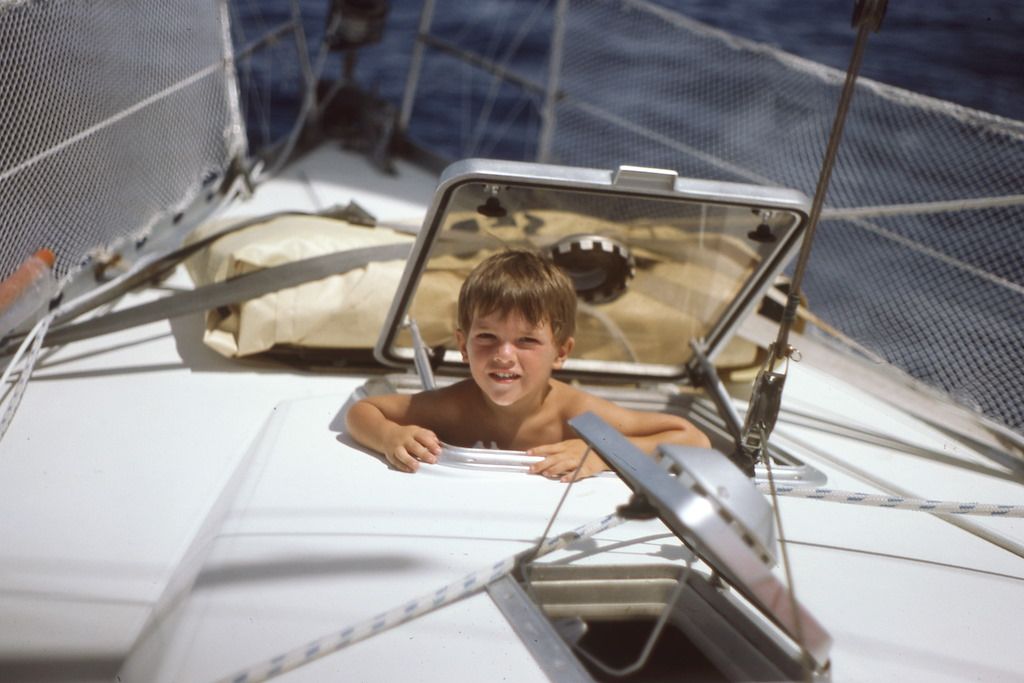
Charlie was born in February 1983 and became an instant Yukon adventurer. In fact, I remember cross-country skiing and overnight camping with him when he was just five days old in the harsh Yukon winter. It was convenient having my own OB/GYN along with us.
We moved aboard our boat, Kluane, in Canoe Cove, Sidney, BC, in late 1985 and began the monumental task of provisioning for our upcoming voyage. I canned enough meals for twice the time allowance of our expected three-week voyage to Hawaii (vegetables, fish, meat, and fruit). Our fully stocked medical and dental kits were thoroughly detailed and organized. We even sat on the hospital grounds one morning and took samples of penicillin and other drugs to make sure that we had no allergies.
A wonderful group of friends helped untie our lines on Michael’s May 24 birthday in Victoria. Space was an issue on the boat, and therefore, as a farewell gift, I asked each of our friends to record their favorite music on a tape. What a terrific idea—I felt that they were with us as we played each tape repeatedly throughout the ocean passages. To this day, I still associate those special tunes with our Pacific voyage and each respective special friend.
Life at Sea
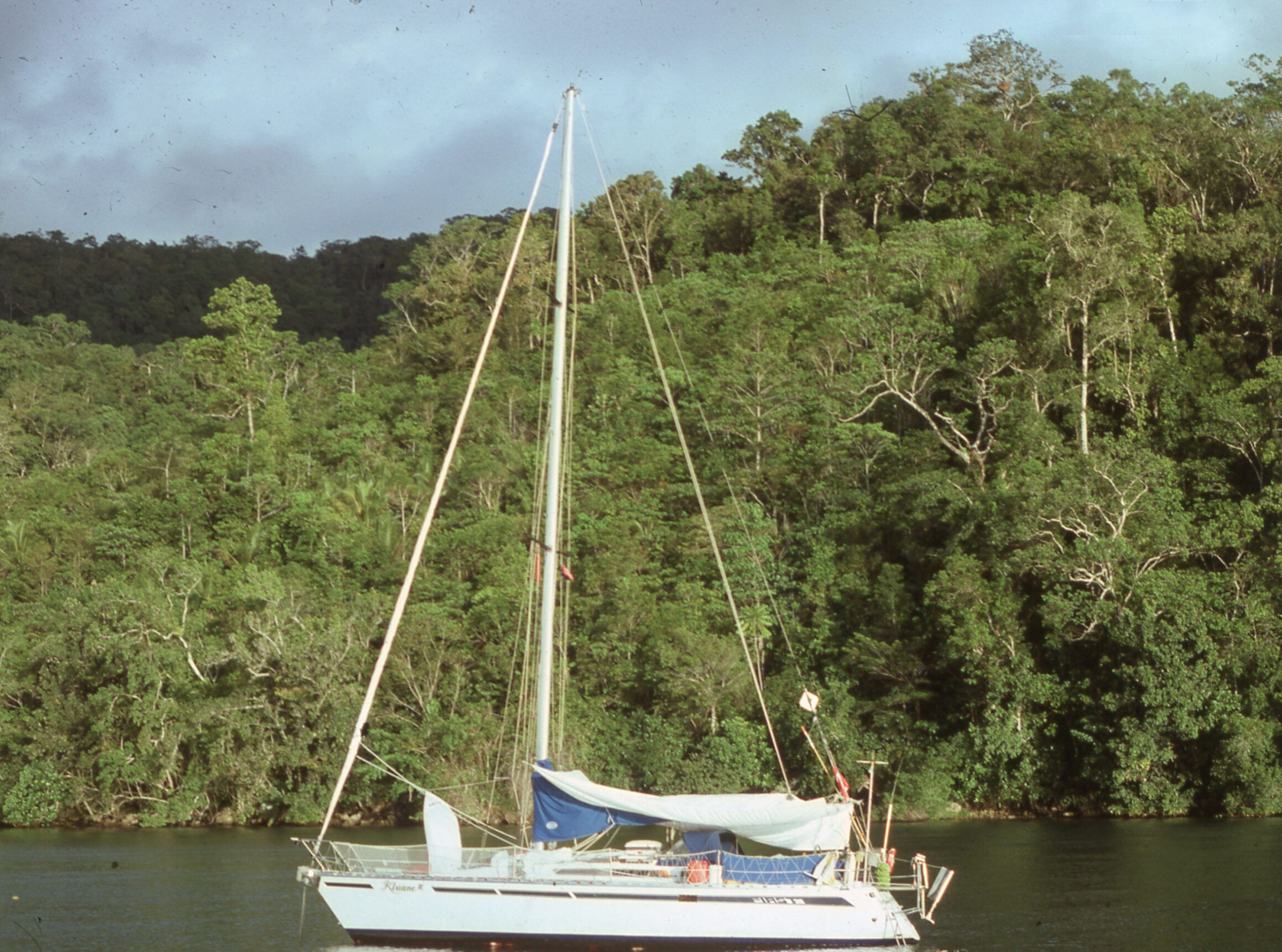
Suddenly, we were alone at sea. As the last glimpse of land disappeared from the horizon, a quiet calmness descended upon us—apart from the sails slapping and the gentle waves crashing against the hull. The boat was in constant movement, creating the need to always keep one hand for our activity and one for the boat. It was just us, at one with Mother Nature.
Michael and both children were quickly overtaken by seasickness. I felt so bad, given that it was Michael’s lifetime dream and he could barely cope during the first three days. I scrambled between Michael and the kids, bringing a bucket just in time for them to vomit, while at the same time managing the boat. The serious seasickness seemed to last about three days with each departure from port, although Michael had longer stretches depending on the weather and seas.
We began to settle into a manageable seafaring lifestyle, averaging approximately 125 miles each twenty-four-hour period. My eyes were constantly glued to the sky, watching the weather and waiting for the perfect moment to take a celestial sighting.
School at Sea
Sam and Charlie began their school regimen, which was provided by the British Columbia Adult Education Correspondence Program—the only correspondence schooling offered in those days in British Columbia, although there were a few more choices through privately paid organizations in the United States. We balanced our teaching roles whereby Michael became the stern principal, and I was the sweet, enthusiastic teacher. Two novel tricks that we adopted to reinforce a school setting were to ring the ship’s bell at 9:00 a.m., indicating the start of school, and to have the boys both wear their previous school ties—to complement their bathing-suit attire.
Routines and Rhythms
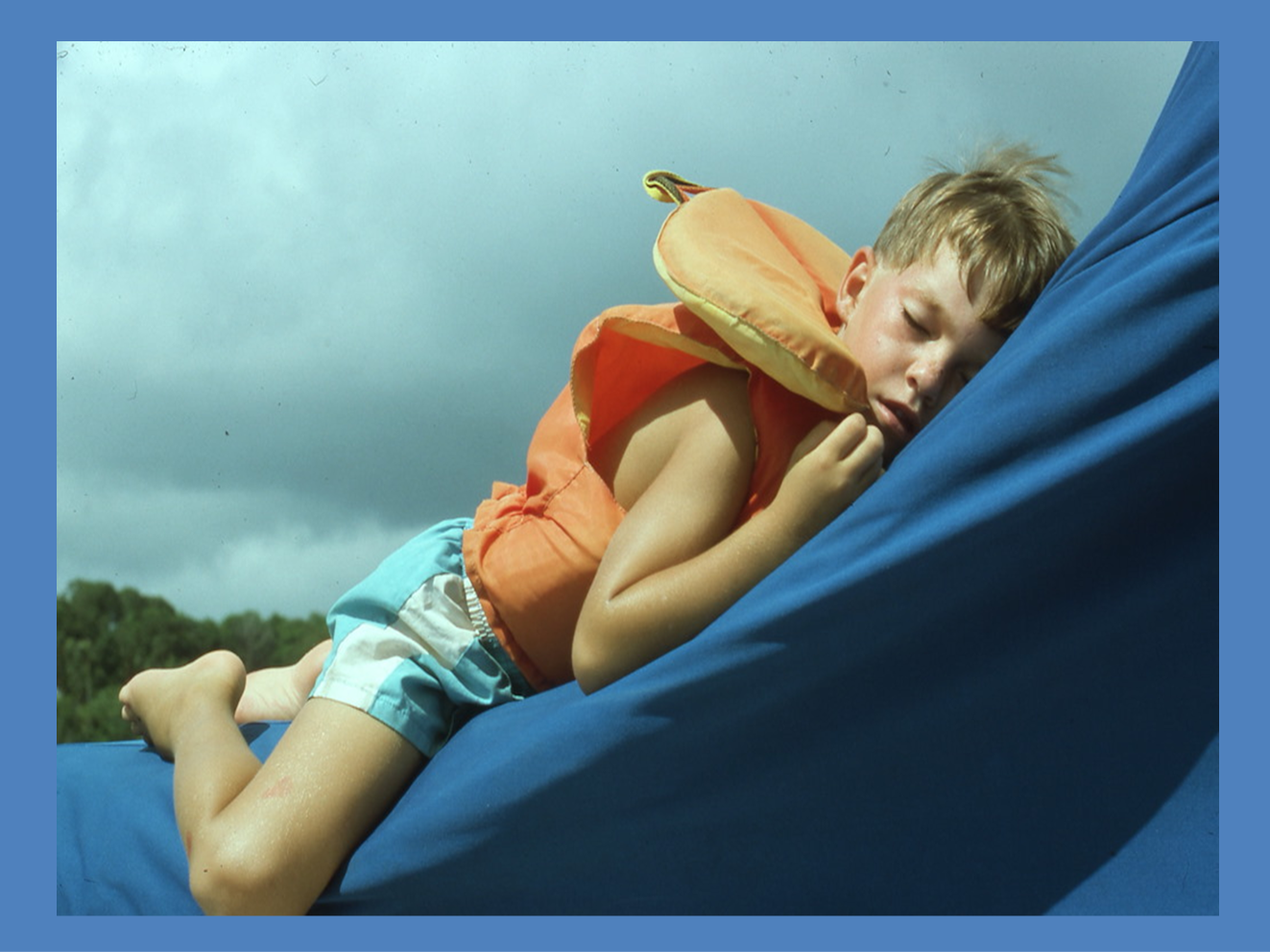
We all took turns doing watch. Michael and I had regular four-to-six-hour watches throughout the twenty-four-hour day, although Sam and Charlie took on the early morning watch from 7:00 a.m. to 9:00 a.m.—with our supervision. Every day blended into the next and was reasonably manageable.
We always had our fishing lines trailing off the stern, and when we caught a fish, we would stop Kluane by “heaving to,” and I would pressure-can it on the spot. As one day blended into another, our enthusiasm to reach land intensified, and we were daydreaming of novelties such as ice cream and a thick, juicy hamburger. Soon, the countdown to Hawaii was on!
Finding Hilo by Radio
Our highly anticipated approach to Hilo, Hawaii, took a funny twist. We were 10 miles from port when the clouds descended over the entire island. I completely lost my ability to obtain a sextant sight. We had been navigating by dead reckoning on our charts throughout the passage, but I still needed more accuracy as we approached the port. Necessity breeds invention, as we discovered that our tiny transistor radio was receiving a transmission from Hilo.
We turned up the volume, and when the frequency got louder, we were getting closer, while a softer sound meant that we were veering away. Our transistor radio navigated us right into Hilo port—which was a terrific sight when the clouds finally lifted. The customs officer was so excited to welcome our young family that he immediately took the kids for ice cream.
Cruising the Pacific
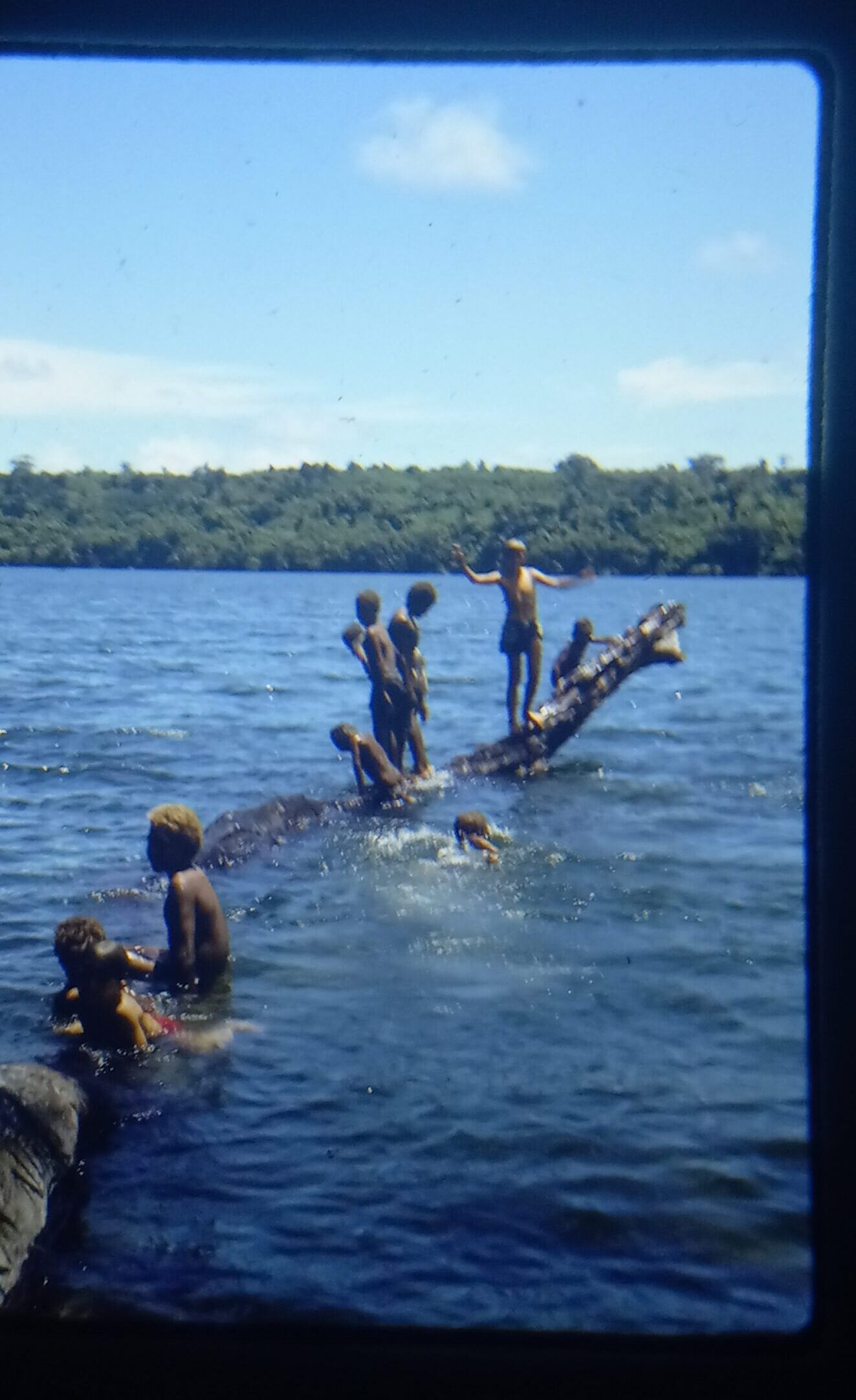
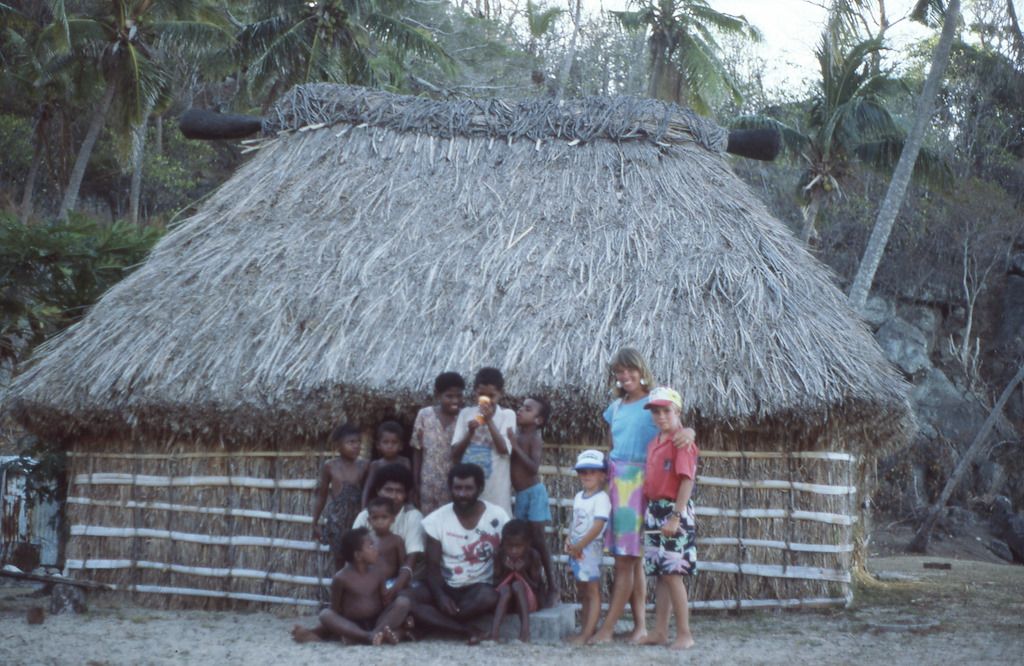
After extensive re-provisioning in Hawaii, we set sail in mid-July for what became an extraordinary cultural experience. The extent of primitive existence on many remote Pacific islands was beyond our imagination. The fact that we had white skin was an anomaly for most of these islanders, and our boys’ blonde hair was even more daunting—especially for the native children.
Cloudy Reckoning
My first unsettling celestial experience was during the roughly 1,000 miles between Hawaii and Fanning Island, in the Kiribati Group. We had been underway for two glorious days of clear skies, calm seas, and minimal seasickness when suddenly a solid bank of dark cloud blackened the entire sky. We continued to perform dead reckoning with our compass and charts, but the overcast sky never lifted for six days. No sun, moon, or any sign of stars. My eyes were glued to the sky for any sign of an indicator.
Even more disturbing was that we were heading for a small island atoll a mile in circumference and only a palm tree high. If we missed the island, which direction would we turn? Thankfully, the clouds lifted just in time for our arrival at Fanning Island. The formidable sight—and relief—of those palm trees in the distance will never be forgotten.
Fanning Island
There are no adjectives to describe the overwhelming reception we received from the residents of Fanning Island as Kluane entered and anchored in the tiny bay. The entire population attended the event: by (small) boat, swimming, and lining the shore. The locals were so enthusiastic that our boys were being smothered with attention, and we needed to ask for some space. The island saw only one commercial boat twice a year, which brought supplies and took away their copra—their only source of income; hence, we were a novelty for this isolated population of two hundred people.
Pacific Island Culture
We continued with remarkable experiences as we sailed through Samoa, Tonga, and Fiji in the eastern Pacific, and then on to New Zealand, where we spent close to a year. Michael took a locum medical job in Greymouth on the west coast of the South Island, and the boys attended school. This is where I wrote my first book, titled “Kids for Sail” (Orca Book Publishers, 1990—over 4,000 copies sold), which described our life at sea to that point.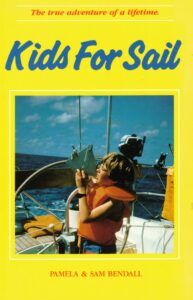
We were also in a movie with the famous actor Brad Davis called “The Rainbow Warrior Conspiracy” because our Kluane was coincidentally the sister ship to the French boat that brought the ammunition to bomb Greenpeace’s Rainbow Warrior.
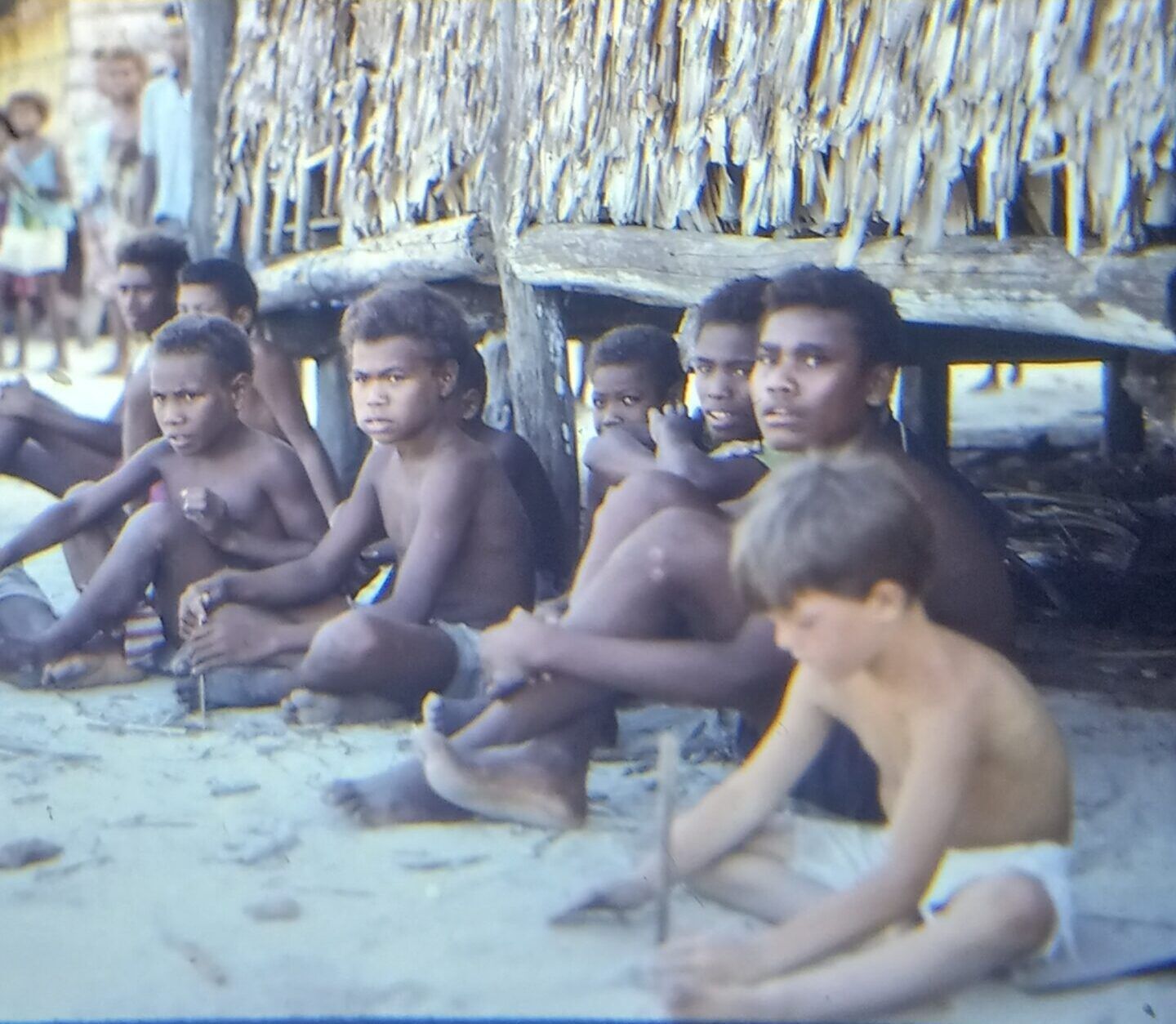
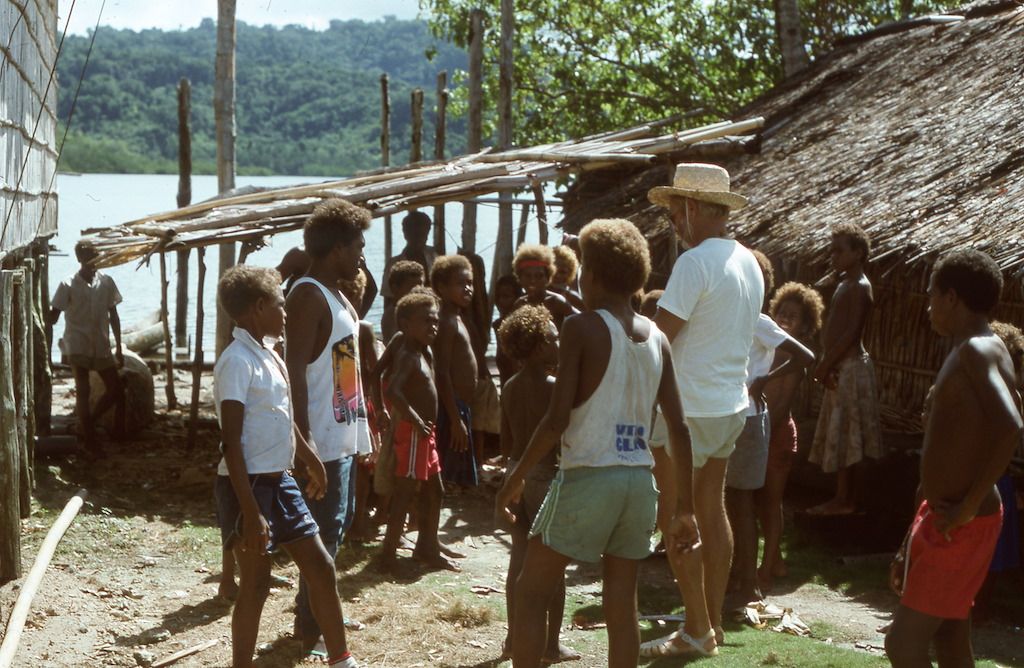
We departed New Zealand in late 1987 and spent the following year exploring all the western Pacific island groups of Papua New Guinea, the Solomon Islands, Micronesia, and Guam. Michael was often called upon to handle medical emergencies throughout this region with little or no supplies in their medical shacks. I remember one incident where a teenage boy had cut off most of his hand and wrist with an ax, and Michael had to reattach it using primitive supplies with vodka as the only anesthetic and disinfectant. We were given a huge lobster feast as compensation.
Missionaries and Backsliders
Seventh-day Adventist missionaries were prominent throughout the Pacific islands at that time and imposed a lot of strict rules in these remote communities, including vegetarian diets and the avoidance of alcohol. I could understand the alcohol ruling, but fish, meat, and poultry were their main sources of food. While these missionaries had the best intentions, they created a lot of internal conflict since staple foods were taken away, along with the associated ceremonies and communal identity—notwithstanding the nutritional consequences.
One dark night in a remote Solomon Island anchorage we heard a knock on the hull. I went out to check the surroundings and a young man whispered, “Hello, my name is Ivan, and I’m a backslider.” He explained that a backslider is someone who secretly has alcohol. If we gave him a beer, he would bring us six lobsters. That seemed like a fair exchange, and consequently, every evening after dark (while we were in the anchorage) Ivan would appear at the side of our hull with his scrumptious bag of lobsters in exchange for his private contraband beer.
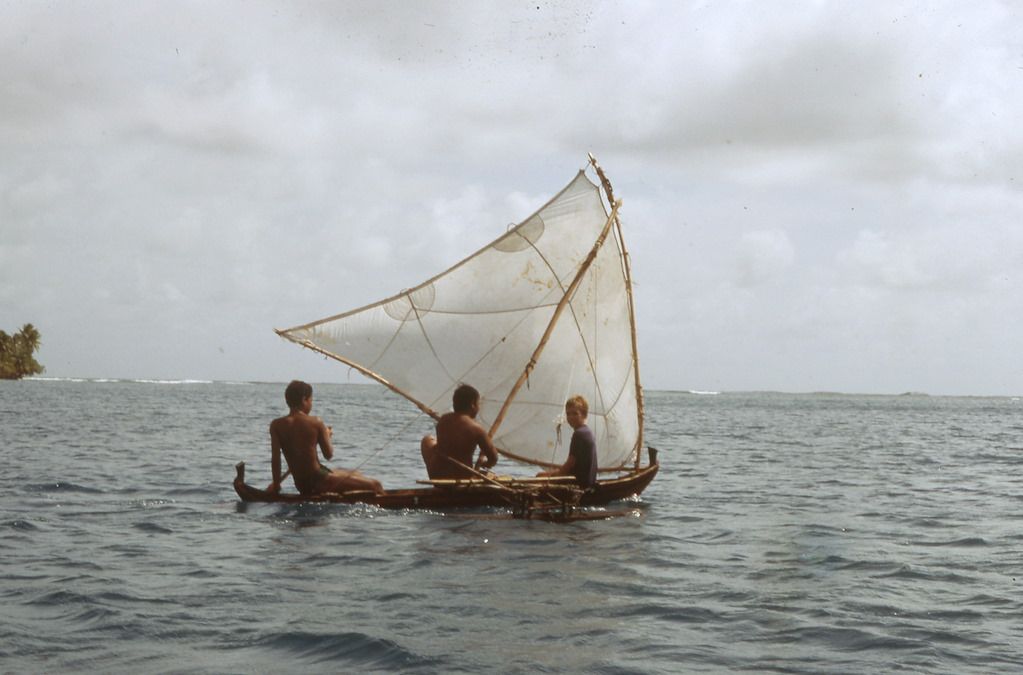
Notably, Satawal Island was the home of Mau Piailug, who was the last Micronesian master navigator and the central figure in the remarkable book “The Last Navigator” (H. Holt, 1987), written by Steve Thomas. Micronesia’s ancient outrigger traditions gave the region a special fame, insofar as they navigated their outrigger vessels by stars, wave patterns, and even the flight paths of birds. When they set out on an ocean voyage in their outrigger, they often carried not just a crew but the makings of a community—elders, children, food, water, tools, and planting materials for the life that awaited them ashore. We happened to come across one of Mau Piailug’s outrigger villages on a remote island near Satawal, Micronesia, and spent the night socializing together. We feasted, danced in traditional costumes, and shared stories over the campfire, comparing their lifestyle to ours. Once all the families had retreated to bed, only five of us stayed behind to enjoy more discussion around the campfire—including Chief Piailug. Suddenly, he stood up with some urgency and told us to wait while he went to the outrigger, which was beached twenty yards away. He dug and dug through the belongings until his beautiful smile doubled in size. That’s when he held up a bottle of Johnnie Walker Red Label scotch and brought it to the campfire for all of us to enjoy. As I mentioned earlier, they stow all necessities in these boats—including a great bottle of scotch!
Our seven-day sail from Guam to Amami Oshima, Japan, was uneventful. The hospitality of the Japanese was remarkable. I didn’t cook a meal for the first thirteen days in port. Schools were let out to visit us. Television and radio stations made us feel like royalty. Curious crowds congregated around our boat until well after dark, all attempting to practice their English and hear our stories.
We finally sold Kluane in late August 1989—just in time for the boys to be enrolled in school in Chilliwack, British Columbia, where Michael was able to obtain an OB/GYN post. I will never forget the final day at the dock in Tokyo when I had only one task left before heading to the airport. That task was to take down our Canadian flag. Tears flowed (even as I write this) so much that I couldn’t see the clasp to unhook the flag. Ultimately, I had to raise the flag back to the top of the mast and let the new owners deal with it.
Sweet Kluane had become more than transport; she became a floating expression of who we were. Our identity.
Then and Now
The two major differences between ocean sailing now and forty years ago are weather and technology.
Weather Changes
In the late 1980s, Pacific weather felt more seasonal, more stable, and generally more predictable. Storms could still be severe, but the ocean itself was cooler and prolonged periods of extreme warmth were far less common.
Heatwaves
Today, the Pacific has a warmer baseline, and that extra heat has changed the character of the sea. Marine heatwaves have doubled in frequency since the 1980s and have become longer-lasting, more intense, and more widespread in geography. For sailors, the difference is not simply a matter of more storms, but of a warmer, less settled ocean in which extremes feel more persistent and less forgiving.
These changes in weather have caused marine species, habitats, and food sources to shift location. Coral reefs are becoming increasingly bleached and are dying. Seventy-five percent of tropical fish rely on reefs for food, habitat, and reproduction. Fishermen must go farther away to catch fewer and smaller fish.
My greatest challenge now is the stifling heat. It’s difficult to hide from the heat on a boat, which makes me sluggish and cranky. I wear cool, wet scarves around my neck, lie on wet towels mid-afternoon, and blow a fan behind a bucket of ice to lower the cabin temperature.
Thankfully, technology now allows us to forecast storms much further out, which generally allows us to avoid major weather systems. We relied on three-day forecasts from unreliable weather faxes in the 1980s and 1990s, which meant a lot more exposure to ocean weather challenges.
Technology Changes
Technology has transformed ocean sailing even more dramatically than the weather. In 1986, we crossed oceans with paper charts, a sextant, dead reckoning, and weather forecasts that were little more than a short window of educated guesswork. Today, GPS and chartplotters tell us our exact position immediately, AIS reveals surrounding traffic, autopilots steer tirelessly, and satellite communication brings weather routing, forecasts, and even family contact to the middle of the ocean. Even lithium battery systems hold power for much longer duration.
These tools have made passagemaking safer, faster, and infinitely more informed, yet they have also taken away some of the mystery and self-reliance that once defined life offshore. Forty years ago, we had to trust the sky, the sea, and our own judgment; now we also trust a screen.
Navigating Without a Screen
I worry that these technological aids provide a false sense of security. I’m delighted that they allow more boaters to cross oceans safely; however, they can easily break down. Then what? As you’ll read in “When Electronics Fail: How to Navigate After Lightning Strikes,” my boat and I were hit by lightning 200 miles south of Central America. I lost every piece of electronics and had to navigate the entire 200 miles by compass and charts.
I wonder how many boaters can do this today—instantly and under duress? I taught a seminar in Mexico last year and asked everyone to bring their charts. Of the fifty boats, not one had a paper chart.
My recommendation—whether inshore or offshore—is to alternate every second day with no electronics so that using a compass and charts becomes a natural way of navigating.
Try it! The satisfaction is enormous.
Conclusion
Looking back over these forty years, I am struck not only by how much ocean sailing has changed, but by how much of its essence remains the same. Weather may be warmer and less predictable, and technology may now guide us with astonishing precision, yet the sea still demands humility, respect, patience, courage, and trust in one’s own judgment. That first departure from Victoria in 1986 opened a life far richer and more adventurous than I could ever have imagined. If there is one lesson the ocean has taught me, it is that while boats, tools, and conditions may change, the deeper rewards of voyaging—wonder, resilience, and the freedom of the open horizon—remain timeless.
Pamela will also discount professional speaking engagements for Practical Sailor subscribers. Please contact Pamela directly by email: [email protected].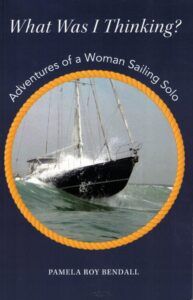 “Kids For Sail” (Orca Book Publishers, 1990), and “What Was I Thinking? Adventures of a Woman Sailing Solo” (Vivilogue Publishing 2012). She also entertains and educates audiences as a professional speaker at boat shows, corporate conferences, service clubs and community organizations.