

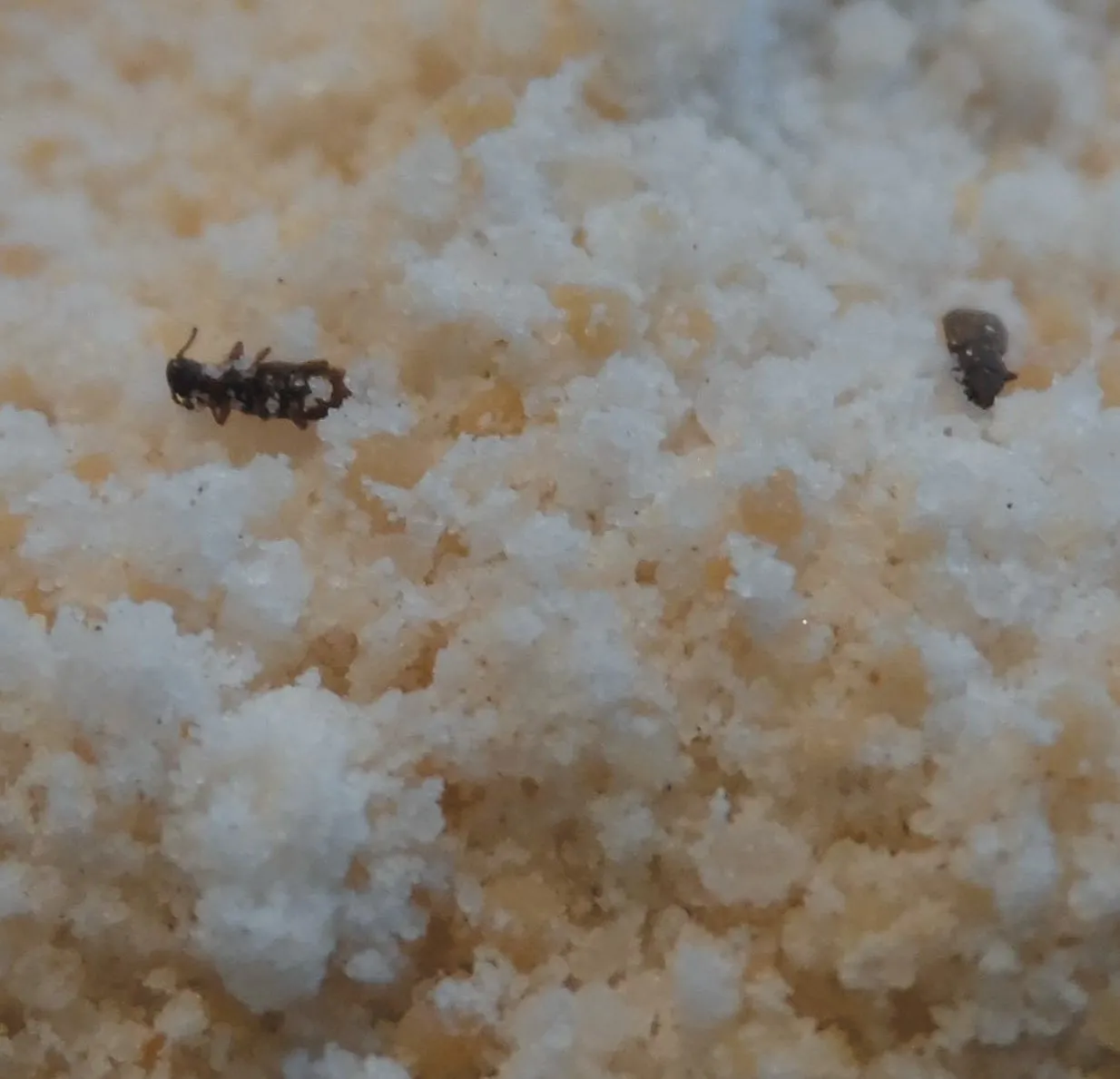
Most rice and grain sold in western countries is fumigated, generally with phosphine. However, this often kills only the live insects, leaving the eggs able to germinate. Surely there are other ways available to the cruisers to extend the life of rice and grains.
Using a 10-pound bag of brown rice, we tested what seemed like the most practical options. We also dug into the extensive research on this topic.
Freezing
Freezing is fatal to all larvae and adult insects, but unless you have a deep freezer that lowers temperatures to at least 13 F, there’s no guarantee you are bug free. Just barely freezing (as in the case of a typical boat freezer) won’t work. At 20 F there is a 30 percent survival rate for rice that is stored for long periods. This is because the eggs of some species remain intact through the winter before hatching in spring. If you keep the rice at below freezing temperature for 72 hours, or can keep it at sub-zero temperatures for a day, your chances of weevil-free flour are much greater.
Microwave
Any approach using heat must be thorough. Microwaves penetrate several inches, so up to five pounds can be treated without opening the bag, although it should be turned and shaken half way through the process. We tried 90 seconds in a 1500 watt oven and got excellent results with rice, flour and pasta.
Baking
If baking in a conventional oven, it is recommended that you stir the rice half way through the process to insure even treatment. We tried the recommended process-an hour at 250 F. Like the microwave, it worked, but it damaged baking mixes.
Vacuum Packing
This method does not work. Atmospheres containing less than one percent oxygen are known to be lethal to all insects. No home vacuum sealing equipment can reduce the 21-percent oxygen in ordinary air to that level. Also bags can easily develop tiny leaks, re-admitting air.
CO2
Atmospheres containing more than 35 percent CO2 are known to be lethal to all insects. Eggs are slightly more vulnerable, with 100 percent mortality when exposed air that is 20 percent CO2. The lack of oxygen also slows the process of turning stale. If dry ice is available, sealing a few ounces of dry ice in a five gallon bucket along with your grain until the ice evaporates should wipe out the insects. You may have to release pressure by lifting the op occasionally
Packfresh
These and other pre-packeged oxygen absorbers (www.packfreshusa.com) can kill living insects, but some larvae still hatch.
Conclusion
Baking, microwaving and freezing will kill weevils. If you are based on shore, these are simple processes to carry out. Carbon dioxide, also, is almost guaranteed to get rid of weevils. Oxygen absorbers are very handy and helpful, though not a certain solution. Vacuum sealing is not effective.
Once you’ve taken care of the bugs, remember that treated products only stayed that way when they are well-sealed. Bugs can crawl though tiny spaces and will chew through plastic bags within hours.
Drew Frye is a technical editor for Practical Sailor. He also blogs at his website.
This article was first published on 19 October 2018 and has been updated.














I know that this may seem revolting to some people, but cooking and eating pasta and rice which contains weevils will (from my experience, I’m not a doctor !) PROBABLY do you no harm at all. You may not even notice them, other than as tiny dark specks. When living in an old boat in Brasil, our pasta and rice supplies were weevilled regularly. My girlfriend-crew, whose father was a medical doctor, pointed out that they are only reformed proteins from the starches. We picked out as many as we could be bothered (not many, after a while !) before cooking, and ignored the rest. There were no discernible effects. So cook and crunch away happily ! By the way, when we bought the boat it was quite literally crawling with cockroaches, some as big as 5cm long. Spray had no effect. Then we scattered piles of Boric acid powder in every dark corner. Magic ; after just one week, we never saw another cockroach. By the way, please note that ‘Borax’ is a trade name of a cleaning soap. It is not the same as boric acid, although there may be chemical similarities. I have been told that powder trademarked ‘Borax’ will not have the same effect. I believe that boric acid may also be called boracic. But check for yourself on the internet, the info is all there. You should be able to buy boric acid powder in any chemist/pharmacy, anywhere in the world ( ? ).
I have used Bay leaves in both rice and flour, when bringing food aboard egg carton are best discarded before the food is brought on, big source of roaches and there eggs