
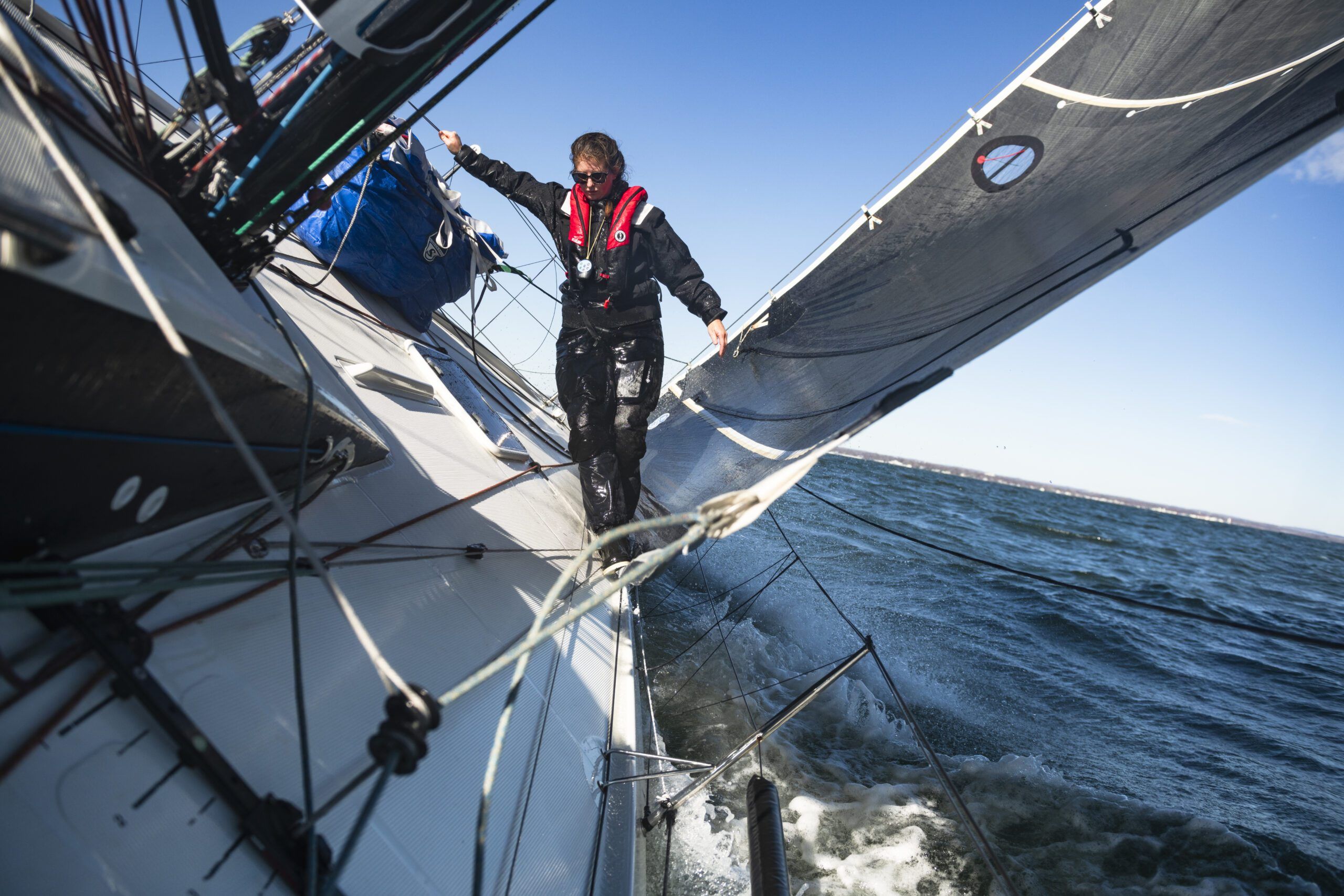
La Solitaire du Figaro Paprec is a unique, solo, multi-stage annual racing format created in 1970 by Jean-Louis Guillemard and Jean-Michel Barrault. In 2025, for the 56th edition of the race, professional skippers competed on identical Beneteau Figaro 3 one design boats over three legs to test the limits of their tactical navigation, physical and mental endurance. The race attracts some of the world’s best solo sailors alongside aspiring amateurs looking to make their mark in the offshore world.
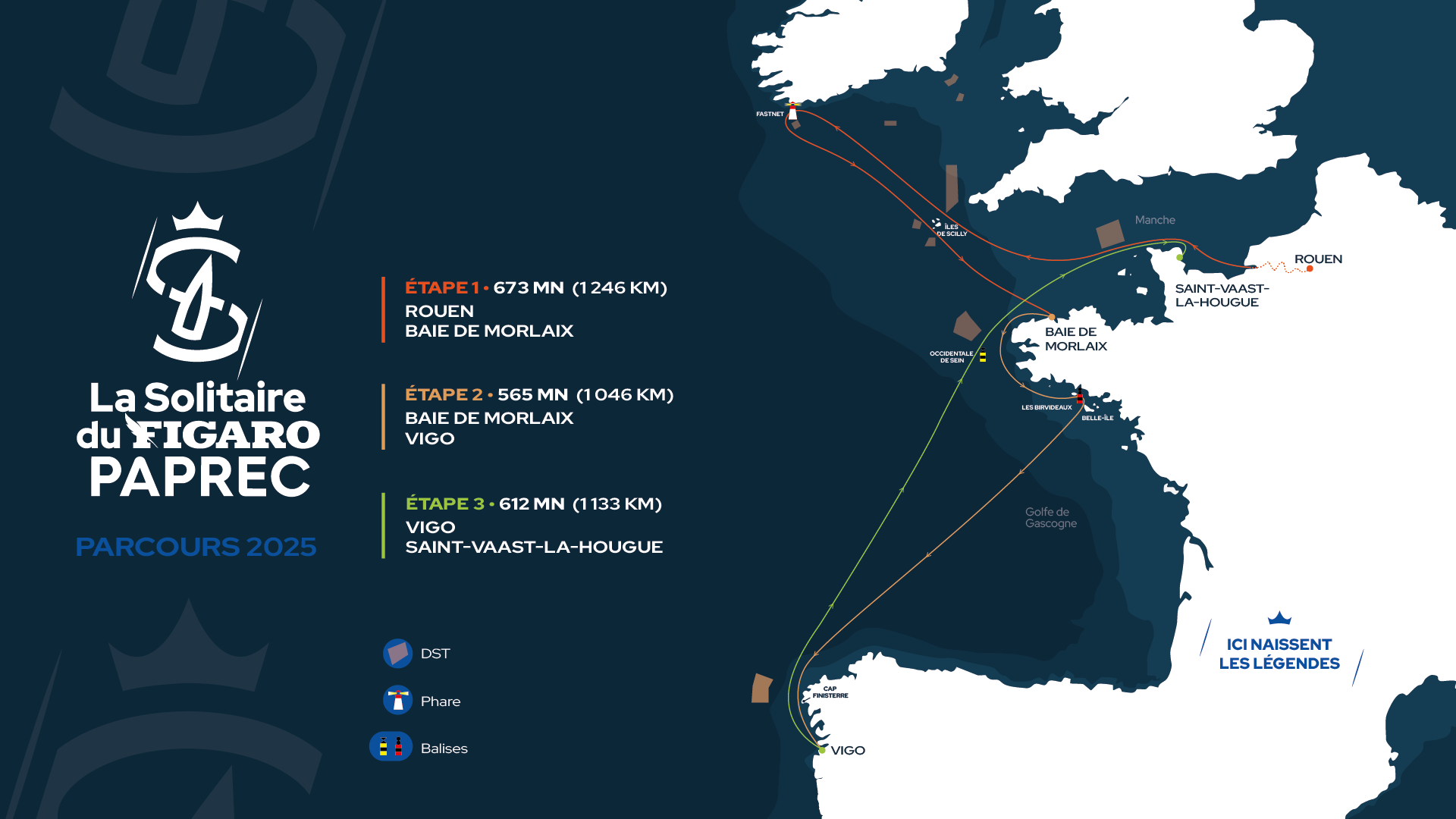
Of the 34 competitors, 31 finished; eight women took part, 13 were rookies and five nationalities were represented. This is the heavy weight of French sailing, with a playground covering a minimum course of 1,800 miles. The 2025 edition started in Rouen, continued via the Baie de Morlaix stopover, then to Vigo, and finished in Saint‑Vaast‑la‑Hougue.
Note: One-design racing is preferred for sports that require complex equipment, where all vehicles have identical or very similar designs or models. This avoids the need for a handicap system.
The primary difference is that IMOCA 60s use a canting (tilting) keel and water ballast, while the Figaro 3 is water ballast-free and has a fixed, straight keel. U.S. sailor Erica Lush completed two transatlantics on the IMOCA 60 and explains that the major difference between the IMOCA 60 and Figaro 3 is the IMOCA 60 has much greater speed and power. 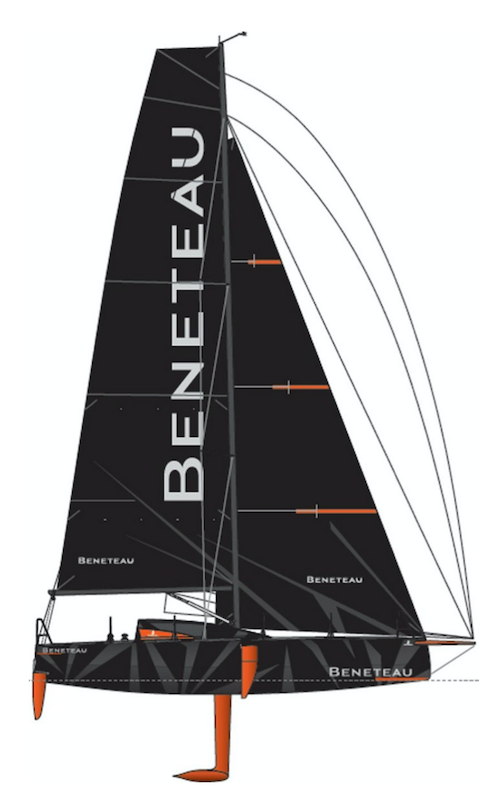
Sailboat Specifications Courtesy of Sailboatdata.com
Hull Type: Fin w/bulb & dual rudders
Rigging Type: Fractional Sloop
LOA: 35.73 ft / 10.89 m
LWL: 31.04 ft / 9.46 m
S.A. (reported): 716.88 ft² / 66.60 m²
Beam: 11.42 ft / 3.48 m
Displacement: 7,000.00 lb / 3,175 kg
Ballast: 2,449.00 lb / 1,111 kg
Max Draft: 8.20 ft / 2.50 m
Construction: Polyester sandwich - Infused PVC foam
Ballast Type: Cast iron keel with mixed cast iron/lead ballast
First Built: 2018
Builder: Beneteau (FRA)
Designer: VPLP design
Make: Nanni
Model: N3
Type: Diesel
HP: 21
Fuel: 11 gals / 40 L
S.A. / Displ.: 31.44
Bal. / Displ.: 34.99
Disp: / Len: 104.49
Comfort Ratio: 13.01
Capsize Screening Formula: 2.39
S#: 5.48
Hull Speed: 7.47 kn
Pounds/Inch Immersion: 1,266.58 pounds/inch
I: 39.93 ft / 12.17 m
J: 14.60 ft / 4.45 m
P: 41.50 ft / 12.65 m
E: 14.21 ft / 4.33 m
S.A. Fore: 291.49 ft² / 27.08 m²
S.A. Main: 294.86 ft² / 27.39 m²
S.A. Total (100% Fore + Main Triangles): 586.35 ft² / 54.47 m²
S.A./Displ. (calc.): 25.72
Est. Forestay Length: 42.52 ft / 12.96 m
Mast Height from DWL: 49.93 ft / 15.22 m
Figaro vs. IMOCA
Erica Lush’s Solitaire Journey
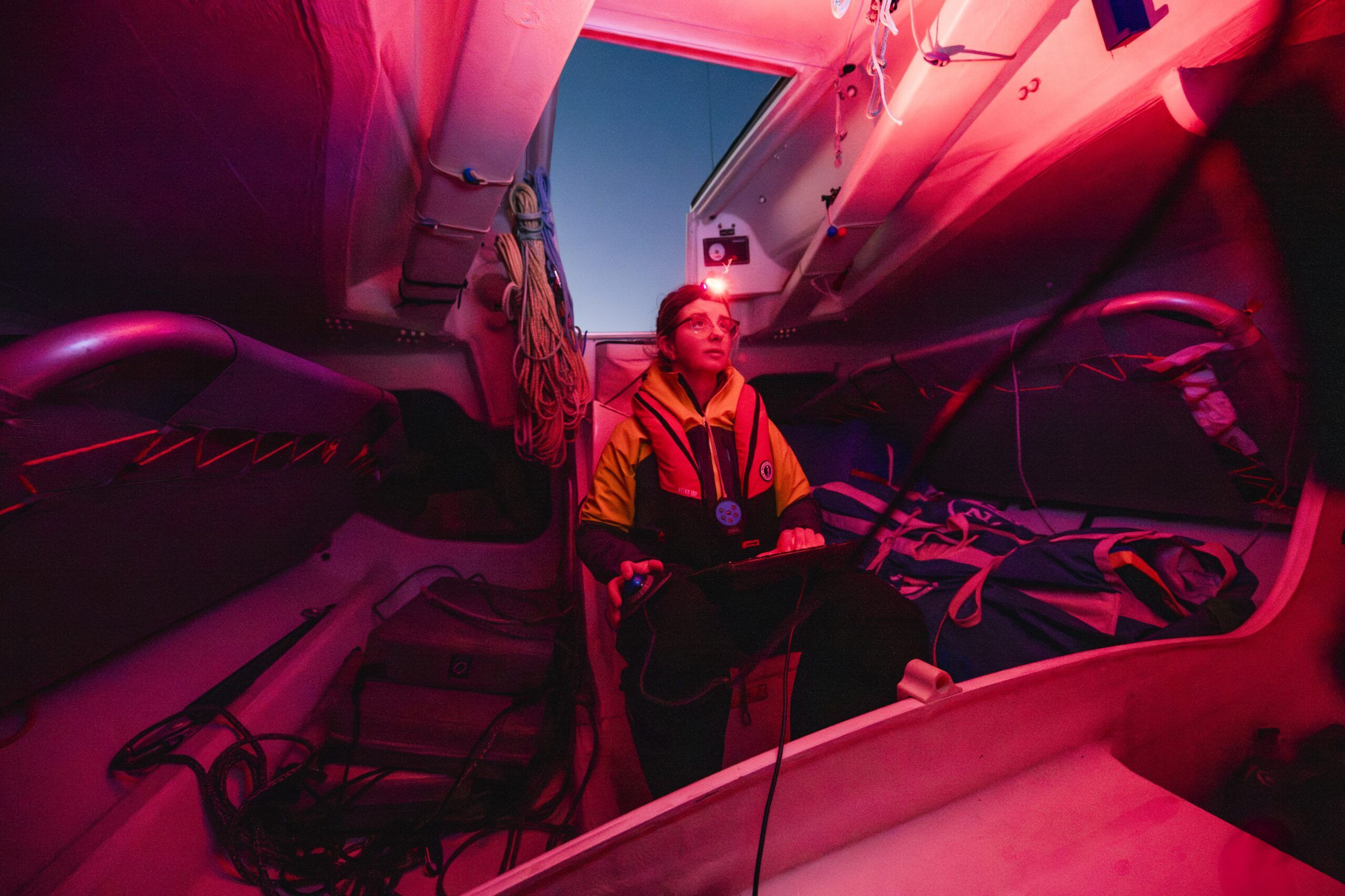
Erica Lush is a second-generation U.S. singlehanded offshore racer who just competed in the La Solitaire du Figaro Paprec 2025 and is the third American to do so. She finished in 13 days, 4 hours, 51 minutes, and 22 seconds. I was excited to hear that she was competing in this race, since I had seen her prowess firsthand in the Southern Ocean as we sailed together on Maiden for the Ocean Globe Race 2023—which we won. I reached out to her after the race to get an insight into her approach.
Switching to Singlehanded
Erica came to a point in her sailing career where she wanted to develop her skills as much as possible, which led her to pursue shorthanded sailing in 2020. She says, “If you’re sailing with a crew, you tend to stay in one position, whereas in double-handed and solo, you really have to be proficient in every level. It’s incredibly empowering on one side because you have to deal with everything on your own and also you are mentally prepping for the next thing that happens or could happen—all the time. So when you’re successful in executing a maneuver that might seem challenging, you really feel super proud of yourself because it’s really hard.” For Erica, turning to solo was just a continuation of that effort to learn as much as possible.
Hope
Erica christened her boat Hope because it’s her home state of Rhode Island’s motto. She managed to acquire the boat a few months before the race, thanks to the sponsorship she received from over 70 individuals as well as the Performance Sailing Fund of New York Yacht Club and the Storm Trysail Club.
“I wouldn’t have been able to even get the first donation if I hadn’t had some hope that I could get there to begin with. I think for any big task you have to believe first within yourself—believe it is possible. It’s really an incredible amount of support and technical coaching I have received for starting a program like this, as it is a huge challenge just to get to the start line.”
In her own words: “All challenges begin with a foundation of hope.”
The reason the French are such high performers in offshore sailing is because they have a platform to support the sport. For example, there is a defined pathway for young, talented sailors to attend training camps throughout France. The French have also made a business model out of offshore sail racing so sailors don’t have to have deep pockets to perform well in the sport. Sailors do need to have enough know-how to help a sponsor benefit from their project—like an offshore race—and communicate how the project’s values align with the company’s values. That helps sailors guarantee corporate funding for their sporting projects, which is mutually beneficial for both parties. Charlotte Yven, for example, is a strong sailor and was supported from a young age within the French system due to her talent. She’s living proof that with a well-funded and well-supported system for skills development, girls can win races too. She’s the first woman to reach the podium in the Solitaire race’s 55-year history. In the U.S., on the other hand, sail racing is elitist and it’s an owner-driver environment in most fleets. So unless you’re the one making a lot of money, you’re not going to be the one making decisions—it’s hard to get into leadership positions onboard. In junior sailing, in contrast, the U.S. has a good development platform. Erica says that there are a lot of opportunities for young sailors in New England where she participated in her high school team and on her college team. However, once you graduate, it’s like falling off a cliff, she explained. French Racing Model
U.S. Racing Model
The Boat
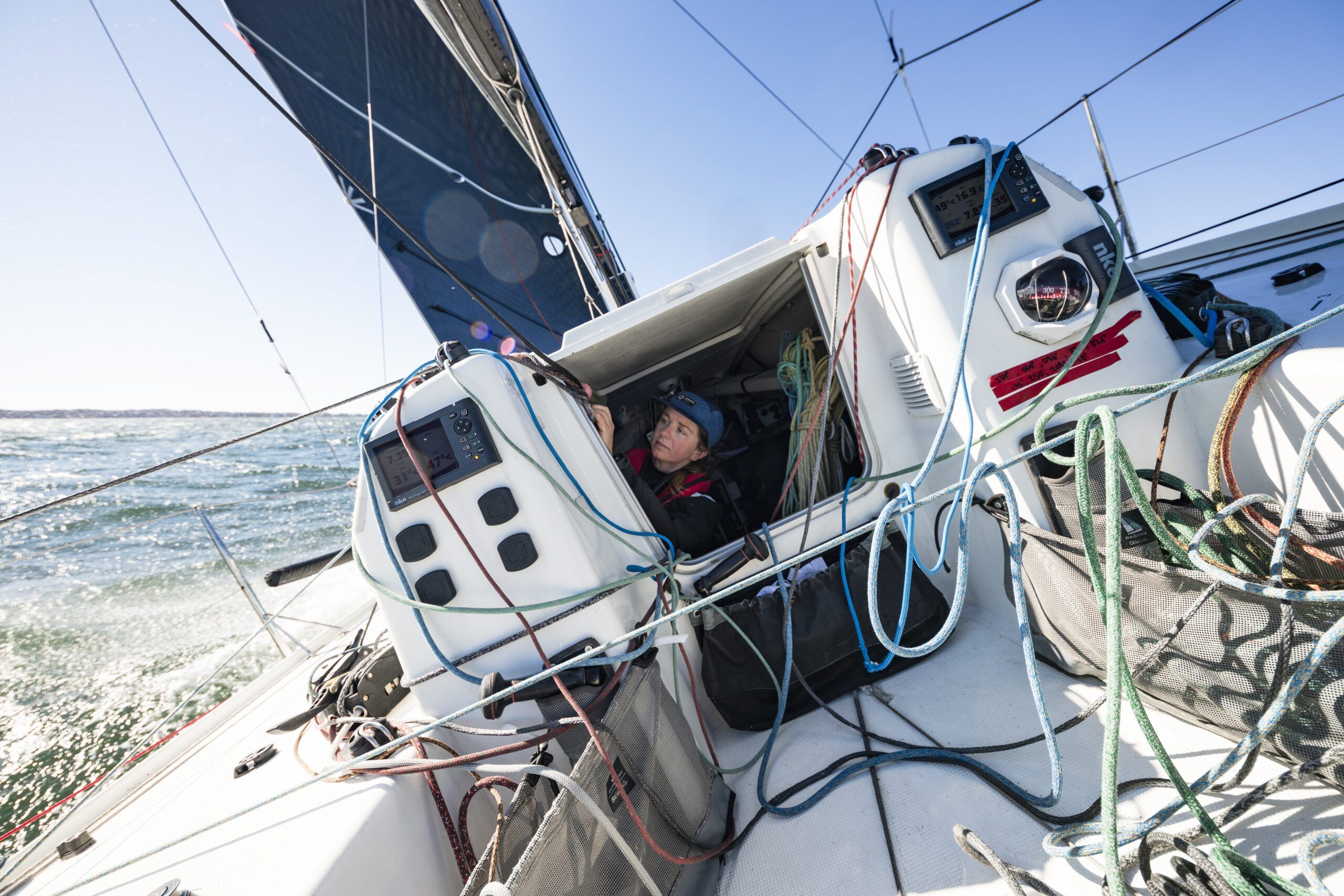
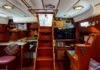
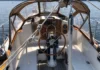
The Figaro 3 is a very capable boat for soloists. It has plenty of righting moment from its foils and deep keel, which makes her impressively stable—you don’t reef until you there’s a consistent 30 knots. You do need to put a lot of twist in the main before bearing away to keep the top of the sail from luffing, but on a conventional monohull keelboat you’d be overpowered and flirting with a broach way long before you would be on a Figaro, whose twin rudders maintain steering control when you are heeled over.
This is the third edition of the boat’s design. There was a Figaro one, a Figaro two and now the Figaro three, and they have all changed significantly throughout the years. Perhaps the Figaro four will have lifting foils—Figaro two had water ballast.
Technical Coastal Sailing
This race swings between coastal and offshore sailing, so a variety of navigation skills are required to handle the currents, the Bay of Biscay and the fickle winds of the English Channel. Strategy and endurance are essential at crossing points, which are specific checkpoints where skippers must validate their passage—which adds a tactical dimension to race management. The part of the course near the coast is especially technical because complex coastlines shape wind and current, so local effects become just as important as the larger-scale forecast. You are constantly thinking about where you’re positioning the boat throughout each segment of the race.
Erica learned that sailors should tuck in behind a rock to hide in the slack water when there is significant adverse current—this was the first she’d ever heard of the technique. There’s a large rock in one of the tidal races and you can tack behind that rock to wait for the current to let you around it. Of course, it depends on when you hit the current, so to prepare for all of these intricacies, Erica put in the work.
The Preparation
In the Solitaire, you know the course a couple of months beforehand, so along with her coach, Erica prepared a textbook where they drew up almost all local effects along the race course and practiced together in those areas. Unfortunately, the weather was so bad this year that the first course was completely changed. All the details that she had been studying for the two months leading up to the race were thrown out the window because it was a completely different race course, Erica explained.
Moving to France, learning French, understanding French sailing instructions, and running the boat, as well as her sailing campaign, was a full time job that left her with very little time for fitness. However, she still managed to work with a trainer to become as injury proof as possible and to improve her cardio fitness. This was important because the boats are small and it’s really easy to hurt yourself since you’re always pulling things in awkward directions aboard.
Most of the sailors competing are French and this is their playground, so it is a challenge for sailors like Lush who don’t have as much experience as the others in the English Channel or the southern coast of the U.K.
Nutrition
Under the guidance of another sailor and nutritionist Belinda Henry, Erica built a plan to keep herself hydrated using low sugar vitamin tabs, magnesium to deal with sleep deprivation and vitamin C to prevent sickness. Nutrition on land was protein-heavy with some greens, which all help brain functioning and muscle recovery. They built a balanced menu of offshore freeze-dried food that provided the right amount of calories for the day. The meals were designed to help her function at her best, with no bloating or upset stomach. Old sailing superstitions claimed bananas and women on board were bad luck, so if women sail, it’s okay to eat bananas too—plus, bananas support muscle function.
Race Delays
The race committee made a lot of changes in this race due to bad weather, Erica explained. For the first leg, they changed the course and delayed the start. For the second one, they delayed it to compensate for the first delay. The third one was hard to prepare for because everything had been pushed forward a day, so there was even less recovery time. Waiting time builds anxiety because you’re prepped for a particular schedule. But of course, with sailing, weather is always in flux.
Spatial Awareness
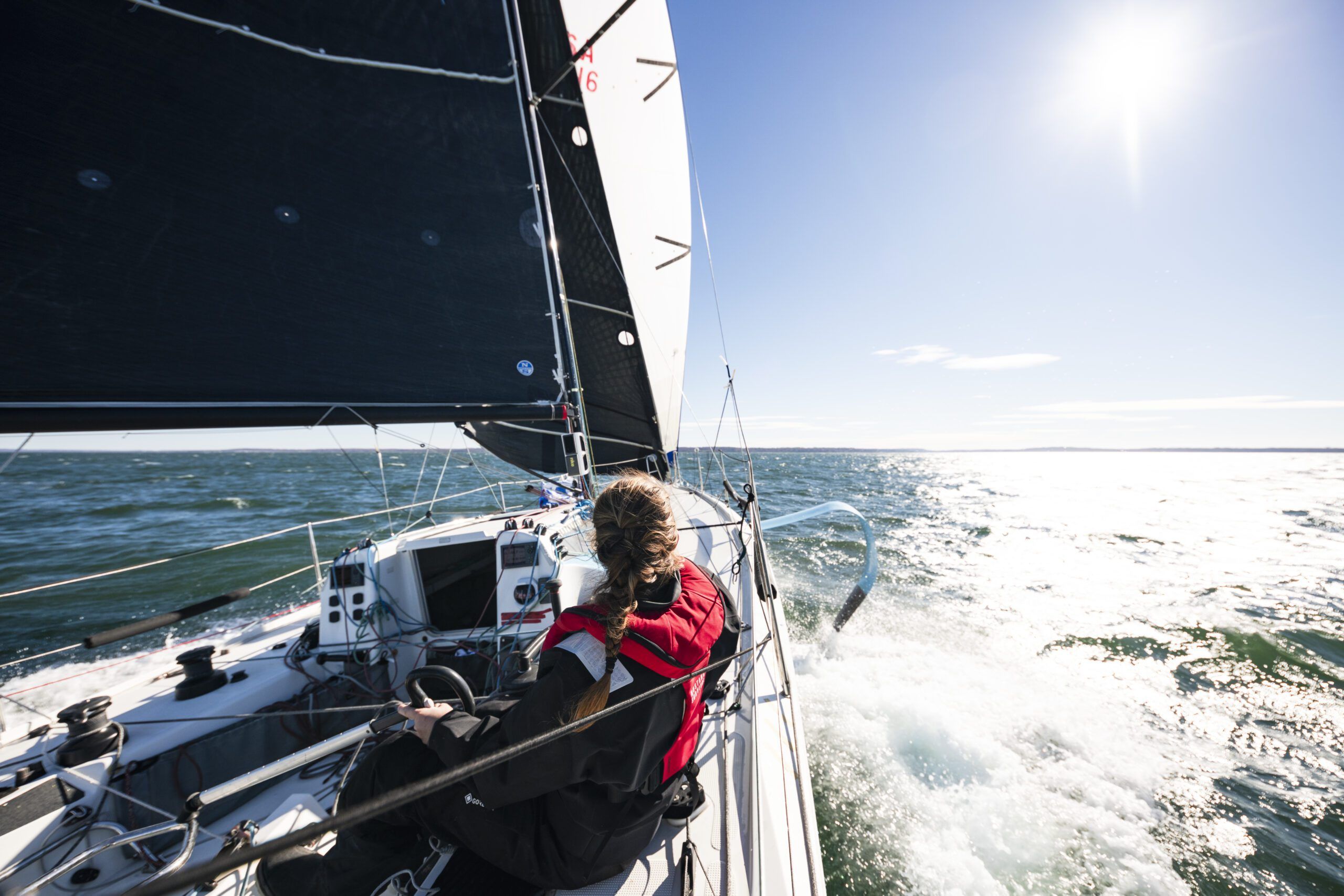
A solo racer is always switched on because they have to be hyper aware of the boat as well as the surrounding environment. A solo yacht racer is neither in attack mode or defense mode, but rather they are reading every sign on and off the boat, constantly running checklists in their head, like creating mental maps, planning maneuvers, and reading the clouds. Back on land racers can switch off water concerns—since they’re not worrying about their bed sinking. This kind of constant, layered awareness is exhausting, so sleep becomes a game-changing factor.
Sleep
You need to arrive to the race course rested because once you start, you’re going to be tired throughout—adrenaline helps to keep you awake through the exhaustion.
Racers need to prioritize sleep in the time windows that they’re given. Post leg two Erica had a huge nap along with re-prepping, because there was a day-and-a-half gap in between. On the third leg, she felt pretty awake the first 24 hours and was tasked with navigating near the coastline. At some point she went below deck to study the digital chart when her body went to sleep and collapsed. Exhaustion caused by sleep deprivation builds up inside of you, but then you wake up with a shock and then adrenaline kicks in. A professor who specialises in sleep sciences advised her not to write off the five minute naps. You have to rest when you can even if it’s 15 minutes, it all helps in the long run.
“When you’re crossing the Bay of Biscay you can start to sleep unless there’s a weather event like a front coming—then when you’re near the coast, in contrast, you really can’t. So it’s a lot of managing when you can take rest and when you need to be alert.”
Weather
In the Solitaire, you get your weather files at the beginning of the race, and you can’t download any more after that. Every day, the race directors provide you with a synoptic chart, and then a rough weather overview. So every six hours you get a brief write up of the approximate wind you’ll have in this section of the ocean, and then the synoptic chart to match that. However, it’s not nearly as detailed as a GRIB file, and you can’t run a new routing based on a change in the weather like you could if you had a GRIB file.
Boat Software
Adrena is a powerful suite of high-performance navigation and tactical decision-making software tools that help optimize route, manage race strategy, and enhance overall performance on the water. It comes built-in on the Figaro 3 and is also used by Vendée Globe racers. It is available in both English and French and is used by race management to prepare race courses, monitor the fleet’s position and communicate crucial information to competitors.
Adrena integrates GRIB weather files given by the race organiser, current data, tide information, and the boat’s speed polars which you load on Adrena. The program produces info about routings, calculations per day, and monitors all the competitors in the same class, as well as waypoints, start, finish, polars, and dangers to avoid.
Traffic Jams
In the first race, the competitors crossed the English Channel five times because they sailed next to a TSS, a traffic separation scheme, where there may be cargo ships to maneuver around. There are alarms for the vessels that comply with AIS, but some fishing boats don’t use AIS, so you have to plan to be awake often to avoid collisions.
Alarms
You can set alarms for many things: AIS vessels, a wind shift, wind increase or decrease, or if your boat speed slows down. On a solo voyage, different kinds of alarm beeps are going off all the time.
Conclusion
Lush’s 2025 Solitaire campaign shows what it takes for a U.S. sailor to compete in French offshore racing’s most demanding proving ground: extensive preparation, grassroots funding, adaptability under pressure, and the willingness to relocate and immerse yourself in a foreign sailing culture. Her finish demonstrates that U.S. sailors can compete at this level, but not without significant barriers, especially in regards to securing funding. Charlotte Yven’s podium finish—the first for a woman in the race’s 55-year history—proves what’s possible when sailors have institutional support from an early age.
For U.S. sailors looking at the Solitaire, the path forward demands a full-time commitment to logistics, language and learning a new sailing environment, all while funding the effort through individual contributors—but the one-design format levels the playing field for those willing to invest the time.
In just over 13 days at sea, Erica Lush proved that with determination, preparation, and hope, a solo sailor can not only compete at the highest levels of offshore racing but also inspire the next generation of women to follow her wake.