

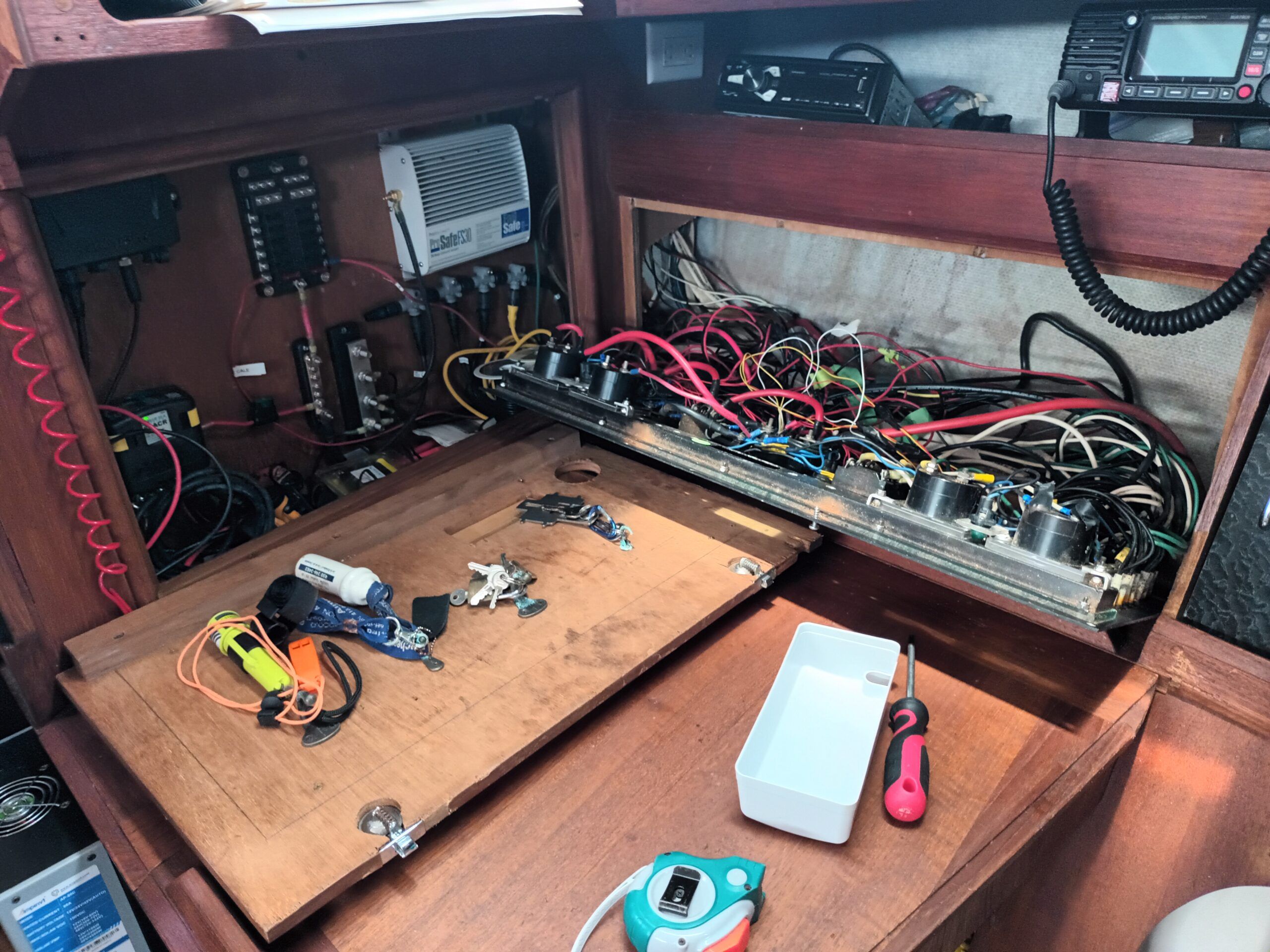
As I approach twenty years of surveying boats, most issues that I encounter are repetitive. The root causes for these repeat problems usually involve safety issues that could have been prevented with proper maintenance and care. I do also occasionally stumble upon a few new issues, mainly related to lithium batteries and their incorrect installation.
If safety isn’t your top priority, consider resale value and how maintenance and care will get you top dollar.
Keeping A Used Boat’s Longterm Value
A recent example of how basic maintenance preserves resale value is a 36 Gozzard that I was interested in buying. It is well priced because it “needs TLC.” The pictures looked great and it fit my needs perfectly.
I have a three-year-old large dog and in order to make her entry into the boat easier, I want a sailboat with a walk-through transom or stairs, and companionway stairs that aren’t steep. I also want a sailboat capable of crossing the Pacific if one day I decide to do so. Plus, the Gozzard is a great looking sailboat in my opinion. So I spent one hour doing a quick inspection and found that the deck was sound and yes, the exterior wood needs TLC, as noted by the broker. However, the interior was where my frustration began.
Neglected Basics
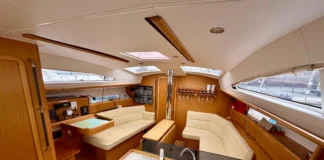
There were numerous small things that the owner could have done throughout the years to keep the value. A few examples are the port window screens—they were all ripped and the windows were kept open with wooden spoons. The head smelled so strongly of urine that I couldn’t inspect it. The gimbaled stove was extremely stained of grease and beyond cleaning. All wood was faded—I doubt the owner had ever oiled it.
The dinette cushions and V-berth were soiled. The owner took out a sink in the V-berth cabin and left an open hole. All these little things quickly added up. Instead of having a moment of euphoria, I became stressed thinking of the weekends I would need to spend doing a refit for the next few years.
If the owner had taken the time to keep up with maintenance and repaired things as they broke, the boat would have kept its value, and I would have made an offer. Unfortunately, this boat, like many in the same condition, will sell for much less and as it waits for a buyer, its condition will worsen.









Good stuff.
I have had two propane bottles begin to leak on a boat. All it takes is a little salt. Fortunately, they were kept in a flammables/gasoline jerry can locker. If they had been in the galley …. Since then, even at home, all bottles not in active use are capped. See “Safety Tips for Small Propane Bottles,” October 2020. Brass caps are cheap on Amazon.
All safety equipment storage should be clearly and obviously labeled. Fire extinguisher and fire blanket lockers should have reflective labels so that they can be spotted instantly. Clearly printed labels should identify PFDs, first aide, tethers, and signal equipment. No digging through other stuff in the drawer, either.
I’ve always thought a topic worth discussing is the servicing of winches that cannot be disassembled without removal. Often, removal is impractical, so they just don’t get serviced at all. There must be a way.
Solutions? Often, partial disassembly is possible. You can probably take off the drum. Wrap a towel around it, clean what you can, re-grease (lightly), and replace the pawls and springs (oil). I’m guessing the pawls and springs have been in there far too long, and they wear in unseen ways that can ruin the winch. Just 10 thousandths wear on the pawl and 10 thousandths wear on the socket, and the pawl can jump out and jam the winch fatally, destroying the drum and sleeve. Of course, you won’t be able to reach the inner set of pawls on a 2-speed winch. Maybe you can get some oil in there.
The drum won’t come off at all? Consider flooding the handle socket with engine oil and letting it drip through while you give it a spin. Not perfect, but better much better than nothing. It will even do some cleaning. You don’t take your engine or trans apart with every oil change. It will drip out for a while. Do it annually. It’s easy. Tip: don’t use gear oil because it is too heavy for the pawls, and they will stick.
Correct service is better. But every boat I’ve owned had 1-2 winches that could not be removed, either because they were seized to the base or because taking half the boat apart would be required. Short-cut service, done more frequently, is much better than no service at all.