

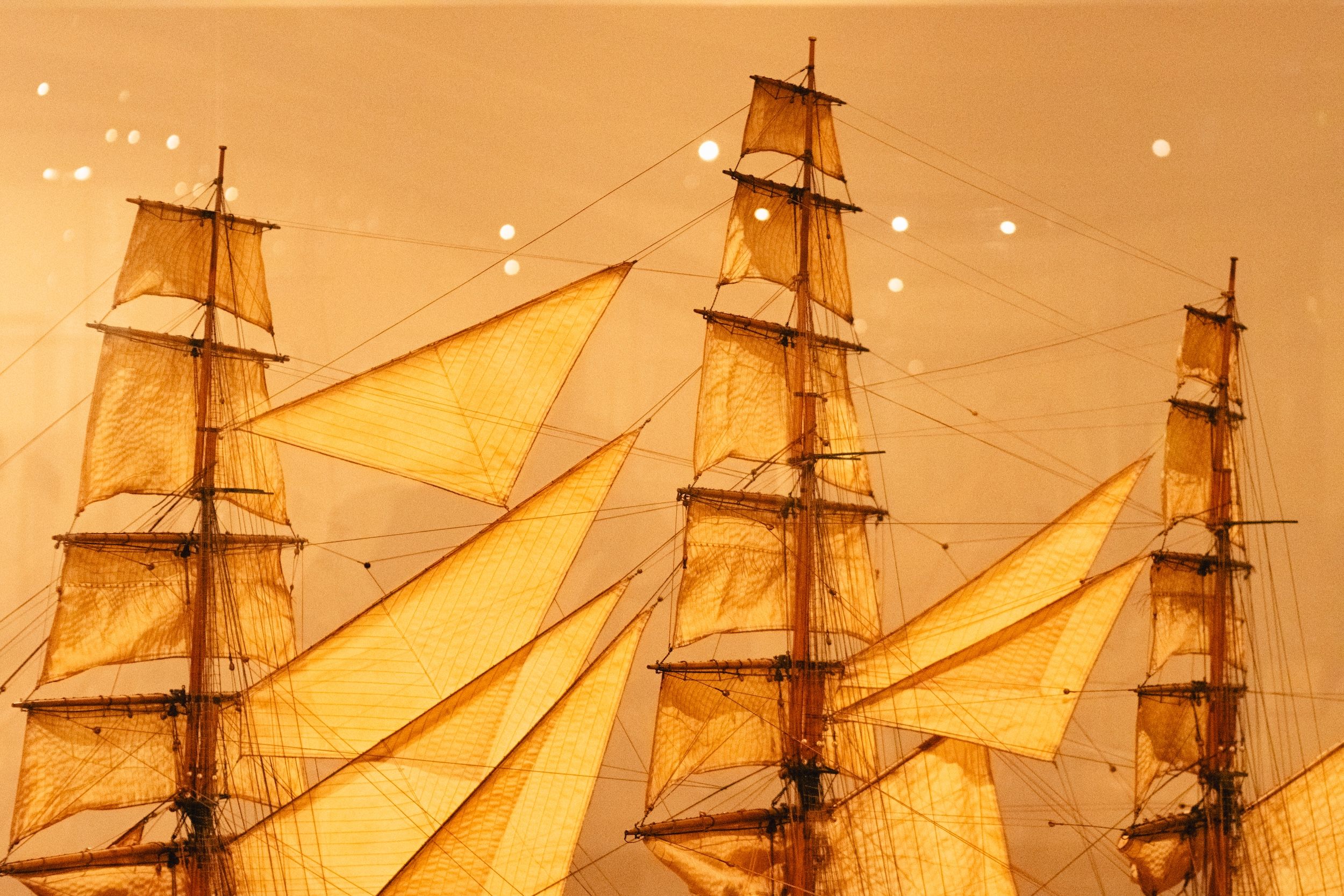
The waters roared off the coast of Sicily as the Grafton, Captain, and Breda closed in. They had set sail from England almost two months earlier with orders to defend Sicily from the Spanish. Now, after a long game of cat and mouse, they had caught their opponents out of formation. The British ships finally had the Príncipe de Asturias in their sights.
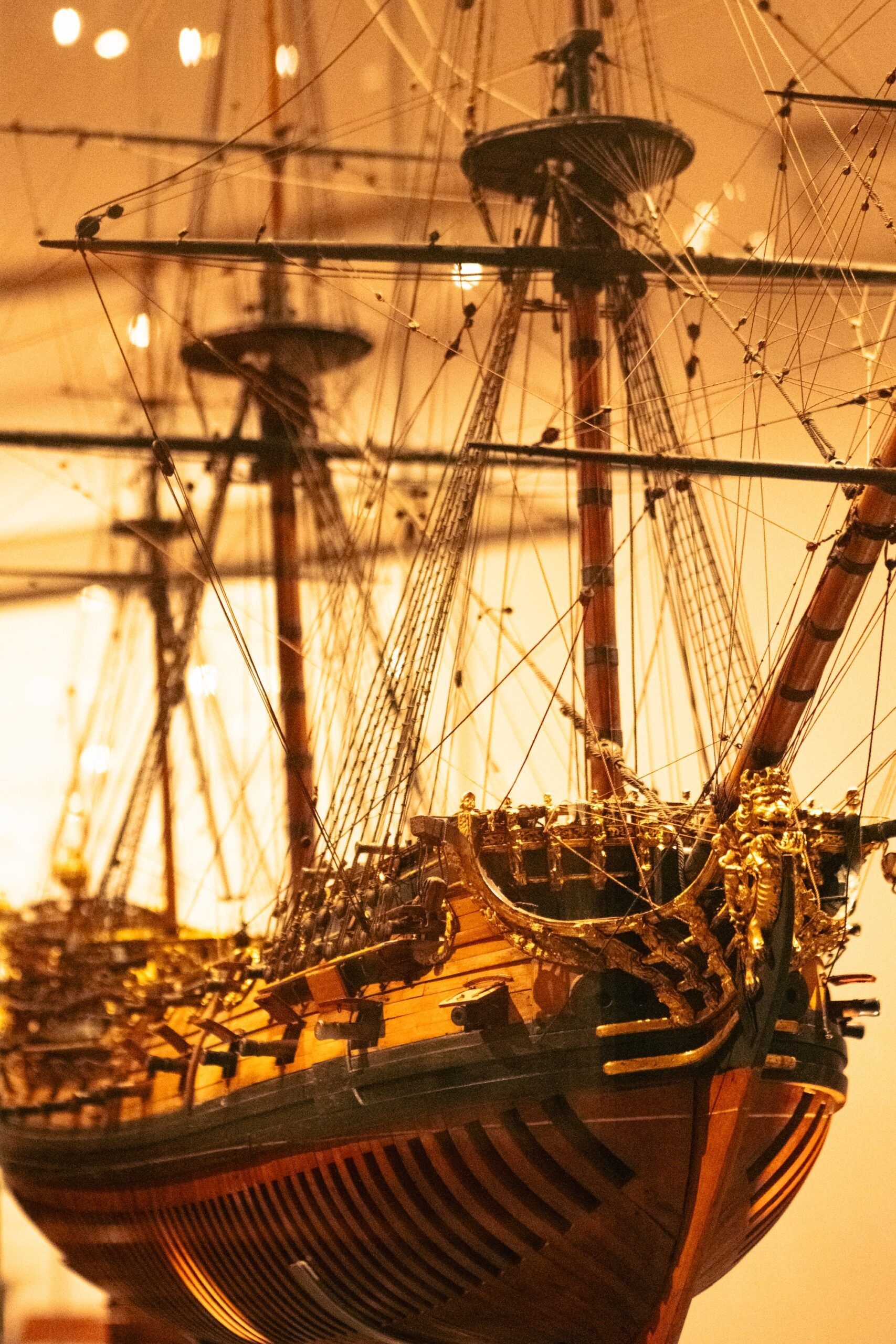
It was the morning of August 11th, 1718. A skirmish further north the day before had given the British their first taste of victory, leaving several Spanish ships captured or destroyed. Still, this was a defensive mission, and the British captains had been given strict orders that morning not to engage unless the Spanish fired first. They didn’t have to wait long. As the disordered and harried Spanish fleet fled towards Cape Passero, they panicked and opened fire on their pursuers.
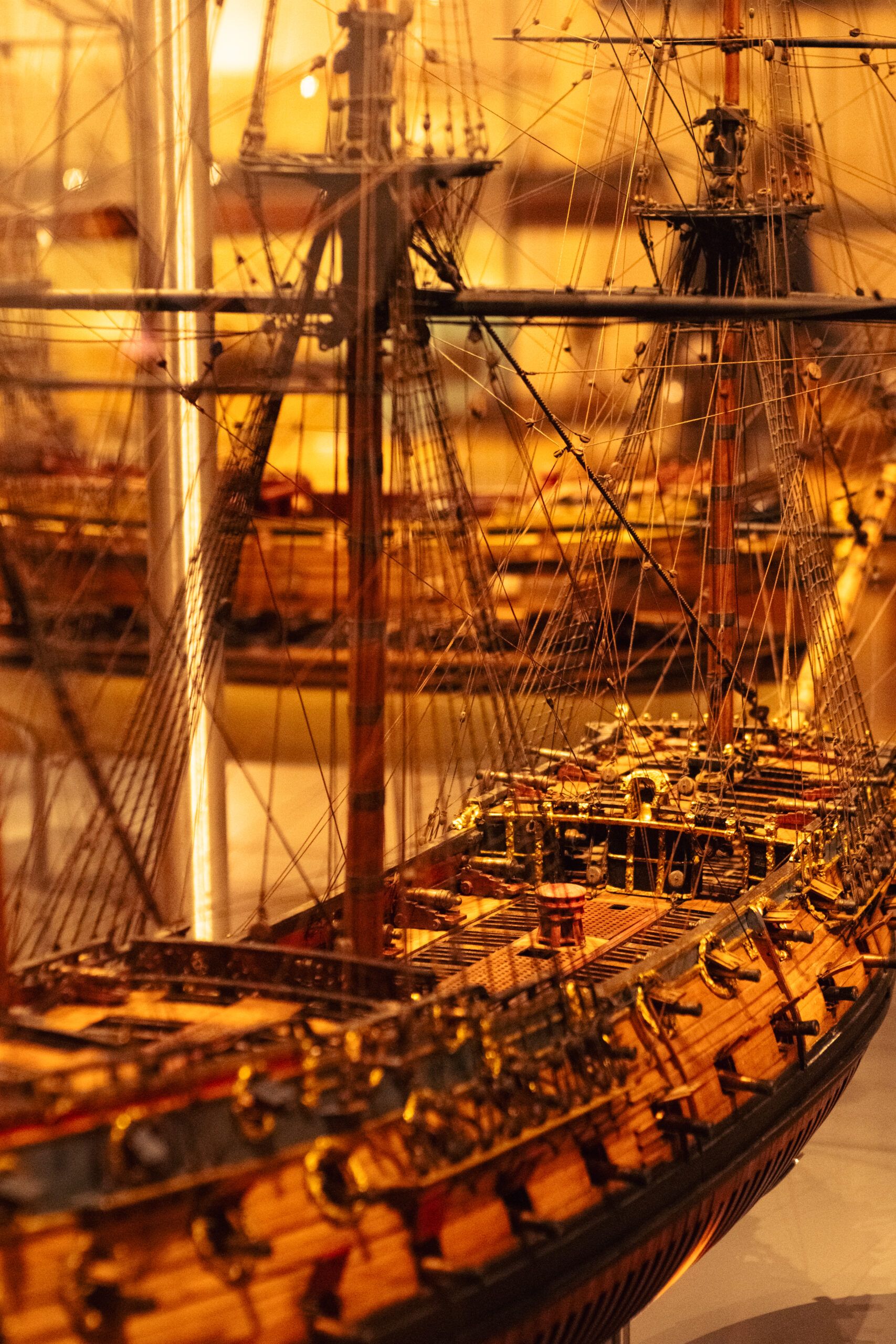
The three British ships sprang into action. Aboard the Breda, all 440 men aboard labored to ready her 70 guns and close the distance. Together with the Grafton and Captain, she formed a line—and opened fire. Against these three fine warships, the Príncipe had no chance—in an instant, she was almost completely destroyed, most of her crew maimed or killed in a deafening mayhem of cannonballs and splintered wood.
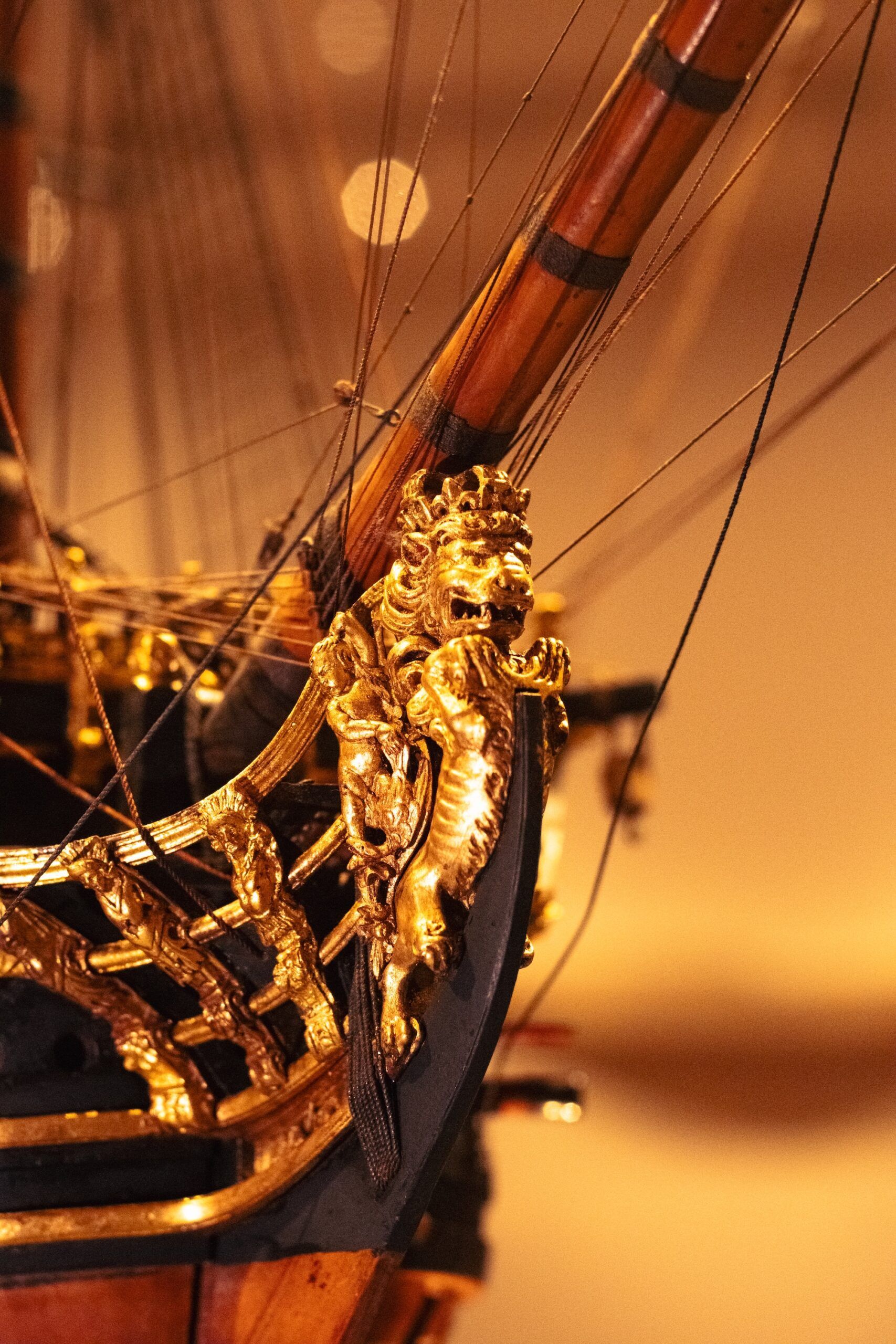
A heavy silence followed.
As the smoke cleared, the injured captain gave his final order. From Breda’s quarterdeck, Captain Barrows Harris watched as the Príncipe struck her colors. She had surrendered. It was Breda’s finest hour.
Below Decks at the Art Gallery of Ontario
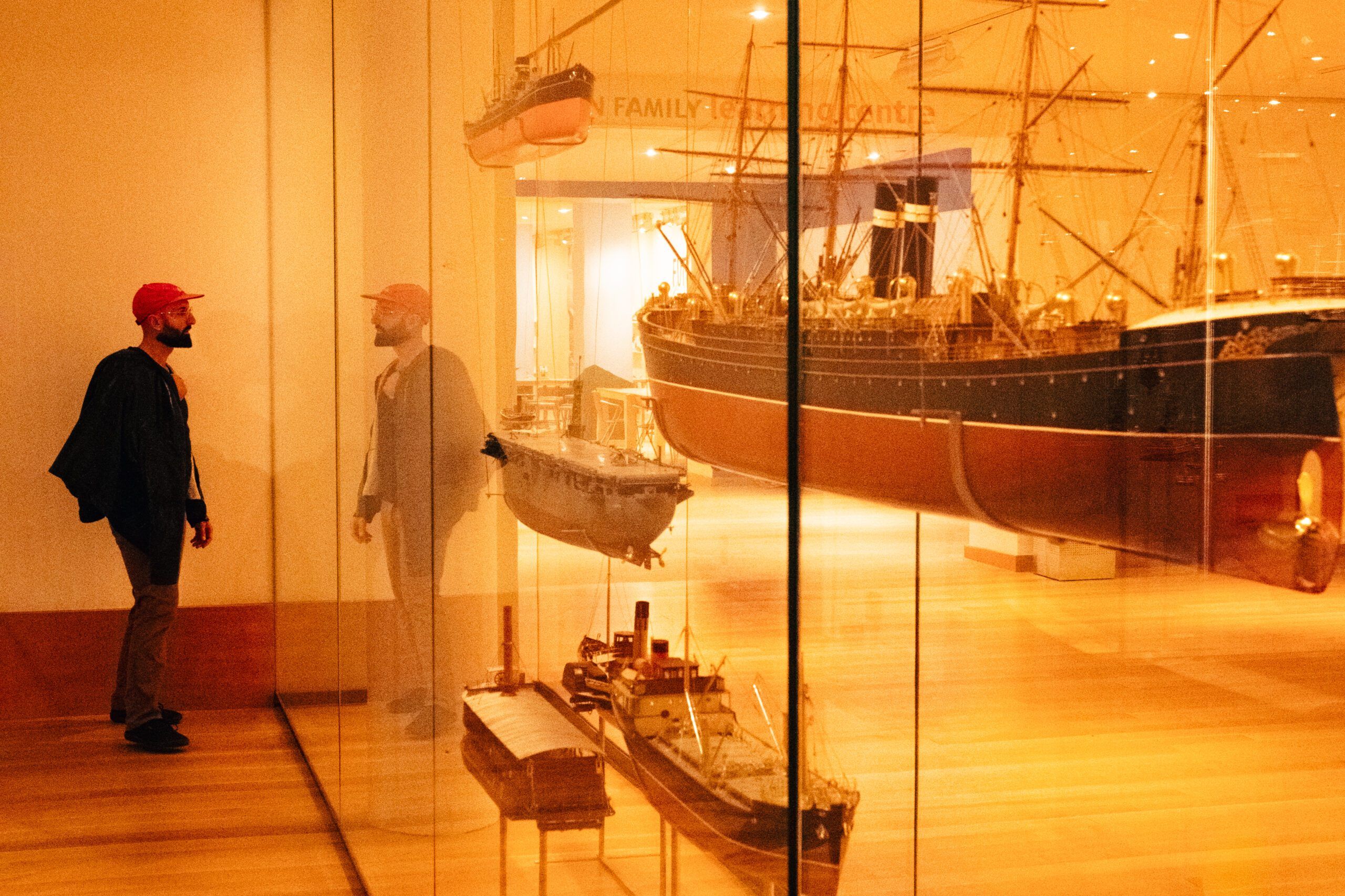
Descend to the lower level of the Art Gallery of Ontario and you’ll find a surprise waiting for you—not Greek marble nudes or oil-painted tableaus, but ships. Lots and lots of ships. This is the Thomson Collection of Ship Models, and it paints—or rather, models—some of the fascinating history of naval architecture, a history propelled by war, commerce, and the sheer exuberant love of exploration.
The collection was donated by Canadian-British businessman and art collector Ken Thomson (1923-2006) in 2002. But since 2009, these fine works have permanently occupied the entire lower level of the AGO, and they need the space, too: this is one of the largest collections of ship models in the world.
Ship Modeling, Then and Now
So, as the spring pushes winter aside and we look forward to the start of our sailing season, let’s make ready our passion for the sea with a little walk through time.
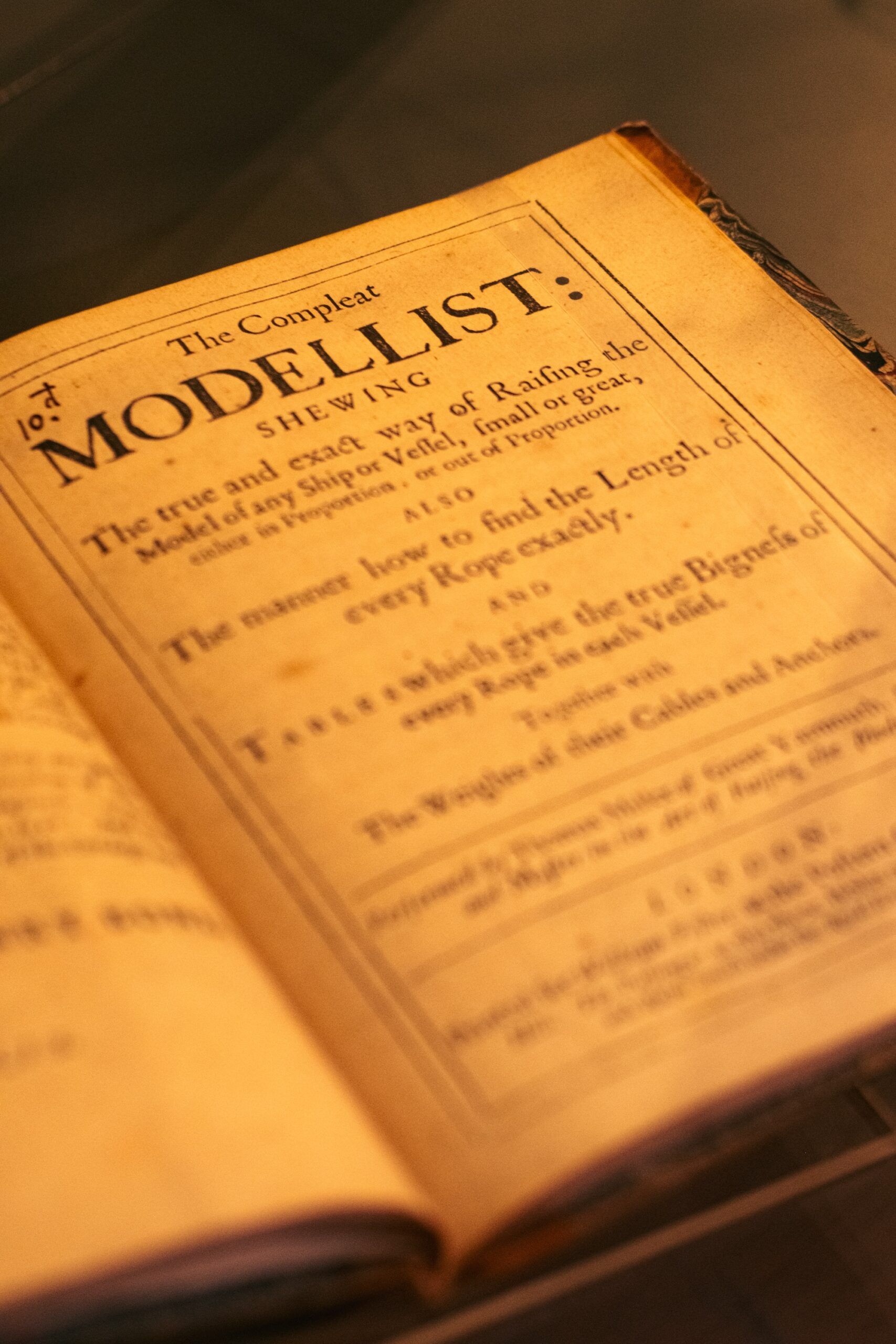
Modeling ships is something of a lost art. And although we tend to think of it as the domain of specialized craftspeople, working with the most delicate precision and the finest materials, this hobby was once enjoyed by many. The resources can be sourced “creatively”: it’s not uncommon to find humble examples modeled from scrap wood, human hair, and soup bones. But the time and patience required can be harder to come by, and perhaps it is for this very reason ship modeling was once a favorite pastime among prisoners of war. In fact, several of the models in the Thomson Collection were built by French sailors held by the British.
A big part of modeling is proportion. Would you know, for instance, how to “Measure the Trew Bigness of a Rope?” Fret not, The Compleat Modellist has everything you need to know about measuring and modeling ships. It was an instant success when it debuted in 1667, and still holds up today. However, you might have some trouble getting your hands on a copy.
Nelson’s Victory in Miniature
Lord Nelson (1758-1805) is perhaps the best known name in the history of naval warfare—and for good reason. It was due to his efforts at the Battle of the Nile and the Battle of Trafalgar that the British Empire enjoyed over a century of uncontested dominance on the high seas, forever shaping the modern world.
Funeral Barge for a Sea Lord
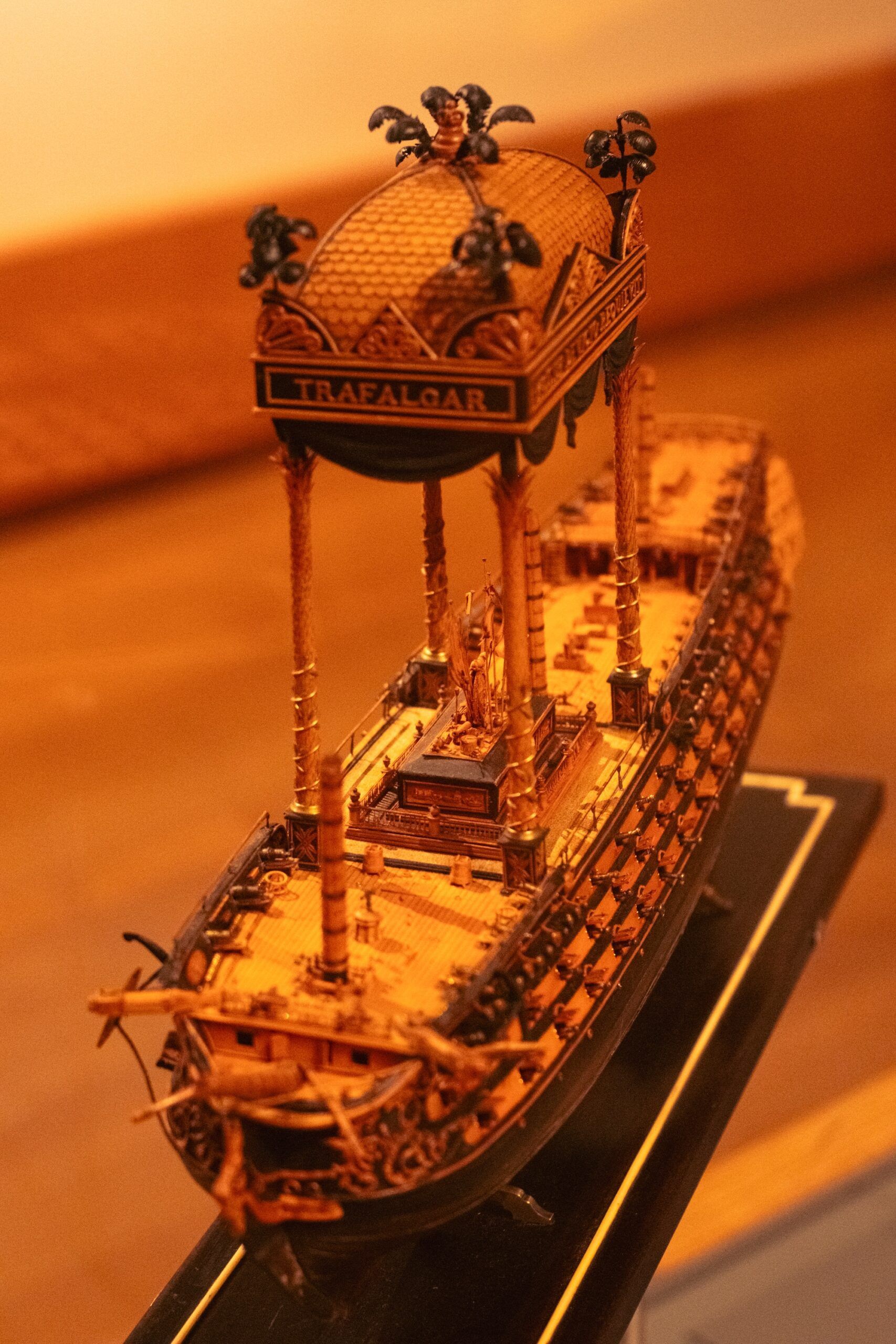
His ship, HMS Victory, is almost as famous as he is. In this very rare model, HMS Victory is modeled as Nelson’s funeral barge, complete with a catafalque worthy of state funerals. The canopy is emblazoned with the names Trafalgar and Nile in commemoration of his great victories, while a Latin motto on the port side proclaims HOSTE DEVICTO REQUIVIT—he rested after defeating his enemies.
While the Victory itself was never converted into a funeral barge, this model does boast a historical basis: When Lord Nelson died, a funeral barge carried him up the Thames all the way to Greenwich, rowed by 60 oarsmen from the actual HMS Victory. Nelson’s coffin, naturally, was made from the mast of a French ship he vanquished at the Nile. They really had a great sense for symbolism back then.
Windjammer on the Clipper Route
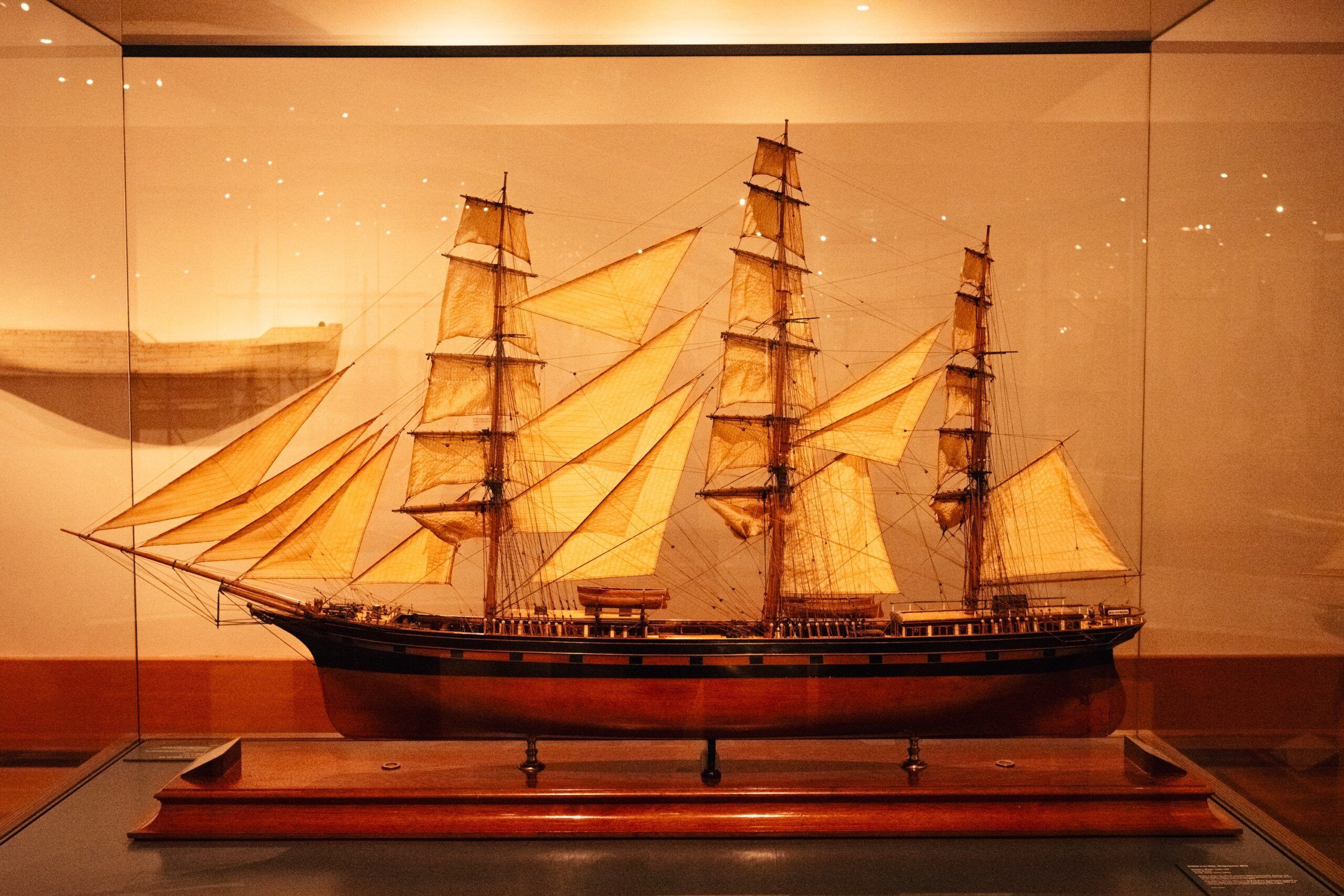
Melpomene (“songstress” in Greek) was built in England in 1876. Fully rigged with an iron hull, she is a magnificent example of the 19th century’s famous windjammers, those engines of global trade. These legendary ships would run the Clipper Route down and around the Cape of Good Hope, on to Asia and Australia, and finally past Cape Horn on the circumnavigatory voyage home. A full journey usually took about 100 days.
Some confusion surrounds the exact identity of this model. She may have been destroyed by a fire in 1894. Or, more interestingly, she may have wrecked off Andaman Island in 1880 while carrying a cargo of salt to Rangoon. This makes me feel a bit wary of the big saltshaker I’m carrying in my sloop’s galley.
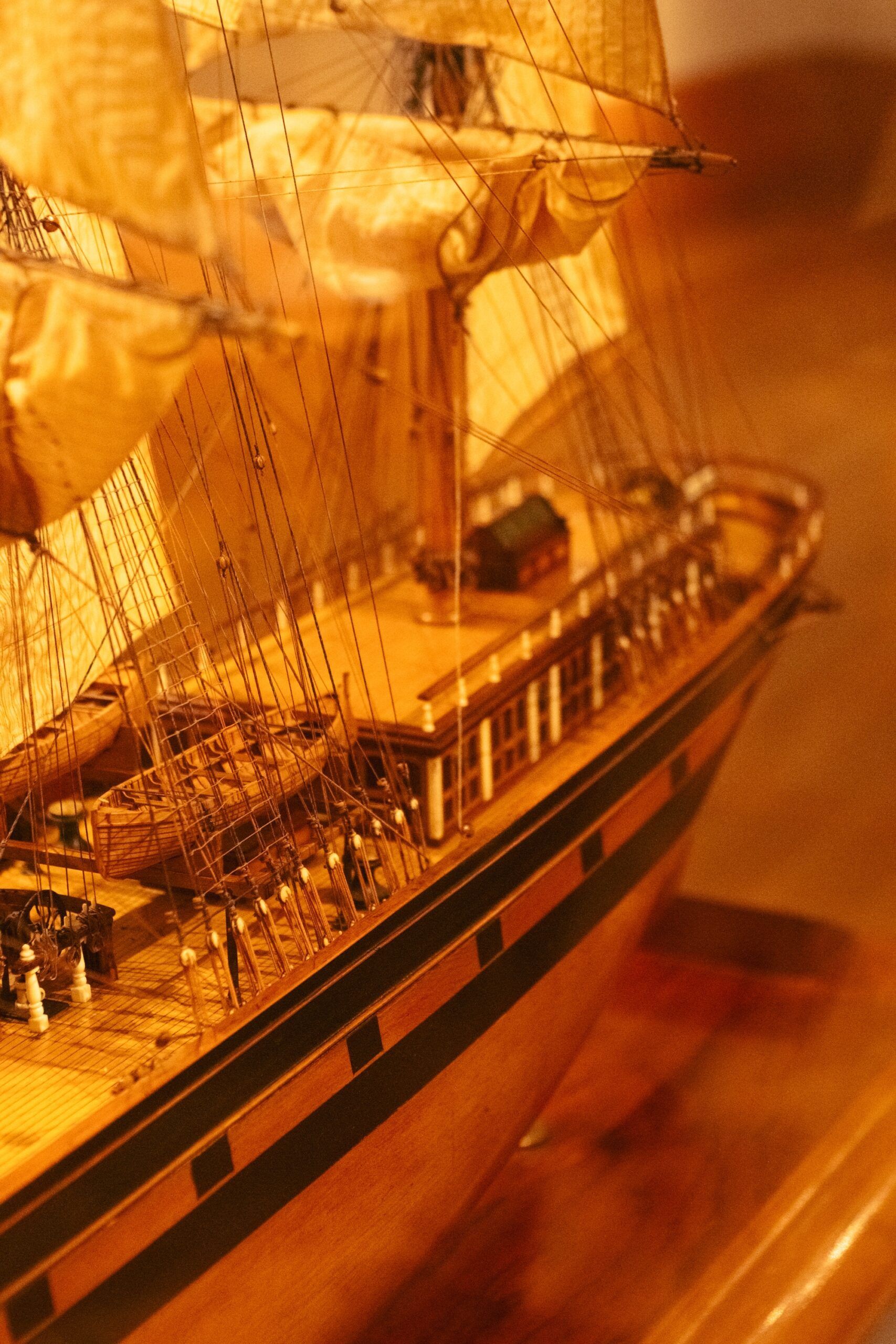
Whatever Melpomene’s fate, she stands as a reminder that these voyages were perilous, and their small tragedies were often forgotten in the heady explosion of global maritime trade.
The seas weren’t the only danger: false gunports painted on Melpomene’s sides speak to a time not so long ago when piracy was still a very real concern on the high seas. (It still is.) From a distance, she intended to fool would-be attackers into thinking she was armed and deter a fight.
When Every Harbor Was a Forest of Masts
Oak, ebony, copper. Cotton, bone, and brass. The Thomson Collection holds many more ships and many more stories. I hope you’ve enjoyed this small porthole window into a fascinating history.
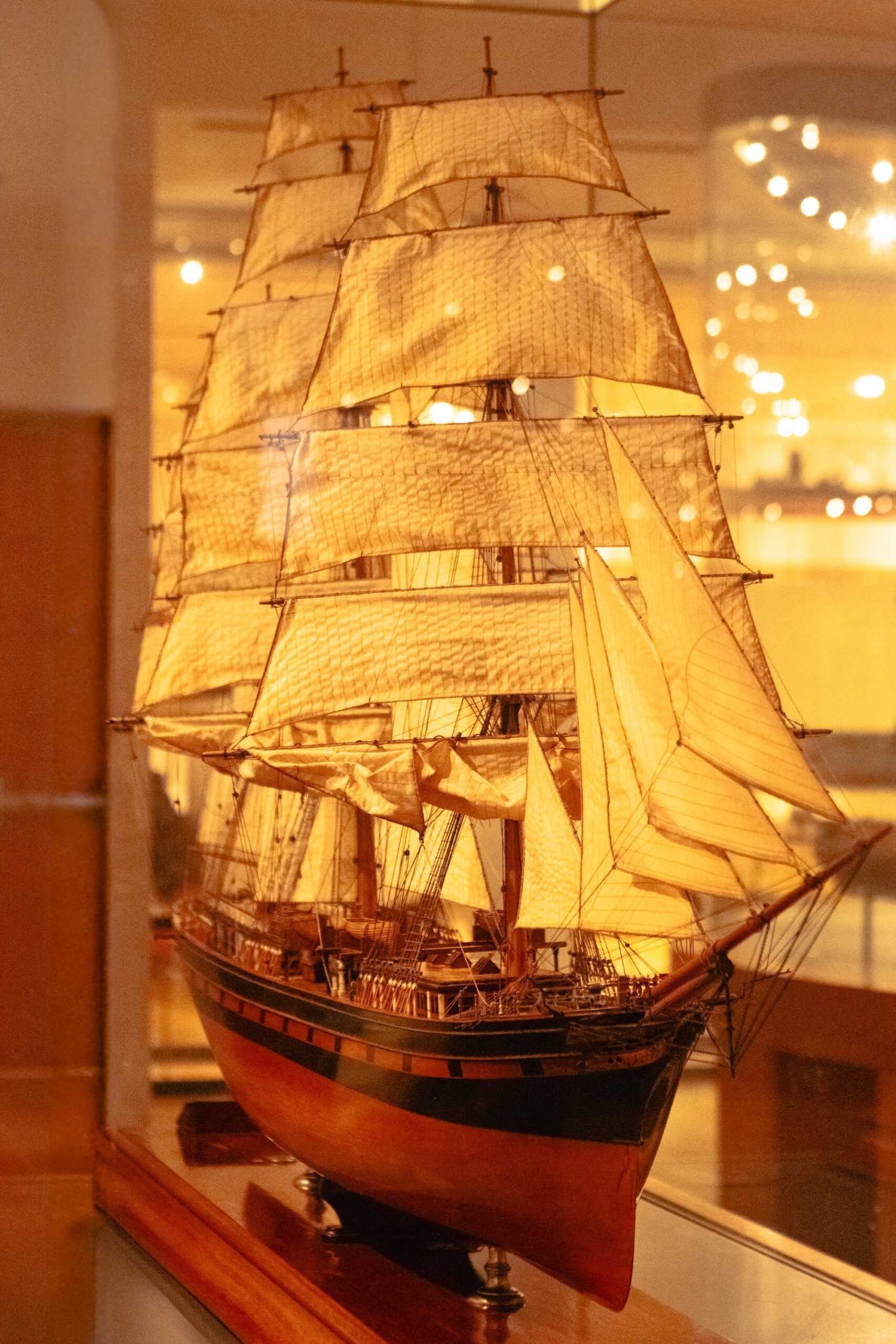
For me, exhibits like these are reminders that this sailing thing we call a hobby used to be a way of life. There was a time when every port was a forest of masts and a concert of clanking bells. When food, trade, and the very borders of nations depended on the ability of brave adventurers to build and sail.
And while that time may not be coming back, we can still capture a taste of it every time we ready our vessels, steel our nerves, and push out into the deep.
Fair winds and following seas.






Every sailor should build one model. Something classic, not their own boat. I built a few. My favorite was a model of the schooner Bluenose. Then I realized I could build a good sailing dinghy in less time! The tiny rigging details were the worst.
That’s a great idea. While I was examining these ships, my first thought was, there’s no way, I don’t have the patience for this kind of intricacy. But then I recalled how I had purchased a little model boat from an old sailor named Pawly in the park last summer. It’s really quite simple compared to the ships on display in the Thomson Collection, but I love it nonetheless and it has great sentimental value to me now. So, a model doesn’t have to be complicated to be worthwhile. It’s very doable for anyone.
Pawly, if you’re reading this, I hope you’re well.