

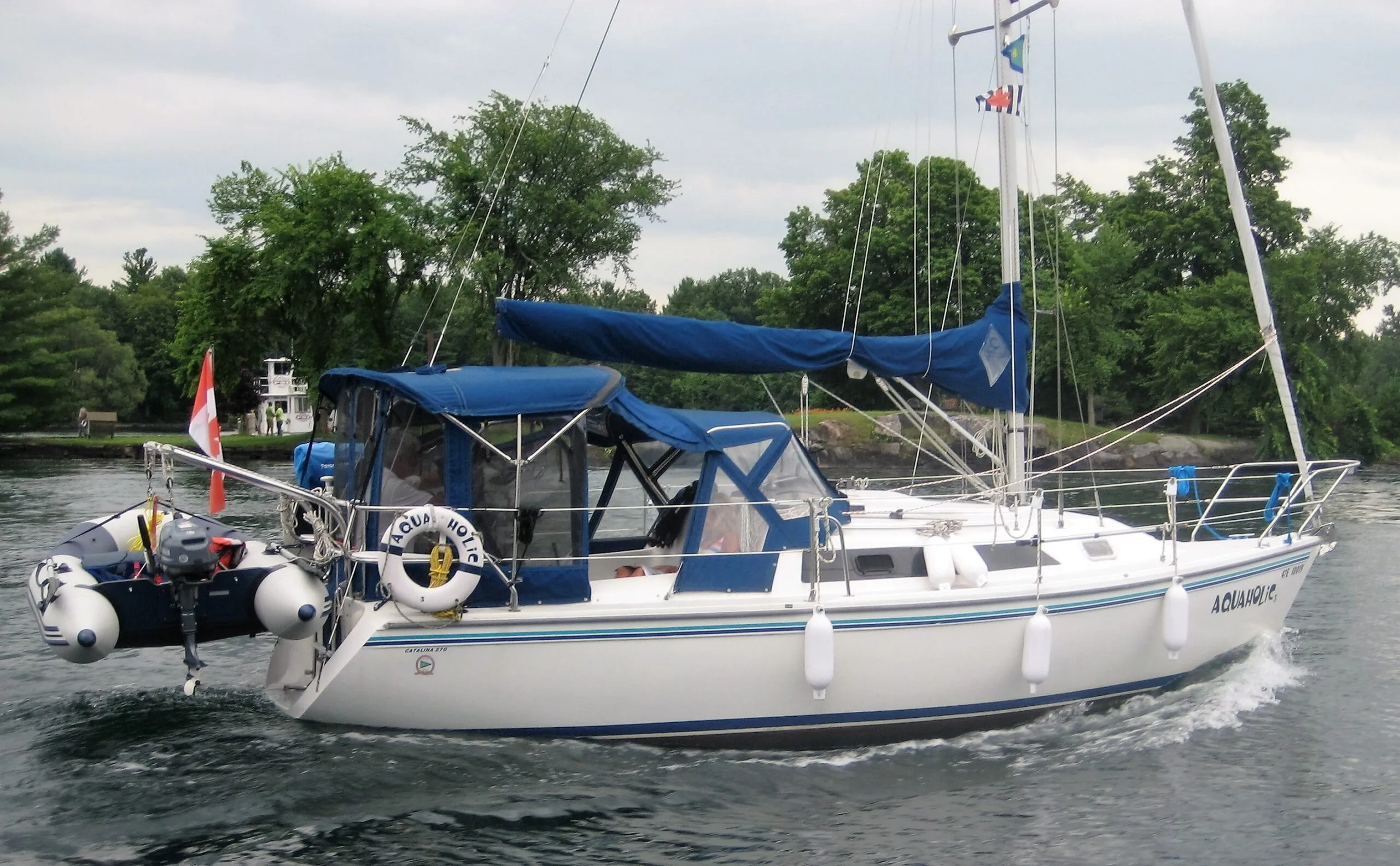
One of the little luxuries many sailors treat themselves to is great canvas. I just went sailing on a brisk, cold and windy day on a sailboat without canvas where cold water and mist splashed off the bow and onto everyone in the cockpit and inside the companionway. In conditions like that you’ll quickly understand canvas’ value.
Even though I dedicate time to properly maintain my canvas, which is now close to 20 years old, it was starting to look weathered on the topside, so I decided to find a solution. (See my article, “How To Extend Your Canvas’ Lifespan” for maintenance tips.)
The Problem
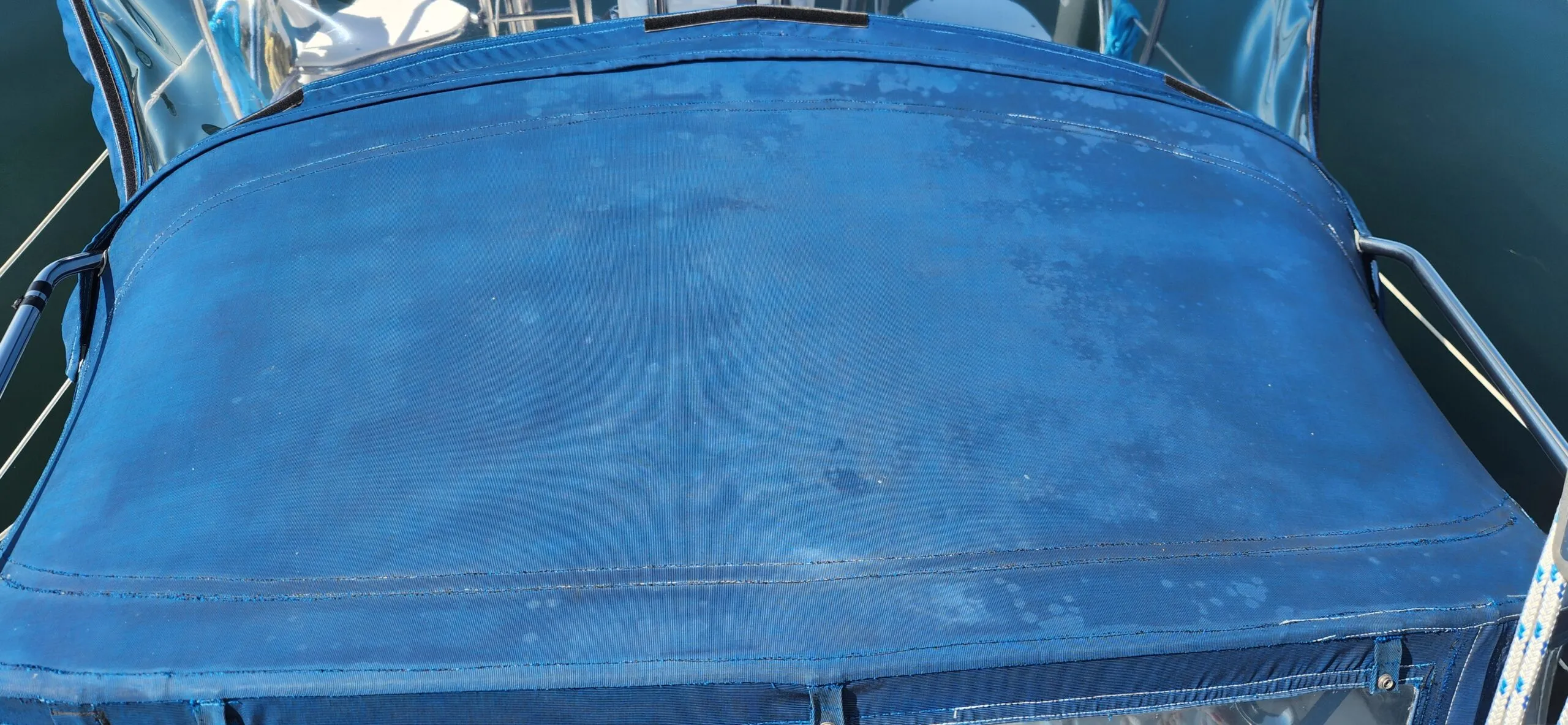
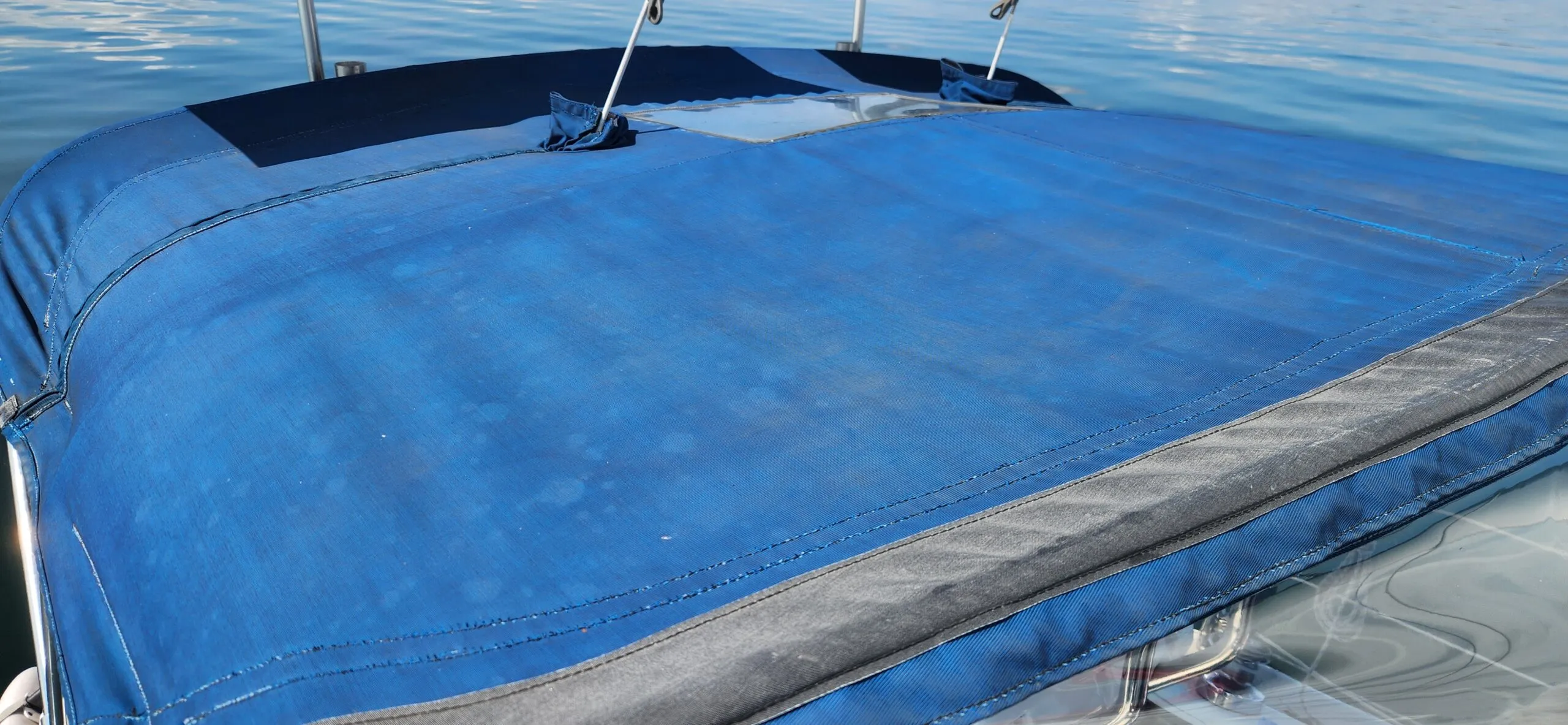
My canvas is still in excellent physical shape, but cosmetically, her top side, which is exposed to the weather all season long, looks faded and stained. The effects of the sun, bird droppings, bugs and no doubt pollution and other environment exposure, are unavoidable and difficult to reverse. The inside however, still looks brand new.
Sunbrella, like most exterior fabric, is actually soft, breathable fabric that is made with solution-dyed acrylic where the color is not stained or tinted, but is actually part of the thread manufacturing process. So, re-tinting or staining is impossible.
The Proposed Solution
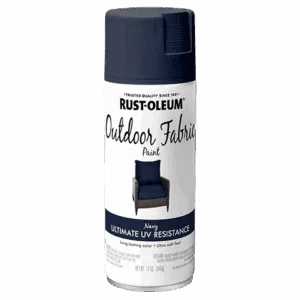
A possible alternative is to actually paint the surface. There are a few paint companies that offer exterior fabric paint, such as Rust-Oleum and Sico.
Of those two products, Rust-Oleum is no longer available in Canada. When I called them to find out where I can purchase their product, they said the market for their exterior fabric paint did not warrant continuing to sell into Canada. It remains available in the U.S. however.
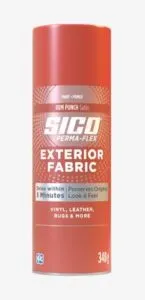
Sico exterior fabric paint, by Pittsburgh Paint (PPG) is still sold in Canada, and is available in many colors, but seems difficult to find. I found mine at RONA, a large hardware warehouse retail chain, but the colour choices were limited.
In speaking with both companies, they do claim that yes, we can paint Sunbrella fabric and is supposed to perform very well.
Ok great! However, I was not about to paint my canvas without first testing it myself. Since you are actually painting the surface, will it last long when exposed to the elements? Will it dry up and start to peel or flake? Will it flake when bent and folded? How will it chemically react when applying waterproofing material? All important questions I wanted answers to.
Before I continue, I want to be clear. Full disclosure: I am not a professional or scientific researcher. Just a simple and curious do-it-yourself sailor and amateur product tester. I choose and pay for products myself and provide my honest and unbiased opinion based on the results and performance I get.
How We Tested
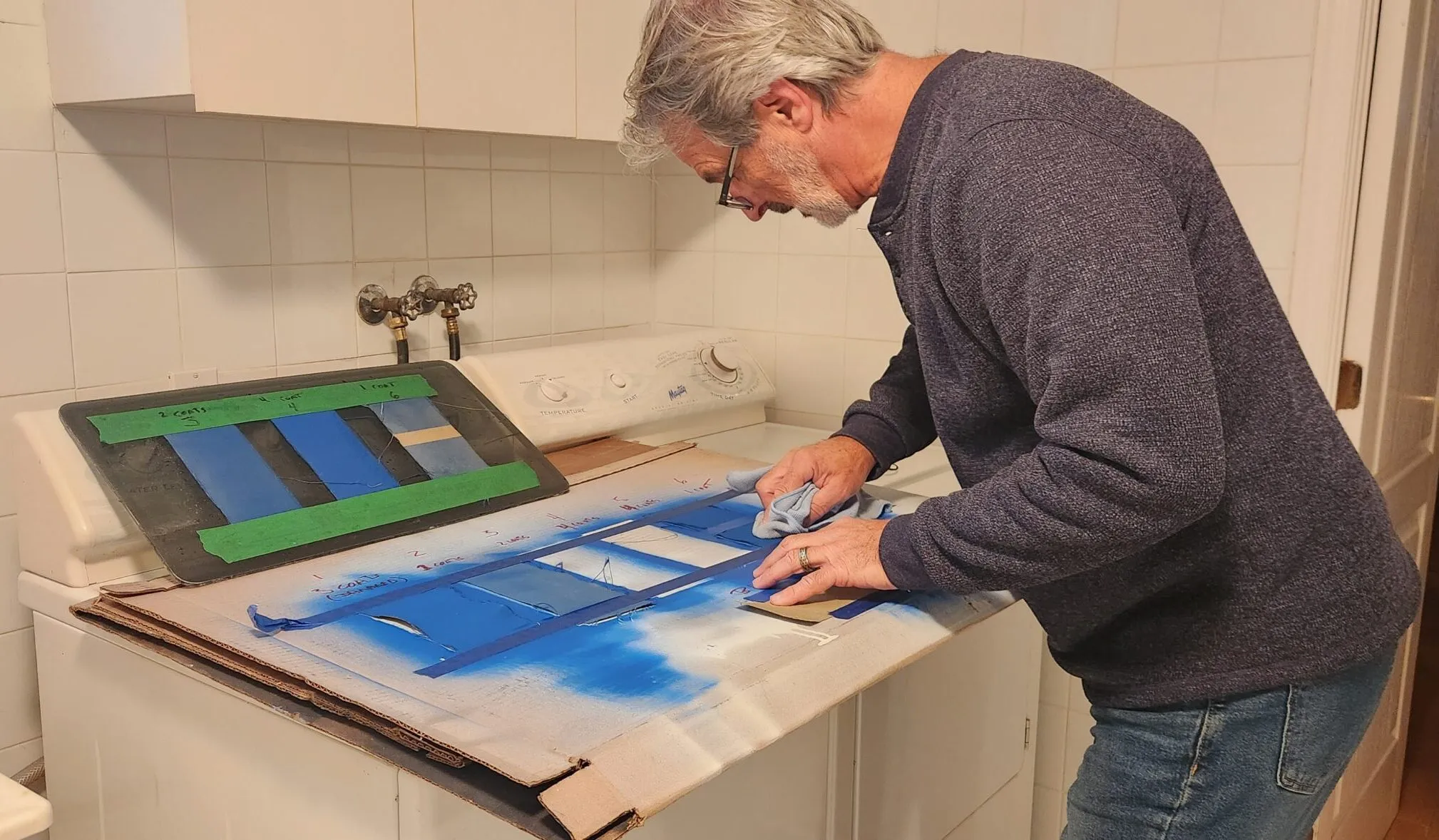
To that end, I asked a local canvas maker friend for some leftover Sunbrella fabric which he gladly provided.
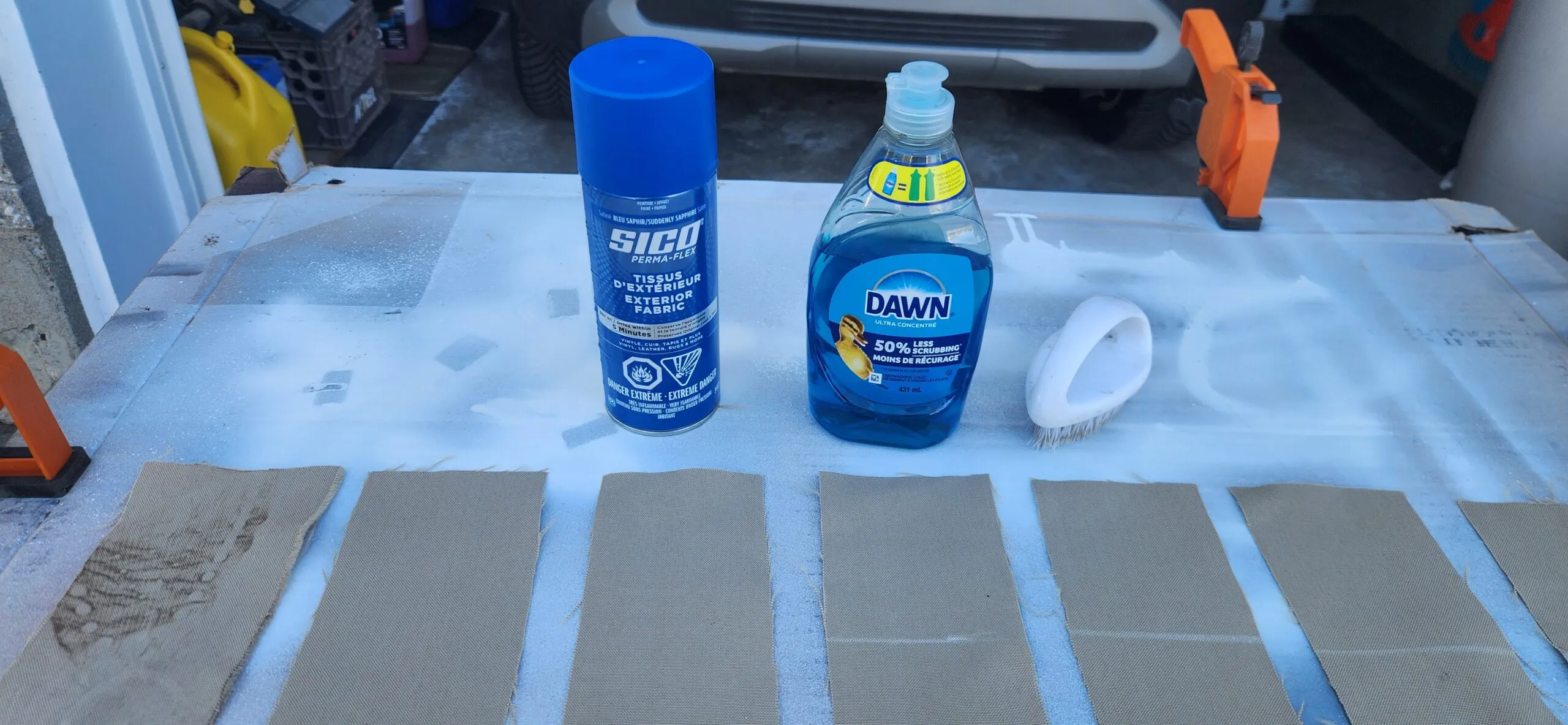
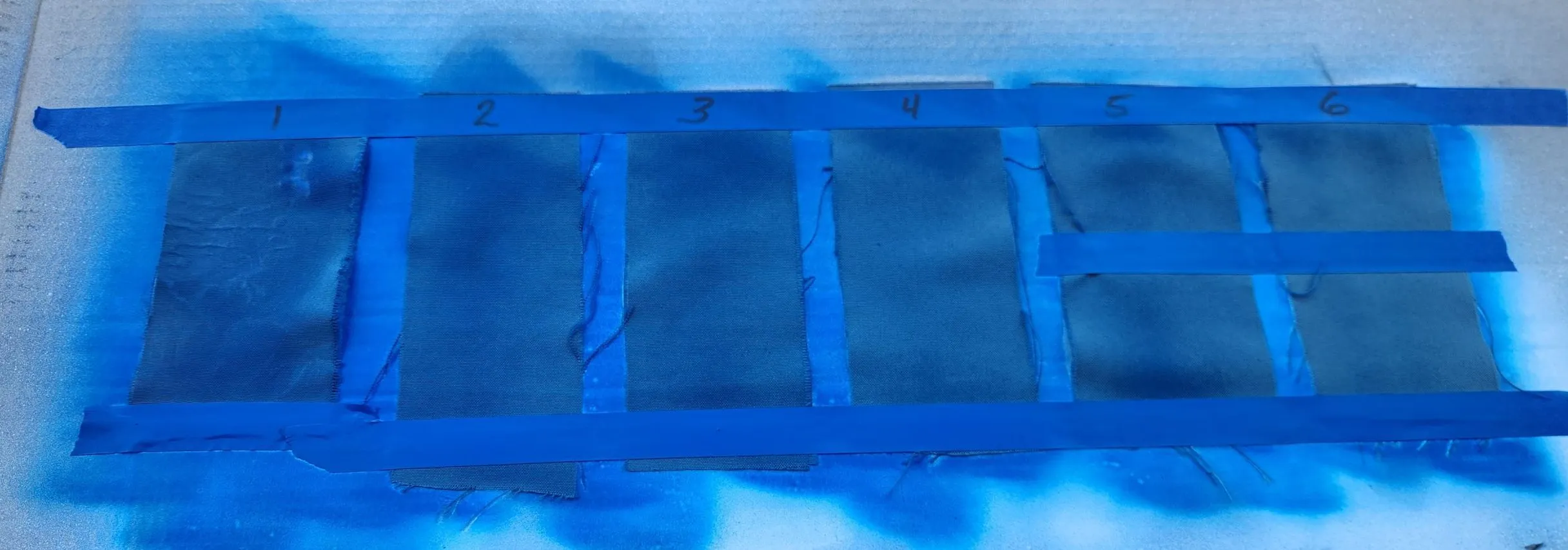
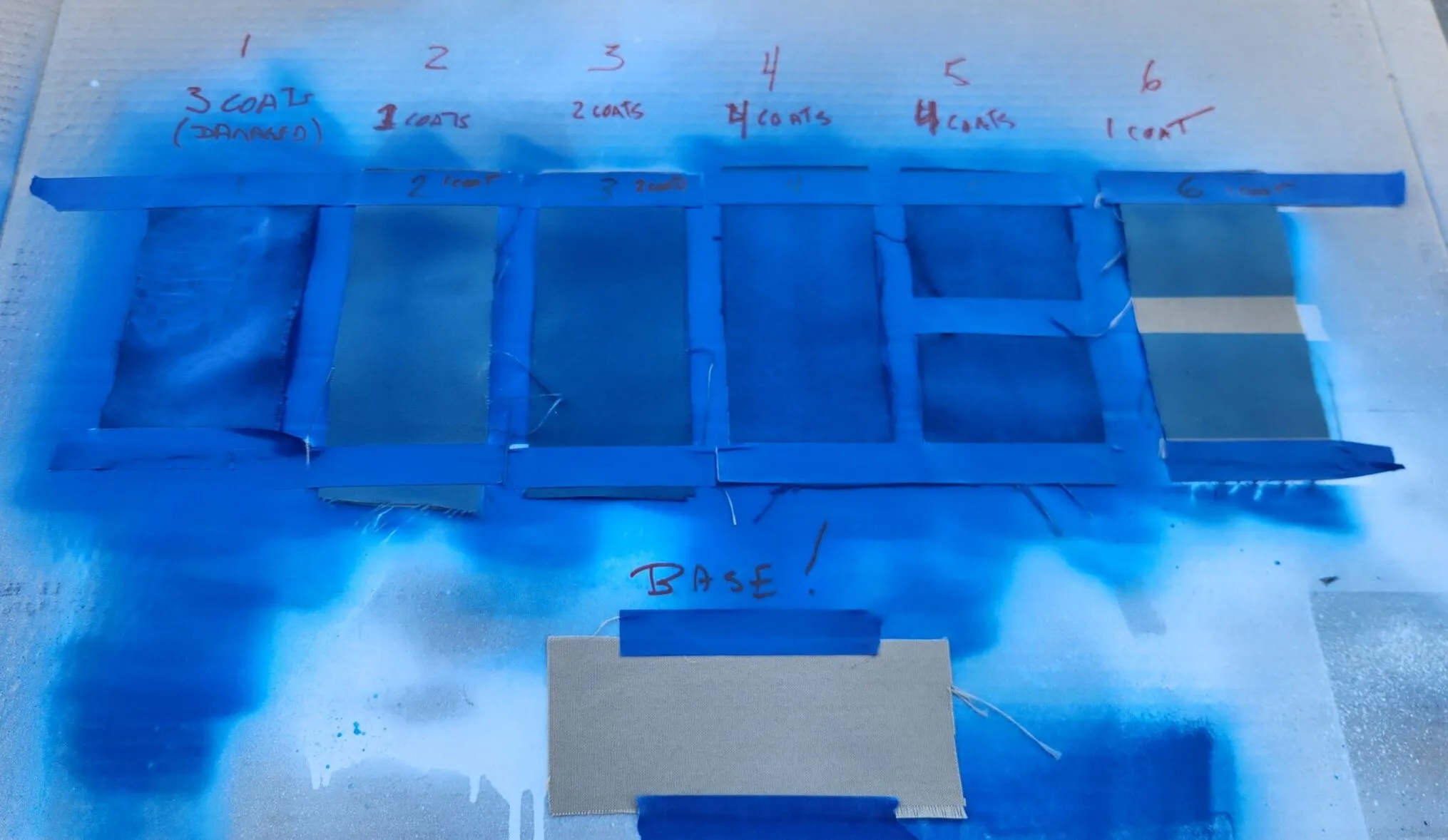
The sample I got was tan colored, which suited me fine as it allowed the opportunity to test coverage performance per coat. I got enough to make a few strips and test the application and number of coats.
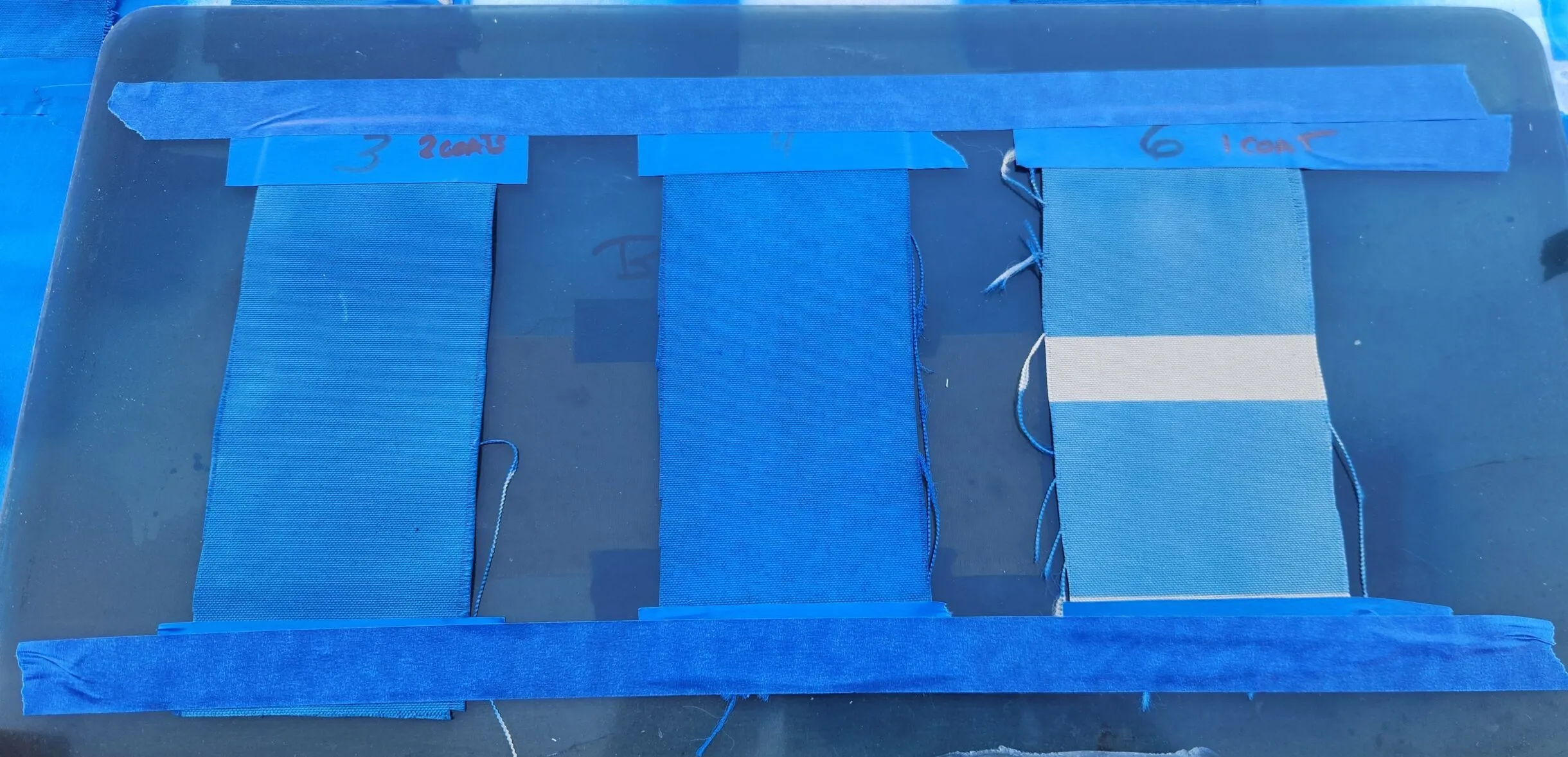
After eight weeks, having been exposed to direct hot sun, rain and even very cold winter temperature, snow and freezing rain, I retrieved the samples.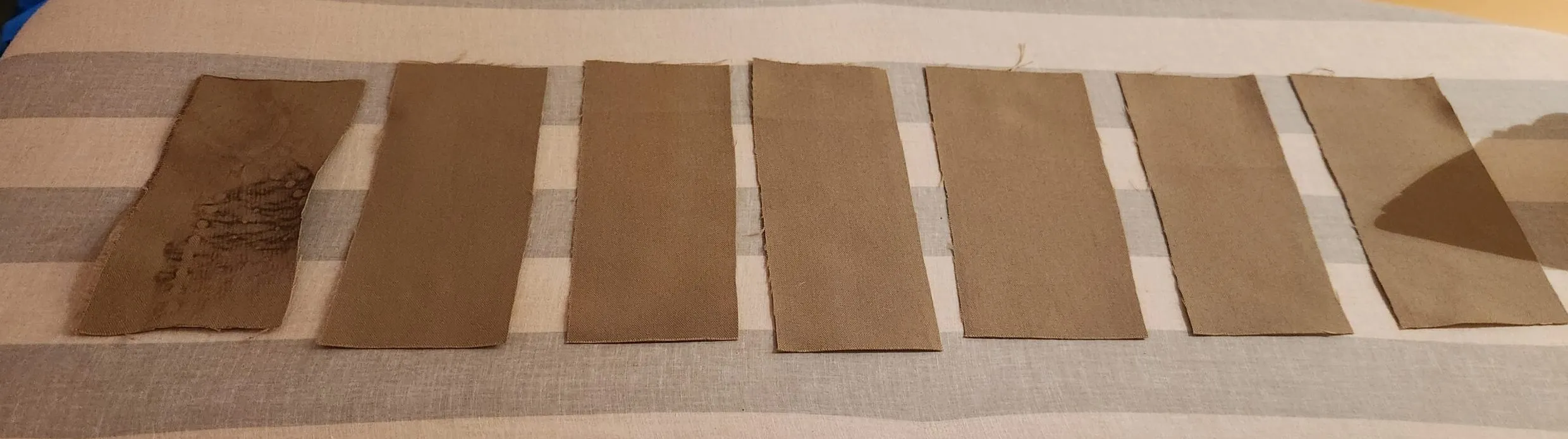
Observations
Bleed Through
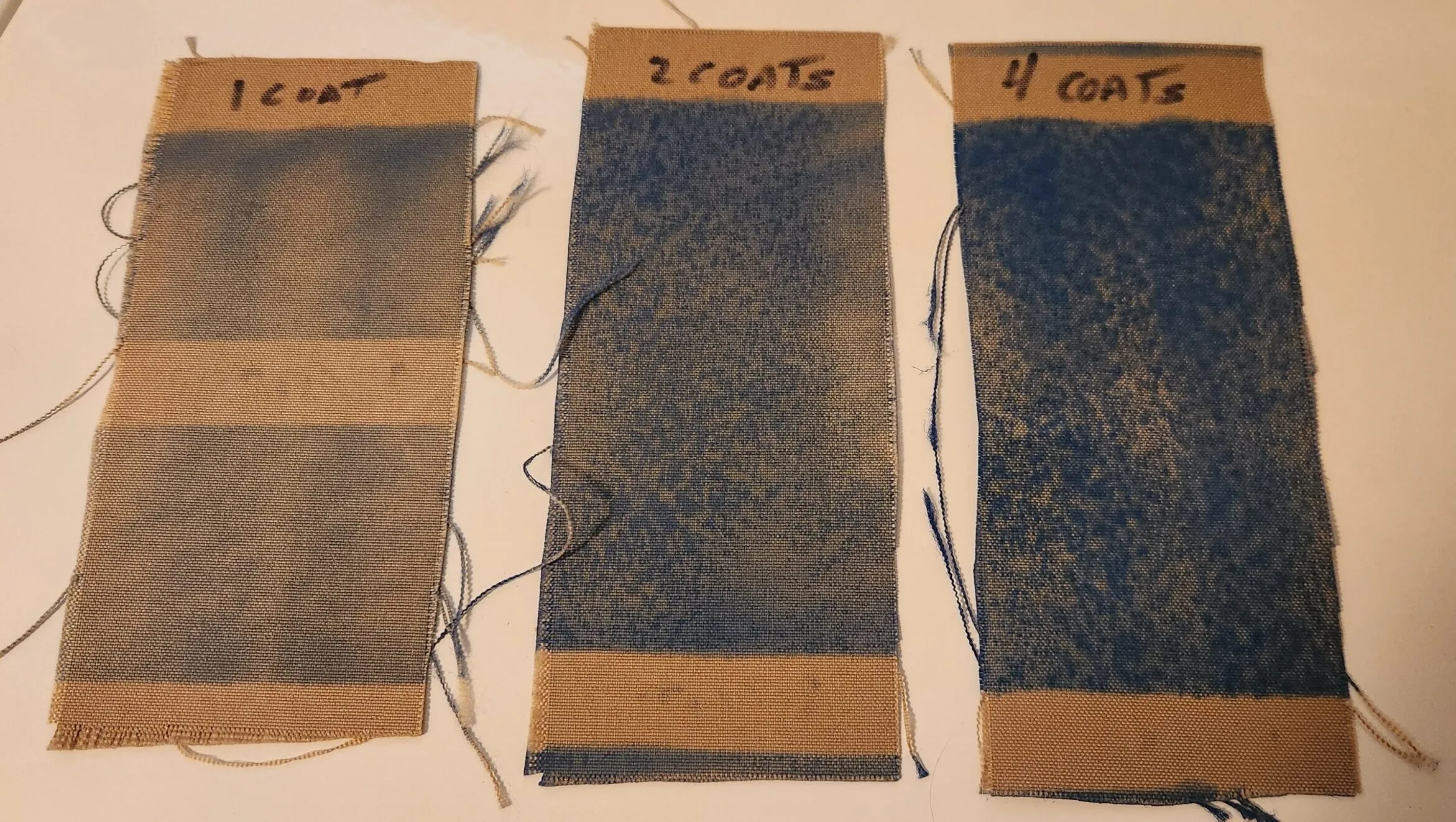
During the paint application, there was bleed through. Because the fabric was tan, versus blue, the effects were more drastic. Had the canvas been blue, the bleed through effect might have been less drastic. However, the shade variance in blue would have been noticeable. Also, I must remember, had this been exterior cushion fabric, the bleed through would not matter. But on a dodger and bimini, where the both sides are exposed and visible, this is critical and may require actually painting both sides.
Bleed through (one coat versus four coats). All coats bled through the fabric. For cushions, this is not an issue, but for canvas parts that both sides are visible, this is non-starter. Perhaps coating both sides may alleviate these issues a little, but am not confident, as painting the other side would most likely bleed through to the side that was first painted
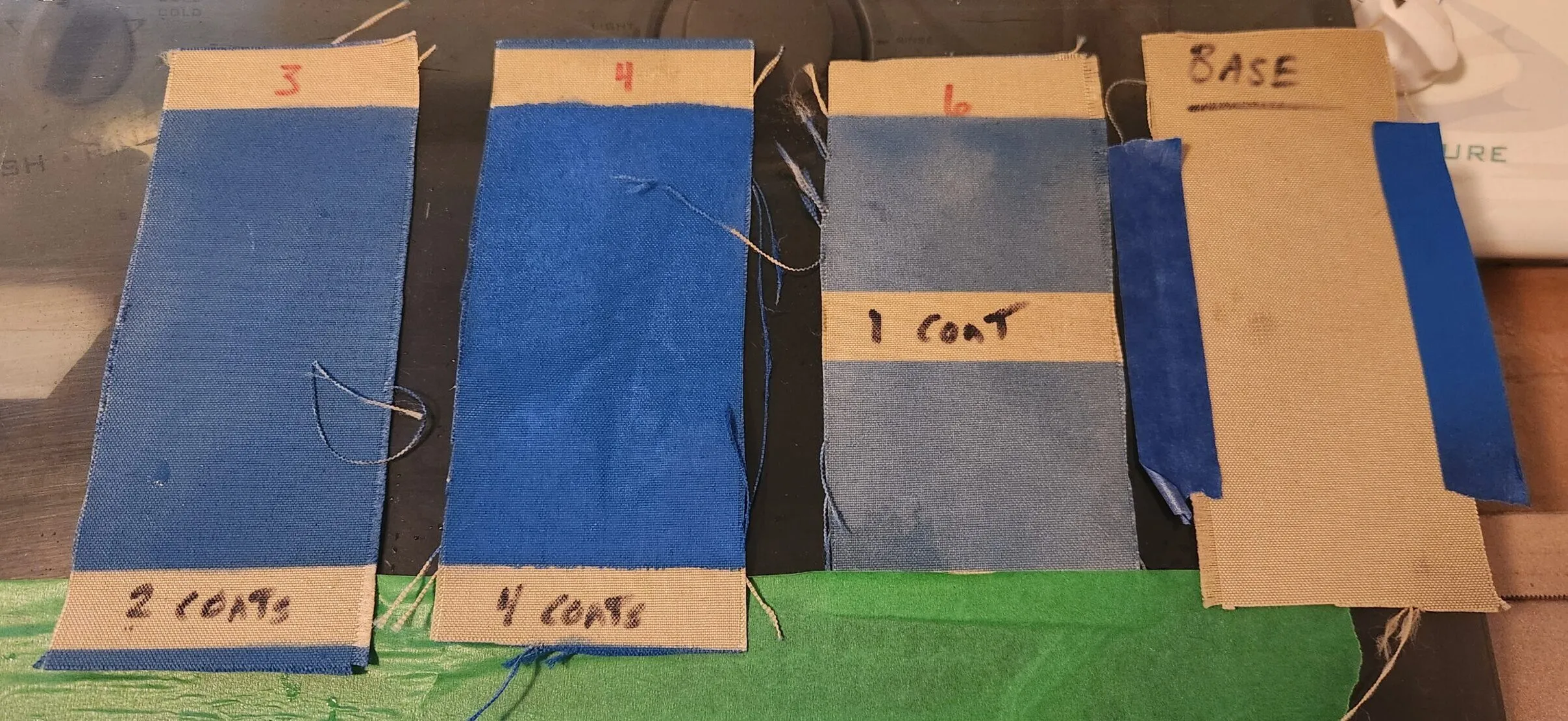
Single Coat
The single coat is absolutely inadequate in coverage and quickly fades from sun exposure.
Four Coats
The best overall coverage performance was four coats. Fading from the sun exposure was unnoticeable.
No Color Loss
While rubbing the surface with my hands and a cloth, there was no color loss or transference to my hands or the cloth. This was to simulate wear and tear caused by frequent cleaning and wiping of the surface.
Bending and Folding
Although folding did leave noticeable creases, I’m certain these would disappear in the sun once the normal tension is applied when installing the dodger and bimini.
Waterproofing Application
No negative effect or reaction.
Spider Out Application
No negative effect or reaction
Saltwater Environment
I have not tested this in and around saltwater environment. However, I do not think it would fare well or last long in a harsh salty environment.
Conclusion
Unfortunately, I would not recommend using the Sico product for any fabric where both sides are visible, such as dodgers or biminis, as well as garden or patio sun umbrellas.
However, if I were painting any old and faded outdoor cushions, I would definitely use this Sico product. Even though I don’t know if it will wear well over time, I would still risk the cushion application based on these test results. It looks like it is finally time for me to retire my 20-year-old canvas. Let me know in the comments if you’ve found other solutions!







Please follow-up in a few years!
I’ve used MDR Amazon latex inflatable paint for a UV strip on an older sail; it remained chip-free until I retired the sail 3 years later (PS article). Sail cloth is resonated and does not bleed through.
I painted a large acrylic canvas (not Sunbrella but similar) porch umbrella with white house paint. It was dark blue and the heat under it in the summer was considerable. I would never do a dark colored dodger. Dark looks good, but dark tents are always hot in the summer. The bleed through is ugly, but the shade is now MUCH cooler. That was 3 years ago and there are no chips or signs of aging. Two coats, and it stiffen the cloth considerably, but the wrinkles come out after it has been up for a day. I wouldn’t use that paint on a boat, I think. 20 years and I would just get new canvas. Stitching goes, there is chafe, the windows are probably due for a second replacement, and zippers get wonky (I sail year-round, so the canvas sees more UV). But it certainly worked so I’m sharing.
I do coat some lines with something like paint (PS article on Yale Maxijacket). It greatly reduces chafe and UV damamge.
I wonder if a fabric dye would work? Remove the canvas and clean, then submerge in a dye solution; let dry then treat with ScotchGuard. Both sides in-solution simultaneously should make bleed-through less of an issue…?
Acrylic fabric (like Sunbrella) accepts dye very poorly. Sunbrella fabrics are dyed as the fiber is chemically extruded, before weaving, so that the color is embedded into the molecular structure of the fiber itself. Polyester fabrics are dyed after the fiber is extruded, either as yarns (then woven into fabric) or as cloth (example: Top Gun). Polyester dyes have poor colorfastness when exposed to sunlight, embedded acrylic dyes are very resistant to fading.
You can’t re-dye acrylic fabric.
Hi Rolland, I agree 100% and that’s exactly what my article states as well as my conclusion.