

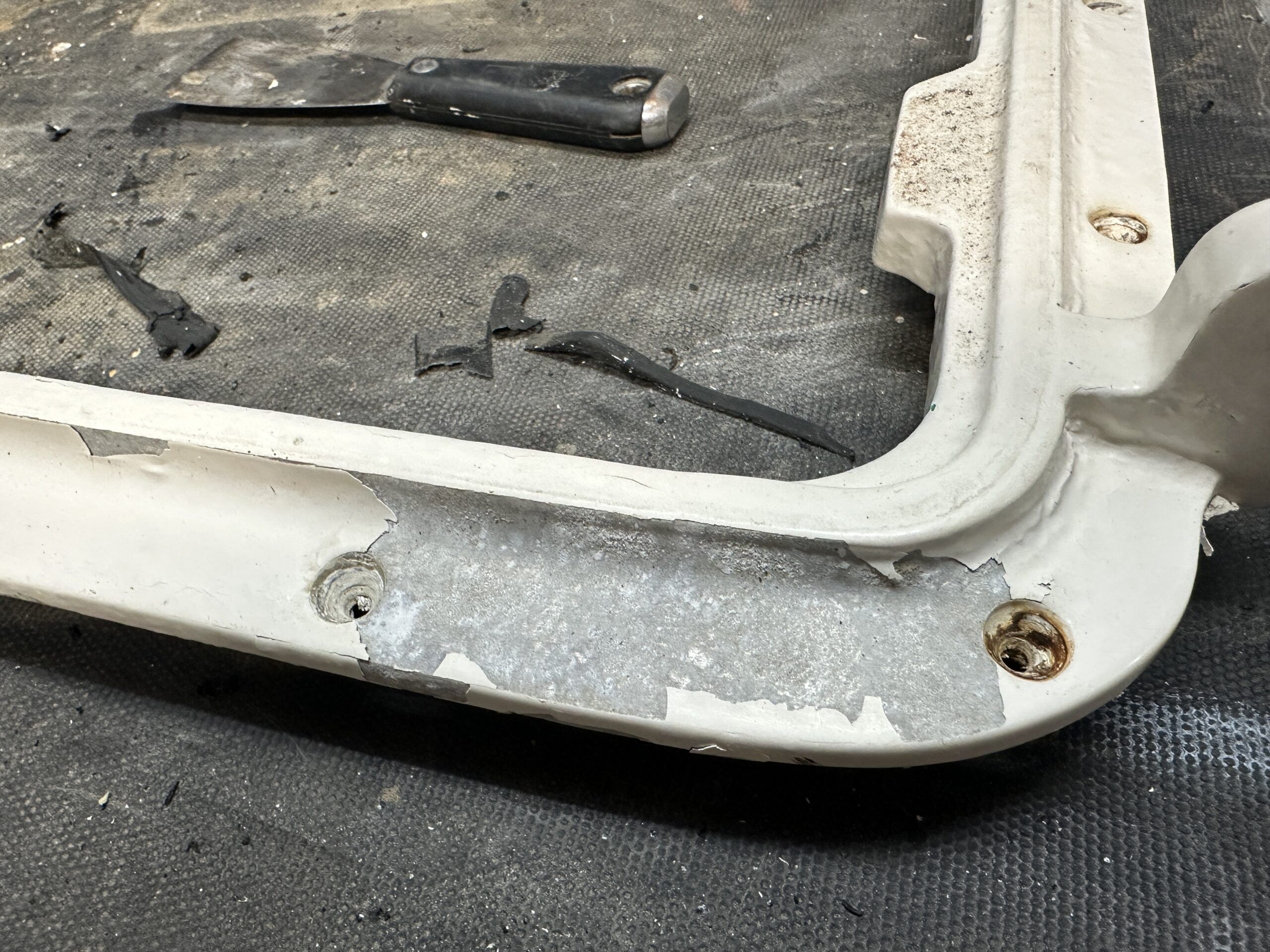
Many boats constructed during the heyday of production in the 70s and 80s, both power and sail, emerged from the factory with aluminum deck hatches. While some of those hatches were constructed in-house, many were from established hardware companies such as Lewmar and Bomar. Frame options included anodized aluminum, a powder coated finish, or simply painted—all with a clear or tinted acrylic lens. Styles included low and high profiles, the high profile with a significant lip to ensure a solid seal when waves sweep over the deck. While they weren’t designed to be stepped on, a quality deck hatch and lens could take that punishment when crew was scrambling about on deck.
To continue reading this article or issue you must be a paid member. Sign in

Join Practical Sailor
Get full access to Practical-Sailor.com – more than 4,000 articles – for just $34.
Join today and save 42% off our full price.








Just a couple of pointers.:
During the removal process using DeBond greatly reduces the amount of force required to remove the hatch. Be patient as the DeBond is not instant. You might apply an initial coat a couple of hours before starting.
We use wooden wedges from any hardware store to work the hatch up. Spray DeBond, work seam with a thin sharp blade, usually near a corner is easier, tap in a wooden wedge.
Spray DeBond into the newly created gap and repeat. As you move you can keep taping the wedges in further, getting more lift.
When re-installing we prefer to use BedIt butyl tape between the hatch and deck.
Note:DeBond doesn’t have much effect on silicone, There are other products for silicone. Silicone has almost no value onboard a boat. Nothing sticks to cured silicone, including more silicone. So repairing anything sealed with silicone becomes difficult and takes a great deal of surface preparation.
Thanks for the comment Carl. I agree whole heartedly, there is no place on a boat for silicone based sealants. I’ve fought with many re-bedding jobs where the most time consuming part of the project was removing all traces of silicone before applying new bedding. Unfortunately, on a time-based project there isn’t always time to use DeBond as a releasing agent. But you’re right, I should have mentioned it for those projects where time is not of the essence.