





Varnish Touch-ups and Take-downs
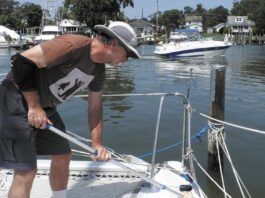
To keep brightwork healthy, approach it as you do your own health. Whether its a touch-up or a complete take-down that's on your horizon, here are a few tips on wood care that can save you hours of sweat down the line.
What Old Gear Do You Swear By (or at)?
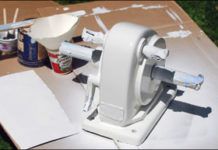
Instead of fixing or replacing tired mechanical equipment with new gear, we can often find a less-expensive substitute on the used-gear market. In many cases, this is equipment that is just as good as new gear, if not better than new. The trick is separating the gems from the junk. A poster child for this sort of refit quandary is the old Simpson Lawrence manual windlass, a British-engineered oddity that has long been a source of cruising sailor ire. Commonly found on cruising boats made in the 1980s, these windlasses use a troublesome chain drive rather than a gear drive. This, along with the dissimilar metals used in its various components (cast-steel gypsy, aluminum case, etc.), make these windlasses a poor candidate for rebuilding.

Going Overboard in Icy Water
When you get to the surface, focus on floating and stabilizing your breathing. You are not going to be able to swim or do anything productive for several minutes, and as a cold water overboard victim, there is nothing you need to do for a minute or two. Focus on not drowning. If you have a PFD, that will be a huge help. If not, try to tread water with as little effort as possible. Calm down and realize you have some time.

Capt. Marx Memorial Safety at Sea Seminar
Join Practical Sailor Editor-at-large Ralph Naranjo for a day-long Safety at Sea Seminar in Hampton Roads, VA on February 24th. The seminar is aimed at mariners of all levels and will cover navigation, heavy weather sailing, and man-overboard recovery. The cost is $130 ($150 after Feb. 1). The unique event is being in honor of Capt. Henry Marx, a respected safety-at-sea expert and frequent contributor to Practical Sailor.

Anchor Design for Soft Mud
Most recreational anchors are optimized for hard sand or clay bottoms, which provide much better holding than softer bottoms (or rocky or weedy bottoms, for that matter). This logical bias toward hard-sand bottoms might actually hinder anchor performance in soft mud. For example, one of the observations from our 2006 test of anchors in soft bottoms was that anchors equipped with roll bars performed far below our expectations in soft bottoms. But there was one exception.

Rope Washing Advice from the Pros
The rope should be tightly coiled or tied in a daisy-chain, and then placed inside a pillowcase. Front-loading washing machines are recommended; an up-and-down motion is preferable to the rotary motion of most common household machines. Without coiling or daisy-chaining, a rope can turn into an impressive tangle. The pillowcase further restricts the motion of the rope and prevents the rope from wrapping around the central agitator, which can destroy ropes and break washing machines.

Fuel Storage Tips for Sailors
Sometimes it is not what has been added to your fuel that matters, but what is missing. Anywhere between 5 to 20 percent of the contents of a portable or installed polyethylene tank can vanish during the course of a year, the result of breathing losses and permeation. The remaining fuel is lower in octane, contains fewer of the volatiles that are so essential for easy starting, and has reduced solvency for gum and varnish. It often looks perfectly good, but is perfectly rotten and potentially harmful as fuel.

Propellor Paints Versus Barnacles
Practical Sailors search for longer lasting prop paints has led us down many rabbit holes, we've experimented with several different prop paints with varying degrees of success, although none of the results so far have been dazzling. Some of our testers have had better success with dedicated slick prop paints such as PropSpeed. In our testing, however, mostly in Chesapeake Bay, no prop paint had lived up to our increasingly faint hope that the paint repel growth as effectively as our hull paint.

Complacency and the Modern Sailor
In recent years it seems as if not a fall sailing season goes by without at least one presumably sound vessel and experienced crew running into trouble off Cape Hatteras. It is almost as if todays sailors are suffering a severe case of amnesia, causing them to forget that this stretch of water has rightly earned the moniker Graveyard of the Atlantic. Or perhaps this is just another example of how improved weather forecasting and state-of-the-art navigation and communication systems (not to mention distress signaling) has led us to become complacent?
Drysuit vs. Survival Suit for Offshore Sailing
The problem with survival suits is that theres no telling when the big wave or brutal wind gust will hit, and it may not leave time to don a survival suit. Some survival suits have sewn-in gloves that make it almost impossible to turn on the radio or deploy a personal locator beacon. Thats why wearing a comfortable, breathable drysuit makes sense. It leaves you much more ready to manage the boat in heavy weather. And should the unexpected happen, your odds of survival in the water are better than they would be in foul weather gear.
Latest Logbook

Practical Sailor Logbook – October 2026
This month leans into used-boat value and hands-on maintenance: Tim Labute tours the traditional, shoal-draft Bayfield 32, Nick Nicholson revisits the much-requested Morgan 38/382,...

Video: What Happened to the Hallberg Rassy 400
Filmed at the Annapolis Sailboat Show, we take an in-depth look at the Hallberg-Rassy 400's hull construction, twin helm cockpit, twin rudder steering system,...



Latest Sailboat Reviews
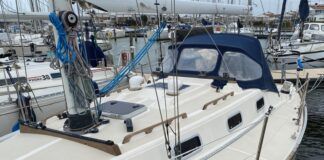
Tartan 31 Piper: Used Boat Review
The Tartan 31 is one of the new line of performance cruising yachts from the venerable-and durable--Grand River, Ohio boatbuilder. In the last few years, Tartan Marine has come out with a range of new models, including the T-28, the 3500 and the 4600. A 41-footer is in the works. Both the 28 and the latest version of the 31 are part of the new Piper series, which are marketed in sailaway condition. Tartan has a reputation for solid construction and good workmanship and that's what the 31 is: solid and well put together. The hull is hand-laminated with alternating layers of chopped strand mat and unidirectional E glass. Behind the NPG/ISO gelcoat there's a layer of vinylester resin, which so far appears to provide the best osmotic blister protection available.