

“Every once in a while people say we are crushing dreams,” explains Frank Gonzales of Gonzo Boat Recycling, “but we aren’t trying to crush every boat. We are in this business to make boats last longer—sometimes that means taking them apart.”
His five-year-old business is growing quickly because many fiberglass (GRP) boats are aging and falling into disrepair in the Pacific Northwest. Monte Brim, who transports boats for Gonzo’s, explains that “unfortunately some people fall on hard times—there’s a death, for example—and the cost of maintaining a boat is out of reach. So they turn to us or become part of the Department of Natural Resources derelict boat program.” Not many businesses offer recycling as an option—boats often go straight to the landfill—but Frank says demand is high for boat recycling. However, that process is much more labor intensive. “It’s easier to throw something away,” he explains, while “it takes a lot of time to remove the parts.”
Recycling Process
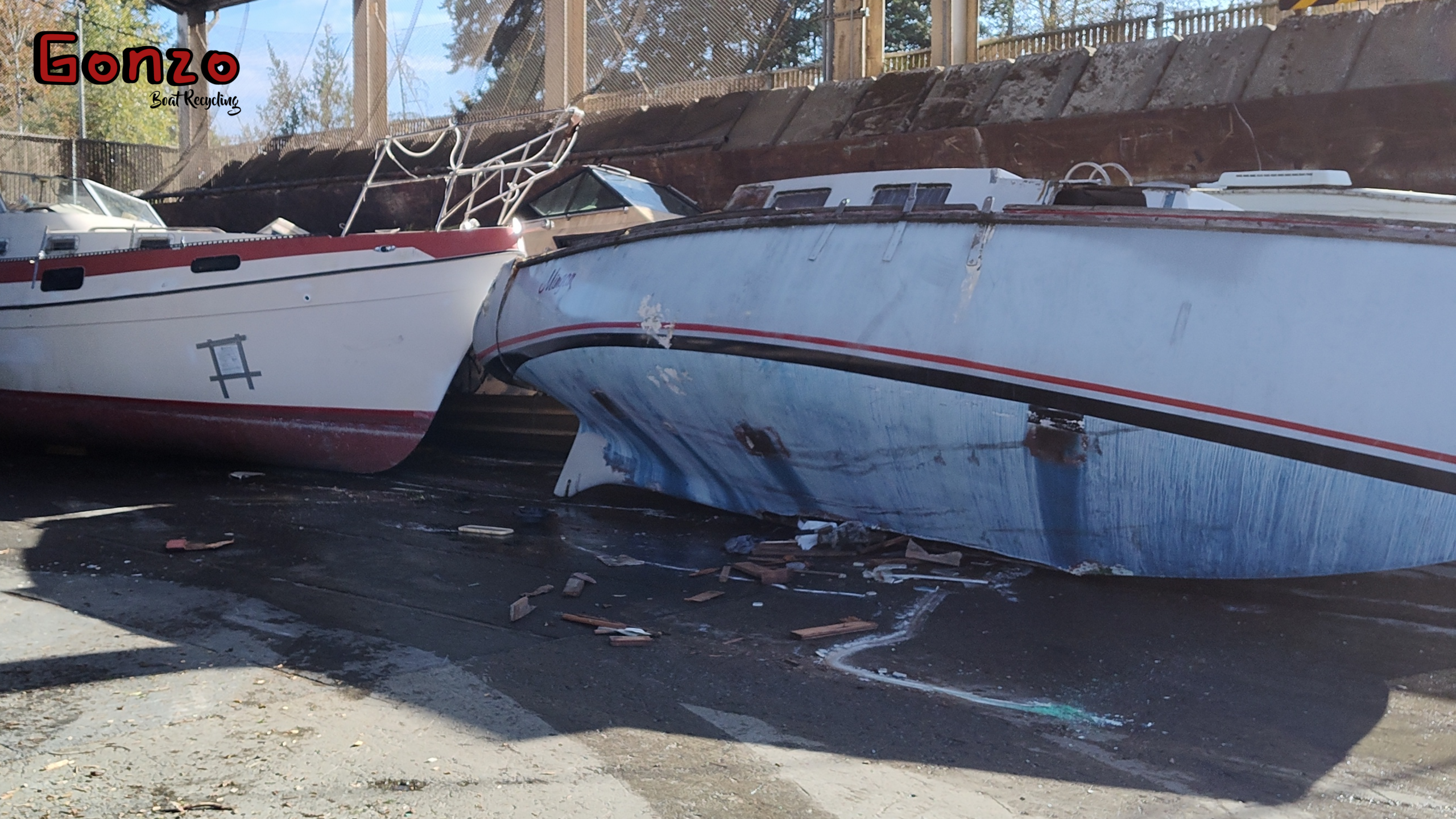
Gonzo can pick up boats or receive delivered boats to their facility in Arlington, Washington. Hazmat materials are removed from the boat first, then workers begin to dismantle and salvage usable parts. Gonzo puts those parts up for sale in their online store and at swap meets. While there used to be more options for boat part resale venues, those channels have dwindled. Sailors can still find used parts at Longship Marine in Poulsbo and Marine Thrift in Port Townsend. Demand for used parts is high, Frank says—used self-tailing winches are the hottest selling items.
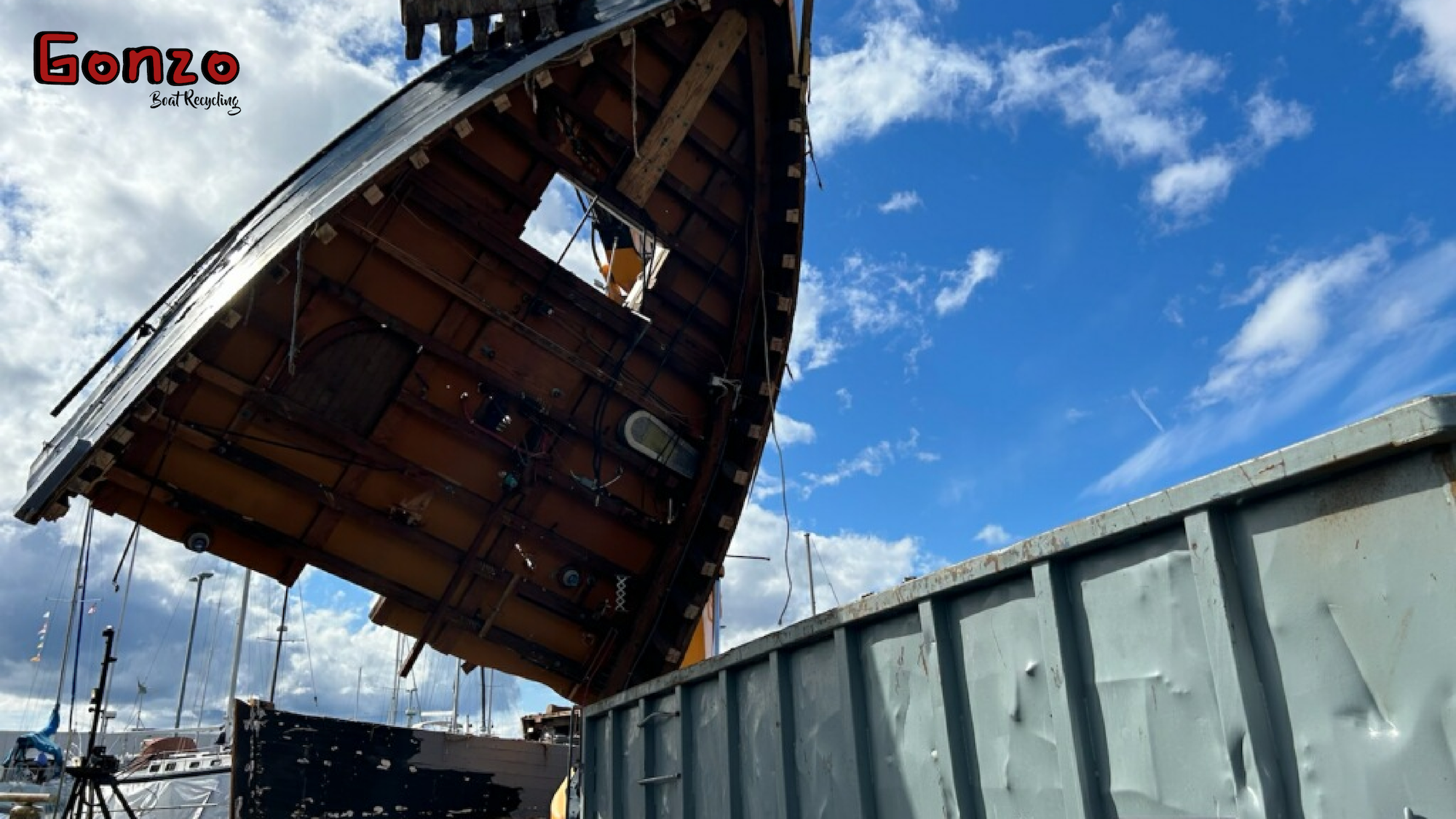
Once all of the useful parts are removed, Gonzo sends the stripped boats to the landfill. “On a GRP boat, roughly 50 percent is recycled or salvaged—on a wood boat that is closer to 80 percent,” Frank explains. While Gonzo’s tries to use GRP pieces wherever possible, like lining their dump trailer, most of the GRP goes to the landfill since there is no established way to recycle GRP, for now.
Cost and State Assistance
If you need to move your boat to its end-of-life phase, Gonzo charges per foot—it’s cheaper if owners deliver the boat to the salvage site themselves, of course. For an average 30-ft. boat, it costs around $6,000 USD to recycle. “We take into consideration if there is a well-known, two-year-old Yanmar diesel on board, for example,” says Frank. Those kinds of high-value parts would reduce the cost to the owner. “If I have to dig the boat out of blackberry bushes in the back forty, it will cost more,” he says, “we charge for the work we do.”
Washington State’s Department of Natural Resources (DNR) will help cover the cost, either full or in part, based on the owner’s financial needs. This derelict boat removal program started in 2002 and has helped remove more than 1,205 abandoned or neglected vessels from the state’s waterways. However, if you’re in a hurry to recycle a boat, note that the state’s process can take up to three months to complete. “At least half of the owners come directly to us first,” says Frank. The other half goes through DNR who then contracts out to Gonzo and other businesses.
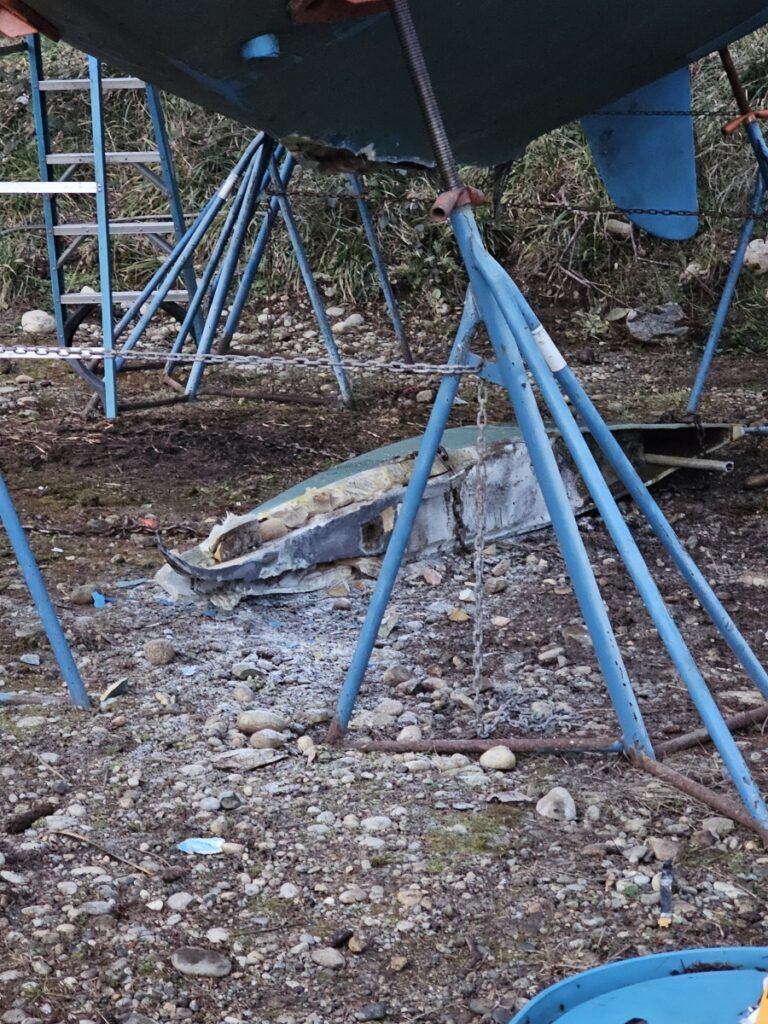
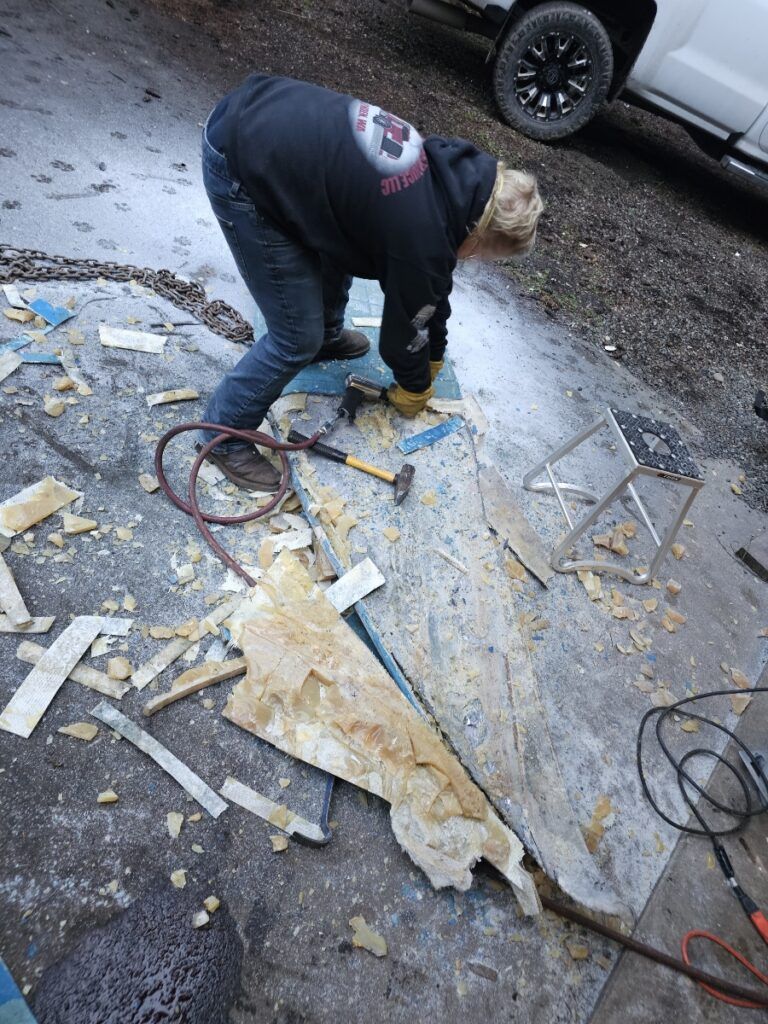
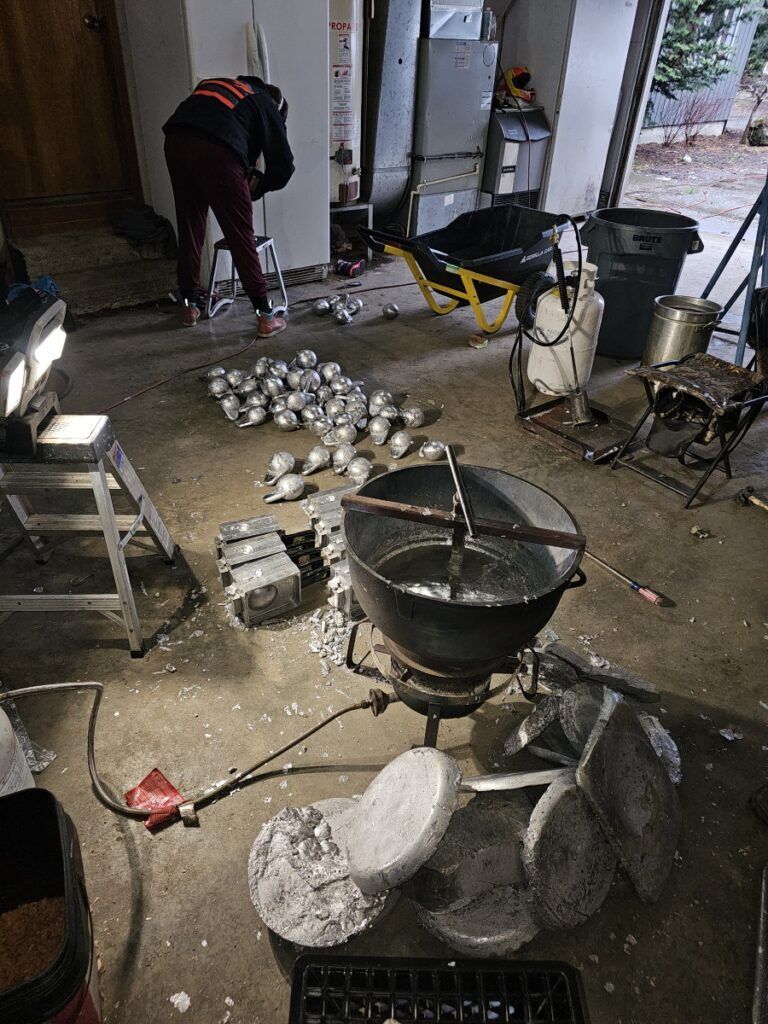
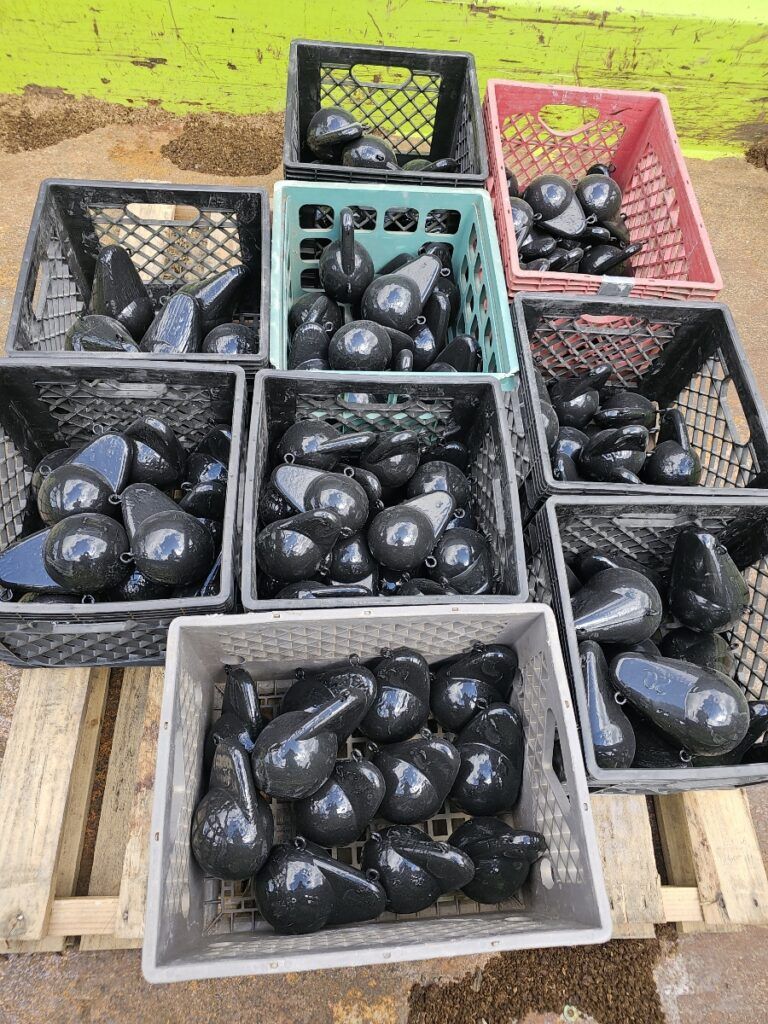
Monte Brim, a fisherman who owns and operates Pacific Marine Transport and hauls boats for Gonzo’s, got into the boat recycling business two years ago as a way to recoup costs for downrigger weights. Salmon fishermen run downrigger weights on a cable 40 to 140 feet down when trolling, and they often have to replace these expensive lead downrigger weights, which are frequently lost. We heard about Monte from Practical Sailor reader Hal Palmer, who submitted a picture of lead downrigger weights made from recycled boat keels for our holiday competition. Monte learned how to recycle the lead from an older gentleman who’d been making recycled downrigger weights. “Fishermen are always losing downrigger weights,” Monte explains, so he started making them himself. First, Monte cuts the keel off with a hydraulic shear attached to an excavator. Then he heats the pot of lead with propane. To cast the downrigger weights, he pours the molten lead into 12 molds of various sizes from 8 lb. to 20 lb. Two big fishing stores, LFS Marine and Holiday Sports, sell these recycled downrigger weights, which turn out to be more affordable than buying new ones. A 12-lb. downrigger weight costs around $50 new, while a recycled one costs around $24. Since it costs so much to ship lead, it is cheaper to buy locally-sourced ones. “These recycled downrigger weights help fishermen continue their hobby,” Monte says.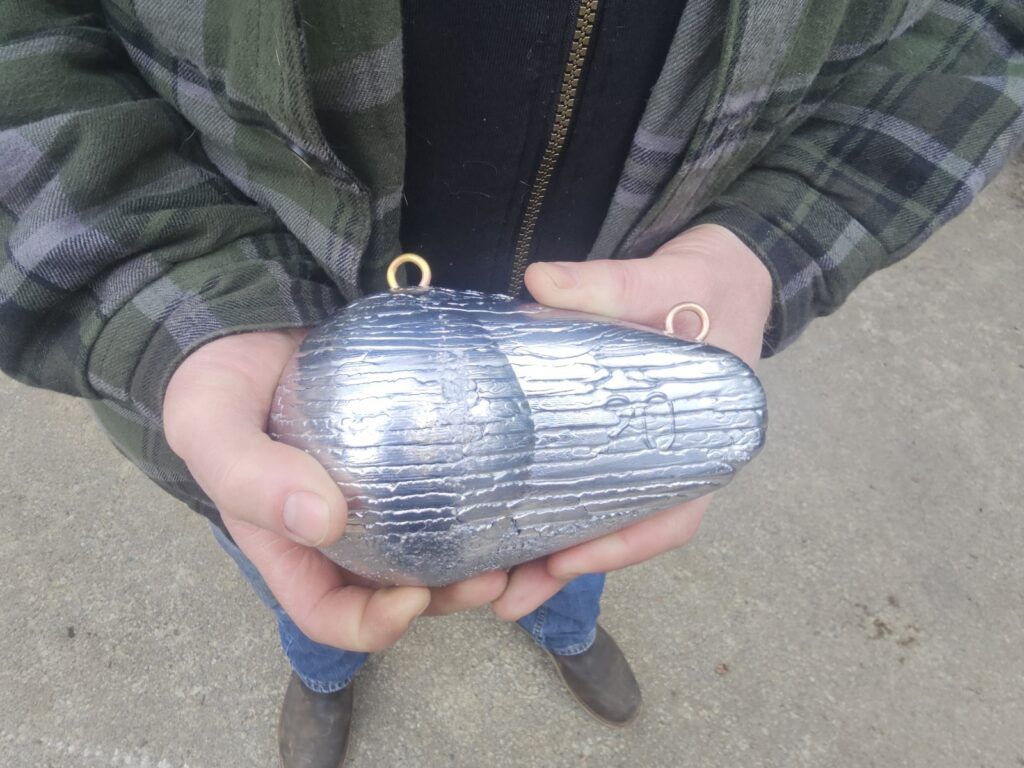
Boat Adoption
Not all boats are destined for parts—Gonzo runs an Adopt a Boat program that gives boats another chance to be on the water. “If we receive boats that are too good to cut up, we hold onto them and find someone who wants to work on the boat,” Frank explains, “we take the hazmat out and get it prepped so it doesn’t go into the landfill.” Gonzo only allows sailors to adopt boats if certain conditions are met to ensure the boat doesn’t become derelict and abandoned.
When Free Isn’t So Free
While it might be tempting to give your derelict boat away for free, Frank urges caution and other methods, like going through the DNR or Gonzo’s. Often those “free” boats overwhelm the new owners and end up abandoned, which can cause environmental damage. See “What Do You Do With Old Fiberglass Boats?”
If you still want to go that route, the one thing that Frank wishes more owners knew is to go to the Department of Licensing and transfer the boat to the new owner. “Even if the buyer means well, they get overwhelmed and give it away,” he explains, “then it becomes a derelict. The state calls the last registered owner and they can be on the hook financially.”
Conclusion
Boats become more than the sum of their parts—they often feel like members of the family. So when it is time for them to move into their end-of-life phase, it can be emotional. Frank explains to boat owners that the salvaged boat parts are like organs—their boat lives on in other boats. The dream continues, even if it is in a different form. Recycling your boat is not only the responsible route, it also creates affordable parts for fellow DIYers to carry out their own repairs and upgrades.
Another thing Frank wishes boat owners knew, “Please pump out your boat before we pick it up.”
Further Reading
- “Navigating the Secondhand Marine Electronics Market”
- “A Brief Modern History of Fiberglass”
- “Regenerative Tides: Citizen Science Tackles the Fiberglass Boat Crisis”






On Long Island, NY (Bohemia) there is a business called Marine Consignment of Long Island. They are a great resource for buying or selling salvaged or surplus marine parts. They also have an eBay store where they tend to list the better quality, higher value stuff.
There used to be a guy doing this in Portland, Maine. I bought a J-24 mast there. Is anyone still doing this in the northeast?
Hi,
You could try Mass Marine Parts, a division of Continental Marine Services on Read Ave in Quincy Ma. Great People!
617-719-8232
There is another option in the Pacific Northwest. The Sailboat Wrecking Yard in Lynden, WA has been in business for much longer than Gonzo’s serving as a walk in used parts place & recycling lead keels into fishing weights. Check out his website. He is only open limited hours & he doesn’t ship parts. I keep worrying he is going to close but not yet… I think he get’s all the boat’s he recycles (or repairs & sells) from marina’s and the DNR. Gonzo’s serves a different source for boats but being able to walk in & peruse the parts is nice.
In the NYC area is King Marine, Verplanck, NY. This is an old fashioned yard with about 300 boats being cycled through and many more parts. No online presence and phone calls are not always productive. You go, tell them what you want, if they have something, they send you out into the yard. No posted prices.