


Editors Picks: Winter Reading for Sailors
Practical Sailor editors have put together a roundup of marine-related books that we think are deserving of a spot in your library. Most are new titles, and they run the gamut from fiction to how-to guides. Enjoy.

Bottom Paints for Freshwater Sailors
I am a relative novice to sailing, and my new-ish boyfriend is thinking about bringing his boat to Lake Superior, Mich. Hes one of those sailors who needs the best of everything, and he hopes to race, with me as crew. He asked me to inquire with the local racers what bottom paint they used, but there seemed to be no real agreement. Some use no paint at all. Does he even need any bottom paint?

Caught Between Two Homers
Technical Editor Ralph Naranjos report on risk management in this months issue sent me scouring the Internet for the origins of risk. Most dictionaries trace the word back to the 17th-century Italian riscare or rischiare, translated as to run into danger.
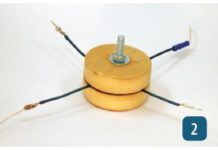
A New Spin on Dependable Crimps and Splices
Our test focused primarily on the small-wire connections tensile strength, with and without solder, but we also looked at their durability under tough environmental conditions. We tested the pull-out strength without solder and the pull-out strength of soldered connections at 400 degrees by heating the connections in an oven to simulate overheating conditions. We tested fatigue by spinning a 6-inch length of splice wire at 650 RPM in a simple device that we called the wire-fatigue whirligig. Finally, testers soaked all samples for four months in salt water to accelerate corrosion, and then, we repeated the fatigue test.

Winter Without Worries
During my admittedly few winters above the frost belt, I have only fond memories of the last few days of the season. And Ive always admired those who didnt let the tilt of the Earth dictate the way they arranged their days.

Three Sailing Pros Speak Out
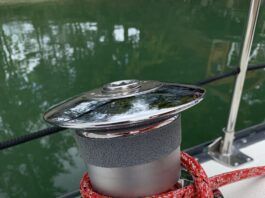
As part of our winch update and sea trial, we caucused three sailing pros and got their performance slant on what they looked for in a good winch and how they put it to use.
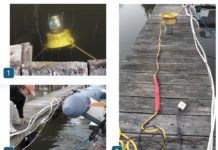
Installation Tips for Deicers
When it comes to deicers, proper installation is key. Here are some tips to ensure your setup will optimize ice removal.
Making an Anodized Mast Look Like New
Have you done any research on the best means of cleaning an aluminum mast? Im having other work done to mine and thought it would be a good time for a cleaning.

Holiday Gift Ideas for Sailors
Sailors are a practical lot. Sure, wed all enjoy a Fruit of the Month membership, but if you really want to make a sailors holiday bright, then gift them with something more useful. Weve rounded up some practical (and fun) gift ideas that any sailor would appreciate, whether theyll be decking the halls or the main saloon this season.
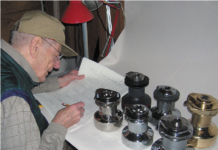
Testing Winches with Dale
Part 2 of our winch test this month brought back fond memories of the man who helped steer me into my position as PSs skipper, the late Dale Nouse, our former executive editor who died of cancer less than a year after I took over as editor in 2005. Dale was in charge of a winch test that year. He passed away a few months later, at the age of 82-working nearly to his last day after 13 years with Practical Sailor.

O’Day 40 – A Budget Cruiser for the Bahamas
The O’Day 40 (1986) is one of those cruising sailboats that somehow slipped through the cracks of sailing history. Built during the final years...



Latest Sailboat Review
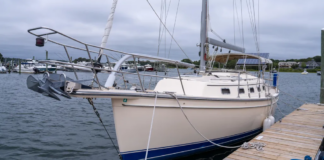
Island Packet Estero Used Boat Review
Florida-based Island Packet targets a relatively narrow niche, so the toughest competitors to its new boats are often older Island Packets. Introduced in 2010, the 36-foot, shoal-draft Estero is the company’s latest attempt to introduce a distinctive model that doesn’t stray too far from the company’s proven formula for success: moderate displacement, full-keel cruisers designed to be lived on, sailed far and in comfort, and endure the bumps, scrapes, and storms that cruising boats inevitably encounter. After sailing the Estero on Florida’s Sarasota Bay and inspecting its interior, construction, and systems, Practical Sailor testers noted that the shoal-water cruiser will appeal strongest to Island Packet fans who’ve been waiting for a shoal-draft, easy-to-sail boat that compares to the IP37 in terms of interior space. These strengths will be most apparent on intracoastal or riverine adventures like the Great Loop.