



Practical Sailors Gear of the Year 2009
Practical Sailor editors pored over the dozens of products reviewed in the previous months to find the best of the best sailing gear, products that are worthy of the designation Gear of the Year. This years editors choice list includes a rugged rope clutch (Spinlock), a grippy ratchet block (Ronstan), feature-filled VHF handheld radios (Standard Horizon and Cobra), high-quality nesting cookware (Magma), a proven paste wax (Collinite), an ocean-ready first-aid kit (Adventure Medical Kits), a reliable LED bulb for cabin lighting (Imtra), an economical ice box conversion kit (Frigoboat), an innovative ultrasonic tank sensor (BEP Marine), cold-weather gloves (Gill), and an easy-to-install Wi-Fi booster (5mileWiFi).
Mailport: 09/09
As a prior owner of a Charley Morgan yacht, I greatly appreciated your article on the Morgan 30. I could relate to the difficulties of that boat, having had to replace a broken centerboard pennant, replace the Palmer M60 with a Yanmar diesel, install a second battery, and live with fairly primitive belowdecks amenities. Yet for all those issues, I loved the boat. The centerboard could be used to move the lateral resistance forward or back, so it was possible to get the boat to balance perfectly and track with barely a finger on the tiller. Ive sailed the Chesapeake Bay for 39 years and have owned a Morgan, Bristol, and Pearson. Of the three, the Morgan was the most fun to sail.

Whos Lurking Behind Those Blog Posts?
In the magazine business, our calendar is set forward several months, so while summer sailing is reaching its peak, were stowing away editorial acorns for winter. Articles on cold-weather sea boots and heavy-weather sailing are on the horizon, along with a two-part series on inverter-chargers. The upcoming story that bothers me most, however, is a long-overdue update on maritime websites. Its something of a sore subject because were undergoing the painful revamping of our own website (a process akin to rebuilding your diesel engine in the middle of your galley), but also because the deeper we dig into the world of websites, blogs, and reader forums, the more trouble we find.
PS Advisor: ‘Weathered’ Teak
Isn’t there an old adage about rousing the rain gods by opening a can of varnish (or paint)? Having lived (and sailed) mostly in sub-tropical climes, we can definitely sympathize with a rain-delayed boat project. The rain actually isn’t doing any harm to the wood or varnish so much as it’s just a nuisance, adding more work and time to the job at hand. After the rain ceases, let the wood dry for several days. The higher the humidity, the longer the dry time. Denatured alcohol or Naphtha can remove surface moisture. Once the wood has dried, you will need to resand any bare wood areas so that you’re coating fresh wood.
DIY Topside Paint Test: Two-part Linear Polyurethanes Face Off
While our topside paint panel test (Practical Sailor August 2008) seeks out the most durable topside paint, this test was to determine which two-part LPU is the most user-friendly for the amateur painter and whether the project is manageable for the average do-it-yourselfer. We chose to use the roll-and-tip painting method, and selected two-part polyurethanes from manufacturers that historically have done well in Practical Sailors topside paint durability tests: Interlux and Epifanes. On the port side, we applied Epifanes Poly-urethane No. 800 white thinned with Epifanes poly-urethane thinner, and on its starboard side and transom, we painted Interluxs Perfection Mediterranean White and used 2333N brushing reducer.
Gripping Hitches for Loaded Lines
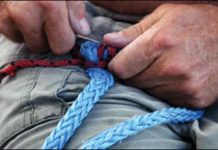
Testers evaluated five different knots to determine which would be the ideal for holding a tensioned line. Testers considered ease of tying and untying, ease of learning and recall, and holding power with various types of line. The old standard rolling hitch was pitted against the modified rolling hitch, icicle hitch, gripper hitch, and sailors hitch.
A Look at the Latest Generation of Genoa Furlers
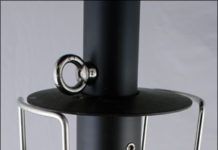
To get an idea of whats on the market and see how the newer products fare against the simpler, tried and true furling systems, Practical Sailor rounded up 11 new headsail furlers suited for 30- to 35-foot sailboats. This, the first of a two-part report on the evaluation, focuses on the seven products that use a head-swivel design and range in cost from $950 to $3,200. (The report of integral systems will follow in an upcoming issue.) The following furlers were reviewed: Facnor LX 130, Harken MkIV and Cruising 1, Profurl LCI32, Schaefer 2100, Furlex 200S (Selden Mast), and US Spars (Z-Spar) Z-780.
Ground Tackle
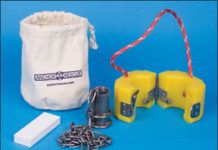
As Practical Sailor prepares for a new round of anchor tests, weve been on the hunt for new anchors, as well as new accessories. One of the most interesting devices to come our way is the Anchor Rescue developed by Richard Provonchee, a sailor and principal in Boxer Marine Inc., based in Cushing, Maine. The most common complaint about anchors is their lack of holding, but an anchor that refuses to budge-can also have serious consequences. The Anchor Rescue uses an innovative two-part system to free fouled anchors. The typical antidote to fouling is to attach a buoyed line to the anchor crown so that it can be hauled backward out of its snag. Most anchors have an eye at the crown for attaching a buoyed retrieval line. (Danforth-style anchors are an exception).
Crossing Over
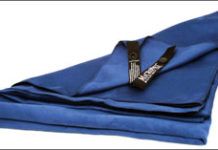
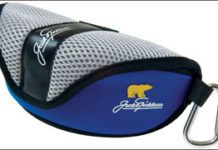
When it comes to gear for the outdoor enthusiast, there are a lot of crossover products. Hikers, bikers, boaters, backpackers, and climbers share a need for lightweight, durable, and practical equipment. So as Practical Sailor editors geared up for our summer adventures, we looked for products that could serve double-duty on the boat and on the trail.
Mailport: 08/09
As a new boat owner, I have no end of questions, but here’s a quickie: I have recently had my boat hauled and sanded to the gelcoat, and repainted with all the right stuff. (The bottom was coated with Interlux CA Bottomkote.) Now, how often should I have a diver clean the underside, bearing in mind I live in San Diego? The service providers have a vested interest in selling frequent cleans—one company running a special at the moment wants me to sign a contract for a bottom clean every three weeks, but that sounds way too often to me. I realize it may well vary with geography and ambient temperature, but there should be some kind of general rule of thumb, perhaps?

Small Boat, Big Keel Why This 27 Footer Works
What makes a small sailboat truly seaworthy? In this video, we take a deep dive into the Pacific Seacraft Orion 27, a rugged, long-keel...



Latest Sailboat Review
Island Packet Estero Used Boat Review
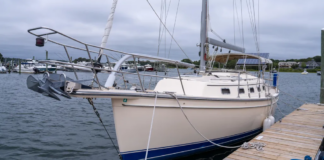
Florida-based Island Packet targets a relatively narrow niche, so the toughest competitors to its new boats are often older Island Packets. Introduced in 2010, the 36-foot, shoal-draft Estero is the company’s latest attempt to introduce a distinctive model that doesn’t stray too far from the company’s proven formula for success: moderate displacement, full-keel cruisers designed to be lived on, sailed far and in comfort, and endure the bumps, scrapes, and storms that cruising boats inevitably encounter. After sailing the Estero on Florida’s Sarasota Bay and inspecting its interior, construction, and systems, Practical Sailor testers noted that the shoal-water cruiser will appeal strongest to Island Packet fans who’ve been waiting for a shoal-draft, easy-to-sail boat that compares to the IP37 in terms of interior space. These strengths will be most apparent on intracoastal or riverine adventures like the Great Loop.