


Mailport: Pocket Cruisers
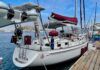
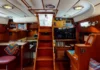
Regarding your recent Rhum Lines column regarding pocket cruisers (see Four Types of Pocket Cruisers, April 2019): Our boat, Quaker Lady, is at home in Bayview, Idaho, at the southern end of Lake Pend Oreille. I bought her in Seattle in 1985, and she came out of the Westerly Yard in 1965. Built for the English Channel, Irish and North Seas, shes solid fiberglass and has a one-lung Volvo auxiliary.
Anchoring Legal Responsibility
We often get questions about anchoring rights. While it is commonly understood that the first boat arriving in an anchorage has privileges, many see this as a matter of etiquette, but it is also a legal issue. The below citations are from the case Juniata 124 F. 861 US Admiralty Court, E.D. Virginia, 1903. Other rulings we reviewed generally agree.]

Sailing Navlight Alert; Honda Genset Recall
The U.S. Coast Guard has determined that many navigation lights being used on sailboats do not meet the basic requirements for these lights, making them less visible to nearby ships.

Mailport: Testing VHF Coaxial
Theres nothing quite like undefined acronyms and other jargon to alienate readers. What do SW or SWR mean? Defining these acronyms would go a long way to interpreting this important information to a wider audience of non-electronics savvy readers. Defining the difference RG8X and LMR type coax could also be helpful.

Leaving Your Boat Abroad Part II
In addition to the usual steps you take before a seasonal haul out at home (decommissioning the engine, storing sails, pickling systems, etc.), hauling out and leaving your boat in a new yard, especially a foreign port, involves some extra measures.

Leaving Your Boat in a Foreign Port
A high percentage of cruisers we meet each year plan on leaving their boats in a safe place and flying home, often once a year. If youre leaving your boat for less than four weeks, it may be most convenient to leave it in the water, providing you can find a secure marina slip or mooring. For longer periods of time, it may be cost effective and attractive to combine dry storage in a secure boat yard with your annual haul out. Weve left Mahina Tiare 1, II & III on the hard or in the water in Portugal, the Azores, Sweden, Panama, Chile, Hawaii, Canada and New Zealand and over the past 35 years and have learned quite a bit about the process, from choosing a place to keep the boat.

Selecting a Stern Anchor
I have a 30-foot sailboat and I was considering keeping an emergency anchor ready to lower quickly as a temporary way to stop drifting in case the engine failed. I have limited mobility so it should be close at hand.

Mailport: Jack Russell is on watch
Regarding your recent Inside Practical Sailor blog post on ideal dogs for boats, I believe Jack Russell terrier, Parson Russell Terrier or many of the smaller terriers are ideally suited. Nimble, determined and easily adapt as long as their people are there. Easy to board the dinghy or back on the boat. Their food storage doesn't gobble up too much storage space and never will a rodent live for more than…

Mailport: Dustless Sanding
Regarding your recent Waypoints article about making your own dustless sander (see Dustless Sander, PS April 2016 online) I added a Dust Deputy (~$50 Ace Hardware) upstream of my shop vac around 3 or 4 years ago.
Mailport: Cold Weather Suits
Regarding your recent Inside Practical Sailor blog post Drysuits vs. Survival Suits, I raft the Colorado river in Grand Canyon where water temps are around 50 F, even in the summer. The whitewater down there is furious and sometimes dangerous. I wear a 3 millimeter neoprene wetsuit under a full drysuit. If the drysuit rips, the wetsuit should slow down thermal loss. The problem is heat buildup in the sun. The solution is to jump in the cold water now and then to keep from over heating. On a sailboat that would be harder to do. There have been a few times sailing solo when I wore both garments, but it was pretty clammy inside. There is no perfect solution, just reasonable compromises by which to stay alive. Something to remember is that once a drysuit rips, it will take on hundreds of pounds of water. A high flotation PFD is mandatory, at least 26 pounds I would think.
Latest Logbook

Practical Sailor Logbook – September 2026
In September we tour the Hans Christian 48T — the offshore cruiser many sailors call the holy grail — walk the custom Antigua 60...

Video: The BEST Sailboat You Can Buy for $35,000 – Catalina...
If you’re searching for a mid-30-foot sailboat, affordable cruising sailboat, liveaboard sailboat, first sailboat, or a capable used sailboat for coastal cruising, the Catalina...



Latest Sailboat Reviews
Cal 2-27 Used Boat Review
Our story begins in 1970, with the introduction of the Cal 29. Looking for something similar but a bit smaller, the company asked designer Bill Lapworth for a 27-footer, which at first was the Cal 27, a fin keel, spade rudder design with a convertible pop top; another incarnation of this basic hull was the T/2. But the concept of the 29 found its full expression in the Cal 2-27, which began production in 1975 and continued to 1977, after which it was again modified and called simply the Cal 27...again. Production of it ceased in 1986.