



Mailport: Water Purification on Lake Michigan
We race a Tartan Ten out of Montrose Harbor, Chicago. Since were sailing on fresh water and the Chicago Area Sail Racing Association doesn't require us to have a built-in tank for offshore racing, the water tank was removed long ago to eliminate excess weight. For port-to-port racing, we usually buy jugs of bottled water and refill individual water bottles. For round-the-buoy racing, we bring water bottles. Some of the T10s just use a camping-type water filter. W

Using a Jordan Series Drogue for Steering
Thanks for this discussion of using drogues for controlling a boat with a rudder lost or jammed over (see Sailing Without a Rudder, Practical Sailor, April 2017). I carry a Jordan Series Drogue (JSD), and I think that by bridling it somewhere in the middle, such that some of the cones open to resist water flow, and some are collapsed one could adjust the amount of drag that was appropriate for the conditions. Have you considered testing this?

Mailport: 30 Amp vs. 50 Amp Shorepower
My previous boat had two 30 Amp 110V circuits. When I bought my new boat it came with 50A 125/250V service. I didnt give it much thought at the time, but now I realize that the 2 x 30A approach is much preferred. I have never seen any discussion of this in the boating press.

Printing Your Own Charts While on Board
I am a novice sailor, but after taking a few more courses, I plan to buy a 30- to 50-sailboat with a few other aficionados. Two questions:

Mailport: Pine Tar Advocate, Snubber Sense, and More!
I was happy to see in the last issue on grease and electronics your willingness to test natural products. For years, I have used pine tar as anti-seize. I first read about it in a series of side bars in the Mariners Catalog published by International Marine Publishing in the 1970s. They were by Pete Culler and called Old Ways Work. He suggested that pine tar was great for keeping bolts, etcetera from rusting together. At the time, I was living in Northern Vermont notorious for bad winter roads with lots of salt. I got some pine tar at the local feed store (used on horses hooves) and tried it on the lug nuts on my truck. Sure enough, they always came right apart.

Snap shackles not advisable for snubbers.
In regard to your ongoing investigations of snubber hooks (Snubber Chain Hooks Revisited, February 2017), I want to add another idea to the mix. Our boat uses a fixed eye snap shackle spliced onto the end of a three-strand nylon snubber. Our shackle is similar to this Wichards 2 -inch fixed eye snap shackle (part #2472).
Mailport: Whats Up with Synthetic Lifelines?
Its been almost five years since your original article on synthetic lifelines (Long-term test Evaluates Synthetic Lifelines, Practical Sailor, September 2012). Since my coated lifelines are due for replacement, Im curious about long-term observations. That said, I plan on going up a size or two from the recommended numbers for an extra safety margin: 6 millimeters rather than 5 millimeters. Im still looking into manufacturers and products because I just learned how easy splicing 12-strand can be, but Im pretty sure almost any of them will be better than the plastic-covered stainless-steel wire, of unknown vintage, thats on the boat now.
Fuel Level Sensor/Return Line Durability
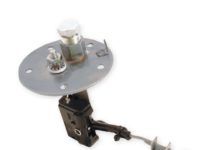
I have a 2008 Gemini 105MC catamaran that I purchased new, and the fuel tank level indicators on both tanks failed a couple years ago. However, I noticed that the fuel-return line is attached to the top of the fuel level sensor. It seems to me that this may be the problem-fuel spraying down on the level indicator shortens its useful life. All the other Gemini owners that I know also have had the level indicators fail. It is not a huge problem. My tanks are transparent so I can see the fuel level in the tanks. My friends who have black non-transparent tanks use a wooden stick-which can be inserted down the fill hose.
A Wood Finish for the Efficient Sailor
I have a boat with a good amount of teak. As a lazy-er, efficient! thats the word, efficient-owner I have waited out the previous owners Bristol Finish. This product was great when new, but difficult to patch as it aged. It has finally flaked off after 10 years or so. For me, the most important characteristic for a coating is that it be easy to remove without damaging the teak, and be easily and imperceptibly patched, because coatings don't go all at once. Also formulations change. It sounds like a mix of Cetol Natural covered by Cetol Gloss is the way to go?

Mailport: Multihull Lover, An Anchor Story, and More!
Regarding your recent article on the evolution of the cruising multihull (see PS, March 2017): I have owned a 34-foot Chris White-designed trimaran for the last 10 years and thoroughly enjoy great sailing and exploring shallow waters on the Potomac River and Chesapeake Bay. Chris Whites book The Cruising Multihull is a good resource for those interested in cats and trimarans. My biggest problem with the boat is finding a place to get her out of the water for maintenance. The 24-foot beam is too wide for the local travel lifts. Thanks for the interesting article.
Latest Logbook

Practical Sailor Logbook – September 2026
In September we tour the Hans Christian 48T — the offshore cruiser many sailors call the holy grail — walk the custom Antigua 60...

Video: The BEST Sailboat You Can Buy for $35,000 – Catalina...
If you’re searching for a mid-30-foot sailboat, affordable cruising sailboat, liveaboard sailboat, first sailboat, or a capable used sailboat for coastal cruising, the Catalina...



Latest Sailboat Reviews
Cal 2-27 Used Boat Review
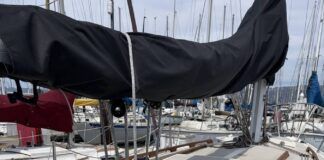
Our story begins in 1970, with the introduction of the Cal 29. Looking for something similar but a bit smaller, the company asked designer Bill Lapworth for a 27-footer, which at first was the Cal 27, a fin keel, spade rudder design with a convertible pop top; another incarnation of this basic hull was the T/2. But the concept of the 29 found its full expression in the Cal 2-27, which began production in 1975 and continued to 1977, after which it was again modified and called simply the Cal 27...again. Production of it ceased in 1986.