



Mailport: 08/08
Presto Protech was among several acrylic coating-type products recently applied to one of our test boats, a 1974 ODay Javelin. Drying almost upon contact, this UV-activated product was one of the quickest to apply. Its gloss compared to that of a conventional paste wax. How long it lasts is a key question that we have yet to answer. A full report on Presto Protech and similar products will appear in a future issue. Our most recent long-term test of these types of products ("Hull Restorer Test," May 2007), showed that one product, Poli Glow, retained gloss on the bow section of our white test powerboat for three years, longer than any conventional boat wax that we have tested. Keep in mind that the acrylic-type products do not "restore" gelcoat. They only cover it-imperfections and all-with a clear, glossy plastic coating that, in some cases, hides minor scratches. For best results, you will still want to eliminate as much oxidation as possible prior to application. Finally, strictly follow the instructions on these products. Buffing the hull with a product that has silicone, Teflon, or some other agent can inhibit adhesion. You might have to avoid using certain cleaners that can peel off the coatings. While the acrylic coatings have outlasted waxes in our tests and several readers have reported great results, we believe that the simpler, more forgiving buff-and-wax routine is suitable for the vast majority of boat owners. PS is currently testing paste waxes as well. And if youre ready to paint, check out our topside paint test, which kicks off on page 27.
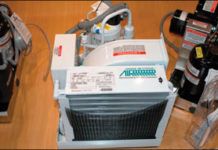
Troubleshooting AC Units
I have an air-conditioning unit with more than 14,000 BTUs. Here in Florida, with a 38-foot boat, that just doesn’t hack it. The unit’s been checked for efficiency by a technician. My prior boat (also 38 feet) had two units totaling over 20,000 BTUs. Those were effective, but that output is enough to cool a small store ashore. How are boat A/C BTUs determined? I suspect the temperature of coolant water is a major factor. Also, what is the effect when coolant water is suppressed by a clogged filter? Are they built to automatically shut down the compressor?

Mailport: 07/08
I just completed a family, 17-year, and 50,000-mile circumnavigation onboard Hippos Camp, our 1985 Morgan 43. And I think the Morgan 43 should be included in your list of strong and reliable boats. In addition to 17 years at sea, Hippos Camp has endured-unscathed-36 hours in the 1994 Queens Birthday storm in the South Pacific, and dealt with the vertical seas of the Agulhas current in 40 knots of wind in the Mozambique Channel. The gelcoat and nonskid on our 22-year-old boat are original and look almost new after polishing. The Perkins 4-108 has 5,700 hours and runs like a Swiss clock. The Morgan 43 is also a remarkable performer in light air. We crossed the Bay of Bengal at an average speed of 4 knots with never more than 8 knots of wind. This is, in my opinion, a real asset. The Morgan 43 was made by Morgan Yachts before it was bought out by Catalina. I think Morgan made 77 43s, and a few more 44s before it stopped.

Tinned Wire Myth Busted
I recently purchased an older boat. Not long before the purchase, the previous owner had the wiring replaced. All the workmanship seems to be in good order, with all connections and terminations made with Ancor crimped connectors and sealed in shrink tubing. All the wiring is the proper gauge (AWG) stranded wire. The only problem is that the wire used was not marine-gauge tinned wire. I am wondering what the risks are to leaving it as it is. Clearly to rip it all out and do it again would be very expensive. I am not using the boat that much and don’t intend a circumnavigation any time soon. If the connections are well made and the wire sheathing remains intact, what is my risk of wire corrosion with the un-tinned wire in a marine environment?

Mailport: 06/08
I have been following your articles on teak maintenance with great interest. I have an Oyster 56 with teak decks and teak toerail. I live in South Florida, and this is my second Oyster. I damaged my first teak deck as well as the metal fittings around it with too much love. With this deck, I have been very careful and only lightly wash. The deck is OK, but I have a toerail that overhangs the sides. I was reluctant to varnish it as it often gets scratched, but it is beginning to look bad. After reading your April 2008 article, Im thinking that applying one of the teak oils may be a solution. Did any of those you tested seem suitable for touch-ups when scratched or nicked? Was there one that could be easily wiped off gelcoat without staining it?
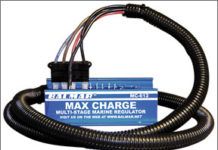
Multi-stage Battery Regulators
I am building an electrical system that will hopefully support wife and two teenage daughters. With this objective, I am planning approximately 1,000-amp hour battery bank. I see lots of hype about the external three-stage voltage regulators. Do they really provide more amp hours during the limited engine running time? If so, I have not found any definitive side-by-side comparisons that convince me that three-stage regulation is more efficient than a single-stage constant voltage regulator.
Mailport: 05/08
I am writing to add some additional comments on the article "Navigation, a Lost Art?" in the January 2008 issue. The aim of your article was on target, and I agree with the points given concerning the limits of technology. The various devices mentioned in the article fall into two broad categories: those such as GPS chartplotters that help the sailor to maintain the spatial awareness that lies at the heart of navigation and those that help the sailor to maintain a better lookout. Radar actually lies in both categories. A third category includes devices used to communicate, but these are outside the scope of the article. A fundamental issue is whether the use of GPS chartplotters is of greater help in maintaining spatial awareness than paper charts.I think not. On our boat, which has a GPS chartplotter, we find that the small screen gives us a restricted view of our situation. In order to get a broader view, we must change the scale, but that causes information such as ledges, buoys and water depths to be omitted, in order to avoid excessive screen clutter. The result is that we keep the plotter on a large scale in order to keep buoys, etc. on the screen. It is akin to peering at the world through a mousehole. Our chartplotter also has the option of a radar overlay, but the optimal choice of radar range to detect other boats does not always coincide with the optimal scale of the plotter needed for navigation.
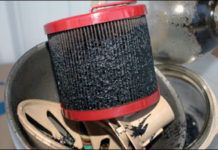
Fuel Filtering Systems
I am the new owner of a 1979 Tayana Vancouver 42 with a Volvo D2-55B diesel engine installed in 2004. Fuel is held in two 80-gallon fiberglass tanks and filtered via a Racor 500 utilizing No. 2010 filters. I use 2-micron filters and Biobor JF Anti-Fungal additive. Despite fuel scrubbings, I continue to have to change primary fuel filters with each fueling. I have been told that I don't need as fine a filter as the 2-micron, but I don't want to risk increased maintenance of the diesel. What do you recommend?

Mailport: 04/08
I loved the article about the 30-footers from the 70s (February 2008). The subtitle was especially appropriate: from the "age of plaid interiors." (I can hear Bachman Turner Overdrive now!) Its great to read, and dream, about the new boats, but they usually carry the price tag of a house. Im sure youll hear the "What about the ….?" So I would say, what about the Islander 30? It seems to fit your criteria. I own an Islander 28, which feels to me like a 30 with its 10-foot beam. It has the basic criteria you mentioned, and which I wanted: standing headroom (510"), a real head, galley, berths for four or five, and inboard diesel power. My Islander is a 1977, and I paid $9,000 for it. One thing I really like about it is its construction. It is also nice to sail, with a balanced helm and the ability to take San Francisco Bays 25-knot winds without much fuss. Its sturdy, attractive, good interior, a good value, and theres enough of them to get info and help for.
Rust Converters
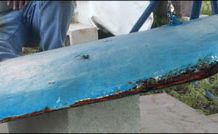
Chances are good that anyone who owns or has worked on a vessel equipped with an iron keel has at one point or another come across products that, "turn rust back into sound metal," or make other similar and often impossible-sounding claims. The question is: Do they work, and is this the best approach for an iron keel? Make no mistake about it, iron is cheap, and thats the primary reason for its use where keels and centerboards are concerned. Lead is nearly always preferred, at least for ballast keels, because its denser and weighs more for a given volume than iron, and it doesn't corrode. Some vessels use bronze as a centerboard material, and while its not as dense as iron, all sailors know it does not corrode. Irons use as a ballast keel or centerboard material comes at a price, a price that is paid over the life of the vessel by its owner or owners. If the iron is not properly isolated from the water in which the vessel floats, it rusts prodigiously. Some studies have shown that an inch of iron will create 16 inches of shale rust. The insidious nature of the way in which iron rusts is often its, or the vessel owners, undoing. Unlike steel, which tends to slough off as it rusts, iron often retains its shape, rusting from the inside out. Thus, it may look sound, however, a sharp blow from a hammer may release huge chunks of material. This type of decay is referred to as graphitization because graphite residue is all that remains.
Latest Logbook

Practical Sailor Logbook – September 2026
In September we tour the Hans Christian 48T — the offshore cruiser many sailors call the holy grail — walk the custom Antigua 60...

Video: The BEST Sailboat You Can Buy for $35,000 – Catalina...
If you’re searching for a mid-30-foot sailboat, affordable cruising sailboat, liveaboard sailboat, first sailboat, or a capable used sailboat for coastal cruising, the Catalina...



Latest Sailboat Reviews

Learning by Doing on a $5,000 Catalina 30 Mk II
When Davis’s mother started talking about wanting to do something “big” for retirement, Davis and Gloria half-jokingly threw out an idea that seemed suitably...