




Feature-loaded VHFs with GPS
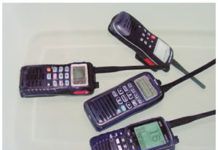
The big advantage of handheld VHF radios as compared to their fixed-mount brethren has always been portability. Its portability that allows them to serve as the primary radio on smaller boats (a dinghy for example), as an emergency backup (or secondary working unit) to a fixed unit, or even as a way to summon help during an unexpected swim. While reduced range (due to their shorter antenna height and lower transmit power) have been acceptable tradeoffs for portability, modern handheld VHF radios continue to keep pace with the many other features provided by fixed-mount VHFs.
Functions and Features
After charging the test units for 24 hours, testers ran each radio through a series of bench tests-including transmitter power output, frequency accuracy and stability, and receiver sensitivity-using our Ramsey COM3010 service monitor. All radios in our test group met industry standards with regards to the above tests, although some did it slightly better than others. Testers took transmitter power measurements (high and low power) directly off the radio antenna port.
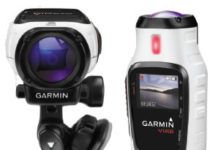
Garmin VIRB Review
There are a handful of popular action cameras on the market, which is dominated by the now ubiquitous GoPro line. Weve purposely steered clear of this fast-moving field, one that is widely covered in consumer electronics magazines and websites. However, since Garmins new entry in this market, the VIRB Elite, incorporates features aimed specifically at boaters, we thought wed check it out. Techies can drop in on any online review or the Garmin website to get a complete rundown of the cameras features and specs (see accompanying table). Our field tests focused on the following.
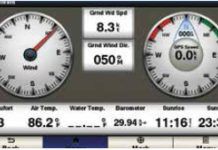
Ultrasonic Wind Sensor Test
Beginning in March 2014 with a review of wind sensors, Practical Sailor embarked on a series of articles on wind instruments. The series kicked off with a look at mechanical, mast-mounted sensors (see PS March 2014 online); Part II compared the various ways that wind data is computed and displayed (see PS May 2014 online); and Part III sought to find the ideal system, matching sensors and displays from different brands (see PS August 2014 online). The ink had hardly dried after the first round of testing, when readers began asking about ultrasonic wind sensors, which appear to offer a number of advantages over conventional mechanical sensors and their revolving-cup sensors.
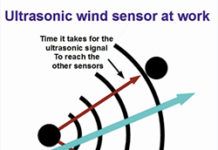
How Do Ultrasonic Wind Sensors Work?
Youre standing on the sailboats bow on a windy day, facing the helm and yelling There is a rock ahead. Youre doing this while youre turning forward to look again. What the helmsman hears is There is a.....
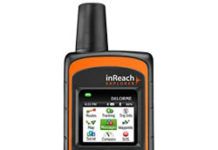
DeLorme Satcom Solution
We recently had a chance to ocean test the new DeLorme inReach Explorer on a passage from Sarasota, Fla., to the Dry Tortugas in the Florida Keys. Like the original inReach (see Practical Sailor, March 2013 online) and the second-gen inReach SE, the first such standalone device designed to send and receive texts by satellite, the Explorer is primarily a satellite texting device. The Explorer has a small display screen like the inReach SE, but the Explorer features a built-in compass, barometer, and accelerometer to give it some basic standalone navigational functions.
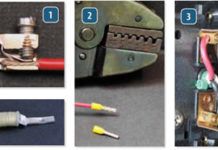
Out, Out Brief Wiring Terminals!
Eurostrips, Euroblocks, set-screw terminations-whatever you want to call them-they are here to stay. Many companies supply set-screw terminations as part of electronics installations, solar controllers, inverter/chargers, navigation lights, or even engine gauge panels. These set screws, if not protected by a pressure plate or a wire terminal, can cause damage to the wire stranding and eventually lead to failure. Attention to the details should always be top on the list when dealing with Euroblocks or any set-screw termination that bears directly onto the wire strands.
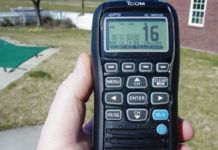
MMSIs for VHF Handhelds
[IMGCAP(1)] In your Oct. 21, 2014 blog on calling mayday on an SSB, I wish you would have included what should be done to configure a Digital Selective Calling (DSC)-capable handheld VHF radio with a Maritime Mobile Service Identity (MMSI) number. If the radio is only used on one boat, thats pretty straightforward (see PS Mailport, October 2011 online), but what should one do if they own a DSC-capable radio but don't own a boat (for…
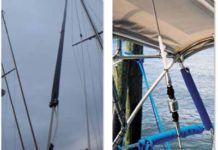
Conjuring Up Some SSB Magic
In our first article on marine single sideband, or SSB, radios, we discussed the relevancy of SSB and the benefits of having one onboard (particularly as compared with satellite communications), and we offered a market scan of the more popular radios available (see PS November 2014). The goal of this report is to delve into the SSB installation process, to introduce some popular accessories, and to present an initial report of our field testing; a more in-depth field test report will follow in an upcoming issue.

Installing the Icom M802
When it comes to installing an Icom M802 SSB system, there are a few rules of thumb that should be followed. Heres a look at our experience. The transceiver should be mounted in a dry location as close as possible to the battery to reduce voltage drop, but as far away from the antenna as is practical. The antenna tuner should also be mounted in a dry spot to prevent corrosion, but it should be as close as possible to the antenna.

Small Boat, Big Keel Why This 27 Footer Works
What makes a small sailboat truly seaworthy? In this video, we take a deep dive into the Pacific Seacraft Orion 27, a rugged, long-keel...



Latest Sailboat Review
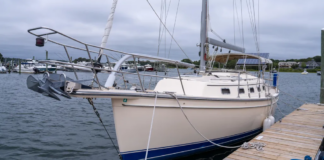
Island Packet Estero Used Boat Review
Florida-based Island Packet targets a relatively narrow niche, so the toughest competitors to its new boats are often older Island Packets. Introduced in 2010, the 36-foot, shoal-draft Estero is the company’s latest attempt to introduce a distinctive model that doesn’t stray too far from the company’s proven formula for success: moderate displacement, full-keel cruisers designed to be lived on, sailed far and in comfort, and endure the bumps, scrapes, and storms that cruising boats inevitably encounter. After sailing the Estero on Florida’s Sarasota Bay and inspecting its interior, construction, and systems, Practical Sailor testers noted that the shoal-water cruiser will appeal strongest to Island Packet fans who’ve been waiting for a shoal-draft, easy-to-sail boat that compares to the IP37 in terms of interior space. These strengths will be most apparent on intracoastal or riverine adventures like the Great Loop.