


Satcom Moves a Little Closer to Affordable
A new generation of satellite phones is making it easier to stay connected. The latest Satcom devices not only provide the satellite tracking offered by the original SPOT device, but also offer communication via text and email messaging. The focus of this test series was pocket-sized, satellite-based communication for the cruising sailor-devices that provide one- or two-way communications and tracking via the Internet, and can also serve as a backup to conventional personal locator beacons. This report, the first in a series, focuses on the SPOT Connect and Briarteks Cerberus CerberLink devices.

PredictWind Satcom Reviews
When we reported on Matt Rutherfords solo, non-stop circumnavigation of the Americas aboard his Albin Vega 27, we noted that one of the few electronics that survived the voyage was an email/weather satellite communicator from New Zealand-based PredictWind. We considered this high praise for an electronic device and decided a Practical Sailor sea-trial was in order. PredictWind, primarily a weather-forecasting company, supplied us with its PredictWind Satellite Communicator and 3G Communicator. The Satellite Communicator will be of interest to long-distance sailors. It allows users to receive PredictWind weather forecasts by satellite email, and to send and receive short emails-similar to other Satcom devices like the Cerberus CerberLink. The 3G Communicator will appeal to near-coastal cruisers; it is basically a modem with a signal booster for 3G cell and data service, plus an onboard router.
Simrad Broadband Radar Comparison
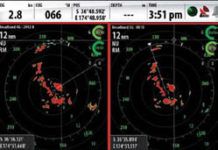
Practical Sailor has been following the developments of Simrads broadband radar since the BR24s debut in 2009. Just as we were setting up a 3G BR24 for field testing, Navico (Simrads parent company) announced the release of the BR24 4G, which promised greater range and better target resolution at close range. A head-to-head test comparing the 3G and 4G broadband radar was impossible to pass up. Testers also compared the units to traditional pulse radar. Our test location just north of Sydney, Australia, was at the southern end of an ocean anchorage for large commercial vessels, about 600 feet long. Using a Simrad NSS7 for a display, we worked 7 nautical miles offshore to ensure the radar had a good view of the ships.
Touchscreen plotter-sounder test: Simrad NSS7 vs. Raymarine e7D
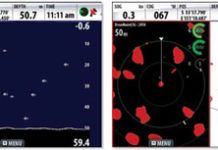
Practical Sailor recently had the opportunity to take a long-term look at the Simrad NSS7 multi-function display from Navico, and we compared it to a similar unit from Raymarine, the e7D. The test focused on the same elements as our past reviews of the Garmin 740s and Ray e7D chartplotter-sounders: installation, screen visibility, environmental tests, and plotter and sounder functions.
A Look at PLB Battery Life
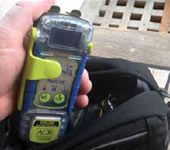
While Practical Sailor editors and readers are excited about messaging features and new “smart” technologies being added to personal locator beacons (PLB) such as the AquaLink View 406-MHz GPS, we were concerned that these extras would come at the expense of the device’s primary purpose. Would the repeated use of a PLB emergency device for non-emergency functions deplete its battery and inhibit its function as an emergency locator? Testers ran the AquaLink through its paces and enlisted the help of an independent lab to determine how non-emergency use affected the PLB’s battery life and other emergency functions.
Seeing Under the Sea
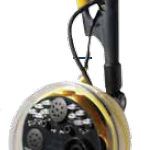
Ever wish you had X-ray vision and could see under the water—without going for a swim—to check the anchor or prop, or to inspect your hull? Well, Aquabotix Technology Corp. developed a product with the goal of giving you that power—at least a limited version of it.
Remote VHF Mics Test
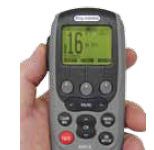
Remote microphones for fixed VHF radios are great tools for both coastal and bluewater sailors, but they can be essential for shorthanded crews. Practical Sailor rounded up and tested six units, each designed to work with two or more compatible, fixed-mount marine VHF radios. The test field included the latest wired and wireless remote mics from Icom, Standard Horizon, Raymarine, and Garmin. To select the best VHF remote mic, testers considered performance, audio systems quality, user-friendliness, features, durability, and ruggedness.
Marine Stereos on a Budget
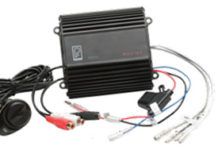
When it comes to onboard stereos, most small and mid-size boat owners want a simple, affordable sound system with a decent audio that can withstand life in the marine environment. To find out what the options are for the cruisers who just want a basic stereo system, Practical Sailor took a look at marine stereo-speaker kits priced under $200. Testers evaluated four budget-friendly audio packages: two kits from Dual Electronics, the AMCP400W and the MXCP43; the CDX-M20 from Sony Corp.; and the ME-52 amplifier from Poly-Planar.

What to Look for in Quality Marine Stereos and Speakers
When shopping for a new stereo system, be sure to evaluate the following closely to be sure the package meets your needs.
Is the SEND Device Message Loud and Clear?
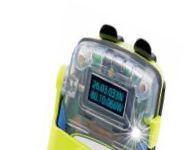
Sometime around 1:30 a.m. April 28, while participating in the Newport-to-Ensenada Race, the Hunter 437 Aegean sailed directly onto the rocky cliffs of North Coronado Island off Mexico’s Pacific coast. Fellow racers came upon pieces of the boat and reported their findings to the U.S. Coast Guard. The bodies of three crew were discovered with the wreckage. The body of the captain was recovered 16 days later. Contrary to news reports stating there “was no sign of distress” aboard Aegean, an SOS distress call went out from one of the crew—but by the time the Coast Guard learned of it, it was too late. Someone sent a distress alert form the captain’s personal SPOT Connect, a portable satellite emergency notification device (SEND) that delivers SOS messages and vital information—ship’s position and user identity—via Globalstar satellites to a third-party emergency call center.
Latest Logbook

Practical Sailor Logbook – September 2026
This month we tour the Hans Christian 48T — the offshore cruiser many sailors call the holy grail — walk the custom Antigua 60...

Video: Morgan 44 Review – The Catalina Cruiser Everyone Forgot
The 1989 Morgan 44 is a big center-cockpit cruising sailboat with Catalina DNA—but it may be one of the most overlooked boats of its...



Latest Sailboat Reviews
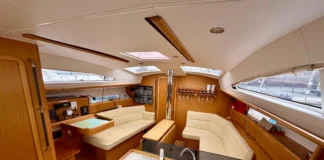
Jeanneau Sun Odyssey 42 DS Used Boat Review
This boat is dangerous for one simple reason—it looks like the answer. It’s big enough, pretty enough, modern enough, and suddenly, somehow, almost affordable...