


Feature Loaded High-end VHFs
As a follow-up to our June 2012 report on mid-priced VHF radios, Practical Sailor tested seven fixed DSC-capable VHFs priced above $300. Because most high-end VHF marine radios offer excellent performance, testers looked especially close at extra features, price, and warranties. We evaluated one radio from Standard Horizon, the Matrix AIS+ GX2150; three from Icom, the IC-M424, IC-M504A, and the IC-M604A; two from Garmin, the VHF 200 and VHF 300; and one from Raymarine, the Ray 218. In addition to the bonus features like AIS, position tracking, and hailer/foghorn capability, testers looked at NMEA network compatibility, screen display, audio output and quality, transmit power and power stability, power draw, and frequency stability.

A Rundown on Common VHF Features and Functions
A Rundown on Common VHF Features and Functions

Raymarine e7 vs. Garmin 740s plotter-sounders
Practical Sailor evaluated the Garmin 740s chartplotter-sounder and other similar sized plotter-sounders in the November 2011 issue. For this follow-up report, we took a close look at the new Raymarine e7D. The Garmin 740s and the Ray e7D are similar in size, and both have a baseline plotter with sounder functionality, but the e7D has many new capabilities that include WiFi and Bluetooth interfaces witth mobile computing devices such as iPads and iPhones. The e7D is also capable of being fully networked with the other members of the new Raymarine chartplotter family and the C- and E-series widescreen units, while the Garmin 740s was designed as a standalone, multi-function display system.
Raymarine’s WiFi Advantage
Raymarine has re-defined onboard interface with WiFi and Bluetooth capabilities in its new MFDs. Using an iPad or iPhone (Version 4 or newer), a Kindle Fire Tablet, or any Android Smartphone or Tablet, users can stream the e7D display to these devices using the RayView free app downloadable from iTunes, Amazon, or the Google Play Android store. This allows you to use these devices as a second display.
Raymarines WiFi Advantage
Raymarine has re-defined onboard interface with WiFi and Bluetooth capabilities in its new MFDs. Using an iPad or iPhone (Version 4 or newer), a Kindle Fire Tablet, or any Android Smartphone or Tablet, users can stream the e7D display to these devices using the RayView free app downloadable from iTunes, Amazon, or the Google Play Android store. This allows you to use these devices as a second display.

Lighting the Way
While electronic navigation plays a dominant role on most of todays boats, paper charts still have their place at the prudent sailors nav station. No chartplotter can match the big picture view offered by paper charts, or the backup benefit in a power outage, hardware failure, or lightning strike.
Useful and Fun Nautical Apps for iPad
In the February and March 2012 issues, we looked at navigation software that allows sailors to use the Apple iPad as a functional chartplotting device. With more than 140,000 apps available, there are hundreds more apps suitable for onboard use. Testers tried out more than 400 weather apps, knot-tying apps, several just-for-fun apps—like Trip Lingo Pirate Edition—and apps for document storage. This report covers more than two dozen of our most used and favorite sailing-related iPad apps.
PS Reviews Cheap and Free iPad Navigation Apps
This article is the second part of three-part series on marine-related iPad applications. Our first part covered the high-end nav apps, while this one looks at relatively inexpensive or free apps. Over the course of three years in the Great Lakes and Florida, sailors put to the test a dozen applications that convert iPads into portable-although less robust-chartplotters. Testers used each one to carry out a series of navigation tasks, evaluating performance and available features. The third part of the series, which will be in next months issue, will look at weather, tide, and other sailing-relative apps.
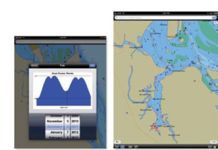
PS Sea-trials the iPad and Nav Apps
With many of the 38-million-sold iPads winding up on board boats, it’s no wonder there are hundreds of iPad apps that are well suited for the sailing life. This begins Practical Sailor’s three-part series on those apps. Part 1 of the series reports on PS’s field tests of multiple navigation apps—using raster and vector charts—to see how well they perform and how they compare to traditional navigation software. They review looks at the top performers: iNavX, iPad Navionics, and Charts & Tides.
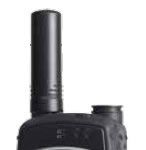
Practical Sailor Reviews Iridium and Inmarsat Satphones
If you are considering buying a satellite phone, much depends on how long you will need it, how you will use it, where you are going and what your cost limitations are. As with cell phones and other communication services, total costs can get complicated with setup charges, access fees, service plans, features packages, and air time bundles. Today’s satphones offer cruising sailors the peace of mind to keep in touch with the office, family, and friends with a private conversation while anywhere on the high seas and open ocean. Practical Sailor looked into the availability, features, functions, limitations, and pricing of the handheld portable satellite phones on the market today. We reviewed the Iridium 9555, Iridium 9575, and Inmarsat Isatphone Pro.
Latest Logbook

Practical Sailor Logbook – September 2026
In September we tour the Hans Christian 48T — the offshore cruiser many sailors call the holy grail — walk the custom Antigua 60...

Video: Morgan 44 Review – The Catalina Cruiser Everyone Forgot
The 1989 Morgan 44 is a big center-cockpit cruising sailboat with Catalina DNA—but it may be one of the most overlooked boats of its...



Latest Sailboat Reviews
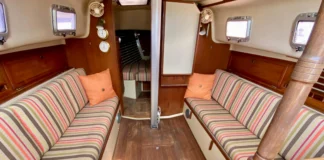
Bayfield 32 Used Boat Review
At first glance, the Bayfield 32 looks less like a fiberglass production boat from the 1980s and more like somebody shrank a traditional sailing...