



Mailport: July 2010
Letters to the editors of Practical Sailor in July 2010 include questions and comments about mildew, galley blenders, teak cleaners, online captains courses and personal hydration.
Cobra Will Take Your Call Now
While it sometimes seems marine electronics marketers are piling on unnecessary features just because they can, anyone who has watched their $300 cell phone disappear over the rail or has missed a call from the boss while they were playing hooky on the water can appreciate Cobras newest handheld marine VHF. The MR HH475 FLT BT is a full-feature, floating handheld VHF that can also link up to any Bluetooth-enabled cell phone. The radio uses a tiny wireless Bluetooth transceiver (the same technology used to link cell phones to wireless ear buds) to synchronize with your cell phone. When you go for a sail, you can put your cell phone belowdecks and use your VHF to monitor and receive any incoming phone calls.
SmartPlug: Safer Power
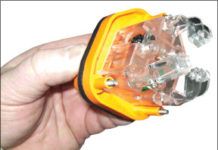
According to multiple reports, most AC electrical fires occur at the boats shorepower inlet. To address this and other shortcomings of the standard twist-type boatside connection, SmartPlug Systems developed a new AC shorepower system that the company hopes will become the new marine standard. Loose and corroded connections are most often the culprits when overheating occurs. Corrosion typically results when moisture gets in at the plug-inlet connection, while arcing-which in turn leads to pitting, scorching, and heat build-up-is partially due to the shape and small contact area of the connector pins.

Mailport: June 2010
The June 2010 issue featured letters on subjects such as: spiders, addition of color to handheld electronics, DIY boatyard recommendation and propane fridges.
Details Distinguish the Best Wi-Fi Antenna for a Sailboat
Practical Sailor looked at three Wi-Fi antennas suggested by readers: the Bad Boy Xtreme from Bitstorm, Rogue Waves Wave Wi-Fi from GeoSat Solutions, and The Wirie, developed by cruising couple Mark Kilty and Liesbet Collaert. All three are marketed specifically to boaters, and they represent the two principal types of devices that users will find: USB-type units that plug into computer or laptop USB ports and Power over Ethernet (PoE) bridges that network via your computers Ethernet port to provide a pathway to the Internet.
Testing Navigation Applications for the iPhone
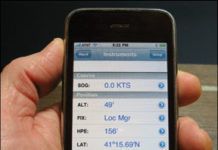
After testing navigation applications for Windows-based smartphones and PDAs, Practical Sailor focuses on three apps available for the iPhone. iNavx, Memory-Map, and Navionics can each be downloaded for a reasonable price and used as backup to primary navigational aids such as a chartplotter or handheld GPS. Cellphone-based programs are not recommended as a standalone approach to navigation, but the iPhone apps are a great way to investigate, plan routes, and set and send waypoints at a very low cost for cartography.

TruPlug is a Handy Emergency-kit Tool
Spring is here, and that means its time for systems and safety checks. Among the items that should be on your to-do list are checking your seacocks and making sure essential safety gear is on board. For us, that has always included keeping an inventory of soft wood thru-hull plugs for plumbing emergencies, but this year, we decided to also add a few of Forespars new closed-cell foam TruPlugs.
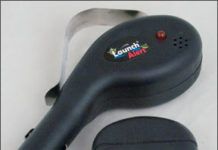
Trailer Helper
The concept behind Quality Mark Inc.s Launch Alert is simple: A 12-volt DC wireless receiver/alarm plugs into a cigarette lighter outlet in the towing vehicle, and a waterproof, battery-operated transmitter/sensor mounts on the trailer. To install, you attach the transmitter (using a very sticky peel-and-stick backing) to the trailer frame so that its sensors are at your desired "waterline." When the contacts are immersed, the receiver in the vehicle beeps loudly.
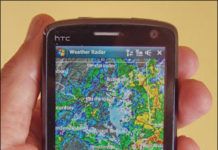
Weather Radar for Windows Phones
We know the drill now. If we feature a Mac product, we have to appease the PC crowd, and vice versa. Otherwise, the earth spins off its axis and our inbox starts smoking. So while the iPhone crowd gets their fill with our review of navigation apps (page 24), heres a morsel for readers using Windows Mobile devices. After testing several navigation programs for Windows Mobile handhelds in December 2009, we had the opportunity to evaluate Memory-Maps Weather Radar for Windows Mobile cellphones.
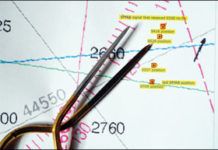
What is the Best Backup for a 406 EPIRB?
Maritime search and rescue missions prompted by distress alerts from emergency position indicating radio beacons (EPIRBs) have topped 6,000, and that number continues to grow. Although Practical Sailor recommends having a GPS-equipped 406-MHz EPIRB (GPIRB) on board, two means of satellite signaling for help is definitely better than one, and a few hundred dollars invested in a secondary tracker or beacon is worth it. In this article, we examine supplemental emergency signaling and tracking devices, including government-supported systems such as the ACR AquaLink Personal Locator Beacon, and private-network systems such as SAT phones and The Spot Messenger.
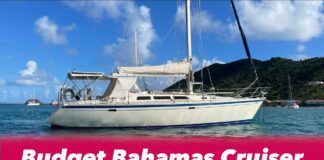
O’Day 40 – A Budget Cruiser for the Bahamas
The O’Day 40 (1986) is one of those cruising sailboats that somehow slipped through the cracks of sailing history. Built during the final years...


Latest Sailboat Review
Island Packet Estero Used Boat Review
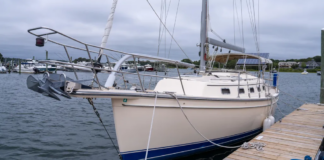
Florida-based Island Packet targets a relatively narrow niche, so the toughest competitors to its new boats are often older Island Packets. Introduced in 2010, the 36-foot, shoal-draft Estero is the company’s latest attempt to introduce a distinctive model that doesn’t stray too far from the company’s proven formula for success: moderate displacement, full-keel cruisers designed to be lived on, sailed far and in comfort, and endure the bumps, scrapes, and storms that cruising boats inevitably encounter. After sailing the Estero on Florida’s Sarasota Bay and inspecting its interior, construction, and systems, Practical Sailor testers noted that the shoal-water cruiser will appeal strongest to Island Packet fans who’ve been waiting for a shoal-draft, easy-to-sail boat that compares to the IP37 in terms of interior space. These strengths will be most apparent on intracoastal or riverine adventures like the Great Loop.