




New Waterproof Handheld VHFs Enter Crowded Market
Electronics is the most rapidly changing category of marine products, and the steady stream of VHF radios is an example of how fast the market changes. Since our reports on VHF radios earlier this year, two new waterproof handheld VHF radios have entered the market. Practical Sailor compares the new, inexpensive Standard Horizon HX28OS to the 2009 Best Choice, the Cobra HH325VP. Testers compared the new floating handheld from Icom, the M36, to the high-end Best Choice, the Standard Horizon HX85OS, a floating VHF that also offers full DSC capability and has a built-in GPS.
Testing Smart Phones at Sea
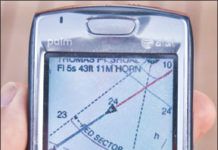
Practical Sailor tests a cross-section of PDAs, pocket PCs, and smart phones between $100 and $800. Palm OS and Windows Mobile software were included. Readability, functionality and practical application were foremost considerations. Reliability, weather resistance, and batteries were also considered. We evaluated Palm Phones Palm Treo, Hewlett Packard iPAQ, Palm PDA Palm TX, Active Captain MobileSource, Memory Map Navigator, and Ozi Explorer CE. Testers compared the mobile devices to a handheld GPS specifically designed for navigation, the Garmin Oregon 400C.

In Distress? Theres No App for That
This months review of "smart phone" navigation tools and software got me thinking about my own descent into the mobile phone abyss, and more broadly, how the communication revolution is reshaping our approach to life at sea. For many years after moving ashore, I resisted the urge to own a mobile phone. That changed after my pregnant wife got stranded in a New England snowstorm. Now, a half-dozen saltwater-soaked phones later, my immersion into cell-phone society is complete. As this months article shows, the same tool I use to order a pizza can now guide me across the Atlantic. (Although Id never encourage taking such a risk.) So when the makers of safety equipment and government spokesfolks ballyhoo a too-good-to-be-true safety communication network for mariners, the Global Maritime Distress and Safety System (GMDSS), it doesn't come across as science fiction.

Mailport: 11/09
To keep from being pulled under in a collision between a tanker and my sailboat, I "pulled the ripcord" to release the snap shackle on my Standard West Marine Safety Tether . The tether release lanyard was outfitted with a series of balls. (See bottom photo at right.) I had rehearsed reaching for and feeling the release toggle many times so it would come naturally in an emergency. The balls have a distinct feel. There was nothing on my PFD or foul-weather jacket that resembled them. The replacement tether I bought from West Marine (ISAF Specification Safety Tether, No. 9553504) has a new toggle on the snap-shackle release lanyard that consists of an open triangle of plastic. This is dangerous, in my opinion! In my first few hours of using the new tether, in moderate sea conditions, I managed to snag the triangular loop on something and release the snap shackle. I am now replacing all triangular loop pulls with bead pulls that I have crafted myself.
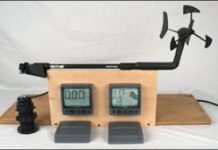
Testers Take Tacktick and Nexus Wind Instruments for a Spin
Practical Sailor testers compared Tackticks improved Race Master system to the Nexus Start Pack 3, a hybrid wired/wireless system. The Tacktick Micronet wireless wind instrument, a compact system featuring wireless display and a masthead sensor, has a strong following among racers. It has proven to be a good choice for those sailors serious about improving race performance as it has many options for tracking performance on the course in real time. Its ability to work with a 12-volt system makes it a good choice for small boats. The versatile, expandable Nexus hybrid has an impressive and intuitive interface and a graphic analog wind representation. It provides all of the basic functions a cruiser or racer uses most, and testers found the analog wind display appealing.
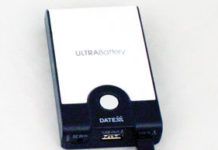
Stocking Stuffers For Sailors
Its hard to believe, but the 2009 holiday season is upon us. As is custom, Practical Sailor editors have put together a varied roundup of gifts to stuff those stockings more likely to hang from a bulkhead than the mantle. For the racing or small-boat sailor whos making the leap from wire rope to high-tech fiber, Colligo Marines Softies offer a lightweight alternative to traditional steel shackles and headsail hanks. Made of extra strong and chafe-resistant Dyneema, the "soft" hardware is the perfect solution for use with synthetic forestays, and unlike metal hanks, theyll never leave rust stains on sails. Using the Softies is as easy as pulling the shake-resistant knot through the expandable spliced loop, then sliding the slip ring (rubber O-rings) up to the knot. A lanyard ensures easy opening, but the self-tightening O-rings offer added security against accidental opening or shaking loose.

PS Advisor: Safe Mounting for Radar
I am looking at antenna mounting options for my 2.2-kilowatt radar. I like the idea of keeping the antenna out of the foretriangle and its sail and rigging, but am a little concerned about crew exposure by mounting the antenna aft on a pole or lower on the backstay. The manufacturer (Furuno) mentions nothing about exposure hazards in its installation manual. Does a hazard exist in this configuration?
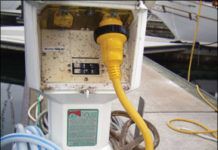
Shorepower Cop
Billed as the worlds only shorepower corrosion detector with reverse polarity indicator by West Marine, Marincos new Galvan-Alert attaches to your existing 30-amp shorepower inlet and power cord and monitors galvanic and stray current corrosion flowing through the green ground wire ground of your shorepower system. Appearance-wise, the GalvanAlert is similar to a miniature Marinco power cord. It is well constructed and utilizes the same plugs, connectors, and locking rings that are familiar to most every boater with an AC shorepower cord. The GalvanAlert has four LED indicators-a green LED to indicate power, a red LED indicating reverse polarity, and two other LEDs to show medium (green) and high (red) galvanic corrosion activity.
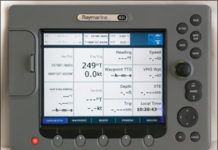
Two 12-inch Chartplotters Go Head-to-Head
After testing the 12-inch Garmin 5212 touchscreen and the Raymarine E120 multi-function displays in August 2008, Practical Sailor pitted the newest big-screen chartplotter, the Simrad NX45, against its well-used Garmin, the subject of a long-term test on one of Practical Sailors test boats. For this head-to-head test, we looked at day and night viewability, functionality, user-interface, and price. We also looked closely at the software that each uses: Garmin uses Bluechart g2 software, Simrad C-Map MAX, and Raymarine Navionics.
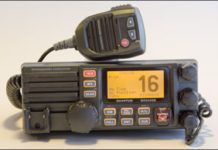
Top-of-the-Line VHFs Packed with Multi-function Features
The fixed-mount marine VHF radios tested for this review go beyond the basic capabilities of moderately priced VHFs. The waterproof VHFs include features such as integral high-wattage hailers, multiple remote microphone connections, and the capability to store MMSI numbers. They also meet Class D standards for DSC functions, with two separate receivers-one for voice communications and a second to continuously monitor channel 70 for DSC calls. The five VHF radios tested were the Icom M504, Icom M604, Standard Horizon GX5000S, Standard Horizon GX5500S, and the Raymarine 218.
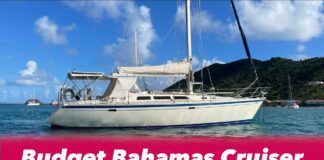
O’Day 40 – A Budget Cruiser for the Bahamas
The O’Day 40 (1986) is one of those cruising sailboats that somehow slipped through the cracks of sailing history. Built during the final years...


Latest Sailboat Review
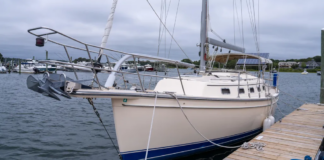
Island Packet Estero Used Boat Review
Florida-based Island Packet targets a relatively narrow niche, so the toughest competitors to its new boats are often older Island Packets. Introduced in 2010, the 36-foot, shoal-draft Estero is the company’s latest attempt to introduce a distinctive model that doesn’t stray too far from the company’s proven formula for success: moderate displacement, full-keel cruisers designed to be lived on, sailed far and in comfort, and endure the bumps, scrapes, and storms that cruising boats inevitably encounter. After sailing the Estero on Florida’s Sarasota Bay and inspecting its interior, construction, and systems, Practical Sailor testers noted that the shoal-water cruiser will appeal strongest to Island Packet fans who’ve been waiting for a shoal-draft, easy-to-sail boat that compares to the IP37 in terms of interior space. These strengths will be most apparent on intracoastal or riverine adventures like the Great Loop.