




Practical Sailor Tests AIS Class B Transceivers from West Marine and Navico
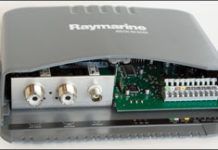
Practical Sailor last looked at Automatic Identification Systems, or AIS, in November 2008, reviewing the Raymarine AIS250, a receive-only device. Since that report, the pool of AIS products has grown to include several affordable transceiver options for recreational sailors. In this head-to-head test, we review two AIS-Class B devices capable of sending and receiving AIS data: the Navico NAIS-300 and the West Marine AIS1000. AIS transceivers are split into Class A (commercial) and Class B (recreational). AIS devices improve safety at sea by receiving and broadcasting a wide variety of information about a ship, including its name, latitude and longitude, course over ground, speed over ground, heading, status, and Maritime Mobile Service Identity (MMSI) number.
Practical Sailors Gear of the Year 2009
Practical Sailor editors pored over the dozens of products reviewed in the previous months to find the best of the best sailing gear, products that are worthy of the designation Gear of the Year. This years editors choice list includes a rugged rope clutch (Spinlock), a grippy ratchet block (Ronstan), feature-filled VHF handheld radios (Standard Horizon and Cobra), high-quality nesting cookware (Magma), a proven paste wax (Collinite), an ocean-ready first-aid kit (Adventure Medical Kits), a reliable LED bulb for cabin lighting (Imtra), an economical ice box conversion kit (Frigoboat), an innovative ultrasonic tank sensor (BEP Marine), cold-weather gloves (Gill), and an easy-to-install Wi-Fi booster (5mileWiFi).
Crossing Over
When it comes to gear for the outdoor enthusiast, there are a lot of crossover products. Hikers, bikers, boaters, backpackers, and climbers share a need for lightweight, durable, and practical equipment. So as Practical Sailor editors geared up for our summer adventures, we looked for products that could serve double-duty on the boat and on the trail.
Mailport: 08/09
As a new boat owner, I have no end of questions, but here’s a quickie: I have recently had my boat hauled and sanded to the gelcoat, and repainted with all the right stuff. (The bottom was coated with Interlux CA Bottomkote.) Now, how often should I have a diver clean the underside, bearing in mind I live in San Diego? The service providers have a vested interest in selling frequent cleans—one company running a special at the moment wants me to sign a contract for a bottom clean every three weeks, but that sounds way too often to me. I realize it may well vary with geography and ambient temperature, but there should be some kind of general rule of thumb, perhaps?
Feature-loaded High-end Marine Handheld VHF Radios
Practical Sailor tested eight high-end marine handheld VHFs from three manufacturers: Cobra, Standard Horizon, and Uniden. Among those tested were two updated Standard Horizon VHFs, the HX500S-LI and HX600S-LI, and three of the companys latest floating VHF radios, the HX750S, HX760S, and HX850S. From Uniden, testers evaluated the MHS450 and MHS550. They also tested the Cobra HH425 LI. These feature-rich handheld marine radios, priced from $130 to $350, were tested for transmitter power, frequency accuracy, frequency stability, receiver sensitivity, audio output, and audio quality. They also were submerged in fresh water, dropped from 4 feet onto concrete and batteries were left on for 15 hours to test battery life.
Marine Electronics: Practical Sailor Reviews New Raymarine A-series Chartplotter-sounder
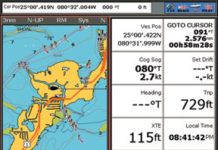
Sailors looking for a chartplotter who tend to stray from the beaten path or those who spend a fair amount of time fishing may want to consider a combination chartplotter-fishfinder. Our last look at plotter-sounders named the Garmin 545s the Practical Sailor Best Choice for combination chartplotter sounders. This review compares the Garmin to the new Raymarine A50D. Testers looked at display unit features, plotter features, and sounder features. The Raymarine unit uses Navionics cartography and can interface with AIS devices.
Marine Handheld GPS Test Update
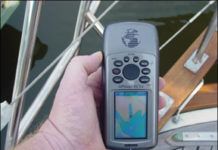
The Delorme Earthmate PN-40 is one of the newest additions to the handheld marine electronics market. Practical Sailor evaluated the rugged, palm-sized Earthmate using the same tests used in past GPS evaluations to see how it matched up against the Garmin GPSMap 76CSx, our top performer in past tests. Testers used the unit for multiple days and rated key functions, battery life, lighting, waterproof quality, cold starts in multiple locations, and visibility under different conditions.
Practical Sailor Tillerpilot Test: the Simrad TP10 and the Raymarine ST1000 Plus
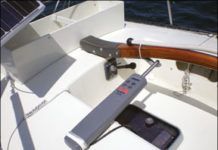
Offshore sailor Skip Allan tested two entry-level tillerpilots, the Simrad TP10 and Raymarine ST1000, aboard his 27-foot sloop during last years Singlehanded Trans-Pac race. The autopilots were used during varying weather conditions and sea states, including gale conditions. The review considers characteristics of the Raymarine tillerpilot and Simrad tillerpilot, including price, power supply, drive thrust, installation ease, user friendliness, construction, and performance.

The Search for Reliable Hands-free Onboard Communication Systems
Being able to communicate with a hands-free communication device along the length of the deck allows crew to coordinate activities like anchoring, docking, and going up the mast. Practical Sailor testers experimented with two systems: Motorola SX800R two-way radios and Nautic Devices Yapalong 3000. Both the Motorola and the Yapalong comprise a cell-phone-sized transmitter/radio unit and a separate handset. We tested them during anchoring, masthead repairs, and docking. The products were used with their mated headsets in various weather and sea conditions, including light rain and spray. The Motorola unit also was tested with a compatible Fire Fox Sportsman Throat Mic.
New Air Breeze Wind Generator Field Tested
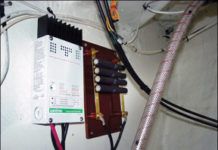
As sailors, wind energy is at the forefront of our lives. The Practical Sailor wind generator test in March 2007 included a prototype of the Air Breeze from Southwest Windpower. Last year, the company debuted the Air Breeze in the alternative energy market for recreational boaters; it is distributed through retail giant West Marine. Using the same criteria as our 2007 test, Practical Sailor tested the Air Breeze for several months under a variety of conditions, using it to charge the ships batteries aboard a Union 36. The wind generators body is cast aluminum, and its blades are made of glass-filled polypropylene. Testers found it quiet, easy to mount, and reasonably priced at $900.
O’Day 40 – A Budget Cruiser for the Bahamas
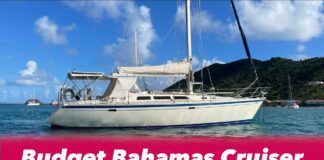
The O’Day 40 (1986) is one of those cruising sailboats that somehow slipped through the cracks of sailing history. Built during the final years...


Latest Sailboat Review
Island Packet Estero Used Boat Review
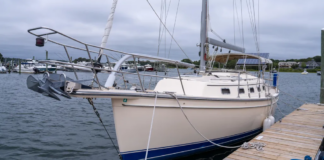
Florida-based Island Packet targets a relatively narrow niche, so the toughest competitors to its new boats are often older Island Packets. Introduced in 2010, the 36-foot, shoal-draft Estero is the company’s latest attempt to introduce a distinctive model that doesn’t stray too far from the company’s proven formula for success: moderate displacement, full-keel cruisers designed to be lived on, sailed far and in comfort, and endure the bumps, scrapes, and storms that cruising boats inevitably encounter. After sailing the Estero on Florida’s Sarasota Bay and inspecting its interior, construction, and systems, Practical Sailor testers noted that the shoal-water cruiser will appeal strongest to Island Packet fans who’ve been waiting for a shoal-draft, easy-to-sail boat that compares to the IP37 in terms of interior space. These strengths will be most apparent on intracoastal or riverine adventures like the Great Loop.