

Practical Sailor PFD Research Looks at Capsizes
After a series of tragic accidents involving sailors in organized sailing events and training programs in 2011 and 2012, Practical Sailor initiated research into safety equipment in use during the time of these accidents. Our current ongoing tests deal specifically with personal flotation devices (PFDs), safety harnesses, and combination inflatable PFDs and safety harnesses. Ultimately, we hope to come up with recommendations similar to those we made for infant PFDs in June 2007, when we published a prototype of what our ideal infant PFD would look like.

US Sailing Investigators Recommendations
Ron Trossbach, the lead investigator for US Sailing in the Rambler 100 incident, recommended the following changes to US Sailing’s Offshore Special Regulations (OSR) and US Sailing Prescriptions. He also recommended that these be forwarded to the International Sailing Federation (ISAF) to be included the ISAF Special Regulations Governing Offshore Racing for Monohulls. The items in parentheses reflect the OSR section that would be amended.
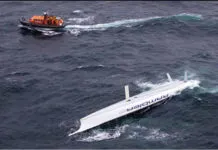
Safety at Sea Part III: Rambler 100 capsize
In our final review of three 2011 sailboat tragedies investigated by US Sailing, we offer a clear look at how even the best-equipped, most highly trained sailors can run into trouble at sea. Rambler 100-touted as the fastest monohull super-maxi on the planet and representing millions of dollars in research and design-lost its can'ting keel and capsized while competing in the August 2011 Rolex Fastnet Race. Sixteen crew struggled to stay on the overturned hull, while another five floated adrift in the Celtic Sea, trying to fight off hypothermia. Practical Sailor looks closely at US Sailings report, directed by retired U.S. Navy Captain Ron Trossbach, the Rambler 100 crews post-accident recommendations, and the safety lessons we can all learn from the accident.
US Sailing Investigator’s Recommendations
Ron Trossbach, the lead investigator for US Sailing in the Rambler 100 incident, recommended the following changes to US Sailing’s Offshore Special Regulations (OSR) and US Sailing Prescriptions. He also recommended that these be forwarded to the International Sailing Federation (ISAF) to be included the ISAF Special Regulations Governing Offshore Racing for Monohulls. The items in parentheses reflect the OSR section that would be amended.
Lessons learned
Ron Trossbach, head of the US Sailing investigation into the Rambler 100 accident, offered the following lessons that sailors can take away from the capsize.
Rambler 100 Recommendations
The crew of Rambler 100 made the following recommendations/observations regarding safety equipment. The recommendations were taken from crew statements provided to US Sailing and do not represent US Sailing’s own recommendations.
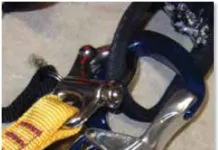
PS Analysis: The 2011 WingNuts Capsize
This is the second article in a Practical Sailor series that takes a close look at US Sailings recent reports on three tragic sailing accidents last summer. The first article covered US Sailings report on the Severn Sailing Association accident involving the drowning death of 14-year-old Olivia Constants in Annapolis, Md. This report focuses on US Sailings investigation of the tragedy involving the light-displacement sloop WingNuts, which capsized during the Chicago Yacht Clubs Chicago to Mackinac race. The US Sailing report focused on four key elements that might have been factors in the accident: crew experience, weather, boat design, and safety equipment. Practical Sailors own investigation and reporting fills in some gaps in the US Sailing report, particularly regarding safety gear-tethers, harnesses, and PFDS-and its role in the event.
Tether recall likely no factor
In 2010, West Marine voluntarily recalled two tether models (SKU #9553512 and #9553504), the same model tethers worn by Mark Morley and Suzanne Bickel the night they died. According to West Marine’s recall notice on its website: “West Marine has discovered that under heavy load, the shackle end may not release. “
US Sailing Recommendations
The US Sailing report makes several specific recommendations to prevent future accidents such as the one that involved WingNuts, among them:
US Sailing Recommendations
The US Sailing report makes seven specific recommendations, several calling for important research into ways to prevent future accidents such as the one that took the life of Olivia Constants.
Latest Logbook

Practical Sailor Logbook – September 2026
In September we tour the Hans Christian 48T — the offshore cruiser many sailors call the holy grail — walk the custom Antigua 60...

Video: If You See This on a Used Sailboat, Walk Away
If you’re searching the used sailboat market, comparing sailboats for sale, or learning how to inspect a sailboat before buying, these are the red...


Latest Sailboat Reviews
Cal 2-27 Used Boat Review
Our story begins in 1970, with the introduction of the Cal 29. Looking for something similar but a bit smaller, the company asked designer Bill Lapworth for a 27-footer, which at first was the Cal 27, a fin keel, spade rudder design with a convertible pop top; another incarnation of this basic hull was the T/2. But the concept of the 29 found its full expression in the Cal 2-27, which began production in 1975 and continued to 1977, after which it was again modified and called simply the Cal 27...again. Production of it ceased in 1986.