

Crew Learns Along the Way
When a storm packing gale-force winds with gusts to 115 knots and torrential rain left contributor Joe Minicks Mason 43, Southern Cross, in shambles off the Greek island of Lefkas, he sought assistance from his insurance company. The boats gear casualty list was long, and the extensive damage to the boat included the hull and electrical systems. For cruisers in the far-flung corners of the world, successfully carrying out such a sizable refit can be challenging, even with the help of a knowledgeable surveyor and a reputable insurance company. But after nearly a year on the hard, the mission was complete, and the Southern Cross crew gained first-hand knowledge about insurance policies and claims, and how to tackle extensive repairs far from home. This is their story.

Buying into the MOB Fear
This months review of man-overboard devices that both alert the crew and help them track a person in the water is a pretty good opportunity for what I call fear factor marketing. Like any active sport that takes place on the water, sailing has risks, but many of the most persistent fears held by non-sailors (pirates are often high on the list) seem to be inspired more by fiction than fact.

In the Wake of a Storm
Sailing west from the Turkish port of Marmaris, we reached across the Aegean Sea with its notorious meltemi wind blowing hard from the north before rounding the southern end of the Greek Peloponnese. We were headed for our winter destination near Rome, when a new forecast warned of an extensive frontal system approaching from the west. With gale-force winds and heavy rain predicted for several days, we needed a new plan. The narrow, sheltered Vliho Bay on the Greek island of Lefkas, seemed to be the ideal anchorage for us to wait for the front to pass.
Mailport: April 2013
I recently purchased the cord, and as packaged on the plastic spool, the shore end of the new 25-foot EEL cord has a very tight bend at the plug, in order to force it into the package. The bend is much tighter than Id normally allow on a power cord, and upon inspection, I noticed what appears to be a separation of the seal between the cord and the plug. I checked other packages on the shelf at my local West Marine (one of many retailers of the cord), and found all of the 25-foot cords have the same tight bend at the shore end, and most have the same apparent seal issue.
Practical Sailor PFD Research Looks at Capsizes
After a series of tragic accidents involving sailors in organized sailing events and training programs in 2011 and 2012, Practical Sailor initiated research into safety equipment in use during the time of these accidents. Our current ongoing tests deal specifically with personal flotation devices (PFDs), safety harnesses, and combination inflatable PFDs and safety harnesses. Ultimately, we hope to come up with recommendations similar to those we made for infant PFDs in June 2007, when we published a prototype of what our ideal infant PFD would look like.
DeLorme inReach vs. Iridium Extreme
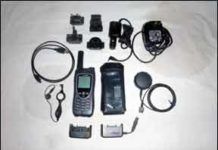
There are numerous portable marine electronics that can keep you connected while you get away from it all. But which device offers the most features-tracking, two-way communication, location sharing, etc.-at the best price? And which one can be counted on in an emergency? We began our look at these personal electronics with the January 2013 review of BriarTeks Cerberus Cerberlink and the SPOT Connect. This month, we evaluate the DeLorme inReach, another pocket-sized, satellite communication option for the cruising sailor, as well as the Iridium Extreme 9575 sat phone, which is capable of providing worldwide voice communication.
Life Raft Inspection, an Inside Look
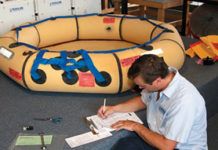
If its been more than five or six years since your life raft was inspected, theres a good chance that it wont deploy properly in an emergency, and survival items stowed inside may also be expired. The hassle and expense of inspecting a life raft-something youve likely never used or will use-often deter owners from having it repacked as often as it should be. To find out exactly what the process entails, Practical Sailor observed the inspection and repacking of a five-year-old, eight-person Viking recreational-grade life raft at a service center in Boston and toured a Winslow service facility in Florida.
Equipping Drones for At-Sea Search and Rescue
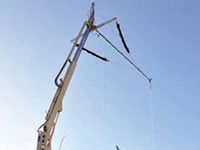
The radio crackles with an emergency dispatch: A sailboat is sinking 50 miles east of Cape Hatteras. Theres no EPIRB signal, just a garbled mayday overheard by a commercial ship. The weather is snotty and getting worse. Within minutes, a Jayhawk helicopter and Falcon jet are airborne, roaring toward the search zone, where theyll meet up with two unmanned drones launched from a cutter on patrol. Sound far fetched? Not really. Early-generation unmanned aircraft systems (UAS) armed with lightweight cameras are already being deployed on limited search missions. Fitted with high-resolution cameras, infrared, and other sensors, the drones cover wide swaths of ocean forup to 20 hours without refueling.
Navisafe’s Handy ‘Mini’ LED Light
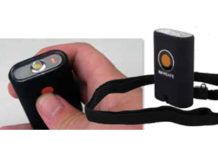
Specializing in lighting for nautical and other outdoor activities, Norway-based Navisafe’s products include the U.S. Coast Guard-certified Navi light 360, Practical Sailor’s Recommended small-boat rail light (PS, May 2011), and now, the Navi light Mini.
Navisafes Handy Mini LED Light
Specializing in lighting for nautical and other outdoor activities, Norway-based Navisafe’s products include the U.S. Coast Guard-certified Navi light 360, Practical Sailor’s Recommended small-boat rail light (PS, May 2011), and now, the Navi light Mini.
Bahamas for $5000? The Watkins 27 foot Sailboat
Is the Watkins 27 the ultimate small cruising sailboat? In this video, we take a deep dive into the Watkins 27 — a classic...



Latest Sailboat Review

Jeanneau 55 Boat Review
This recent sailboat from Jeanneau may as well be a spaceship. They’ve taken all the time-honored designs of a monohull aft cockpit and turned...