


US Sailing Investigators Recommendations
Ron Trossbach, the lead investigator for US Sailing in the Rambler 100 incident, recommended the following changes to US Sailing’s Offshore Special Regulations (OSR) and US Sailing Prescriptions. He also recommended that these be forwarded to the International Sailing Federation (ISAF) to be included the ISAF Special Regulations Governing Offshore Racing for Monohulls. The items in parentheses reflect the OSR section that would be amended.
PS Analysis: The 2011 WingNuts Capsize
This is the second article in a Practical Sailor series that takes a close look at US Sailings recent reports on three tragic sailing accidents last summer. The first article covered US Sailings report on the Severn Sailing Association accident involving the drowning death of 14-year-old Olivia Constants in Annapolis, Md. This report focuses on US Sailings investigation of the tragedy involving the light-displacement sloop WingNuts, which capsized during the Chicago Yacht Clubs Chicago to Mackinac race. The US Sailing report focused on four key elements that might have been factors in the accident: crew experience, weather, boat design, and safety equipment. Practical Sailors own investigation and reporting fills in some gaps in the US Sailing report, particularly regarding safety gear-tethers, harnesses, and PFDS-and its role in the event.
Tether recall likely no factor
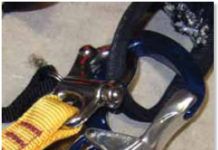
In 2010, West Marine voluntarily recalled two tether models (SKU #9553512 and #9553504), the same model tethers worn by Mark Morley and Suzanne Bickel the night they died. According to West Marine’s recall notice on its website: “West Marine has discovered that under heavy load, the shackle end may not release. “
US Sailing Recommendations
The US Sailing report makes several specific recommendations to prevent future accidents such as the one that involved WingNuts, among them:
Safety at Sea Seminar
If you don’t have any plans for the last weekend of March and beginning of April, you can still register and attend the Annapolis Safety at Sea seminar, presented by the Marine Trades Association of Maryland and the U.S. Naval Academy. The seminar runs March 31-April 1 and will be held in Alumni Hall at the Naval Academy in Annapolis, Md.
Safety Lessons Learned Part 1
This is the first in a two-part series that examines extensive reports on three sailing accidents. Each capsule summary of the reports is followed by a brief analysis of the US Sailing reports, and our recommendations for sailors. Fourteen-year-old Olivia Constants died last summer when her harness was accidentally hooked in the trapeze and she could not surface after the boat turned turtle. US Sailing made recommendations regarding capsize and recovery training; life jackets; trapeze gear and training; entrapment; electronic communication; language; and crisis, incident, and disaster plans.
US Sailing Recommendations
The US Sailing report makes seven specific recommendations, several calling for important research into ways to prevent future accidents such as the one that took the life of Olivia Constants.
Help Us Design a Better PFD/harness
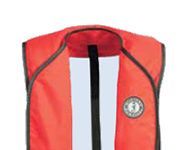
Do try this at home: Don your favorite inflatable-PFD/harness and inflate it. Dont waste a gas cartridge; use the oral inflation tube. Wade into the water. A pool is fine-make sure it is still shallow enough to stand. Now, imagine you are underneath an overturned hull and are trying to escape. Try to swim beneath the surface as you might do to get out from under the turtled boat. You don't have to dive deep, the imaginary overturned boat could be as small as a dinghy.
Orion Replacing Potentially Faulty Flares
In the wake of “repeated product failures,” Orion Safety Products has instituted a replacement program for older XLT flares and 12-gauge signal systems that some boaters may still have in their emergency kits. According to the company, some XLT and 12-gauge signals made before October 2008—when the designs were revamped—have failed to launch or to ignite.
Seascoopa Revisited
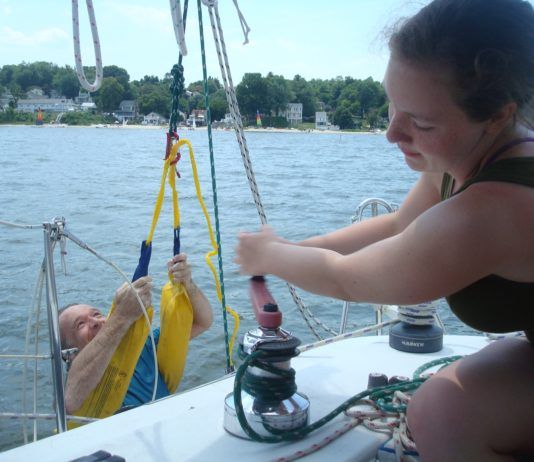
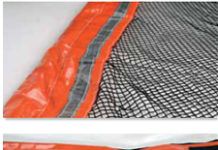
In May 2010, Practical Sailor reviewed a prototype man-overboard (MOB) recovery device called the Seascoopa. The parbuckle-type device functions much like a human trawler net, enabling the recovery of injured or unconscious MOBs while the boat is slowly making way. While the device performed as advertised, it needed some design fine-tuning. After an extensive re-design, the production version of the new Seascoopa addresses most of the concerns testers had with the prototype and cranked the construction quality and design up a notch. Testers felt there are certain benefits to the improved Seascoopa that other recovery aids do not offer, but it's not our preferred device for use as a primary MOB aid.
Bahamas for $5000? The Watkins 27 foot Sailboat
Is the Watkins 27 the ultimate small cruising sailboat? In this video, we take a deep dive into the Watkins 27 — a classic...


Latest Sailboat Review

Jeanneau 55 Boat Review
This recent sailboat from Jeanneau may as well be a spaceship. They’ve taken all the time-honored designs of a monohull aft cockpit and turned...