

Seawind 950: Some Assembly Required
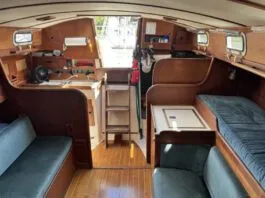
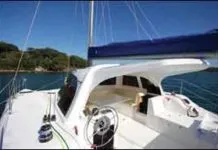
Seawind Catamarans, Australias most successful sailboat builder, introduced its new Seawind 950 last year. The 31-foot cruising multihull can be delivered in two 40-foot containers and can be assembled by two people (with a forklift or crane) in less than two days, ready to sail on coastal passages. The $220,000 Seawind 950 was designed as an entry-level catamaran with a minimalist fit-out. The container concept allows the yacht to be delivered economically anywhere in the world with truck access.
The Pros and Cons of a Plumb Bow
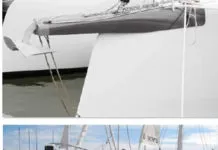
Practical Sailor editors looked at emerging design trends at the most recent Annapolis Boat Show. What caught our eye was that race-boat designers long-running obsession with near vertical, plumb bows-a shape that squeezes maximum waterline length into a hull-has trickled down to boats built for cruising. This raised the question: Is this race-boat style stem advantageous to a cruising sailboat? It is important to recognize that a plumb stem and long waterline arent the only design factors that make a sailboat go fast.

EPA Mandate Sparks Fuel-vent Filter Test
Every day, as the temperature rises and falls, gases inside your fuel tank expand and contract. The emissions released during this diurnal breathing have raised concerns at the U.S. Environmental Protection Agency, and in July 2011, the agency mandated passive carbon canister filters on all installed gasoline-tank vent lines to collect fuel evaporation emissions. While older boats are not required to retrofit, we wondered how such a filter would affect fuel quality and engine performance-and whether carbon is the most effective filter media-so we launched tests using E10, gasoline, and diesel to find out.

A Look at Sailboat Design: Fin Keels vs. Full Keels
When a keel tears away from a sailboats hull, it makes the loss of a rig or rudder seem like a minor inconvenience. History shows that its an uncommon occurrence, but because we now annually hear of such incidents, weve decided to take a closer look at keels and see what keeps the ballast where it belongs. Keeping the keel attached is as important as keeping the crew safely on board. And for the offshore monohull sailor, preventing a keel loss, like preventing crew overboard, requires some informed forethought.

Estero’s solid FRP hull, balsa-free deck is built to last
Island Packet Yachts has been building cruising boats for over 32 years. It builds five different hull designs—about 80 boats per year—to American Boat and Yacht Council and European Category A (offshore) standards.
Esteros solid FRP hull, balsa-free deck is built to last
Island Packet Yachts has been building cruising boats for over 32 years. It builds five different hull designs—about 80 boats per year—to American Boat and Yacht Council and European Category A (offshore) standards.
New Boat Review: A Look Inside the New Leadership 44
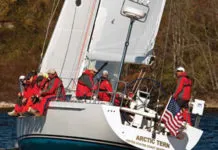
The U.S. Coast Guard Academy recently received its newest sail training boat: the Leadership 44. Built by Morris Yachts, a company best known for high-end, custom sailboats, the Leadership 44 was designed by David Pedrick, whose resume includes America’s Cup boats and many capable cruisers. The Leadership 44 has all the necessary features of a 24/7 underway workboat—offshore sleeping berths, ventilation in rough weather, a galley and head that work well underway, and a sail plan that’s efficient and easy to handle. With a displacement of 26,000 pounds, the L44 is strong and stiff, yet reasonably lightweight for a boat of that size. Civilian versions of the design will be making their way to the market soon and would be worth considering for bluewater cruising duty.
Leadership 44 is Strong, Stiff, and Lightweight
The Leadership 44 is built in Morris Yachts’ factory on Mt. Desert Isle, Maine, using advanced building materials and construction. Known for its precision semi-custom boat building, the company was launched in 1972 by the late Tom Morris. His son, Cuyler, is now the president and chief development officer.
Hunter Factory Blends Old and New Technology
The Hunter 33 is built in Alachua, Fla., using high-quality resins and laminates and conventional open molding hand-laminating processes.
Funding the Dream
In the June 2001 issue, Practical Sailor looked at financing boats and recommended that prospective boat buyers “stick with the pros.” We recently set out to see what had changed in boat financing since the 2008 U.S. financial crisis. After interviewing industry experts and related organizations on the state of the marine lending and boating industries, we assumed a boat-buyer’s role and sought financing help from marine loan specialists, large banks, and small lenders. We looked at cash versus financing, borrowing against your home, finance products, rates on boat loans, collateral on the loans, insurance issues, pre-approvals, repossession, and borrower qualifications.
Morgan 382 – The $30K Boat Nobody Talks About
The Morgan 382 might be one of the most overlooked cruising sailboats ever built. Designed by legendary naval architect Ted Brewer and produced between...



Latest Sailboat Review

Jeanneau 55 Boat Review
This recent sailboat from Jeanneau may as well be a spaceship. They’ve taken all the time-honored designs of a monohull aft cockpit and turned...