

Six-Month Checkup: Long-Term Boat Wood Finish Exposure Test
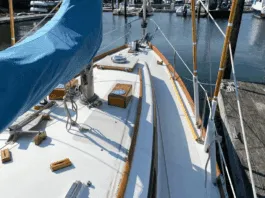
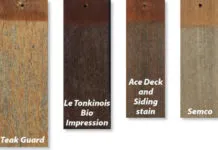
Practical Sailor closes in on its search for the best teak oil, best marine varnish, and best synthetic wood finish this month. Testers check in on the 53 coated wood panels on our test rack, which have been enduring the elements for six months. Testers rated the panels for single-season gloss and color retention and coating integrity. The test products included dozens of one-part varnishes, two-part varnishes, synthetic wood finishes and stains, spar varnishes, wood sealants and teak oils from makers like Interlux, Pettit, Epifanes, Le Tonkinois, Minwax, Ace Hardware, Star brite, and West Marine. The long-term evaluation aims to find the best exterior wood finish based on overall ratings for ease of application, gloss integrity and appearance, and how the coating fares over time under real-world conditions. At the six-month mark, this report offers our single-season recommendations for finishing teak decks, cockpit trim, toerails, and other exterior wood surfaces.

Eco-friendly Boat Maintenance
Practical Sailors May 2008 issue looked at green practices in marine maintenance outside the hull. This spring, we look at eco-friendly products and techniques for the boat interior. We focus on areas belowdecks where we can reduce our impact on the environment. Proper disposal of petrol fluids used in most inboard engines-fuel, lubricant oil, and transmission fluid-is paramount. Preventing engine fluid spills by using careful filling techniques is key, as are careful preparation for a possible spill and proper cleanup should a spill occur. The best products we found for preventing oil spills and cleaning up oil spills include 3M Sorbent Pads and MDR Oilzorb Engine Pads; Jabsco Oil-Changing System; and the Vetus Bilge Water/Oil Separator. We recommend RydLyme Marine and Barnacle Buster for a green descaling of a boats heat exchanger.Eco-friendly bilge cleaners that we recommend include CRC Industries Big Bully Natural Orange Bilge Cleaner, Clean Water Solutions Microbial Powder, Star brites Sea Safe Biodegradable Bilge Cleaner, and Star brites Super Orange Bilge Cleaner. Eco-friendly soaps and detergents recommended for green cleaning include Dr. Bronners Sal Suds and some cleaners in the Simple Green, Spray Nine, and Thetford Marine lines. And, don't forget plain old blue Windex.
Affordable Cruising Sailboats
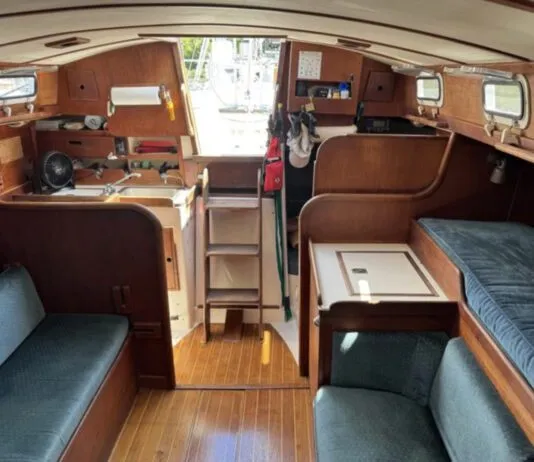
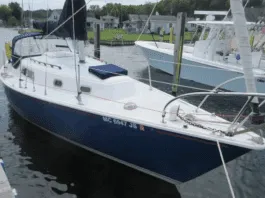
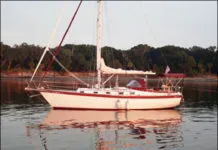
In a search for a budget cruiser, Practical Sailor examined a field of used sailboats costing less than $75K and built between 1978 and 1984. We narrowed the field to boats with sufficient accommodations for four people and a draft of less than 6 feet. One way to approach a used-boat search is to look for sailboats with informed, active owners associations and high resale values. Practical Sailors quest for recession-proof cruisers led us to the Allied Princess 36, Bristol 35.5C, Endeavour 37, S2 11.0, Freedom 36, ODay 37, Niagara 35, C&C Landfall 38, and the Tartan 37. The report takes a more in-depth look at the Tartan, C&C Landfall, and Niagara.

Bottom Paint Tests 2009 Spring Update
Over the years, Practical Sailor has tracked the evolution in marine antifouling paints. Shaped by government regulations, environmental concerns, and industry innovations, the shift started with tin-based paints in the 1980s. After tin-based paints came under fire for the harm they cause marine life, copper-based paints grew in popularity. Now, concerns about the impact of copper on the environment have led to the development of copper-alternative paints, such as zinc-biocide and water-based antifoulings. We continue to sort through the data to help you find the best bottom paint for your boat. This report offers an update to our panel tests after six months and 18 months in the water as well as the head-to-head tests under way on our test boat fleet. Some of the best performers (out of 72 paints tested) at six months were hard paints and specialty antifoulings such as Copper Shield 45 Hard made by Blue Water, VC Offshore by Interlux, Copper Guard by Pettit, and Sharkskin by Sea Hawk. The best ablative paints at six months included Copper Shield SCX 45 by Blue Water, EP-21 by Epaint, and Hydrocoat and Vivid Free by Pettit. The top long-term bottom paints-those appropriate for multi-season antifouling protection-included Interlux Micron 66, Pettit Trinidad SR, and Interlux Epoxycop. These extensive tests also included marine bottom paints from Awlgrip, Flexdel, and Microphase Coatings. The lineup also covered re-branded products from West Marine.
A Smorgasbord of Tools and Patience Are Required For the DIY Epoxy Barrier Coat...
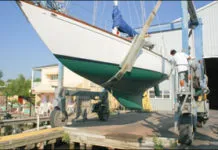
Practical Sailor Technical Editor Ralph Naranjo sets out to remove a few layers of bottom paint and the underlying Interlux InterProtect epoxy barrier coat, which was applied to his boat hull in 1982. While non-toxic, eco-friendly paint removers work well on removing antifouling paints, one-part enamels, and varnish, all bets are off with epoxy coatings. With a good selection of chisels, a penchant for keeping them sharp and no aversion to hard work, Naranjo battles the pock-marked, blistered barrier coat. His arsenal included three chemical strippers-Peel Away Marine Safety Strip, Peel Away Smart Strip, and Franmar Soy Strip, an array of sanding disks, and random orbital sanders. His report offers how-tos, tool tips, and a rundown of the costs associated with the DIY barrier coat removal to answer the question: Is it really worth doing it yourself?
Practical Sailor Resumes its Search for the Best Boat Wax
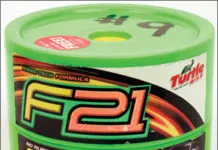
Practical Sailor tested a field of 10 tubs of paste waxes for ease of application, gloss, texture, finish, and price. Most of the products did a fairly good job of producing initial shine. The two waxes with the most glossy fiberglass test patch were not the easiest to apply nor were they the least expensive. The boat wax test included marine paste waxes and car waxes-some with carnauba-from Meguiars, Turtle Wax, 3M, Collinite, Kit, Mothers, Nu-Finish, and Star brite. You need only dip a toe into this topic to realize that there are almost as many recipes for a glossy hull as there are sailors whod rather do anything than wax their hull. As long as marketeers keep alive our hopes for a glossy finish that will last forever, there will be people who will plunk down hard-earned money for the latest and greatest gelcoat elixir. We generally define gloss as being the surface ability to reflect light. Gloss, along with ease of application and the ability to repel dirt and water, are the features that Practical Sailor focused on for this report (see "How We Tested," page 32).

Getting Rid of Mold and Mildew Onboard
Among the marine maintenance products Practical Sailor evaluated recently were 14 pump-spray mildew cleaners to find out which one was the most effective at removing severe mildew stains. We tested chlorine bleach cleaners, chlorine-free cleaners, hydrogen peroxide cleaners, and ammonium chloride cleaners on a variety of materials, ranging from mildewed shower curtains to moldy vinyl seat cushions and moldy life jackets. We also used them to clean a mildewed sail and mildewed Sunbrella. All products were effective at removing the mold mildew from the shower curtain, but the cushions, life jacket, Dacron sail, and Sunbrella were more of a challenge. One product stood out as a more effective mildew cleaner: Klean-Strip Mildew Stain Remover. Klean-Strip is a highly concentrated product with 19 times more sodium hypochlorite than common bleach, and we do not recommend it for cleaning sails or fabrics. Other products tested include 3M mildew stain remover, Boat Armor mildew stain remover, Boatlife mildew remover, MaryKate mildew stain remover, MDR Amazons Amazing Mildew Stain Away, MDR Moldaway, Naturally Clean Mildew, Nautical Ease Mildew Stain Remover, household Spray Nine, Star brite Mildew Stain Remover, Sudbury Mildew Cleaner and Stain Remover, Thetford Mildew Stain Remover, and West Marine Mold and Mildew Cleaner.
The Daysailers of Daydreams
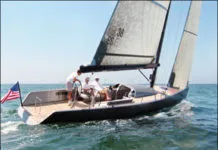
A daysailer was once simple and small, an entry-level passport to the sport. In the new millennium, however, that has changed. Simplicity may still be a watchword, but the boats have grown into what could be called trophy boats. Hinckley Co.s latest daysail boat is 42 feet long. Morris Yachts is marketing a boat that stretches 53 feet as a daysailer. Ted Fontaine at Friendship Yachts already has built one that size. And these are only a few of the daysail boats with minimal accommodations, big cockpits, and over-size price tags that are filling up the fleet. In all, more than a dozen elegant daysailers have made it to market. This article compares an even dozen: the Alerion Express 28, 33, and 38 (Pearson Composites); e33 (e Sailing Yachts, Robbie Doyle and Jeremy Wurmfeld); the B-38 (Luca Brenta); Bruckmann 42 (Bruckmann Yachts); Crosscurrent 33 (Maxi Dolphin); the Friendship 40 (Ted Fontaine); Harbor 25 (W.D. Schock); Hinckley 42 (Hinckley Yachts), J-100 and J-124 (JBoats), Morris 36 (Morris Yachts), Sabre Spirit (Sabre Yachts), and the wallynano (Wally Yachts).
Etchells-inspired e33 – A Practical Sailor New Sailboat Review
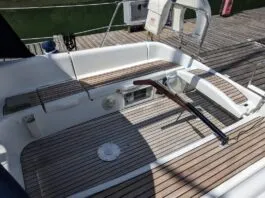
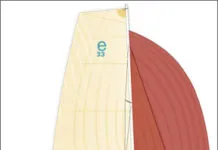
The trophy daysailer market is rife with branding, image, and various forms of snob appeal. The e33, however, makes its pitch on practical grounds. Reports from the field highlight the performance/comfort/control combination that makes the e33 a fun raceboat. You don't need a big crew, you can exercise your tactical talents to the max, and you give away nothing in boatspeed. Our time sailing the e33 convinced us that it is not only a legitimate performance sailboat, but that attaining that performance is sinfully easy. The e33 daysailers bonus points include a cockpit that takes up more than half the deck space and can hold five or six adults comfortably; cockpit-led control lines; carbon-fiber spars; and a hydraulic headstay control. Below, Spartan accommodations include berths for four, an enclosed head, and a built-in cooler. With the look of a classic and the innovative design of a modern daysailer, the e33 is e Sailing Yachts intelligent, inspired, comprehensive attempt to capture the fun of performance sailing.
New Navy 44 Sail-training Sloop Built to Last
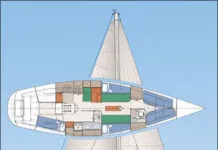
The U.S. Naval Academy’s new Navy 44 MkII is a seaworthy workhorse that skips the design fluff and focuses on being training-boat tough and race-boat efficient. Designed by David Pedrick, the Navy 44 MkII—younger sister to the Navy MkI racer-cruiser-teacher--is meant to be cruised and raced for 20 years, and to endure two or three times the wear and tear of the average production boat. The boat was designed to act as a sail-training platform with heavy-duty usage by midshipman, while at the same time performing like a race boat for experienced crew. The biggest challenge in designing the boat lay in achieving the requisite strength, stability, and longevity while keeping the vessel's weight from overwhelming performance. Equipped with a Yanmar 4JH4E, and a full array of B&G electronics, the sloop also has Furuno radar, GPS, a NavNet digital chart system, Icom VHF, and SSB.

Small Boat, Big Keel Why This 27 Footer Works
What makes a small sailboat truly seaworthy? In this video, we take a deep dive into the Pacific Seacraft Orion 27, a rugged, long-keel...



Latest Sailboat Review
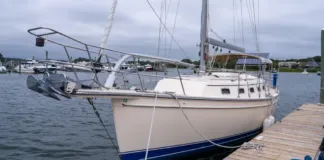
Island Packet Estero Used Boat Review
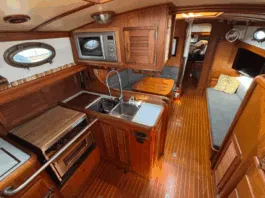
Florida-based Island Packet targets a relatively narrow niche, so the toughest competitors to its new boats are often older Island Packets. Introduced in 2010, the 36-foot, shoal-draft Estero is the company’s latest attempt to introduce a distinctive model that doesn’t stray too far from the company’s proven formula for success: moderate displacement, full-keel cruisers designed to be lived on, sailed far and in comfort, and endure the bumps, scrapes, and storms that cruising boats inevitably encounter. After sailing the Estero on Florida’s Sarasota Bay and inspecting its interior, construction, and systems, Practical Sailor testers noted that the shoal-water cruiser will appeal strongest to Island Packet fans who’ve been waiting for a shoal-draft, easy-to-sail boat that compares to the IP37 in terms of interior space. These strengths will be most apparent on intracoastal or riverine adventures like the Great Loop.