


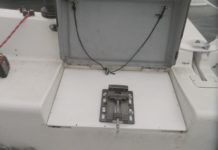
A Handy Cockpit Vise Is Ready in a Pinch
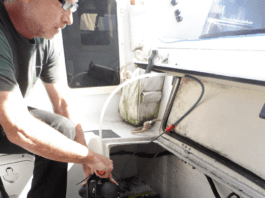
Most times when I need a third hand, I can secure whatever I'm working on by jamming it in the groove between dock boards, or against a piling and placing a knee on it, or some combination. Work surfaces can incorporate cleats or holes for this purpose, but sometimes more specific clamping measures are required.

Chafe Protection for Fiber Rodes
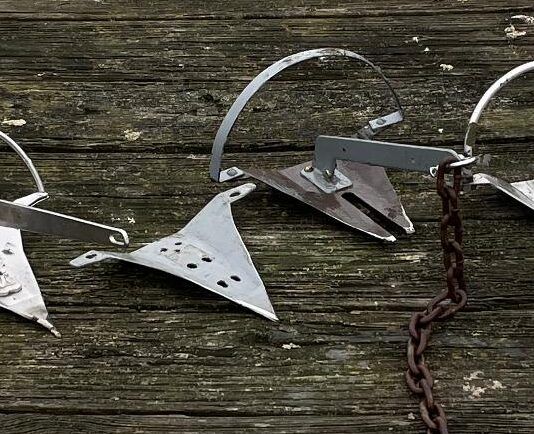
Our plunge into chain-free rode takes a new twist. How do we protect against bottom chafe?

Gear of the Year Roundup
The bulk of the past years testing focused on maintenance products, safety essentials, and do-it-yourself substitutes for higher priced marine gear. This was a deliberate move as the staff here at Practical Sailor tries to buck the trend toward high-priced, budget-busting marine-grade gear that is out of reach of many sailors.

New Goyer Guard vs. Firehose
One of the quickest ways to lose your floating investment is to chafe through a dock line or mooring pendant, sending your boat smashing into the neighboring slip or a rock jetty. It has been a while since we tested chafe gear (see PS October 2012), so when a new product came across our radar, we jumped on the chance to test it.
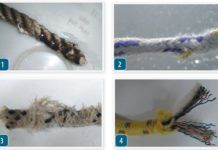
Verifying Material of Mystery Ropes
Using the wrong rope for the job is a recipe for failure. Fortunately, with a trained eye and a little knowledge of physical properties, making a rough identification is simple enough.
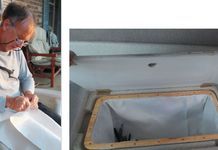
Bottomless Lockers Be Gone
Storage is a challenge on small boats, and my new-to-me Corsair Marine F-24 trimaran was particularly Spartan this regard. The skinny hulls provided minimum volume and the race-focused designer intentionally omitted proper lockers. A performance-oriented boat such as this must be kept light if she is to sail to her potential. But even day sailers and racers attract a certain amount of necessary clutter, sure as honey attracts flies. Something had to be done, and yet, as a new owner its tough to know what will best suit your needs and what the boat needs. Its even harder to cut the first hole. This project was 100 percent non-invasive.
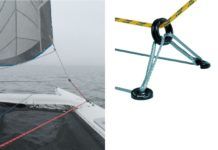
Try a Barber Hauler for Better Sail Trim
If you can't position the jib clew exactly where you want it on all courses and in all weather, a barber hauler should be in your future, for even the most laid-back sailor. Here are some options.
Online Help for Autumn
Its getting to be that time of year, when many skippers haul out or head south. Fall also heralds the beginning of boat show season. Here are some PS articles from the online archives that are suited for the season.
A Custom-fitted Clew Strap
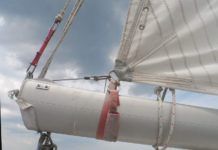
After settling on the material, one of the most basic mainsail design questions is whether to have an attached foot or loose-foot. A sail with an attached foot, secured to the boom with a bolt rope or sail slugs, has a small advantage in area, while a loose footed sail is easier to adjust (flat for windward work and smooth seas, fuller for reaching and rough seas), slightly cheaper to fabricate, and much easier to take off the boom for storage. Both are used on both high performance and cruising boats. Most new mainsails are loose footed.
Years Later, Mast Mate Still Riding High
Mast steps are a great help when going aloft, but they add weight where it hurts most (aloft), and halyards love to get stuck behind them. One alternative is the Mast Mate webbing ladder, which hoists on your mainsail track.
Latest Logbook

Practical Sailor Logbook – September 2026
In September we tour the Hans Christian 48T — the offshore cruiser many sailors call the holy grail — walk the custom Antigua 60...

Video: The BEST Sailboat You Can Buy for $35,000 – Catalina...
If you’re searching for a mid-30-foot sailboat, affordable cruising sailboat, liveaboard sailboat, first sailboat, or a capable used sailboat for coastal cruising, the Catalina...



Latest Sailboat Reviews
Learning by Doing on a $5,000 Catalina 30 Mk II
When Davis’s mother started talking about wanting to do something “big” for retirement, Davis and Gloria half-jokingly threw out an idea that seemed suitably...