




Buyers Guide: Choosing a New Cruising Main
As with any big ticket item, choosing a new mainsail involves a number of choices, each of which are driven by an equally diverse list of factors to consider, from the type of boat (cruising, racing sailboat), and area sailed (inshore waters, coastal waters, or bluewater), to the type of sailor you are (performance-oriented hard charger or weekend warrior). Practical Sailor offers a step-by-step rundown of the available options and the selection process our testers experienced when we shopped for a new mainsail for our Chesapeake Bay test boat. While the decisions will vary, the exercise can serve as a template for any sailor looking to upgrade a mainsail.
The Art of Building with Thermal-setting Plastics
One of the themes seen among the new entries is a trend toward thermal-setting rather than thermal-fixing plastic construction. The latter is representative of the most common approach to fiber-reinforced plastic (FRP) boatbuilding. A process in which room-temperature liquid-resin systems are used to wet-out reinforcing filaments in what has become generically referred to as fiberglass boatbuilding.
Local Loft Versus Web-based Service
Not every sailor has a selection of local sailmakers to choose from. He or she must instead rely on Internet research and phone conversations to find the best sail for the best price. As most of the world’s sail production takes place in a handful of high-volume production lofts abroad (China, Sri Lanka, and Africa), U.S. sailmakers have taken on the role of sail designers—rather than sailmakers.
Sailmaker Survey Reveals Readers’ Favorites
Our informal online sailmaker poll generated 336 complete responses, not large enough to be statistically significant, but still useful, in our opinion. In total, readers recommended more than 100 different lofts. The responses are subjective to each respondent’s experience, making it impossible to fairly rank sailmakers based on the poll, so readers should consider this report an overview and use it accordingly in any sailmaker search. The responses can offer some insight into what can be expected of a specific sailmaker and what should be considered in the selection process.
Sailmaker Survey Reveals Readers Favorites
Our informal online sailmaker poll generated 336 complete responses, not large enough to be statistically significant, but still useful, in our opinion. In total, readers recommended more than 100 different lofts. The responses are subjective to each respondent’s experience, making it impossible to fairly rank sailmakers based on the poll, so readers should consider this report an overview and use it accordingly in any sailmaker search. The responses can offer some insight into what can be expected of a specific sailmaker and what should be considered in the selection process.

Where Credit is Due: August 2011
Letters to Practical Sailor, August 2011. This month's letters cover subjects such as: Weems and Plath, and Moorhouse Sailmakers.

Sheathing Bulkheads, Part II: Fit, Glue and Finish
Last month, we showed you how you could turn a big, expensive pile of lumber into a smaller pile of bulkhead sheathing and a large pile of sawdust. This month, we’ll show you how to transform that pile of sheathing into beautiful new bulkheads for your boat. Like making the sheathing stock in the first place, installing it is a tedious operation, full of opportunities to make mistakes.
Chafe Protection for Dock Lines
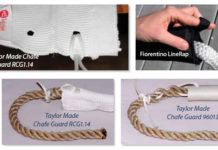
The best anti-chafe material to rely on in a storm is the one that resists abrasion, doesn’t cause heat build-up in the line, and can be easily installed—even if the line already has been deployed. Practical Sailor tested five commercially made products marketed as chafe protection for lines on boats: the Davis Secure, from marine accessories maker Davis Instruments; LineRap from Para-Anchor manufacturer Fiorentino; Chafe-Pro from the North Carolina-based Fjord Inc; and two sets of Chafe Guards by Taylor Made. Products ranged from single-skin webbing designs to tough Dacron double-layer designs, and the chafe gear’s attachment, or locking, methods were an integral part of the ratings. (The products don't work if they don't stay in place.) Chafe gear was put through a series of abrasion tests and was rated on price, ease of use, and performance.
T’is the Season for Planning
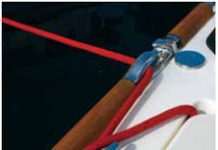
Chafe protection for docking and mooring lines is essential for securing a boat ahead of a storm, but boat owners should also be sure to inspect the cleats themselves. The cleats should be beefy enough to handle the task at hand, and they should be properly supported with sturdy, easy-to-inspect backing plates. In addition to ensuring your cleats are structurally sound, it’s also important to pay attention to line leads. If a line must make a sharp bend at a chock or cleat, the risk of chafe increases significantly, and attaching anti-chafe gear at the bend is imperative. Find out whether your cleats are up to snuff—and how to replace them if they’re not—in our look at chocks and cleats in the March 2010 issue.
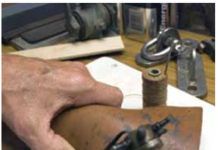
Old Salt’s Anti-chafe Solution
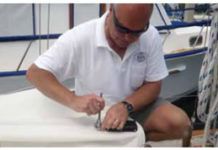
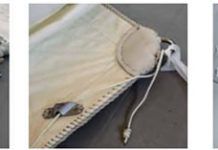
Being a team of diehard do-it-yourselfers, we decided to try our own hand at devising a workable solution to defeating line chafe. After fiddling with canvas, old fire hose, and even messing around with some Kevlar, we settled on leather—an old rigger’s standby. It proved to be rugged and remained unholed after a ride on the belt sander. The fabrication process was kids craft 101, and there was something quite seafaring about the result. …

Small Boat, Big Keel Why This 27 Footer Works
What makes a small sailboat truly seaworthy? In this video, we take a deep dive into the Pacific Seacraft Orion 27, a rugged, long-keel...



Latest Sailboat Review
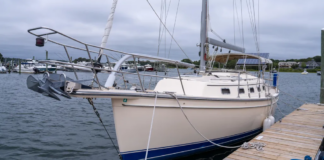
Island Packet Estero Used Boat Review
Florida-based Island Packet targets a relatively narrow niche, so the toughest competitors to its new boats are often older Island Packets. Introduced in 2010, the 36-foot, shoal-draft Estero is the company’s latest attempt to introduce a distinctive model that doesn’t stray too far from the company’s proven formula for success: moderate displacement, full-keel cruisers designed to be lived on, sailed far and in comfort, and endure the bumps, scrapes, and storms that cruising boats inevitably encounter. After sailing the Estero on Florida’s Sarasota Bay and inspecting its interior, construction, and systems, Practical Sailor testers noted that the shoal-water cruiser will appeal strongest to Island Packet fans who’ve been waiting for a shoal-draft, easy-to-sail boat that compares to the IP37 in terms of interior space. These strengths will be most apparent on intracoastal or riverine adventures like the Great Loop.