



West Marine Issues Rocna Spec Notice
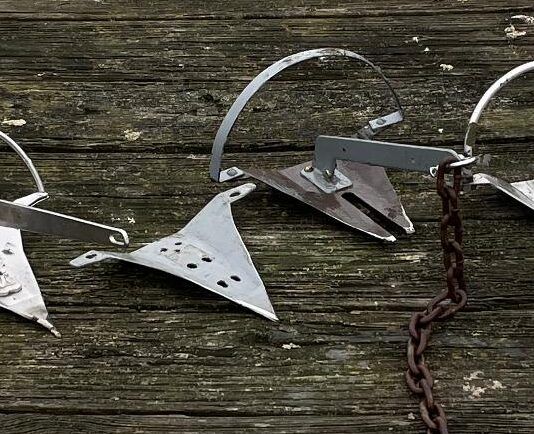
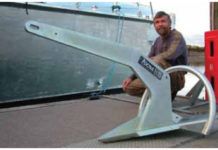
In the wake of questions about the tensile strength of steel used in the shafts of Rocna anchors, West Marine has issued “product specification notices” to customers who have purchased Rocna anchors since 2010 and recently posted the notice on its website (www.westmarine.com). West Marine is one of world’s largest distributors of the Rocna, a plow-style anchor sold in 34 different countries. The Rocna (www.rocna.com) earned a Recommended rating in our 2008 tests of heavyweight anchors, finishing behind the Manson Ray and the Manson Supreme (November 2008).
Anchor Chain Advice
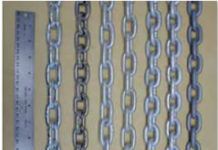
I sail an Areodyne 38 in New England, primarily on weekends and a two-week annual cruise. I use 25 feet of 5/8-inch chain with 200 feet of oversized braided rode and a 35-pound Bruce anchor. In 12 years of cruising this boat, the setup has dragged only once, yet I’m still unable to relax at anchor. I’m considering going to all-chain. Also, because my boat is pretty light with a fin keel and bulb, the rode wraps around the bulb when the current is stronger than the wind, requiring diving to free the mess. This is manageable in July, not so fun in October. Can you recommend a type, size, and length of chain given my criteria? My boat weighs in at 10,000 pounds, and I am the windlass.

Where Credit is Due: September 2011
Letters to Practical Sailor, September 2011. This month's letters cover subjects such as: Johnson Pumps, Raymarine, Edson and More!
Practical Sailor’s Reader-recommended Sailmakers
If you are looking for a sailmaker, here's a state-by-state list of those recommended by readers of Practical Sailor magazine, based on the magazine's 2010-2011 survey.

Buyers Guide: Choosing a New Cruising Main
As with any big ticket item, choosing a new mainsail involves a number of choices, each of which are driven by an equally diverse list of factors to consider, from the type of boat (cruising, racing sailboat), and area sailed (inshore waters, coastal waters, or bluewater), to the type of sailor you are (performance-oriented hard charger or weekend warrior). Practical Sailor offers a step-by-step rundown of the available options and the selection process our testers experienced when we shopped for a new mainsail for our Chesapeake Bay test boat. While the decisions will vary, the exercise can serve as a template for any sailor looking to upgrade a mainsail.
The Art of Building with Thermal-setting Plastics
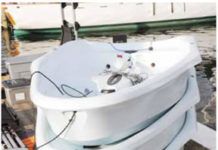
One of the themes seen among the new entries is a trend toward thermal-setting rather than thermal-fixing plastic construction. The latter is representative of the most common approach to fiber-reinforced plastic (FRP) boatbuilding. A process in which room-temperature liquid-resin systems are used to wet-out reinforcing filaments in what has become generically referred to as fiberglass boatbuilding.
Local Loft Versus Web-based Service
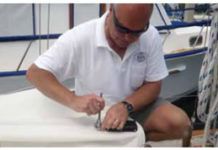
Not every sailor has a selection of local sailmakers to choose from. He or she must instead rely on Internet research and phone conversations to find the best sail for the best price. As most of the world’s sail production takes place in a handful of high-volume production lofts abroad (China, Sri Lanka, and Africa), U.S. sailmakers have taken on the role of sail designers—rather than sailmakers.
Sailmaker Survey Reveals Readers’ Favorites
Our informal online sailmaker poll generated 336 complete responses, not large enough to be statistically significant, but still useful, in our opinion. In total, readers recommended more than 100 different lofts. The responses are subjective to each respondent’s experience, making it impossible to fairly rank sailmakers based on the poll, so readers should consider this report an overview and use it accordingly in any sailmaker search. The responses can offer some insight into what can be expected of a specific sailmaker and what should be considered in the selection process.
Sailmaker Survey Reveals Readers Favorites
Our informal online sailmaker poll generated 336 complete responses, not large enough to be statistically significant, but still useful, in our opinion. In total, readers recommended more than 100 different lofts. The responses are subjective to each respondent’s experience, making it impossible to fairly rank sailmakers based on the poll, so readers should consider this report an overview and use it accordingly in any sailmaker search. The responses can offer some insight into what can be expected of a specific sailmaker and what should be considered in the selection process.

Where Credit is Due: August 2011
Letters to Practical Sailor, August 2011. This month's letters cover subjects such as: Weems and Plath, and Moorhouse Sailmakers.
Latest Logbook

Practical Sailor Logbook – September 2026
In September we tour the Hans Christian 48T — the offshore cruiser many sailors call the holy grail — walk the custom Antigua 60...

Video: The BEST Sailboat You Can Buy for $35,000 – Catalina...
If you’re searching for a mid-30-foot sailboat, affordable cruising sailboat, liveaboard sailboat, first sailboat, or a capable used sailboat for coastal cruising, the Catalina...



Latest Sailboat Reviews

Learning by Doing on a $5,000 Catalina 30 Mk II
When Davis’s mother started talking about wanting to do something “big” for retirement, Davis and Gloria half-jokingly threw out an idea that seemed suitably...