

Marine Toilet Tech: A New Joker Valve
Joker valves are no joke for us. Weve spent far too many hours tackling what has to be one of the least favorite tasks of sailor-dom-the cleaning and rebuilding of the marine head. Situated at the toilet outlet, the joker is the infamous valve between what you want in the toilet bowl (odorless clear water) and what you want out (the other stuff). It never seems to work right and requires the sort of lavish attention wed rather save for our beloved. The most common problem is that the valve stiffens with lime deposits and remains open, allowing holding tank odors to permeate back into the cabin. When we heard Thetford had come up with yet another iteration of the infamous valve, we were intrigued.
12-volt Battery Gauge Testing
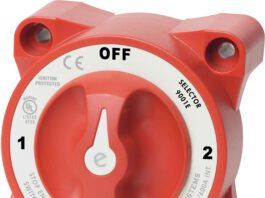
Our test gear comprised a ProMariner ProNautic 12-40P battery charger; West Marine-branded, flooded-cell, deep-cycle battery with a 75-amp hour rating; and two 120-volt, 70-watt incandescent light bulbs powered through a Heart 140-watt DC to AC inverter. This setup created a 12-amp DC load on the battery. We confirmed voltage and current draw using a Fluke Model 867B graphical meter and a Blue Sea Systems Model 8110-amp clamp/multimeter.

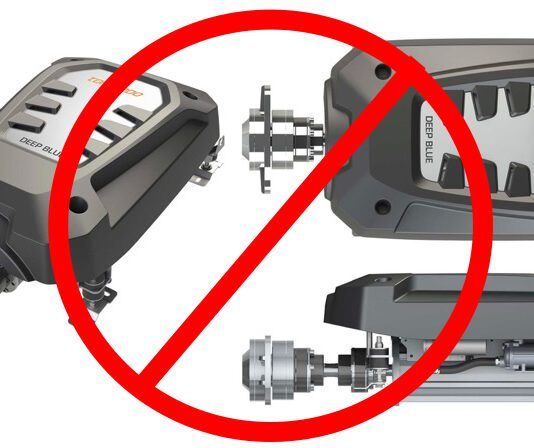
Rebuilding a Water-Damaged Torqeedo Motor
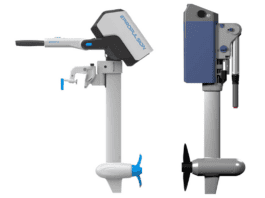
Were been following the Torqeedo portable electric outboard since our first test of the Travel 801 in 2008. Since then, weve put two of these motors into long-term service on test boats. Both are still operating with no major problems, but we have received a few reports from disappointed owners. PS reader John Poindexter, a retired naval officer who sails on the Chesapeake Bay, sent us an account of his experience with the Torqeedo.
Plastic Through-hull Warning
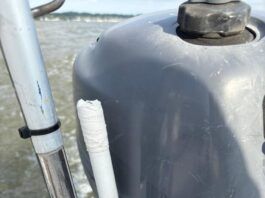
Cracked nylon thru-hulls are a common problem, as a walk in almost any boatyard will bear out. Unlike fittings constructed of industry approved materials (bronze, Marelon, etc.) nylon thru-hulls are not recommended for use at or below the waterline. Age often plays a factor in the failure of nylon thru-hulls, but ultraviolet light is the main culprit. While different brands vary widely in their susceptibility to UV damage, some are so poorly made they can fail within the first year of use. The stress placed on the thru-hull by an unsupported hose can also cause failure, with the weight of the hose acting like a lever as the boat bounces around while underway.
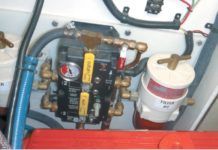
Dealing with Bad Diesel
About this time of year, many of our readers will experience a gradual loss of engine power, maybe even a complete shut down. Theyll pull the filters and find them so clogged youd think the last fill-up was a spinach smoothie.
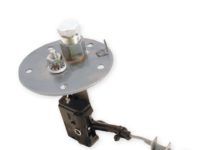
Fuel Level Sensor/Return Line Durability
I have a 2008 Gemini 105MC catamaran that I purchased new, and the fuel tank level indicators on both tanks failed a couple years ago. However, I noticed that the fuel-return line is attached to the top of the fuel level sensor. It seems to me that this may be the problem-fuel spraying down on the level indicator shortens its useful life. All the other Gemini owners that I know also have had the level indicators fail. It is not a huge problem. My tanks are transparent so I can see the fuel level in the tanks. My friends who have black non-transparent tanks use a wooden stick-which can be inserted down the fill hose.
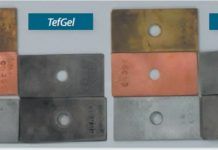
Tef-Gel vs. Lanocote
In this update of our review of greases (see PS February 2017) we compare Lanocote and Tef-Gel, greases that are used to prevent metal corrosion. Tef-Gel, from Ultra Safety Systems, is often prescribed to prevent stainless-steel fasteners from seizing in aluminum. Lanocote, made by Forespar, is commonly applied to prevent seizing in turnbuckles and other components that need lubrication.
Budget Priced Winch Grease
While we respect that winch manufacturers have put a lot of effort into selecting appropriate lubrication products for their equipment, in the enormous world of lubricants we know there are non-marine brands that can do the job just as well. In the wake of our recent winch grease test featuring products from Andersen, Harken, and Lewmar (see PS October 2016 online), we decided to look at budget options.
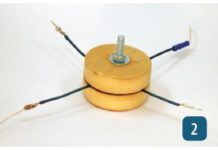
A New Spin on Dependable Crimps and Splices
Our test focused primarily on the small-wire connections tensile strength, with and without solder, but we also looked at their durability under tough environmental conditions. We tested the pull-out strength without solder and the pull-out strength of soldered connections at 400 degrees by heating the connections in an oven to simulate overheating conditions. We tested fatigue by spinning a 6-inch length of splice wire at 650 RPM in a simple device that we called the wire-fatigue whirligig. Finally, testers soaked all samples for four months in salt water to accelerate corrosion, and then, we repeated the fatigue test.
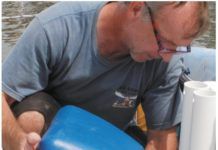
Making a Do-it-Yourself Jerry Can Drip Catcher
The previous owner of our test boat swore by using a funnel. Of course, the funnel was too small to catch nozzle leaks, reduced the flow, required holding a heavy can on a rocking deck for three minutes while the CARB can dribbled along, hoping the wind or rocking didnt move the funnel. (Sure, the flow is faster with non-CARB cans, but you had to reduce the flow for the funnel anyway.)
Latest Logbook

Practical Sailor Logbook – September 2026
In September we tour the Hans Christian 48T — the offshore cruiser many sailors call the holy grail — walk the custom Antigua 60...

Video: The BEST Sailboat You Can Buy for $35,000 – Catalina...
If you’re searching for a mid-30-foot sailboat, affordable cruising sailboat, liveaboard sailboat, first sailboat, or a capable used sailboat for coastal cruising, the Catalina...



Latest Sailboat Reviews
Learning by Doing on a $5,000 Catalina 30 Mk II
When Davis’s mother started talking about wanting to do something “big” for retirement, Davis and Gloria half-jokingly threw out an idea that seemed suitably...