

Step-by-step Winterizing Tips
Winterizing agents should never be used in freshwater tanks or hot-water tanks. Doing so will greatly increase the chances of biological growth, which can result in foul-smelling, bad-tasting water. If your boats water system does not have bypass fittings that allow you to add glycol to waterlines, install them. The addition of a few simple fittings can reduce the annual process from hours to minutes for the cost of a few jugs of glycol.
Refractometer Takes Out All the Guesswork
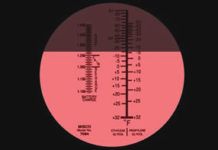
What matters most, our testing confirms, is not so much which brand of pink stuff you choose, but how you use it. Even the best product, mixed with too much water left in the line, results in a blend with unknown and perhaps unsatisfactory performance. While this may not be critical in North Carolina, sailors in Wisconsin need to get it right.
AWAB, ABA Top Long-term Test
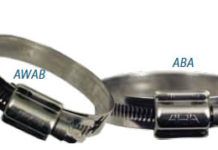
General-purpose, relatively inexpensive hose clamps are all over most boats, but there are some applications where using a higher quality, corrosion resistant clamp is critical-such as engine hoses and through-hulls. Most quality clamps are stamped stainless steel, but there are many grades of steel, and making an alloy stainless and corrosion resistant is complicated and costly. You start with iron, which rusts easily, and through multiple processes, you add proportions of elements such as nickel, manganese, molybdenum, and chromium. Different percentages of these elements will improve the desired strength, hardness, and flexibility, as well as corrosion resistance, of the steel.
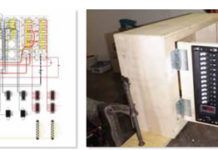
Electrical Panel Upgrade
Editors note: Designing, installing, and wiring a new main circuit panel on a full-fledged cruising boat is an extremely challenging refit project. The writer is a professional engineer who made sure that his installation met or exceeded American Boat and Yacht Council Standard E-11. Failure to adhere to the standard could result in fire, injury, or death. We offer the following article, which outlines the steps involved in constructing a custom panel, as a rough guide. In our opinion, such a project should not be carried out without the consultation of an ABYC-certified electrician.
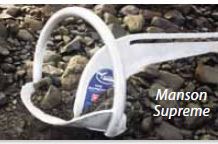
Winterizing an Outboard
For winterizing a small outboard engine, is it best to run the gas out of the engine or store it full with an additive mixed in? Is it the same for two-stroke and four-stroke engines? What about ethanol and non-ethanol gasoline?
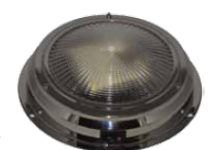
Imtra, Hella Dome Lights Shine
In our previous cabin light reviews (PS, May 2010 and January 2009), the transition from incandescent lighting to fluorescent and finally to LED was favorably noted. Since then, the evolution has turned into a solid-state revolution, and LEDs bolstered by dimmers, touch switches, and watertight seals now own the show. And a clean-sweep conversion to LED cabin lighting can knock out the grotto-like ambiance that haunts many sailboat interiors. Often, its not a problem of having too few lights; its an energy shortfall revolving around too few amperes to spare. An LED makeover is also an opportunity to illuminate the lockers, engine room, and other cave-like confines that cause you to reach for a flashlight and wish for an extra hand to hold it. Not only is the timing right to tap into a new genre of energy-efficient lights, but the product range and pricing offer a gameplan for every budget.
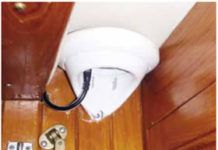
When Choosing Pilots, Err on Side of Caution
In a nutshell, autopilots have one main function: to assume control of a vessels steering and control its heading, be it a specific course or on a selected route or to a waypoint. As with any crucial piece of gear (anchors being a great example), cost should not be the primary consideration in the selection process. Its crucial to select a unit that has both the power and ability to steer your boat effectively in all sea conditions youre likely to encounter.
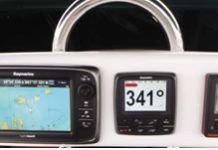
Rotary-Drive Autopilot for Worm Gear Steering
Autopilots are one piece of electronics gear that truly has something to offer every sailor-from gunkholer to bluewater cruiser. Having this extra crewmember onboard not only eases the burden of shorthanded sailing, but also helps prevent helm fatigue. An autopilot allows solo sailors to use the head, more easily raise sails, or grab a bite to eat. Crewmembers can enjoy a passage, passing the time reading a book or watching the scenery without being a slave to the helm.
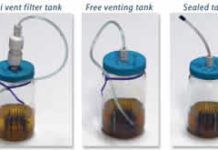
Diesel Tank Vent Filters
Through lab tests and years of field testing, weve found that silica-gel vent filters reduce tank corrosion and improve gasoline stability. But is the same true for diesel fuel and tanks? Thats what this test sought to find out. Testers put two silica-gel diesel tank vent filters through their paces: Pindell Engineerings AVD2 (for tanks up to 60 gallons) and AVD3 (for tanks up to 200 gallons). The results were compared to setups with a free vent and those with a sealed tank.
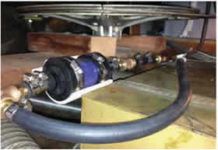
Installation Best Practices for Fuel Systems
The Coast Guard and the American Boat and Yacht Council (ABYC) have worked together to develop general installation guidelines for the carbon canisters required under the EPA's evaporative emission regulations. While the standards (AYBC H-24) don't specifically apply to the H2Out AVD unit when installed in diesel fuel systems, they represent good basic commonsense and should be followed with any fuel tank vent adsorbent product. We have added a few tips and precautions learned during our testing.

Small Boat, Big Keel Why This 27 Footer Works
What makes a small sailboat truly seaworthy? In this video, we take a deep dive into the Pacific Seacraft Orion 27, a rugged, long-keel...



Latest Sailboat Review
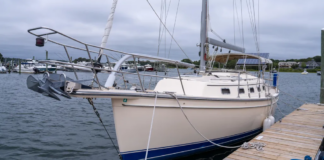
Island Packet Estero Used Boat Review
Florida-based Island Packet targets a relatively narrow niche, so the toughest competitors to its new boats are often older Island Packets. Introduced in 2010, the 36-foot, shoal-draft Estero is the company’s latest attempt to introduce a distinctive model that doesn’t stray too far from the company’s proven formula for success: moderate displacement, full-keel cruisers designed to be lived on, sailed far and in comfort, and endure the bumps, scrapes, and storms that cruising boats inevitably encounter. After sailing the Estero on Florida’s Sarasota Bay and inspecting its interior, construction, and systems, Practical Sailor testers noted that the shoal-water cruiser will appeal strongest to Island Packet fans who’ve been waiting for a shoal-draft, easy-to-sail boat that compares to the IP37 in terms of interior space. These strengths will be most apparent on intracoastal or riverine adventures like the Great Loop.