


Maintaining Your Boats Electrical System
The battery is the heart of a boat’s 12-volt electrical system. In it, a chemical reaction maintains a potential difference or voltage, which “pumps” or pushes electrons around whichever circuits are switched on or are “closed.” No charges should flow through an “open” or incomplete circuit; if they do, you’ve got a problem, which we’ll get to later. The storage battery’s chemical reaction is reversible, which means that it can be recharged, and will be continuously, as long as the engine is running and the alternator or generator is functioning properly.
The Perils of Fantastic Plastics
This month’s Gear Graveyard called to mind the famous scene in the movie The Graduate when actor Dustin Hoffman is pulled aside at a dinner party and offered a word of advice: "I just want to say one word to you son . . . just one word . . . plastics." There are a myriad of polymer combinations that make up the vast realm we call plastics, so to speak of them in a general sense can be misleading. Some plastics, like the glass-fiber reinforced acetal copolymers used in a variety of marine hardware are extremely strong.

Practical Sailor Compares 3 Electric Outboards
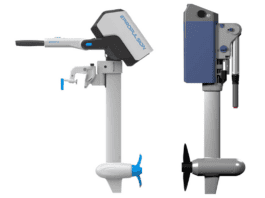
When it comes to the development of electric drive systems large and small, there’s a double-headed challenge. The first is the propulsion system itself, a combination of electric motor and drive train that efficiently turns watts into speed through the water. The second part is the acquisition of power to run the motor. Electric propulsion, in our opinion, is a good fit for daysailors and marina-to-marina cruisers, so we tested a few options available to recreational boaters looking for an electric outboard: the Torqeedo T-801, which we previously reviewed; the new Torqeedo T-1003, a beefier iteration of the T-801; and the Electric Paddle, a less-expensive option.
Marine Systems: Wire Exposure Test Update
There are a variety of wire types that exceed government and industry standards for onboard wiring. Because these types of wire can be 10- to 15-percent less expensive than high-quality boat cable, Practical Sailor wanted to determine whether any of these other options would be acceptable for the cost-conscious sailor.Using a moisture chamber designed to mimic years of use in a harsh marine environment such as a bilge, PS's test focuses on the durability of tinned wire, non-tinned wire, and various wire connectors. It also examines whether using a corrosion-inhibiting product could help extend the life of these wires and connections. The test led to some definitive conclusions on which wire types are best in specific onboard uses, and also showed that long-term wire protection begins with well-sealed connections. Our July 2010 issue reported the six-month results, and here, we offer the one-year update.

Mailport: December 2010
Letters to the Practical Sailor editors in December 2010 include: paint colors, sailmaker services, bilge pumps, pest control and the Wirie v. a DIY WiFi antenna.
Marine Systems: Low-capacity Electric Bilge Pumps Faceoff
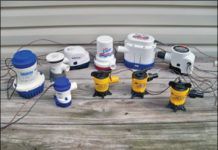
On the heels of its performance evaluation of electric bilge pumps rated at 1,600-gallons per hour (GPH) or more, Practical Sailor bench tests 10 smaller pumps rated at 1,500 GPH or less. These smaller centrifugal pumps are a good fit for small boats or as a primary bilge pump when installed in conjunction with a high-capacity bilge pump. When selecting the best overall pump from such a diverse group, a number of factors have to be considered to make the choice meaningful as it relates to the real world. In addition to performance, all of our top picks rated well for price, wiring, quality of construction, and warranty. Testers evaluated automatic bilge pumps and pumps without float switches from Shurflo, Attwood Marine, Johnson Pumps, and Rule Industries.

Going Bananas? Go Sailing
The back of our workshop in Sarasota, Fla., is crowded with paints and thinners, rags and brushes, dusty pallets and power tools, and now, a small mountain of electric flush toilets. Since I have a long-running feud with manual toilets, I don't deserve nor want an electric-flush version. But there are apparently plenty of readers who are contemplating push-button porcelain thrones, and who am I to deny them this indulgence?

The Best Sailing Gear of 2010
Practical Sailor offers the annual selection of Editors Choice products for the Gear of the Year 2010 lineup. We hope the list will guide you through the dizzying array of gear at the fall boat shows, or at least help you whittle down your wishlist for Santa. The roster covers a broad spectrum of products-from gadgets for measuring speed to a performance multihull built for speed-that have bested their peers in our tests. The lineup includes gear from Spinlock, Brion Toss, Lopolight, Selden Mast, DuBarry, Keen, Standard Horizon, and Mastervolt. It covers LED navigation lights, bosun chairs, footwear for sailors, and marine electronics. Boat maintenance products from Polymarine and Interlux also made the list.

Mailport: September 2010
Letters to Practical Sailor from our readers. September 2010's topics include barnacles, teak finish, knots for a bosun chair and LEDs.
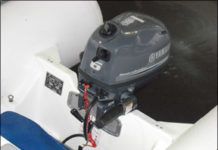
Yamaha Updates F-series Outboards with New F4 and F6
Yamaha recently updated two of its portable outboard engines, the F-series four-horsepower outboard and 6-horsepower engine. We reviewed the original F4 and F6 in 2003. Both updated designs use an 8.5-cubic-inch engine block and both weigh 60 pounds, which marks a weight loss for the F6 but an increase for the F4. Both also have improved stowage capacity and demonstrated solid performance. The report compares the new outboards to the 55-pound Suzuki DF4, the top contender in Practical Sailors 2003 Outboard Engine test.
Latest Logbook

Practical Sailor Logbook – September 2026
In September we tour the Hans Christian 48T — the offshore cruiser many sailors call the holy grail — walk the custom Antigua 60...

Video: Why Are Tartans So Expensive? Inside the Tartan 3700
If you’re researching Tartan Yachts, looking for the best traditional cruising sailboat, comparing premium used sailboats, shopping for a bluewater cruiser, or considering a...



Latest Sailboat Reviews

Learning by Doing on a $5,000 Catalina 30 Mk II
When Davis’s mother started talking about wanting to do something “big” for retirement, Davis and Gloria half-jokingly threw out an idea that seemed suitably...