



Maintaining Your Boat’s Electrical System
The storage battery’s chemical reaction is reversible, which means that it can be recharged, and will be continuously, as long as the engine is running and the alternator or generator is functioning properly. Normally, we take these things for granted, and are surprised when they don’t work-a testament to the reliability of the devices.
Getting the Charge Out of Lightning
Every year, a surprising number of boats are struck by lightning. Almost invariably, there is some damage to the boat or its equipment. The damage can range from minor electrical problems to serious hull damage.
Maintaining Your Boats Electrical System
The storage battery’s chemical reaction is reversible, which means that it can be recharged, and will be continuously, as long as the engine is running and the alternator or generator is functioning properly. Normally, we take these things for granted, and are surprised when they don’t work-a testament to the reliability of the devices.
How to Prevent Head Odors Aboard Your Sailboat
While permeation of waste gases through flexible sanitation hose is a major source of odors in the head, it is not the only one. This article looks at the possible sources one by one.
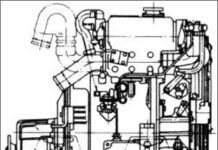
Hard-to-Find Mercedes Parts – Knotmeter Fouling
Given the number of Mercedes diesels you see on the highway, its amazingly difficult to find parts for the marinized versions of these engines. Part of the difficulty is the origin of the marine versions of the various Mercedes engines. Mercedes, like several other engine manufacturers, doesn't make marine diesels. They do, however, license other companies to do marine conversions using their engine blocks.
Lightning Protection – Tired Topsides – Yacht Design
Installing a lightning protection system is not a particularly simple task, however. ABYC standard E-4 gives four pages of instructions on the installation of lightning protection. Even with the Dynarod kit, you have to provide all the connections to create a short, direct path to ground. You must also, by the ABYC standard, tie all major metal masses in the boat - engine, tanks, stoves, for example - to the lightning protection system.
Battery Care Pays Off
Among the more neglected pieces of gear aboard most boats are the primary storage batteries, which faithfully crank the engine and light the lights. In the case of the typical lead-acid battery, even benign neglect is tantamount to abuse. It’s small wonder that many battery manufacturers refuse to recognize the warranty on batteries used aboard boats. The normal marine battery cycling - relatively high discharge rates with no charging, followed by rapid charging at a high rate by high-output alternators - is murder on conventional automotive batteries, and not exactly a piece of cake even for deep cycle batteries, constructed to absorb this type of abuse.
It’s The Golden Rule for Electronics
If the weather this time of the year is cold enough for you to give up sailing for a few months and curl up in a warm place, there’s a good chance that the electronic equipment on your boat would appreciate a little of the same treatment. A little extra care when the weather is cold can add considerably to the useful life of most electronics. Unless a piece of gear is totally sealed against the environment, the atmosphere on the inside of the unit will be pretty much the same as the atmosphere on the inside of the rest of the boat. In the middle of winter, this can mean a lot of cold and condensation. Needless to say, condensation on the inside of your delicate electronics is not the best atmosphere for long life.
Its The Golden Rule for Electronics
If the weather this time of the year is cold enough for you to give up sailing for a few months and curl up in a warm place, there’s a good chance that the electronic equipment on your boat would appreciate a little of the same treatment. A little extra care when the weather is cold can add considerably to the useful life of most electronics. Unless a piece of gear is totally sealed against the environment, the atmosphere on the inside of the unit will be pretty much the same as the atmosphere on the inside of the rest of the boat. In the middle of winter, this can mean a lot of cold and condensation. Needless to say, condensation on the inside of your delicate electronics is not the best atmosphere for long life.
Maintaining Your Boat’s Electrical System
The battery is the heart of a boat’s 12-volt electrical system. In it, a chemical reaction maintains a potential difference or voltage, which “pumps” or pushes electrons around whichever circuits are switched on or are “closed.” No charges should flow through an “open” or incomplete circuit; if they do, you’ve got a problem, which we’ll get to later. The storage battery’s chemical reaction is reversible, which means that it can be recharged, and will be continuously, as long as the engine is running and the alternator or generator is functioning properly.
Latest Logbook

Practical Sailor Logbook – September 2026
In September we tour the Hans Christian 48T — the offshore cruiser many sailors call the holy grail — walk the custom Antigua 60...

Video: Why Are Tartans So Expensive? Inside the Tartan 3700
If you’re researching Tartan Yachts, looking for the best traditional cruising sailboat, comparing premium used sailboats, shopping for a bluewater cruiser, or considering a...



Latest Sailboat Reviews
Learning by Doing on a $5,000 Catalina 30 Mk II
When Davis’s mother started talking about wanting to do something “big” for retirement, Davis and Gloria half-jokingly threw out an idea that seemed suitably...