

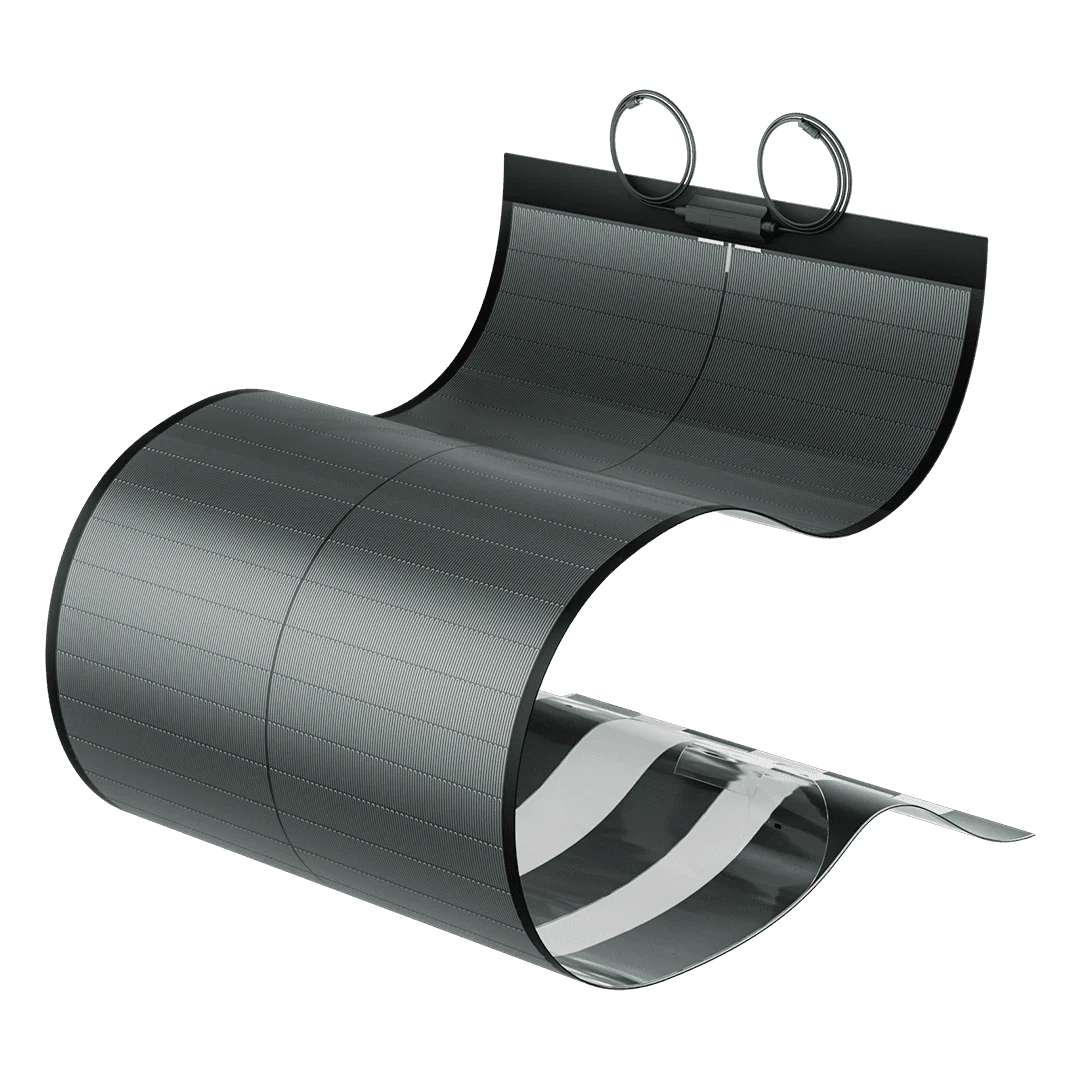
We’ve been running solar on our boat for a decade, and after dealing with the rapid degradation of our latest SunPower flexible panels, we decided to try something different—Copper Indium Gallium Selenide (or CIGS) panels—specifically, the BougeRV CIGS panels.
So far, they’re really—outshining—our old flexible panels. We’ve seen much higher daily output plus the ability to take a beating.
Given that they take up roughly the same amount of space as traditional flexible panels, I’m starting to wonder: Why aren’t more of us switching to these?
Let’s break down the difference in CIGS panels with shading, efficiency, durability and overall daily output.
First Look
Taking these things out of the box was quite a surprise. The way it can be rolled up into a tight box is very different than a traditional flexible panel. Once out of the box, the slinkiness of its flexibility is striking.
Let’s see how these will fit into our overall solar setup.
Our Solar Setup Today
Port Side on Hard Top
- 3x BougeRV 100 W Compact CIGS Panels
- Victron SmartSolar 100/30
Starboard Side on Hard Top
- 4x BougeRV 100 W Compact CIGS Panels
- Victron SmartSolar 100/30
Solar Arch
- 3x REC Alpha Pure R 430 W Rigid Panels
- Victron SmartSolar 250/100 TR VE.Can (The “TR” means that it has screw terminals instead of MC-4 connectors for terminals.)
These will all be connected to our Victron VenusOS running on a Raspberry Pi.
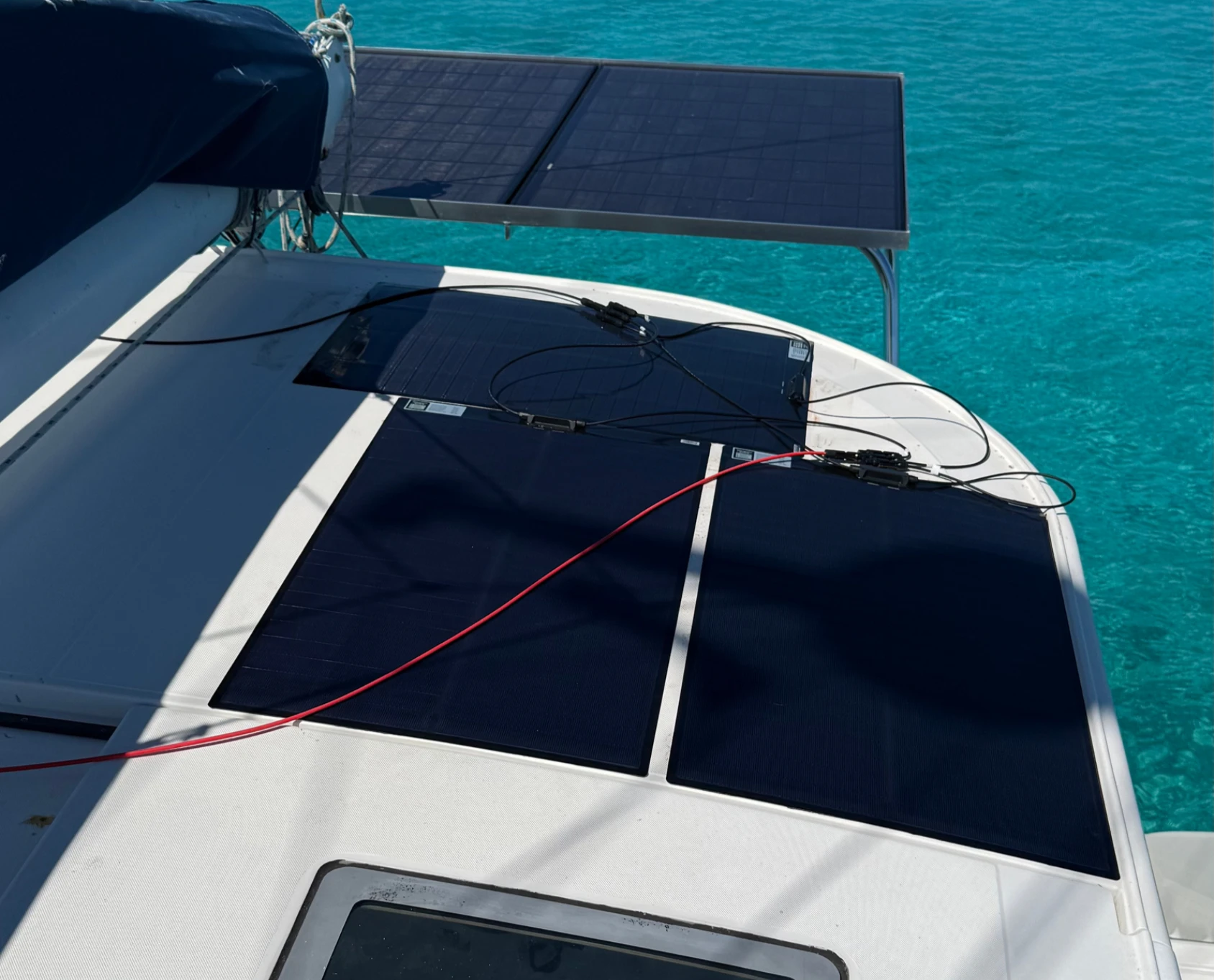
Our flexible panels have always been mounted on the hardtop above the cockpit, which means they get a lot of partial shading throughout the day from the spars and rigging.
Look at all that shading! Please ignore the mess of cabling. The pictures were taken before we did any wire management.
Because of the constant shading, much of the time our old panels were putting out a tiny fraction of rated output.
How CIGS Panels Handle Shading
Most boaters I talk to about solar panels seem to choose theirs based on total wattage or advertised efficiency, but that number is basically meaningless if your panels are constantly getting shaded. With our old SunPower panels, if even a small section got shaded, the output would drop dramatically—sometimes by 80 percent or more.
That’s because traditional monocrystalline panels have cells wired in series, so shading even part of a panel can tank the output of the whole thing.
CIGS panels work differently, incorporating many small bypass diodes that allow electricity to flow around shaded sections instead of blocking the entire circuit.
This means that instead of a huge power drop, the shaded area simply produces less while the rest of the panel continues functioning at near-full capacity. For sailboats especially, where the boom and rigging are constantly throwing shade, that’s a big deal.
Impact of Shading on Power Generation
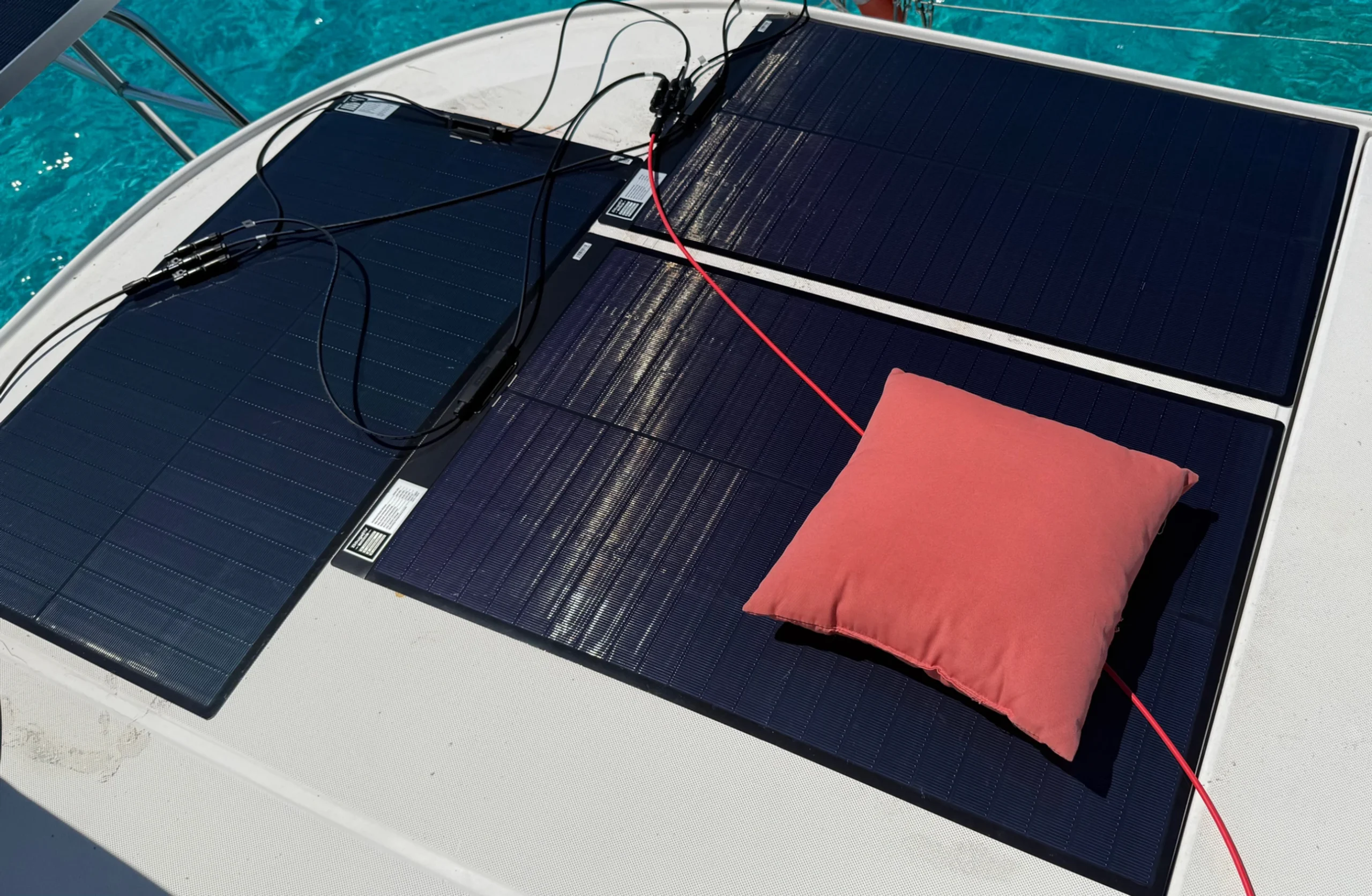
Does it actually perform as well as the claims? Let’s take a look at how these panels perform before and after some shading. We’ll use a pillow to cover up part of one of the panels, like so:
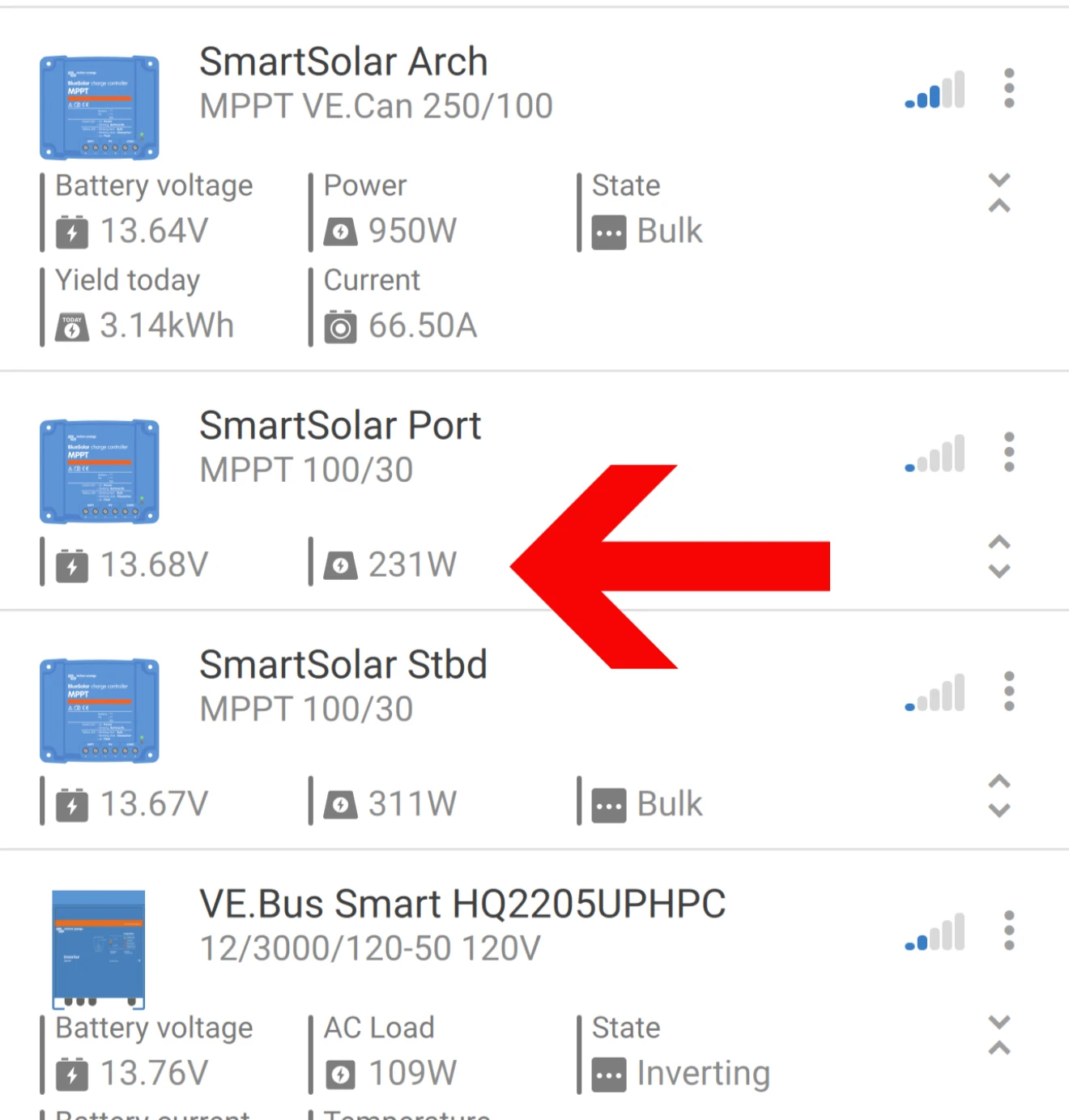
First, let’s look at the output immediately before placing the pillow:
Now let’s add our pillow: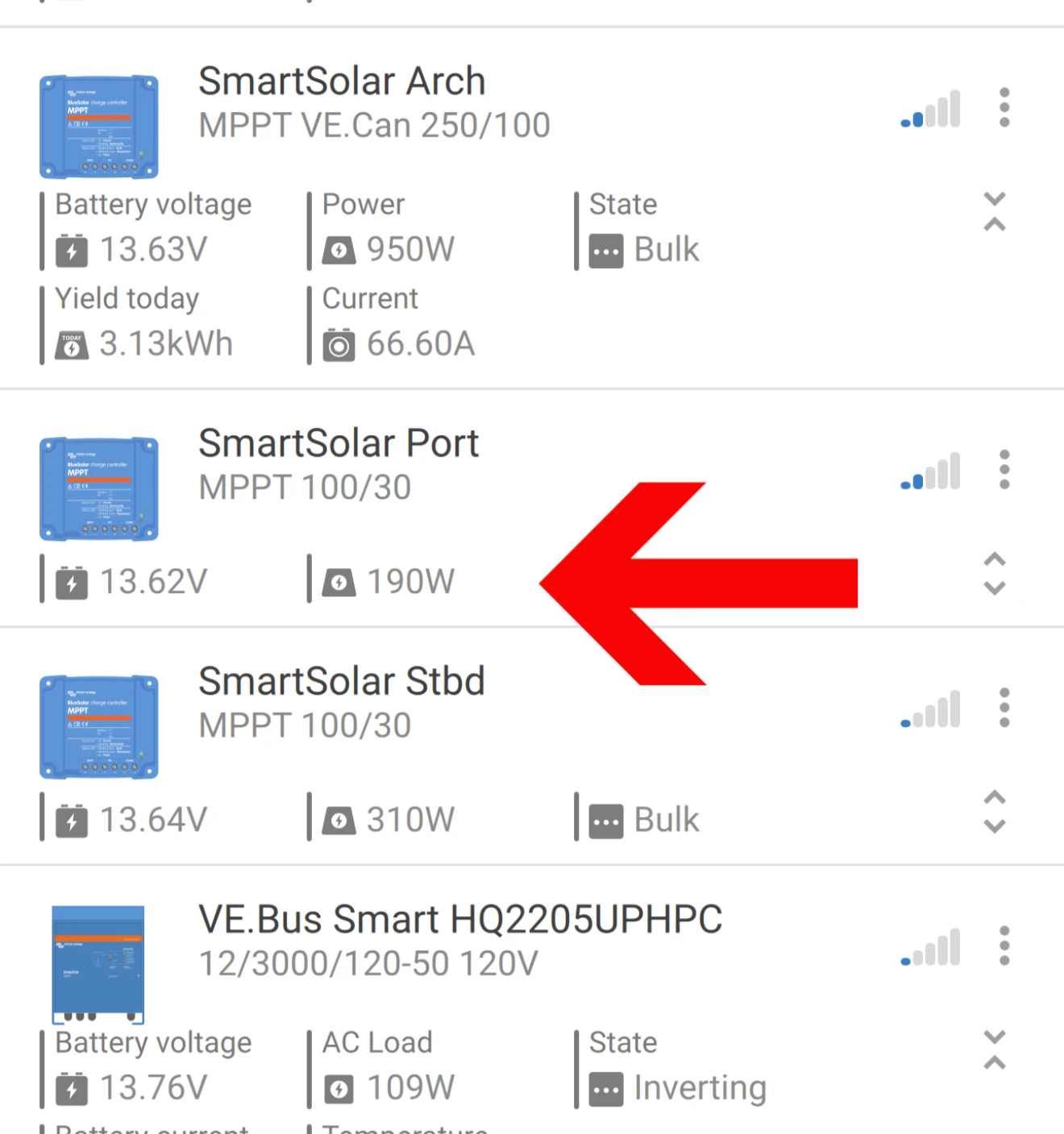
I grabbed the screenshots of the Victron app almost immediately before and after placing the pillow, trying to make sure the overall conditions did not change. I left the output visible from the other panel banks, so you can see they were also producing the same output. I did repeat the test about a half dozen times and the results were the same.
You can see that adding the pillow only decreased the output by 41 W. This is an amazing result. A traditional flexible panel would likely dip by 70 W in this scenario.
Clearly there is a huge advantage to having these types of panels on a boat where shading is a possibility.
Another situationally specific advantage is that the CIGS panels won’t reduce output when they’re installed on a curve. There are some pretty flexible monocrystaline panels out there, like the EcoFlow 100 W panel, but they warn that installing on a curve reduces efficiency because of the difference in amount of light hitting the panel in different sections. I would love to see some data on how close this effect is to shading, but unfortunately, I couldn’t find any.
Size Comparison: Are CIGS Panels Really Bigger?
Initially, I thought BougeRV CIGS panels were significantly larger than traditional flexible panels, which might explain why they haven’t caught on in the marine world. But when I compared them, the difference wasn’t as dramatic as I expected:
- BougeRV Yuma 100 W CIGS Flexible Solar Panel: 42.6” x 26.0” (7.7 sq ft)
- Renogy 100 W Flexible Monocrystalline Panel: 48” x 21.6” (7.2 sq ft)
- Ecoflow 100 W Fleixble Monocrystalline Panel: 41.5″ x 24.1″ (6.9 sq ft)
In terms of actual surface area, they’re all pretty darn close. So, if space isn’t the issue, what is?
Efficiency! That must be it.
The EcoFlow Panel, for instance, claims 23 percent efficiency, “Our 100W flexible solar panel has an excellent efficiency rating of 23%” (Source: https://www.ecoflow.com/us/100w-flexible-solar-panel). This is going to trounce the 17 percent advertised efficiency of the BougeRV CIGS panel, right?
Not so fast! They’re about the same size. Wouldn’t the more efficient one be smaller or produce more watts per sq ft?
We need to dig a little deeper into the EcoFlow panel’s 23 percent efficiency claim, especially given its dimensions. Here’s how it stacks up:
Calculating Claimed Output Based on Efficiency
Solar irradiance at sea level is about 1,000 watts per square meter or 92.9 watts per square foot.
- EcoFlow panel area: 6.9 sq ft
- Claimed efficiency: 23%
- Theoretical output at 23%:
- 6.9 sq ft × 92.9 W/sq ft × 0.23 = ~147.4 W
But it’s a 100 W panel—not 147 W.
So, real-world output suggests an actual efficiency around 15 percent, not 23 percent.
Why the Inflated Efficiency Claim?
Some companies use cell efficiency rather than panel/module efficiency in their marketing. This ignores the space between cells, the borders, and losses from wiring or lamination. High-end monocrystalline cells can indeed hit 23 percent, but that doesn’t mean the whole panel does for its square footage.
EcoFlow’s 23 percent claim is misleading—it likely refers to the efficiency of the individual cells, not the full panel. BougeRV’s panel claiming about 17 percent efficiency aligns more with its output and size, and BougeRV does specify the 17 percent as cell efficiency not panel efficiency.
Durability
One of the main reasons we made the switch to CIGS panels was how poorly our old flexible panels held up. After about three years of sun, salt and heat, they had visible surface damage and their output had dropped by more than half. Part of the problem is just how flexible panels are installed—flush against the deck or hardtop, with almost no airflow underneath. That heat builds up, and over time it cooks the panels from the inside out.
Add to that the wear and tear of real-world cruising. Our hardtop is also our primary access for re-flaking the main after we drop it, and the occasional, “Figure out what just jammed up there.” We do have clear footpaths with no panels on either side of the boom, but in rough seas, you’re sometimes stepping wherever you can. It’s unavoidable.
Now, we haven’t had the BougeRV CIGS panels long enough to give a definitive verdict on their long-term durability—but what I can say is they feel tougher. They’re lighter, more flexible, and they don’t have a rigid face to crack.
If you’re willing to take BougeRV’s word for it, they have a video of comparing their output to other panel types after whacking it with a baseball bat.
I even saw a test where someone literally shot them with a rifle, and the output barely dropped.
Hopefully we’re never in that situation, but knowing they can handle a dropped winch handle or a misstep gives us a lot of confidence.
Are CIGS Panels More Expensive?
Pricing is another factor that might be keeping boaters from making the switch. So how do they compare? Note: Prices are at the time of writing.
- BougeRV Yuma 100 W Compact CIGS Panel: $240
- Renogy 100 W Flexible Monocrystalline Panel: $113 Currently “45 percent off,” across all channels, which might be indicative of a longer term price drop.
- Ecoflow 100 W Fleixble Monocrystalline Panel: $200
- Solbian SP 100 W Flexible Panel: $1,000
BougeRV CIGS panels are definitely more expensive than an entry-level flexible panel, like the Renogy, but significantly cheaper than high-end options like Solbian.
Notes (and Dangers) for Installation
I have gotten a few recommendations to not install flexible panels directly on top of the gelcoat. In our case, it likely doesn’t matter, because there is a fairly thick layer of glass underneath.
I also believe that the foam sticky backing on these CIGS panels will give more room to expand and contract. However, I should mention that a reader sent pictures of a roof that was destroyed and leaking from flexible panels that cracked the roof. We did not opt for additional backing, but please plan your installation accordingly.
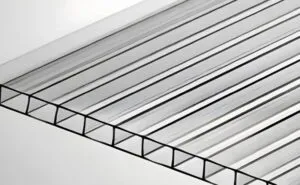
I’ve gotten a great recommendation to add dual wall polycarbonate greenhouse glass under the panel to give them some airflow and protect the boat. In theory, keeping them cooler should also increase their efficiency.
Thanks to Steve T. and Frank S. for the feedback and recommendations.
Final Thoughts: Are We Holding onto an Inferior Technology?
So far, we’re really happy with the BougeRV CIGS panels. They’re producing much more power during the day despite all the shading from our rigging, and they seem way more durable than our old panels. While wrapping up this article, I’m sitting in air-conditioning running off our batteries, without worry that they’ll be topped back off after we leave the boat.
And after looking into the size and price comparisons, I don’t see a compelling reason why someone would choose a traditional flexible panel over the CIGS—especially if you’re on a sailboat dealing with shading all day.
Maybe the real issue is that the boating world just hasn’t caught up yet. Are we holding onto an inferior technology simply because it’s what we’re used to? I think so. And unless something major changes, I think CIGS panels should be the future of flexible solar on boats.





Hey Adam, re flexi-panels directly on hardtop roofs.
We have had (2) Renogy solar 100watt flexi-panels installed directly on our fiberglass roof on a VW Westfalia camper van for over 9 years. So far no degradation of either the fiberglass or the output of the solar panels as yet.
Currently have had (2) of the same panels installed directly on the rear Bimini of our Hunter 41DS sailboat for 18 months, so far, so good. Jim.
Hey James, I can say mine seem plenty fine to me so far, but everyone’s circumstances are different. I figured I’d give the warning so at least folks don’t blindly follow my plan without some knowledge of risk. When I remixed my old ones, I had some cracking of the diamond pattern gel coat underneath. But that might have been more from the glue than the panels. Hard to tell.
I’d say you’re pretty lucky with that lifespan. I don’t really that kind of longevity from traditional flexible, especially down in the Caribbean.
Good data points to have!
On the hunter, I think you’d be surprised how much more output you’d get during the day with CIGs panels once you’re in the market to replace them.
About 8 years ago, I installed 4 of the very inexpensive( about $150.00 per panel) 50 watt Nature Power semi-flex panels directly to my cabin top. I installed each of them over dual walled 8mm thick poly green house glazing panels to reduce/eliminate the heating problem mentioned in many periodicals. Although the panels have suffered surface degradation, overall they still produce readings close to the original specs.
Glad to see another vote for the green house glass. I would imagine that the surface degradation is going to eventually block enough light that the panel will drop a significant amount of output. But 8 years on budget panels is impressive.
When you do replace them, I suggest checking out a CIGs construction panel. The extra power produced per day due to handling shading better is significant, at least in our experience!
Thanks for this great review. Last year I purchased a Merlin folding 170 amp portable array. Paid $700, a discount. It is a great addition, particularly at anchor. I was told not to “leave it out in the rain.” Seemed strange. Well, on a 30 day ocean passage, I lashed it to the cabin top and it was regularly covered with sea water coming onto the boat (sort of a rough passage) and was thrown around constantly, tugging at my less than perfect lashings. It performed throughout and keeps performing now. It performed well when partially shaded. But I wish I had known of the panels you review.