I’ve long hated proprietary 12 volt connectors. This project started six years ago when the power plug on my tiller pilot failed, falling to bits. If the pin’s contact flicked for even an instant the tiller pilot’s fix would be lost, resulting in circling, which is not safe when singlehanding and using the pilot to hoist the mainsail or set a reacher. By then the only replacements were on eBay and cost $110 to $140, exceeding the probable value of the aging pilot. The mast light connector had also failed. So in the fall of 2020 we set about testing a handful of respected connectors, torturing them in a salt spray test chamber and on the boat. The results were mixed—there were some outright failures, some were good for instruments—but nothing was standard and nothing thrilled us. One of the best connectors in the spray chamber failed in use as a result of UV damage to the sealing boot. See “Watertight Connector Test.”
Our first experience with SAE connectors on a boat was thirty years ago on our Stiletto 27 catamaran. The stock fitting corroded and leaked within 10 years. We tried several things, but they either couldn’t handle the amps of the incandescent deck lights of the day or proved fragile. After yet another expensive and annoying failure, we spliced on a 4-pin SAE connector—also known as 4-wire flat, common back in the day for trailer connections—we had in the tool bag. We greased it up every spring, and it was still going strong seven years later when we sold the boat. We also like the idea that if it did fail, we could pick one up at any auto parts or boat store and splice it in place in minutes, although we never had to. Fast forward to 2021, the following are updates on wear conditions after four years of use.
4 Year Updates
Masthead
The Aqua Signal Horizontal Waterproof Plug Connector had failed and been replaced twice over about 12 years. It was a high traffic area, but more importantly, there is a weak spot in the sealing O-ring that admitted dampness. The cable pass through was also prone to leakage. The six pins were great when we had a wind vane, but we got tired of bald eagles eating the vane and scaled back to just a single anchor light and VHF antenna (separate cable), so two pins were enough.
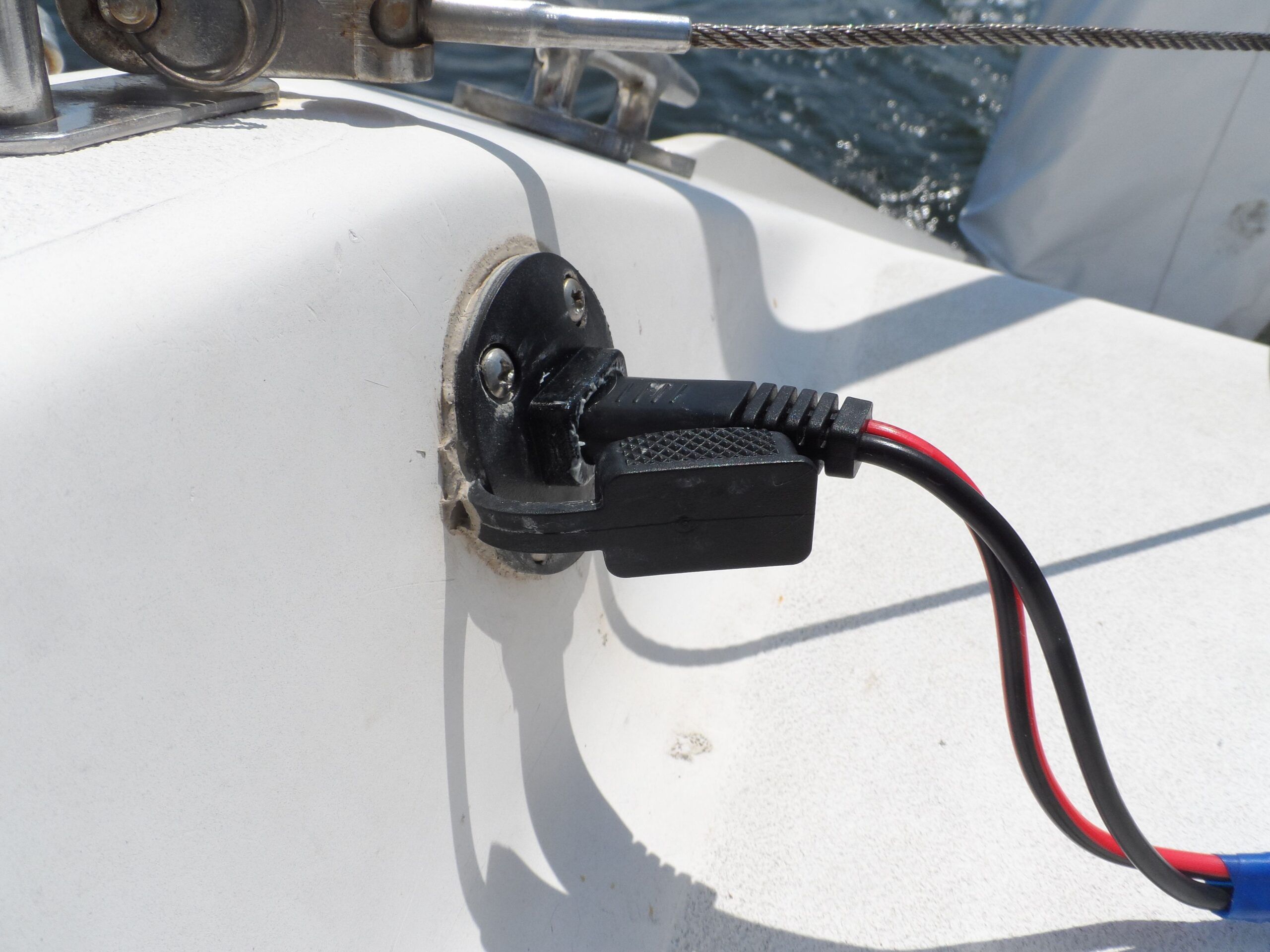
A 4-pin connector would work if we had a tricolor or deck light. We grease the 2-pin connector once each season with Tefgel, which keeps the pins dry. No corrosion, and we get heavy spray up there. The deck pass through is flanged and potted, so it cannot leak. If you kick it the plug comes out (without damage) but they don’t come apart too easily or they wouldn’t work on boat trailers. We’ve never had one come apart that we didn’t snag or kick. So far, so good. The light still works.
Tiller pilot
The original connector had four pins, allowing it to be controlled by a remote or by wind vane plotter. A remote makes little sense on a 24-ft. boat, so we never used it. As noted previously, bald eagles were making the wind vane expensive and annoying, and frankly, we didn’t really need it. The F-24 is quite weatherly, so upwind we just crack off a few degrees and it’s fine. Off the wind multihulls generally steer better by magnetic compass, since surfing and apparent wind changes happen too fast. We spliced on a 2-pin bulkhead connector. It doesn’t lose contact, the pilot stays on course, and an annual slathering of grease keeps it corrosion-free.
We did make one mistake, or rather the previous owner did. The plug is right behind where you sit, making it damage prone. This probably contributed to the initial failure. So we branched a second plug, leaving the original available for other uses. Easier than making the hole disappear.
SAE 2-Pin Ratings in 2021
Muyimu SAE 2-Wire Flat
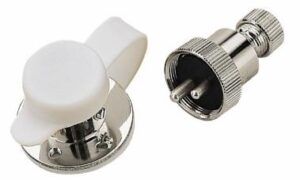
Like the 4-wire flat, not the best sealing around the connection, but they can do well if kept greased. Additionally, they meet the universal availability requirement. The bulkhead version tested came with a 4-screw mounting flange we thought we would like, but the plastic distorted over several months; you’ll need to go light on the screw tension.
Bottom line: The Sea-Dog version is a better choice.
Sea-Dog SAE 2-Wire Flat
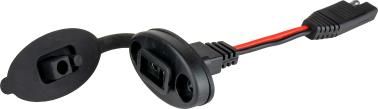
Like the Muyimu version, but with a better flange. Also available in a back nut version (not tested, must have backside access, and typically harder to bed well).
Bottom line: A Budget Buy for utility connections.
Conclusion
Not sayin’ there aren’t better answers. But the SAE 2-pin and 4-pin connectors are cheap, universal and reasonably reliable. When they do fail, it’s likely to be gradual—a result of a simple, robust design.