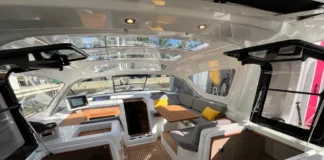
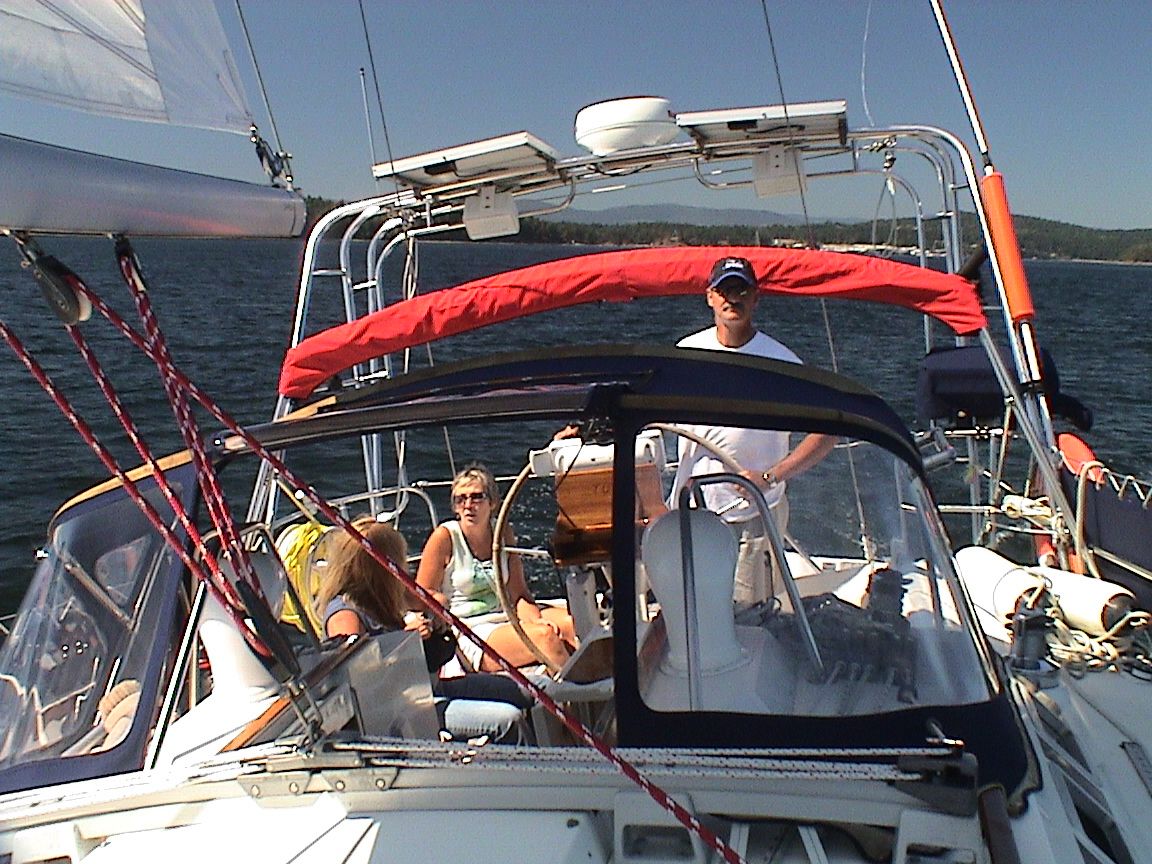
It was a bright mid-summer afternoon as we sailed towards our favorite local marine park only a few miles from our home port of Sidney, British Columbia. Carey and I were cruising the Canadian Gulf Islands aboard a borrowed Beneteau 39. Long time friends, Ron and Linda, non-sailors, were aboard and we were treating them to a weekend cruise. Our own small 30 ft. Islander Bahama was not always a good fit for four adults. Borrowing the Beneteau from a sailing buddy offered much more room with separate sleeping cabins and heads. The Beneteau was a more appropriate choice.
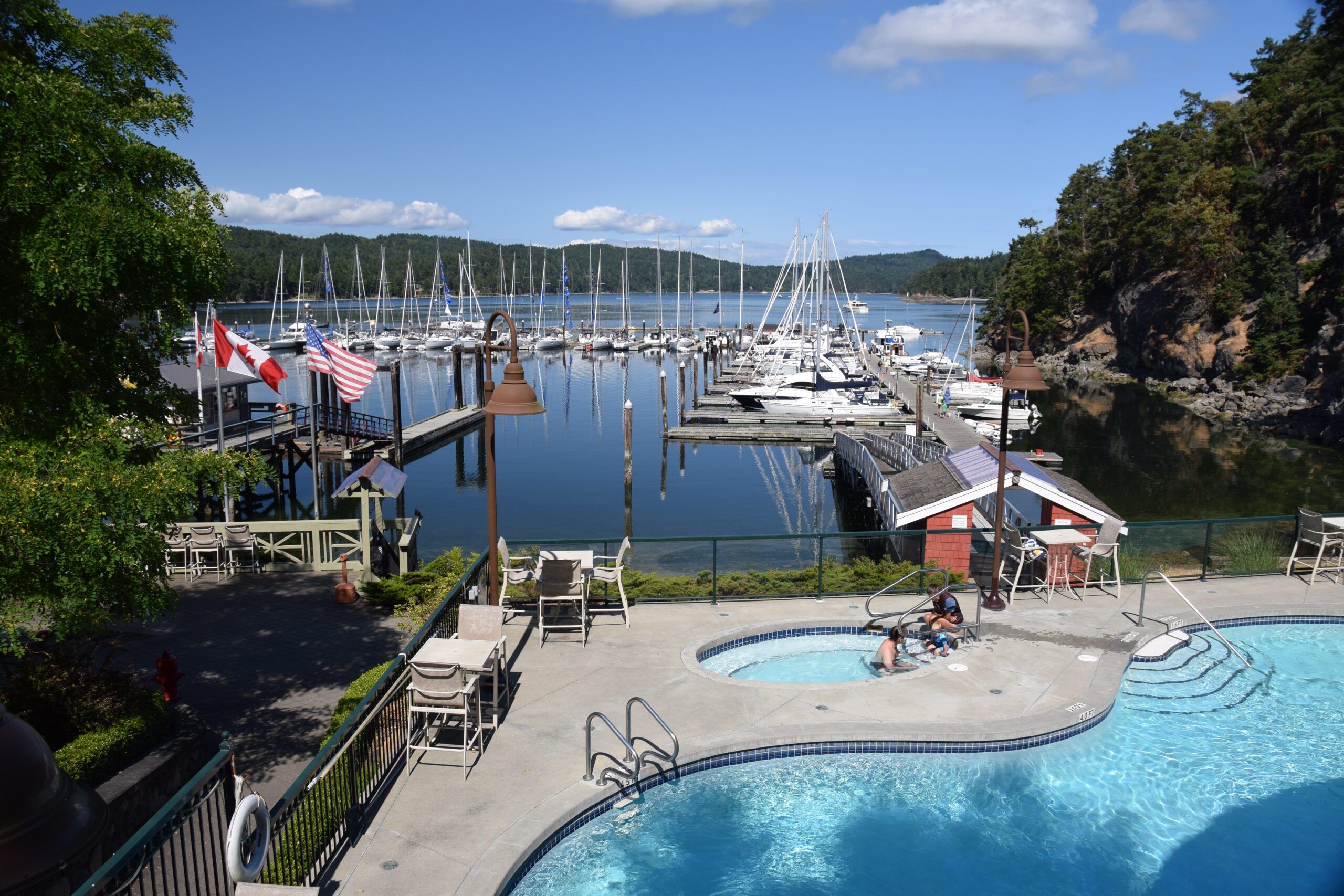
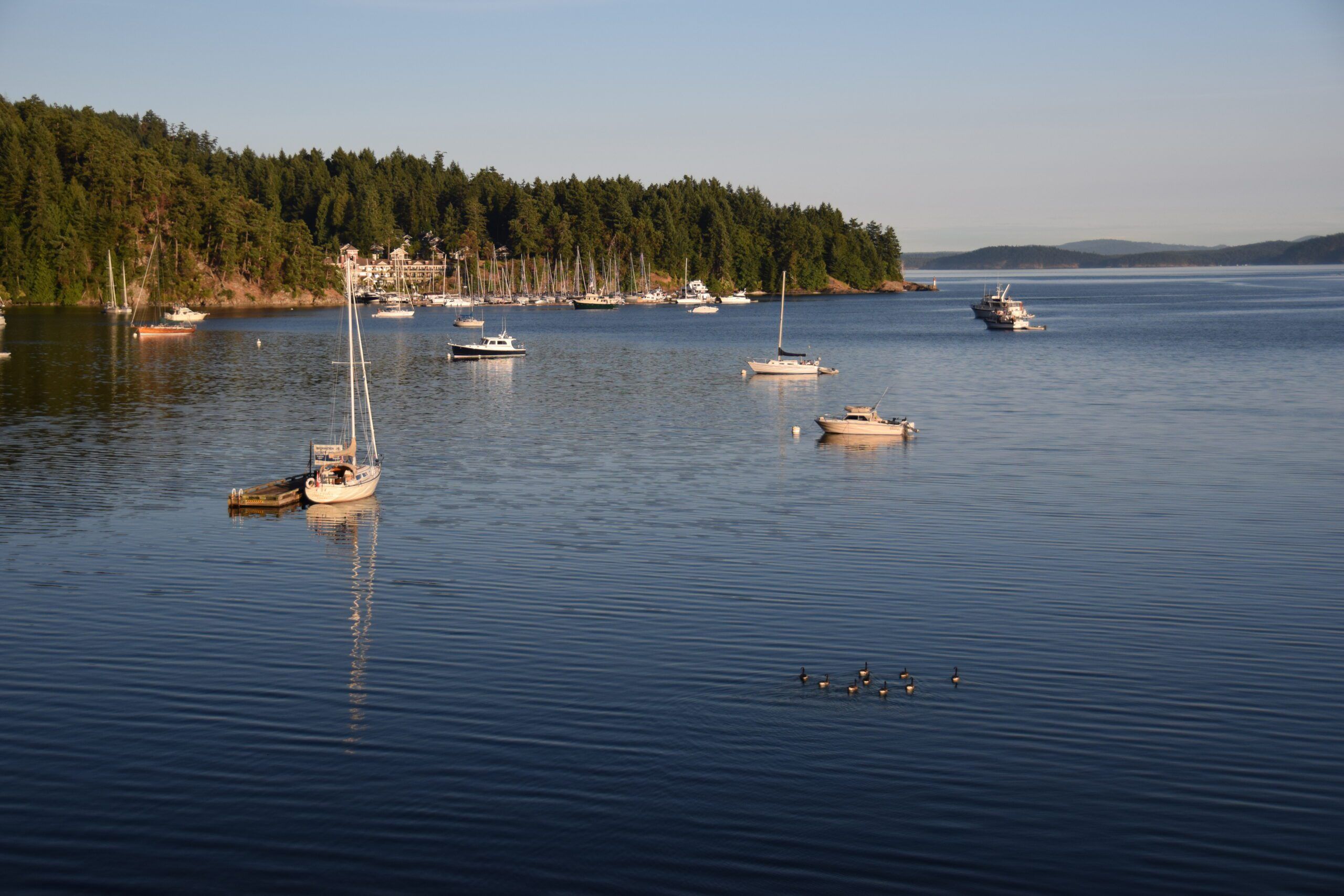
The first destination for the weekend was Bedwell Harbour on beautiful South Pender Island. Within the harbor, Beaumont Marine Park featured a network of well-maintained trails lined with stunning arbutus trees, secluded walk-in campsites, and a vigorous hike up to a spectacular mountaintop viewpoint. A popular destination by road or by water, the park is well worth exploring. Across the harbour was Poets Cove Resort and Marina, a very popular boating destination with restaurants and swimming pools. A summer favorite for children and adults.
Searching for a Spot to Rest
Mooring buoys, available on a first come basis, fronted the gravel and sand beach of the park, our destination for the evening. On a Friday afternoon in mid summer, I didn’t expect to find a vacant buoy. However, the harbor offered plenty of room for anchoring outboard of the mooring field. I was prepared to drop the hook in the somewhat deep water.
It had been a perfect sail in light winds as we approached the harbor, rolling up the main and genoa as we approached the busy mooring field. I caught sight of a single mooring buoy still unexpectedly open! I turned the wheel in that direction only to see a C&C 37 converging on the same buoy. I wasn’t concerned. I had expected to anchor anyway and watched as the skipper eased up to the buoy against the steady breeze, a woman with two young children securing the mooring line at the bow.
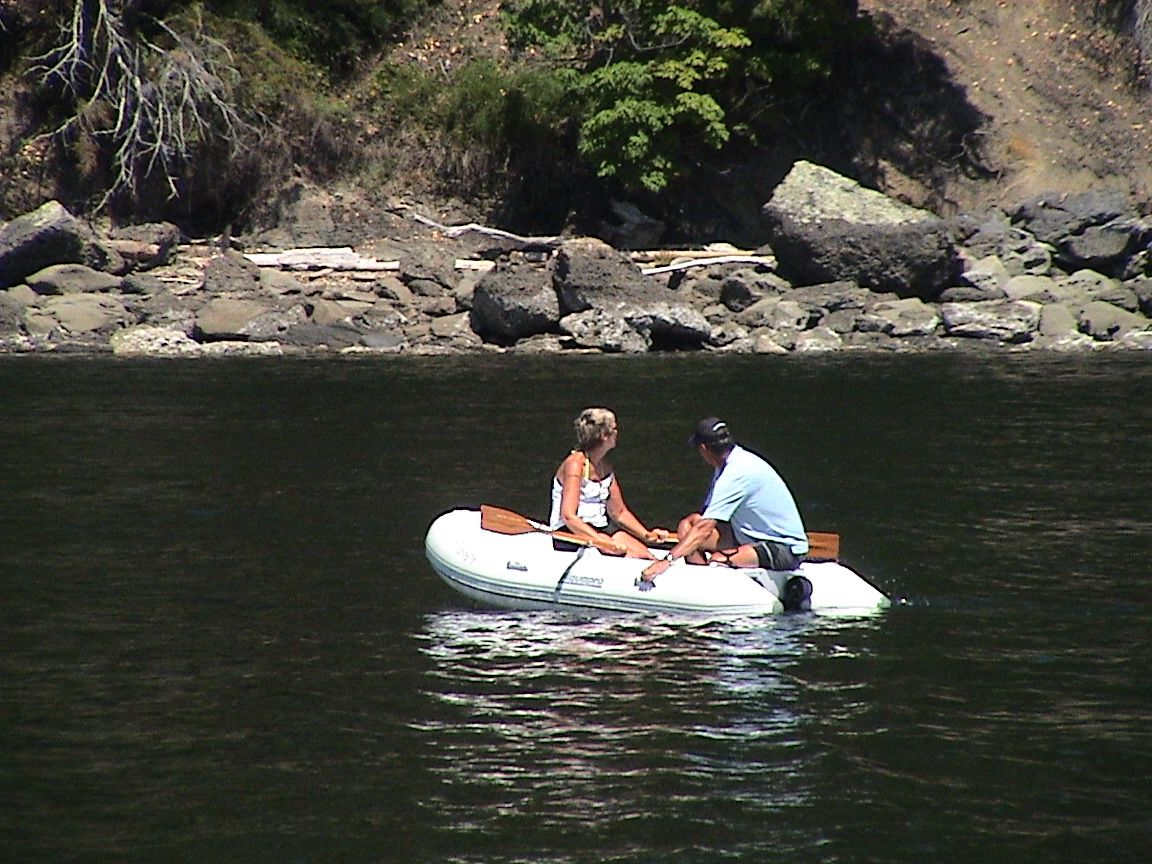
Not wanting to interfere with any of moored vessel, I dropped our anchor well away from other boats. Once secure, Ron and Linda soon rowed the dinghy towards the beach to explore the park. Carey and I relaxed in the cockpit, soaking up the sun and viewing the lazy summer activities in the harbour.
A Lazy Afternoon Switches Gears
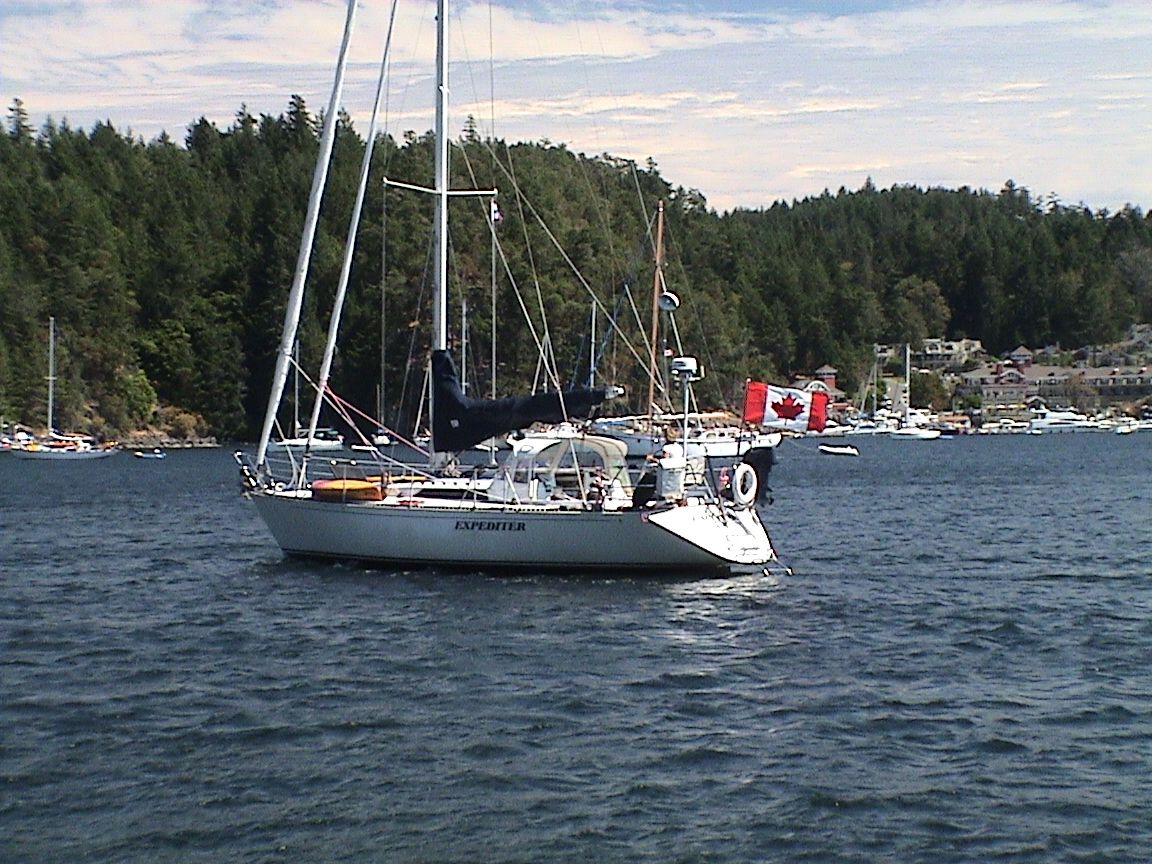
The afternoon drifted by and I went below to tidy up the main cabin before Ron and Linda returned. I glanced out a portlight toward the mooring field and noticed the C&C 37 that had grabbed the last mooring buoy had cast off and was making its way towards us. I idly thought that perhaps I should haul up the anchor and grab the buoy. It was closer to the beach, and Ron and Linda wouldn’t have to row back as far.
But I was satisfied with our anchor set and thought nothing more of it, continuing with the task of tidying the main cabin. A few moments later I glanced out again and noticed the same boat still headed our way through the moored boats, a small wave forming at the bow as speed increased. As it was headed directly towards us and was only about 100 meters away, I continued watching. The sun’s dazzling reflection on the plastic windows of the dodger prevented me from seeing anyone in the cockpit. Then I noticed a bow line dragging in the water! Oh no! Was the boat loose?! Uncontrolled!?
Quick Thinking Saves the Boat
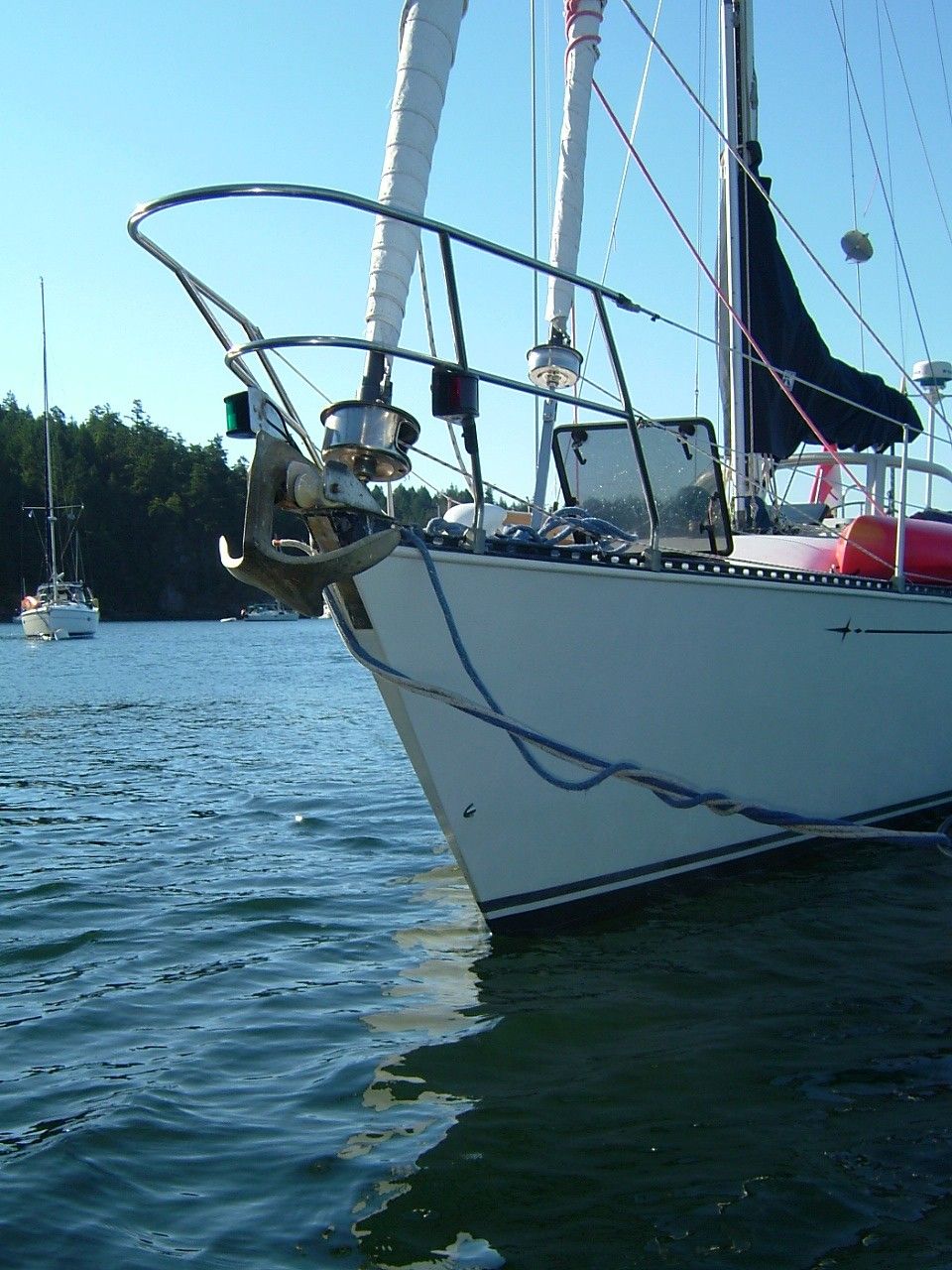
I scrambled up into the cockpit, climbing over a nearly asleep Carey stretched out on the settee, and onto the side deck. I still couldn’t see anyone in the cockpit and by this time concluded the boat had come loose from its mooring buoy, with no one aboard! The breeze was directly on its stern and, with the windage of the rig and dodger, driving directly towards us.
A very quick assessment left me with virtually no options. There was no time to start the engine and power out of the way, even with the anchor down. No time to do anything but try to fend off. Fortunately, I could see that the anchor platform and leading edge of the bow on the C&C was just above the level of the toe rail on the Beneteau. I grabbed the pulpit as the sharply raked C&C bow thumped into the aluminum toe rail at my feet and climbed up through the lifelines and onto the deck, the anchor right in my face!
I didn’t loose my footing in the jolting impact and hung onto the pulpit over my head. As the force of the impact subsided the bow slowly slid back down and settled into the water. I called out to Carey to get some fenders out. I was anticipating the C&C to rotate in the breeze and lay alongside while I hung on to the pulpit.
Sorting it Out
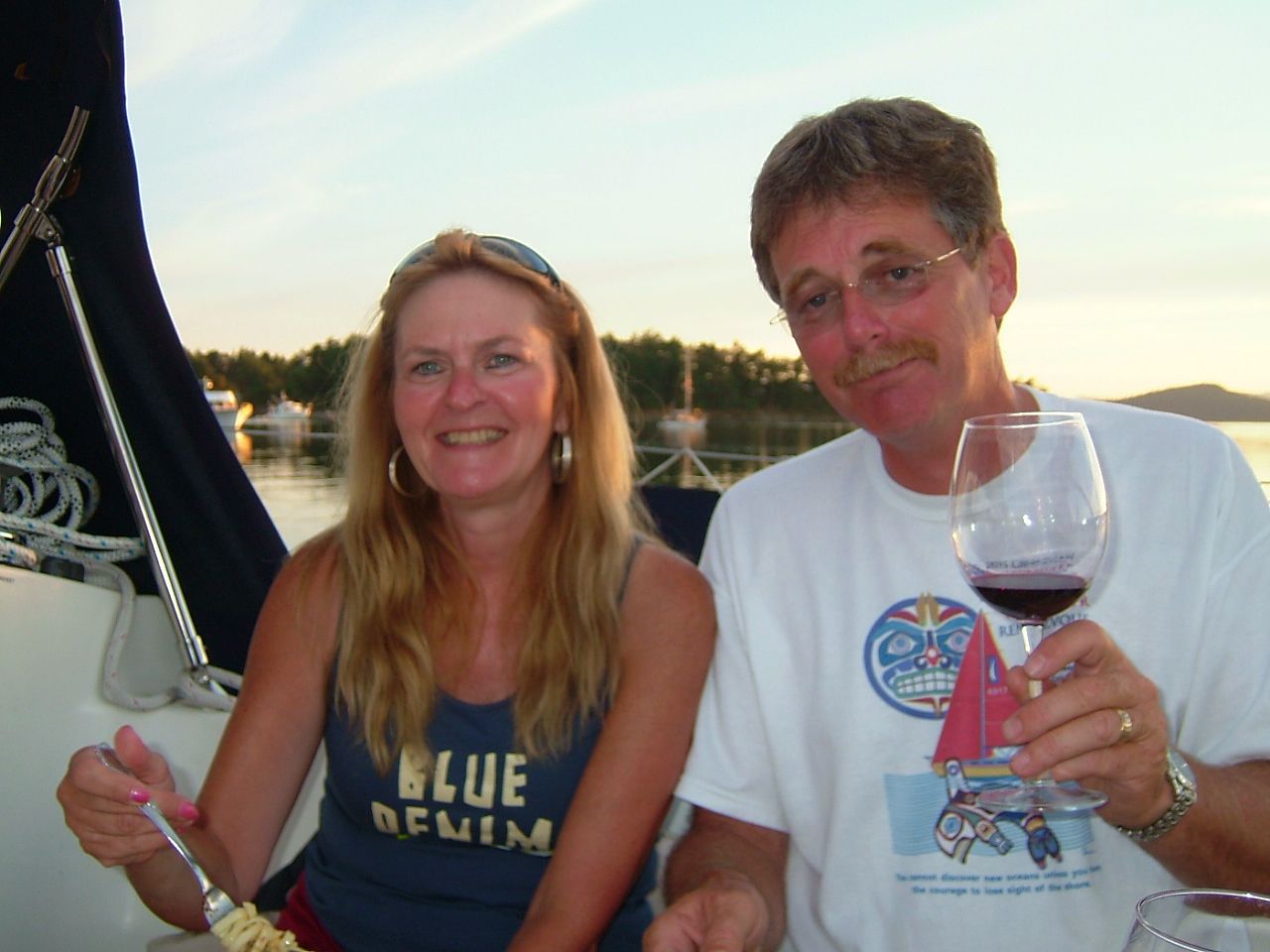
Suddenly a woman’s voice shouted out from behind the dodger: “What are you doing to our boat?” Carey’s frantic response was a bit more caustic than mine. The woman popped out from behind the dodger and I could just imagine her confusion. One moment she was comfortably in the cabin, secure to a mooring buoy, and the next there was a jolting impact and a boat across her bow.
I calmly informed her that her bow line had let go and that she had drifted down on us. I asked her if she knew how to start the engine and drive the boat. Although obviously confused and flustered, she competently started the diesel and backed away without any further damage. She called out, asking me to contact her husband on a specific ship to ship VHF channel; he was at the Poets Cove Resort & Marina across the harbour, enjoying the pool with the children.
A few minutes passed as she hovered the C&C close by. Carey and I examined the damage to our toe-rail and spinnaker pole, both bent by the impact. Soon enough an inflatable dinghy came skimming towards us from the marina. A few pleasantries were exchanged (no, really, pleasantries!) and the skipper went to assist in securing the C&C back to the mooring buoy.
The Friendly Aftermath
Rob came by a little later to assess the damage. He let us know that Jennifer was mortified with the collision, it was her tying of dock line to the bow cleat that had failed. He and Jennifer had borrowed her father’s C&C to take the kids sailing for the weekend. Two borrowed boats, what are the chances? Rob assured us that he would look after the repairs and details were exchanged.
The eye splice is unlikely to let go, the other end just as unlikely to let go if wrapped around the cleat correctly. The “correctly” part of the tie is where some of us go wrong. Simply wrapping it around the cleat multiple times isn’t secure. Even looping it in a figure eight multiple times is not secure if done incorrectly. What is secure, however, is a figure eight with the line looping under itself. Just twice is enough. The more tension on the line, the tighter the grip on the clean. See “How to Cleat Your Lines—Properly.”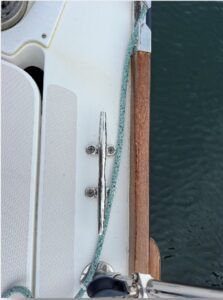
Many boaters use their pre-sized dock lines when securing to a mooring buoy. The eye splice is looped over one of the bow cleats, down to the mooring buoy, and back up to the opposite bow cleat. It’s a common practice that is quick and easy to accomplish.
Ron and Linda arrived back from the park while the adrenaline still flowed through the cockpit. Carey regaled them with a breathless account of the dramatic impact. Cocktails were prepared to calm the jangling nerves.
The rest of the weekend was anticlimactic as we settled into very pleasant and relaxing sailing under sunny skies with glorious sunsets. The many retellings soon conjured an impact so severe we were lucky to have survived!
Repairs and An Understanding Captain
In the subsequent weeks the toe rail was straightened, and the spinnaker pole replaced. There was no noticeable damage to the bow of the C&C, just a minor scratch on the gelcoat.
When I contacted Peter, the Beneteau’s owner, he was unperturbed. A long-time sailor, Peter understood that the incident was not of our doing. All’s well that ends well, and there are now more stories to tell.