

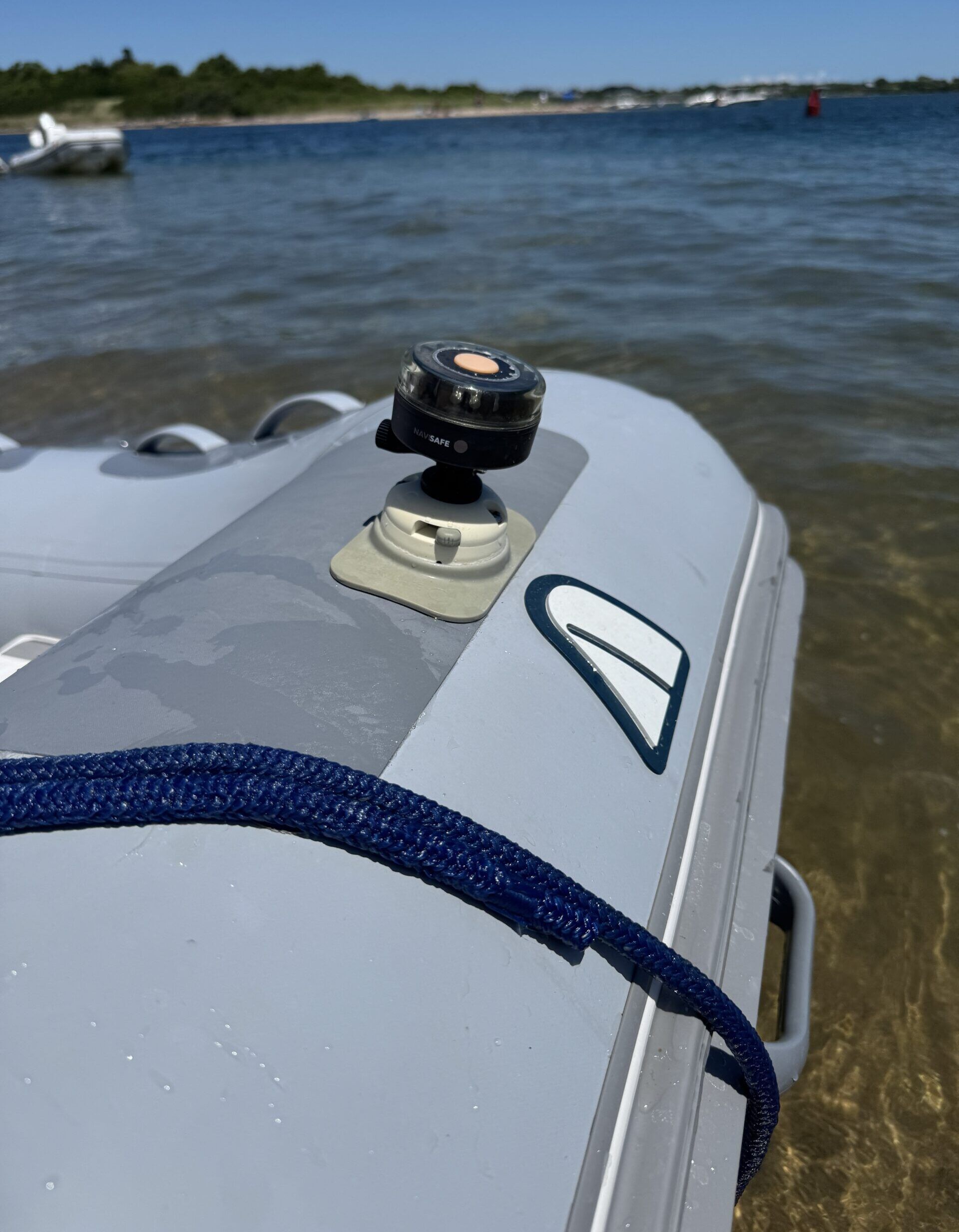
Many of us have seen it—nighttime running of unlit dinghies in full stealth mode (minus the sound of a full-throttle outboard) ripping through mooring fields and anchorages after leaving a dockside bar or restaurant. This is both illegal and dangerous.
Studies have shown that Practical Sailor readers all run nav lights on their dinghies, so we are good there. For those looking to upgrade or replace their lights, let’s take a look at what options are on the market for portable navigation lights.
Regulations
What kind of lighting is required for your dinghy? Navigation Rules (both International and Inland) specify what lights are required for a dinghy.
Rule 22, Visibility of Lights, states that, for vessels less than 12 m (39.4 ft.), all-round lights shall have 2 nm visibility and sidelights 1 nm visibility.
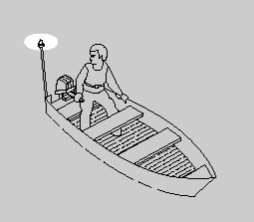
does not exceed 7 knots. (Image source: USCG Nagivation Rules)
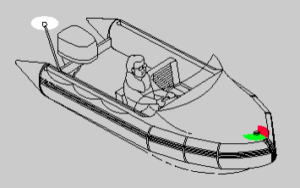
International. (Image source: USCG Navigation Rules)
Rule 23 (International and Inland) specifies that power-driven vessels under 12 m (39 ft.) may skip a dedicated sternlight and display an all-round masthead light and sidelights. Vessels under 7 m (23 ft.) with a top speed below 7 kt only need to display an all-round white light and, if practical, sidelights. If your dinghy can exceed 7 kt, she falls under the more stringent requirements for the vessels under 12 m. Rule 23 also discusses placement of the lights in regard to the vessel centerline.
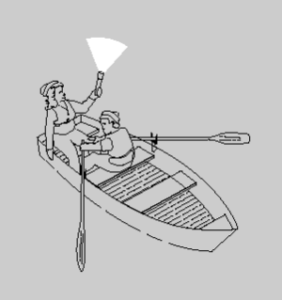
Rule 25 states that a sailing vessel or oar-powered vessel under 7 m should have an electric torch or lighted lantern if she does not have a masthead light and sidelights or tricolor.
Annex 1 dives into light placement, vertical separation of the all-round light and sidelights, and black screens for sidelights.
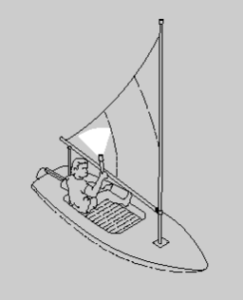
Same for Inland. (Image source: USCG Navigation Rules)
USCG-Approved vs. Non-USCG-Approved
Not all portable navigation lights are USCG-approved—meaning they do not meet either the visibility requirements and/or do not shine precisely in their prescribed horizontal sectors (sidelights terminating 22.5 degrees abaft the beam on each side). Some manufacturers are clear about their lights not meeting USCG requirements, but others make no mention of meeting or failing to meet requirements.
Some all-round lights and sidelights will be advertised as, “Designed for boats less than 22-ft. in length with maximum speed of 7 kts.” As boats less than 7 m and top speeds slower than 7 kt are not required to carry sidelights, this is a manufacturer’s way of stating that the lights are not USCG-approved without saying it in a blunt fashion. Regarding all-round lights assigned to that statement, I would assume the lights do not meet the 2nm visibility requirement.
This leads us to this question: Is it better to strictly meet USCG requirements or run with non-USCG-approved lighting?
Unarguably, using USCG-approved lighting is the best and safest way to get underway in your dinghy especially if you are traveling at speeds greater than 7 kt. However, one could make the argument that non-USCG-approved lighting is better than no lighting at all.
And, if you are going to use non-USCG-approved lighting, the prudent mariner should do their best to meet USCG requirements for mounting position, range of visibility, and horizontal sector visibility.
Bottom line: See and be seen!
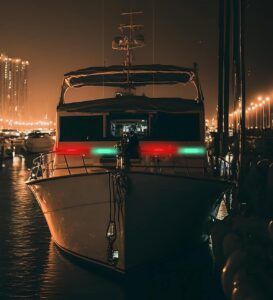
Mounting
Mounting portable navigation lights on a dinghy (inflatable or rigid hull) can be a challenge due to the simple fact that the boats aren’t designed with nav light mounting in mind and often lack mounting infrastructure for adding lights.
Across the market you will find lights with suction cups, poles, stickers and clamps. Take a good look at your craft and where you plan on mounting the lights to help guide you to what option works best for you.
Know that suction cups don’t always play nice with the skin of an inflatable and the clamp requires something to clamp to. Over the years, sailors have resorted to tape, glue, bubble gum and zip ties to secure their portable nav lights.
Donning and Doffing Your Lights
If your dinghy is always inflated and/or stored in a way that you do not need to remove the lights, then you need not worry about ease of installation and removal. However, if you are storing your dinghy or deflating it between use—or just want to keep your plastic lights from getting hazed by the sun—you will need to come up with a solution that allows for easy mounting and storage.
Dinghy Lights
A “portable navigation light” search of your favorite marine chandlery’s website will present you with a myriad of options for making your dinghy visible (and legal) for nighttime and reduced visibility voyages.
Seachoice (and other brand) Portable Battery Operated Navigation Light
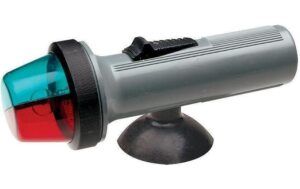
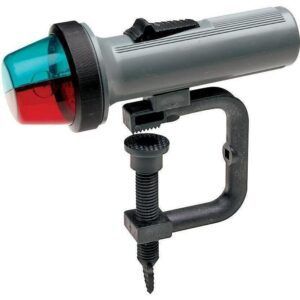
Looking like an old-school flashlight, the classic D-cell battery lanterns are still on the market and can affix to the vessel with either a suction cup or a clamp.
An upgraded version features an LED that is undoubtedly friendlier to the big batteries ($30.99).
Navisafe Inflatable Boat/Dinghy Complete Navigation Light Kit
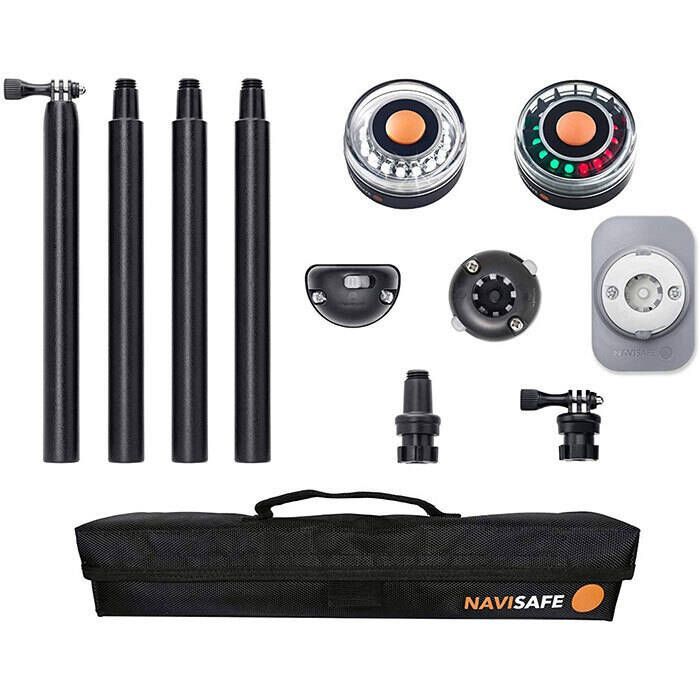
Navisafe lights come from a Swedish company solely focused on nav lights for smaller vessels including kayaks and paddleboards. At a price point well above the competition ($188.99), these lights have a lot to live up to. Their lights are USCG-approved and have 2 nm visibility—meeting the all-round light visibility requirement and exceeding the sidelight requirement.
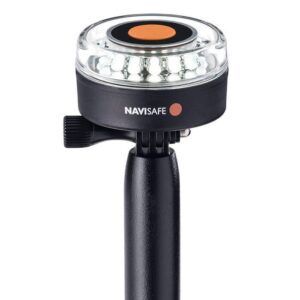
For maximizing placement/mounting options and giving you the ability to pair with other lights, the tricolor light can illuminate in tricolor mode, white (sternlight) only, red and green only, or only red/only green.
The units are waterproof to 20 m depth (for putting nav lights on a submersible?) and also float when dropped in the water. They run on three AAA batteries per lantern. Navisafe lights come with a variety of mounting options—adhesive, screw-on transom/bulkhead mounting option, rail mount, magnetic, and more.
The socket at the mount is proprietary (they call it “Navimount”) but easy to engage and disengage. The attachment directly below the lights is the somewhat universal action camera/GoPro three-pronged mount allowing you to use an action camera atop your lighting mast when not running a “masthead” nav light.
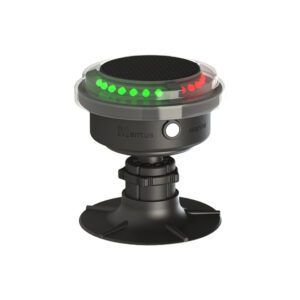
As an alternative, and also USCG-approved 2 nm visibility, Mantus Marine Lights look similar, are solar powered (daylight or USB charging), IPX8 rated, and come in at a slightly lower price point ($107).
Seavolt LED Bow Light Navigation Kit, 12V DC
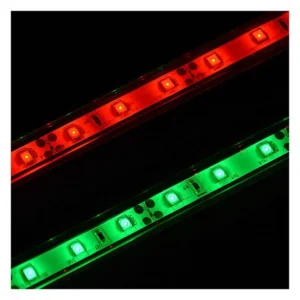
Non-USCG-approved and powered by 12-V sources, these marinized “strip lights” make for an intriguing lighting option for those not wanting to mess with batteries or charging and have a boat that allows for hard mounting of lights. West Marine says they have a light output of “18.” I have no idea what that means. Normally, light output is referenced in lumens. Perhaps they mean there are 18 LEDs in the strips, total. They cost $16.99 for a 6-in port and starboard set.
Alternative Options
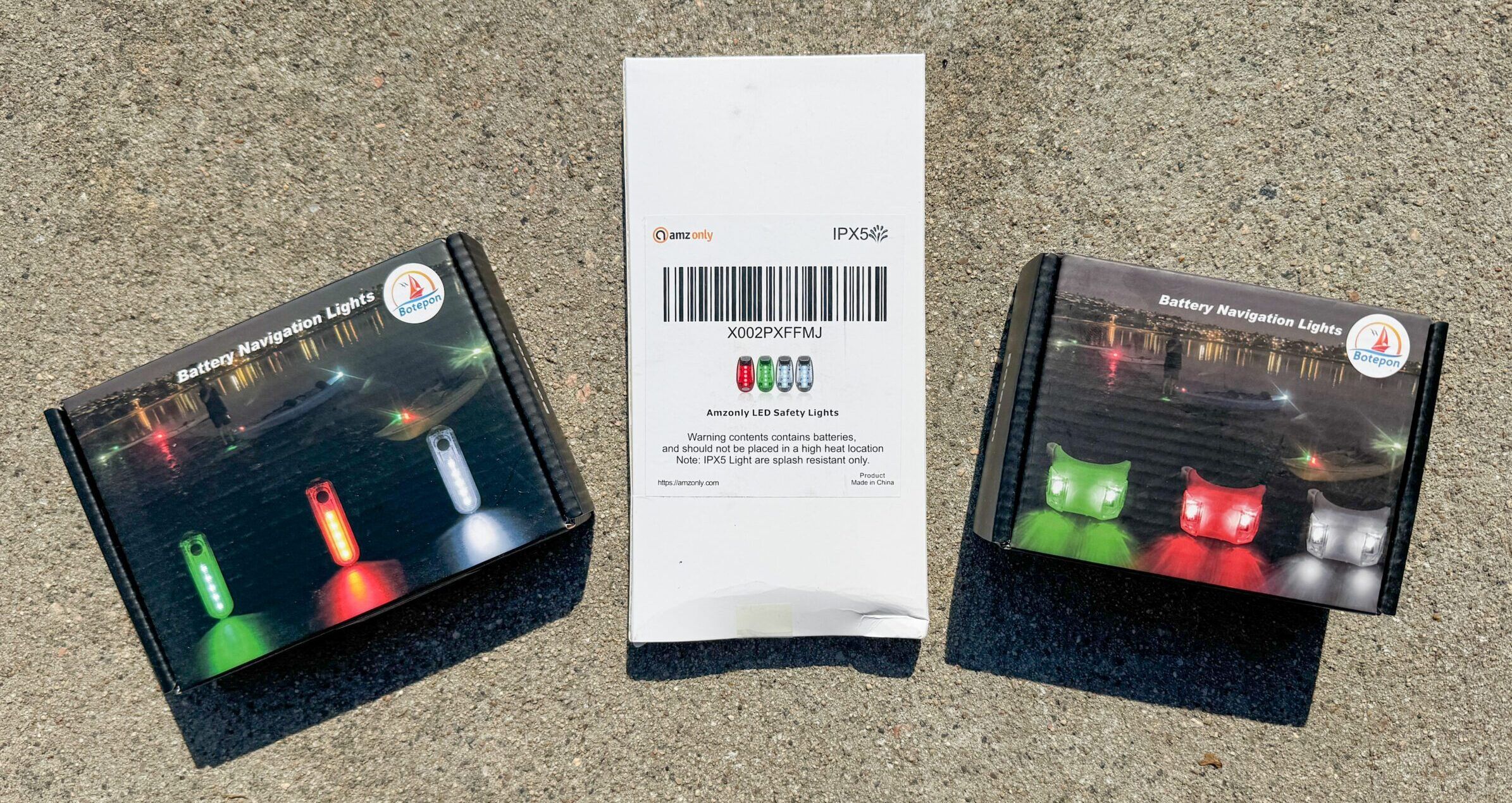
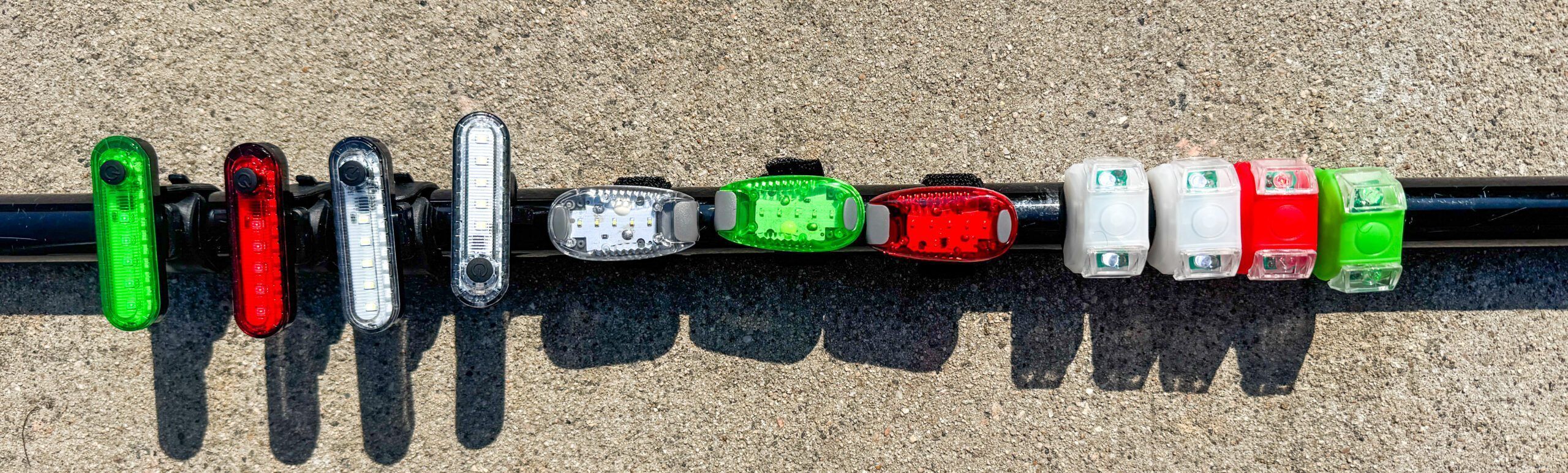
Amazon and other online retailers sell very inexpensive red, green and white LED lights for dinghies and kayaks that are, basically, versions of bicycle lights advertised for marine use. Based on experience with similar products, these items may vanish before press time, but here is a quick look at some options:
Amzonly 4pack Kayak Lights
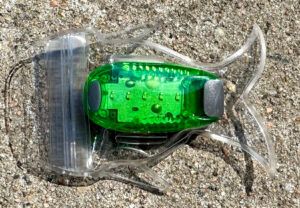
This four-pack of lights (one red, one green, two whites) come with coin cell batteries, a screwdriver to remove the battery door, hook-and-loop straps and fish-shaped waterproof (IPX8) bags with a hook-and-loop strap slot to protect the lights from water. Photos of the product in use show it on kayaks, backpacks, and dog harnesses. It is an affordable option, at $13.99 for four lights.
Botepon Kayak Navigation Lights
Another four-light pack, the Botepon lights are USB-rechargeable and IPX6 water resistant ($17.99). The lights ship with four charging cables (one for each light), safety whistle, a small roll of electrical tape and rubber straps for mounting on a bar or line. The electrical tape is included with the intent that you can boost the weatherproofing by taping over the USB port. It is not clear if the units are IPX6 rated without the tape or IPX6 only when using the tape.
Botepon Kayak Lights
Integral rubber straps help mount the lights in this six-pack (two red, two green, and two white) to a rail or bar. Listed as “waterproof” with no IP rating, these lights are coin-cell battery powered and have an advertised 0.6 mile visibility. The units ship with extra batteries and a safety whistle. I carry similar lights in my bike pannier as emergency backup lighting.
Bottom Line
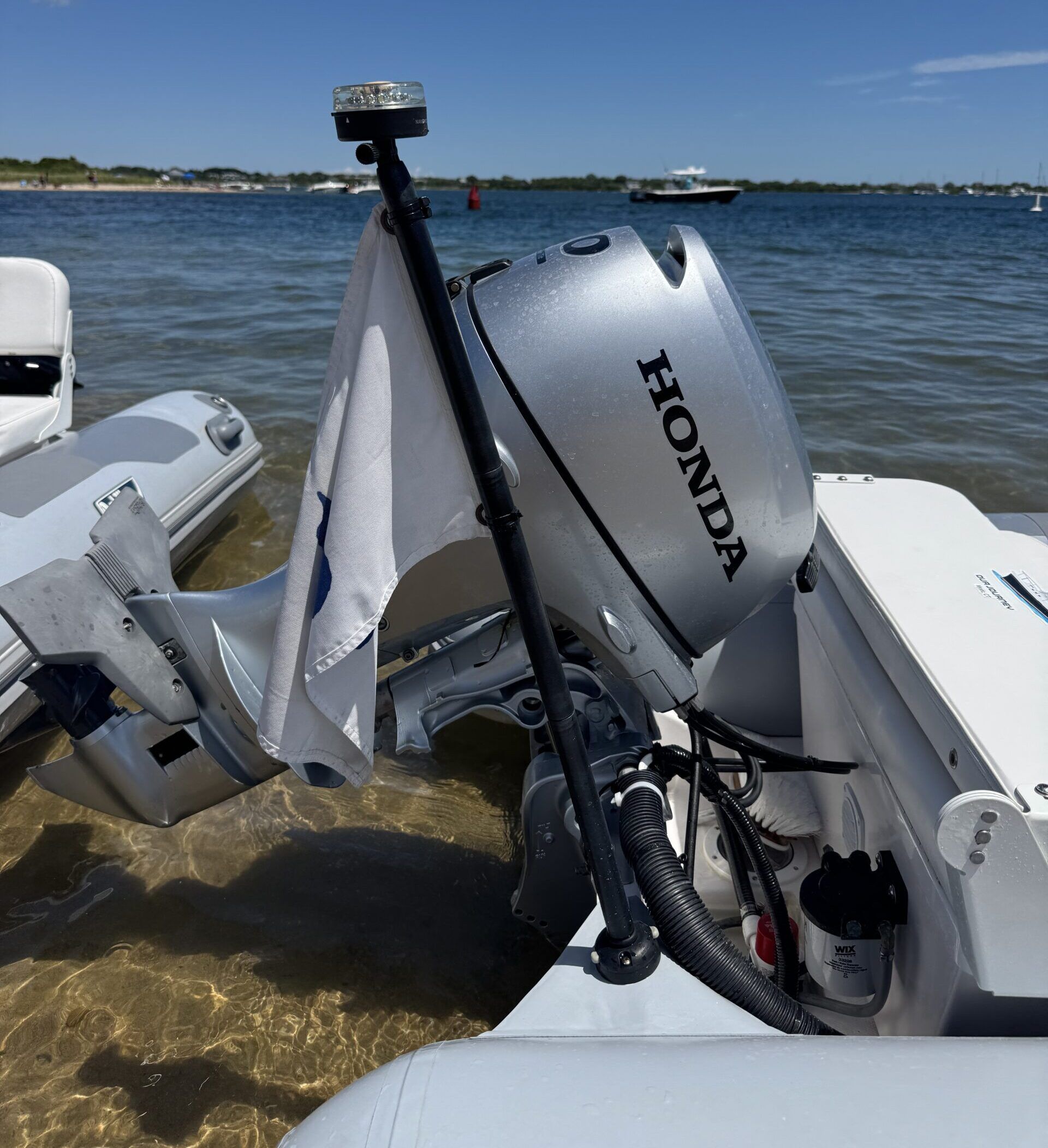
In preparing this article, I mounted Navisafe lights on my dinghy and have found them to be perfect for the task—very bright, thoughtful mounting options, versatile and convenient. The storage bag that came with my lights is great, but I wish it was slightly bigger to make it easier to get the lights and pole back in. I have not tried the similar, and lower-priced, Mantus lights, but do like that they are USB rechargeable and charge during the day using solar power.
If you aren’t on your dinghy after dark much, the investment of the Navisafe (or Mantus) lighting system might be overkill. But, with inexpensive LEDs and electronics easily obtainable from today’s online marketplaces it is easier than ever to find a lighting option for your nighttime dinghy voyages.
Meeting USCG requirements is always recommended and may require a more thorough approach to the mounting and placement of portable navigation lights.







Show Me Your Dinghy lights are the BEST! And not expensive. Check them out!
Hello Karineodlin!
Thank you for that recommendation! These lights look great and the backstory behind them is exactly why we all need lights!
They can be found here: https://showmeyourdinghy.com/
Thanks for reading!
Best,
Todd