

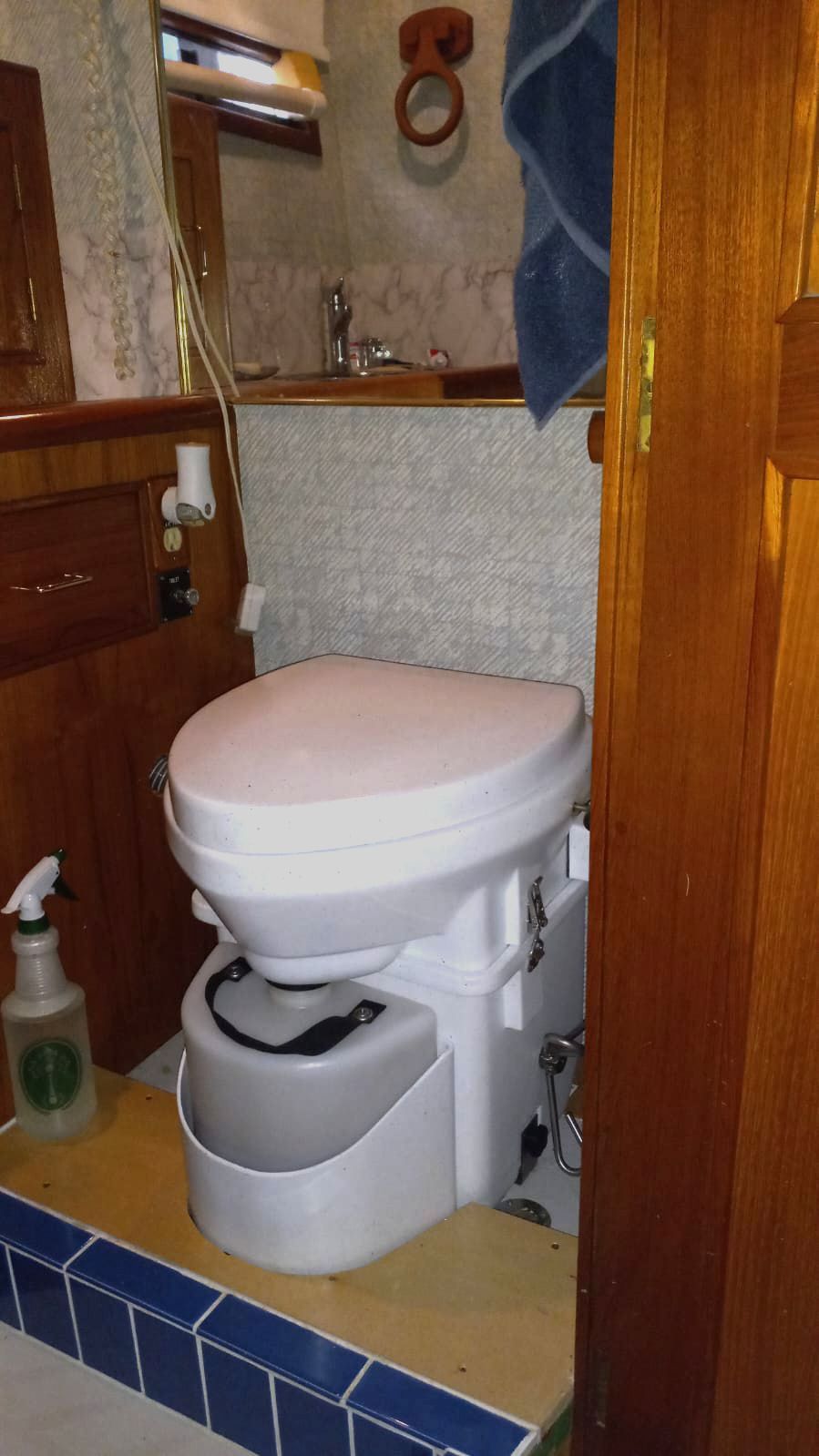
I never thought that I could get so excited about a toilet. When we first installed our new Nature’s Head composting toilet aboard our 40 ft. Ocean Alexander Quetzal two years ago, I admit to being indifferent. I knew that it made sense environmentally; however, I was a bit awkward about altering my ever-so-private occasion of going to the bathroom (I’m a bit of a prude). Now, two years later, I’m adamantly convinced that all boats have composting heads. They’re not only practical, but they’re so much more convenient than regular boat toilets.
In fact, I believe that marinas should make composting heads a requirement. Holding tanks and waste flush-out pumps are ridiculously onerous to manage and are often disregarded in favor of just dumping overboard on an ebb tide and when boats are away from shore (versus the 12-mile requirement). If every boat in our marinas and anchorages had composting toilets, we would never have to worry about sewage in the waters, and we’d be able to swim freely and run our water-makers at will.
There are a lot of variations of composting toilets. After extensive research, my favorites for boats are Nature’s Head and Air Head. I will go into greater detail about the specifics later in the article. Many other composting toilet choices are more suitable for RV’s, tiny homes, and cabins.
Last week, I had the pleasure of speaking with the owner and CEO of Nature’s Head, Matt Cochran, based in Ohio, U.S.. He told me that Transport Canada actually prohibited composting toilets when he first launched the business 20 years ago. Two years later, they not only reversed their stance, but as well, launched a campaign to encourage boaters to embrace the concept. Compositing heads are very popular in the tiny home industry, as well as boating, RV’s and remote cabins.
Note: For the purposes of this article liquid waste is referred to as “Number 1” and solid waste is “Number 2.”
As mentioned above, my two favorite composting toilets for boats are Nature’s Head and Air Head. Other than size, they are similar in operation and appearance. Both cost approximately $1,000.00 USD. Nature’s Head is slightly taller and wider; therefore, if space is an issue aboard then you’ll want the Air Head. Note: Be sure to allow for extra space around the toilet for ventilation and opening the lid etc., which is described in full in the instruction manual and online. The fittings are also slightly different but not enough to be decision-makers. Both of these toilets have two compartments. The front is for Number 1 and has several holes that drain into a 2.2-gallon chamber. The back section is for Number 2 and has an opening flap that empties into the composting container. Both containers are easily removable. Generally, if two people are using the toilet full-time, the front container will need emptying every three to four days, and the back container every three weeks; on average 60 to 80 uses. Nature’s Head recently introduced a smaller weekender composting toilet for day sailors and smaller boats. It’s 3 inches shorter that the regular unit and both compartments are smaller: 1.6 gallons for the Number 2 chamber which accommodates a maximum of two weeks of continuous use. The Number 1 chamber should be emptied more often as well. The Number 1 chamber can also be modified to divert the liquid into a holding tank. Nature’s Head sells a spigot that goes on the front of the chamber and has a line that goes directly into the holding tank for those that don’t want to have the hassle of emptying the container on a regular basis. The toilets also come with a small 12-volt internal fan. When installing both the Nature’s Head and Air head it is important to consider how you will power the little fan and moisture outside. The toilet is equipped with a 12-volt cable that allows connection to direct 12 V power. Proper ventilation is important in ensuring that excess moisture is directed outside rather than accumulating in the head. We attached PVC piping to the fan outlet and ran the pipe outside via our opening porthole. The composting container is a bit tricky at first. You will want to buy the heaviest, strongest composting garbage bags that money can buy (trust me on this one). You can even double up for extra safety. We buy biodegradable bags on Amazon, and the biodegradable coco coir (which is the composting agent) at any hardware store. You can also buy all these supplies from the manufacturer and online. Some people use peat moss, but the coco coir supposedly absorbs more liquid and is more sustainable—it is made from coconuts. A small amount of the coco coir goes into the bottom of the container to reach about 25 percent from the bottom. There’s a foot spider handle on the side of that container that churns the waste into the coco coir. Be sure that there’s enough coco coir in the base to allow the gizmo to make full contact with the composting material. You’re supposed to churn the spider handle with your foot after every usage, and I just do it every time I’m in the head—when I shower, do my make-up, etc. It’s important to note that coco coir has more applications than composting toilets. It is landfill approved and can be used to soak up diesel, bilge liquids and oils, and even used as kitty litter. Nature’s Head is a distributor for Coco Absorb Corporation and boaters can also obtain coco coir directly from them in a more powdery form. Emptying the front ( Number 1) container is simple. You just undo the compartment and dump the liquid overboard. There’s no odor to the liquid, as long as the chamber is rinsed out and sprayed with vinegar on a regular basis. I recommend that you drain the container slowly; otherwise, it may splash back in your face—you’ll only do it quickly once. Emptying the waste container is also simple. Just release the clamps, put a strong, heavy biodegradable bag over the top and tip it upside down. This waste bag can go into any garbage facility insofar as the waste essentially becomes a dry composition. We rinse both containers with white vinegar spray after emptying. All toilet paper goes into a separate garbage bin, with exception of “quirk” #3 below. The cruising life never ceases to amaze me. In 2015, I coordinated a much-needed garbage infrastructure program (in conjunction with Rotary) in El Salvador. Never, in my wildest dreams could I ever have imagined specializing in garbage collection, cans and education. So much so that my (then) 5-year-old grandson was boasting to his friends that: “My grandma drives a garbage truck.” It was something that I believed in because every extensive beautiful beach and roadway was smothered in garbage, and it wasn’t their fault. People jokingly accused me of being “Trashy.” Now, I’m specializing in toilets! I can’t imagine where my next specialty gig will take me. Note: Practical Sailor has no advertising relationship with Nature’s Head. The author chose to recommend Nature’s Head based on her own experience with the product.
How Composting Toilets Work
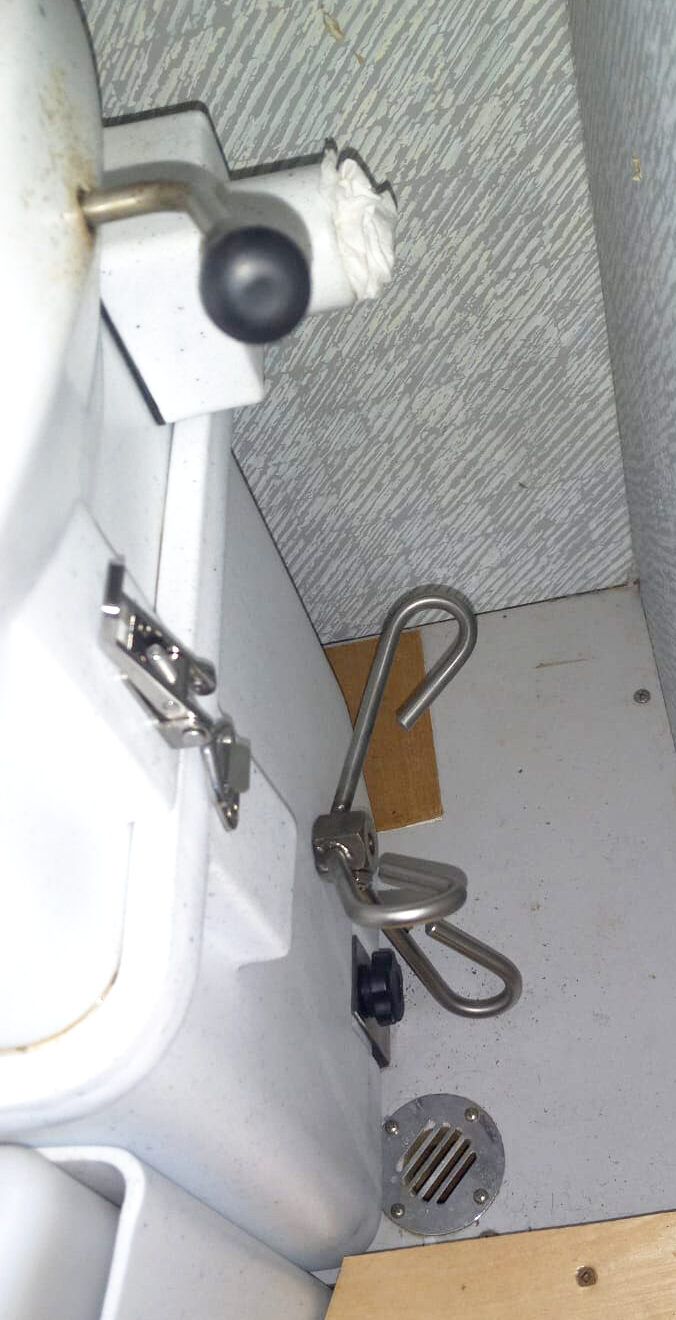
Two Compartment System
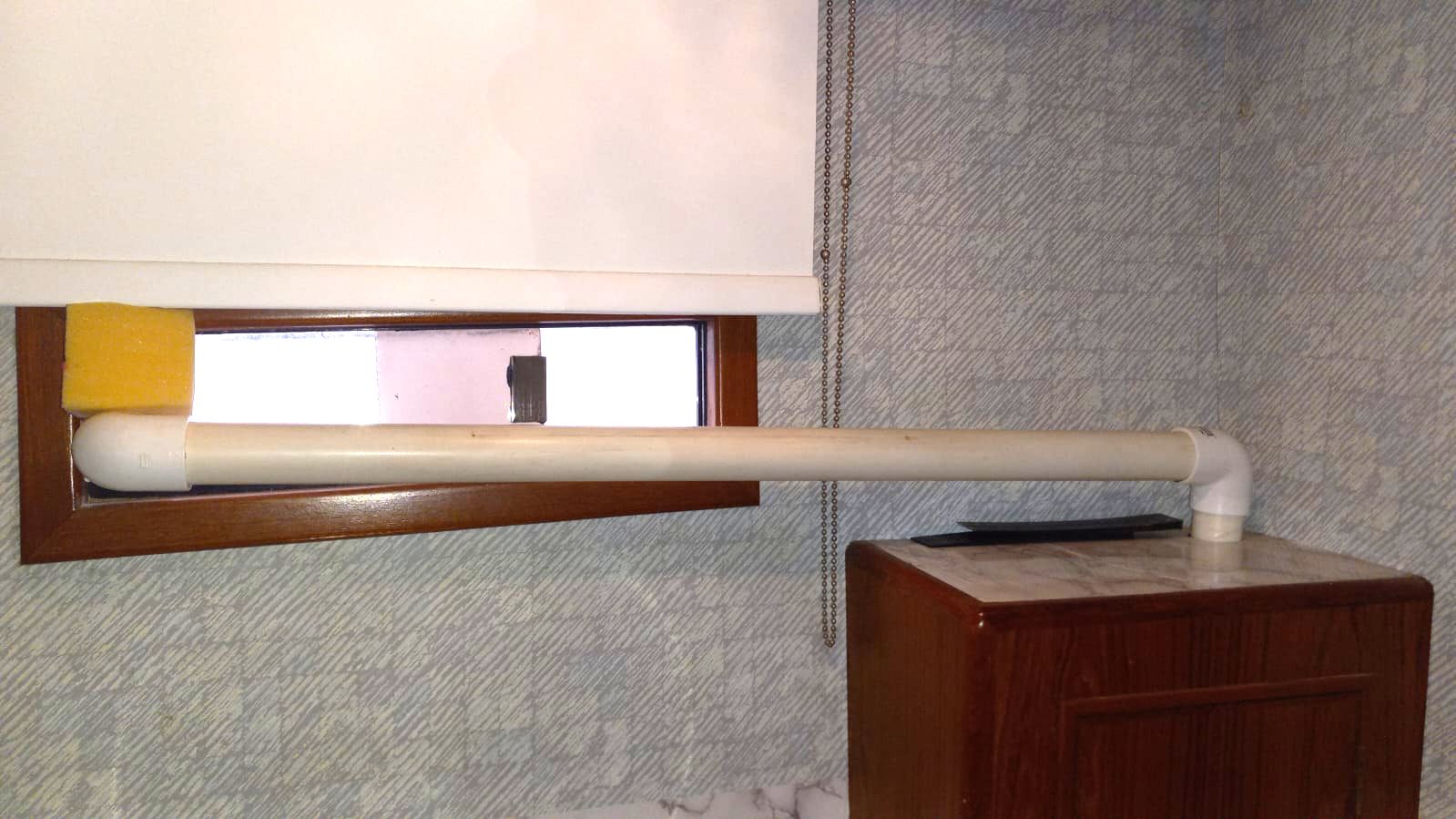
Garbage Bags and Coco Coir


Emptying The Containers
I’m going to let you in on a few quirks and tricks that we’ve learned:
Conclusion
Resources:







Thanks for a detailed article, including difference between the brands and space use info. While I respect your opinion about “…make composting heads a requirement” I really must take exception to that. Boater’s situations are incredibly varied. For example, we have enough challenges with our non-boater guests using a conventional marine head so it would limit who we could share the experience with. A portable toilet isn’t an option either. Also, as primarily day sailors and limited overnighters, I sometimes only empty our tank at the end of the season.
Big fan of our composting toilet. The one mod that we made that I love is pvc tube that enters into the top of the pee container and is connected to a separate shower sump pump. Allowing us to discharge liquids with out removing container and dumping over the side. This really helps offshore when going down below and try and disconnect the peek tank to try and empty overboard which from experience is a daunting task and needs to be done regularly with more than a two people.
Urine from a healthy human is sterile. Great fertiliser.
Urine is not sterile. That is a myth that has been disproved. Urine can indeed contain bacteria and other pathogens. In my little sailboat, I have a 5-gallon bucket with peat-moss and agricultural lime as the medium and I just shake the bucket between uses. I do not pee in the 5-gallon bucket nor do I use an electric fan.
For pee, I use a wide mouth 2-quart detergent bottle that I can easily fill in day or two of use. No mess as the bottle has a tight screw on lid and easy to pee into if you are a male. I dump the pee overboard when I am away from shore or anchorage, but I never get outside the 12-mile limit. Consequently, dumping the urine overboard is probably illegal.
My bucket has a tight lid and the medium tends to absorb the moisture and smell from the deposits I put in it. All the same, I usually only go out on overnight sails for a few days at a time. I agree that my bucket (without a fan) would likely not work if overnighting for extended periods of time. I dump the contents of my bucket in my compost pile at home and mix it in with a shovel. But I never use that compost on my garden.
I would never put my bucket contents in with my household garbage and send it to the landfill – although that is just my personal comfort level related to no wanting to put human waste into the normal garbage stream. I have thought about not using a medium and then could dump the contents into my home septic tank by pulling the cover off the tank – but currently I do not do that.
I realize that landfills these days receive a lot of disposable diapers. All the same, I try to keep my bucket contents out of the landfill.
Please support your assertion with peer reviewed evidence.
Is it possible to keep the rear chamber clean by spraying it with white vinegar and wiping it out with a brush, or will that will make the material below too wet so that it starts to smell?
Yes, this is common practice if the toilet is not going to be used for an extended period. Other wise there is no point. If toilet will only be used for the rare weekend, a non-curn design with a bag is more practical. See “Disecting the Desiccating Head,” June 2021.
No, if it is drained the amount of moisture remaining would have no effect.
If you don’t like the smell of vinegar a 5% solution of citric acid is actually even more effective.
We chose an OGO compost toilet. It has a smaller footprint and and”electric” flush system. We found that the was simpler than those you mention. That is simply our preference.
While we have never had any bug issues, Many of our friends add Diatomaceous Earth to the coco coir mix. It is a physical insecticide that contains no chemicals.
We cruisethe Eastern Carribean and have had no issues with disposal.
I have an AirHead on my O’Day 30 and its the best improvment one can do, IMO. I have a small 7 watt solar panel to keep the house battery charged which runs the fan, although I ran it the first season with no solar panel, and the fan didn’t discharge the battery after 8 days. I vented it into the anchor locker (a segregated deck locker). No smell occurs because the coco seems to de-odorize everything. The best thing was the huge storage space regained when the holding tank was removed.
I love my AirHead composting toilet. One thing I learned, due to an infestation of tinier than normal no-seeums is to microwave the coir bricks for 3 1/2-4 minutes prior to hydrating. It only happened once, but once was enough. Apparently insect eggs or larva can be present in the coir. I had to bomb the cabin due to thousands of the little suckers. Microwaving the bricks renders them dead. Never a problem since..
We carry 2 pee tanks. Sometimes I’ll sit, other times I can manage to position myself standing up. I have heard of people
adapting the tank and running a dedicated line from the tank to the through hull that’s no longer used. You’d want to make sure you’ve got no reverse flow, so a check valve may be in order.
Also, I do not utilize the mini fan for ventilation of the composting tank. Instead, I cut a hole through the side of the cabin and installed a clamshell vent (with screen). The wind passing over the vent has proved more than sufficient.
Before dropping a deuce , a water spray of the bowl and placing a couple sheets of TP across the opening helps a lot in eliminating any cleaning of the bowl afterwards .
I’ve tried every possible “wet head” available in my over 50 years of sailing, and NONE of them were foolproof. About 10 years ago, I installed a “C Head”, possibly the simplest and certainly the cheapest of all manufactured composters. No “Joker Valves”, with their surprises, no stinky hoses and no holding tanks that need to be pumped out. Now I would not have anything else.
I’ve had holding tank and desiccating systems. Well designed and maintained, they are both faultless.
For smaller boats that would use a chemical toilet, no question, desiccating heads are a huge improvement. Less odor, easier to service, and lighter (desiccating–composting heads are a different topic) to carry.
For cruising boats over ~ 28 feet I think it’s personal preference. The writer is correct in that we need to get past the instinctive yuck factor of composting heads; they really do work. Great for areas with limited pump out options, such as lakes. I liked the holding tank system on my 32′ PDQ cruising catamaran. It was well designed, faultless in operation, and I would not have preferred a composting system. That said, I sailed in an area with plentiful free pump-out stations and I did preventative maintenance.
Horses for courses, IMO.
We are not a fans of toiet paper, we use a bidet instead, ia it possible to use a bidet with a Composting Head?
I have a bidet at home, installed when my wife was going though chemo. Yes, very nice. If I had a conventional head on my current boat I would install one, in part to eliminate clogs and the potential for build-up in the tank. TP also has a tendency to wrap around the mixers in composting toilets, to the point where many bag the TP separately (see also statement by author in article). But this is not a strict requirement, just a good practice.
But no, a bidet would not work without considerable modification. Not impossible, but the water would have to be diverted away from the solids bin, just as urine is diverted.