

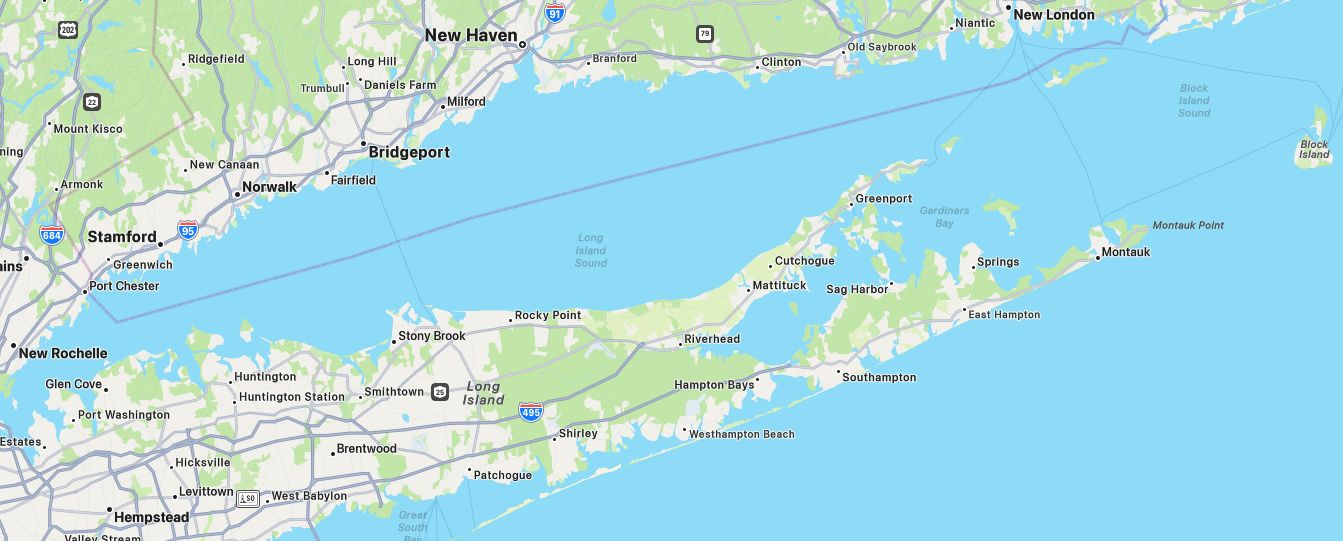
The East End of New York’s Long Island shelters within its North and South “forks” popular cruising destinations including Greenport, Shelter Island, Sag Harbor, and Montauk. What keeps many sailors hailing from the populous western end of the Long Island Sound (The Sound) from ever reaching these destinations is the sheer length of this tidal estuary, at nearly 80 nautical miles. Then there’s the psychological and very real nautical challenge of passing through Plum Gut or The Race.
To continue reading this article or issue you must be a paid member. Sign in

Join Practical Sailor
Get full access to Practical-Sailor.com – more than 4,000 articles – for just $34.
Join today and save 42% off our full price.






You are a braver man than I. Every season I think, “This is the year I finally tackle my Mattituck fears.” And every season I talk myself out of it. Same with Coecles Harbor. 🙂
My wife buries herself in Eldridge as we begin planning our voyage every February. She could earn a merit badge in The Race and Plum Gut currents. I gently mock her for being so obsessed with them, but then every trip transiting those areas is smooth because of her prep. (She’s also the Watch Hill, Martha’s Vineyard and Cape Cod Canal current guru. I’m the East River, Hell Gate and NY Harbor guy.)
We were out there some of those same dates as you, while transiting from NJ to the Vineyard, and while we have a 24HP motor, negotiating that chop was still not fun. We normally stick primarily to the LI side on our way out – usually Oyster Bay and/or Port Jeff, before crossing over to Noank – but this year we stuck strictly to the CT side, as we wanted to visit the Norwalk Islands and tuck into New Haven to shorten the trip to Noank. Of course the prevailing south westerlies decided to take a few days off as we headed that way.
Thanks for sharing. Enjoyed this article very much.
Thank you for sharing. I’ll keep Noank in mind for hoped-for journeys east of the Connecticut River.
It’s a great little area, and just a stone’s throw down river from Mystic, which is also one of our favorite places to visit. And Stonington is very close by as well.
Instead of going through the Race, proper, stay north of Fisher’s Island, just off of the Mystic River. It’s a very nice passage, with excellent anchorages on either end of Fisher’s, appropriately named West and East Harbors.
Easy exits, both east or westbound.
Thanks for the suggestion. That passage is also known for high currents, but from the sounds of it, not as unforgiving (of bad timing) as Plum Gut and the Race.
Great article, Doug. As a Florida sailor, it broadens my knowledge base to read about the challenges of huge tidal swings and flood/ebb currents. Some of our inland-to-gulf passages have 3 to 4 kt currents and strong opposing winds, but with only a 1 foot tidal change, this is much easier to deal with. A 50hp diesel also helps.
This article hammers home the importance of local knowledge when cruising unfamiliar (or even familiar) grounds. The shoaling we experience in our passes demands that we stay up-to-date on the track to plot in and out. Thanks again for a great article!
Very nice article!
I’ve never seen those 8 foot standing waves mentioned in the guidebooks. I’ve also never gone through the Race or Plum Gut with a foul current, and if the wind is opposing a fair current I will delay the passage on a rough day until things settle down. I’ve had tougher times rounding Bartlett’s Reef on the north side of the Sound…but I do know a power boater who lost his steering going through the Race against a foul current.
The entrance to Coecles has been dredged and there is nothing to fear, but it is narrow. Stay on the north side of the channel. You’ll be in 15- 20 feet and not much further than that from the sand bar! Great spot in prevailing SW winds. Not great in a norther or strong east wind as the area to anchor is confined to the southerly side of the harbor. Head up the channel to the marina for a mooring in those conditions. Another harbor on Shelter Island where you can still anchor is West Neck, a lovely spot across from Sag Harbor. It can be tight but if the weather is settled folks find a way to squeeze in.
From mid sound it is only a mile or two longer to go north of Fishers’ Island and through Watch Hill Passage than via the Race to Block Island. If you must travel down the sound against the current, go this way.
As an alternative to Duck Island (especially if you need to go ashore or reprovision) North Cove in Old Saybrook, CT is about a mile and a half up the river and usually has open moorings available at no cost (federal harbor of refuge/town dingy dock) or you can call the yacht club for launch service, showers, etc. at a reasonable fee.
Excellent article with good insights. You may have convinced me to give it a go! Also, try an alternative stopover at Fayerweather Yacht Club in Black Rock harbor next time. Dockage on our guest dock, a friendly clubhouse with bar and deck, and a short Uber to many restaurants on Fairfield Avenue. Cheers.