

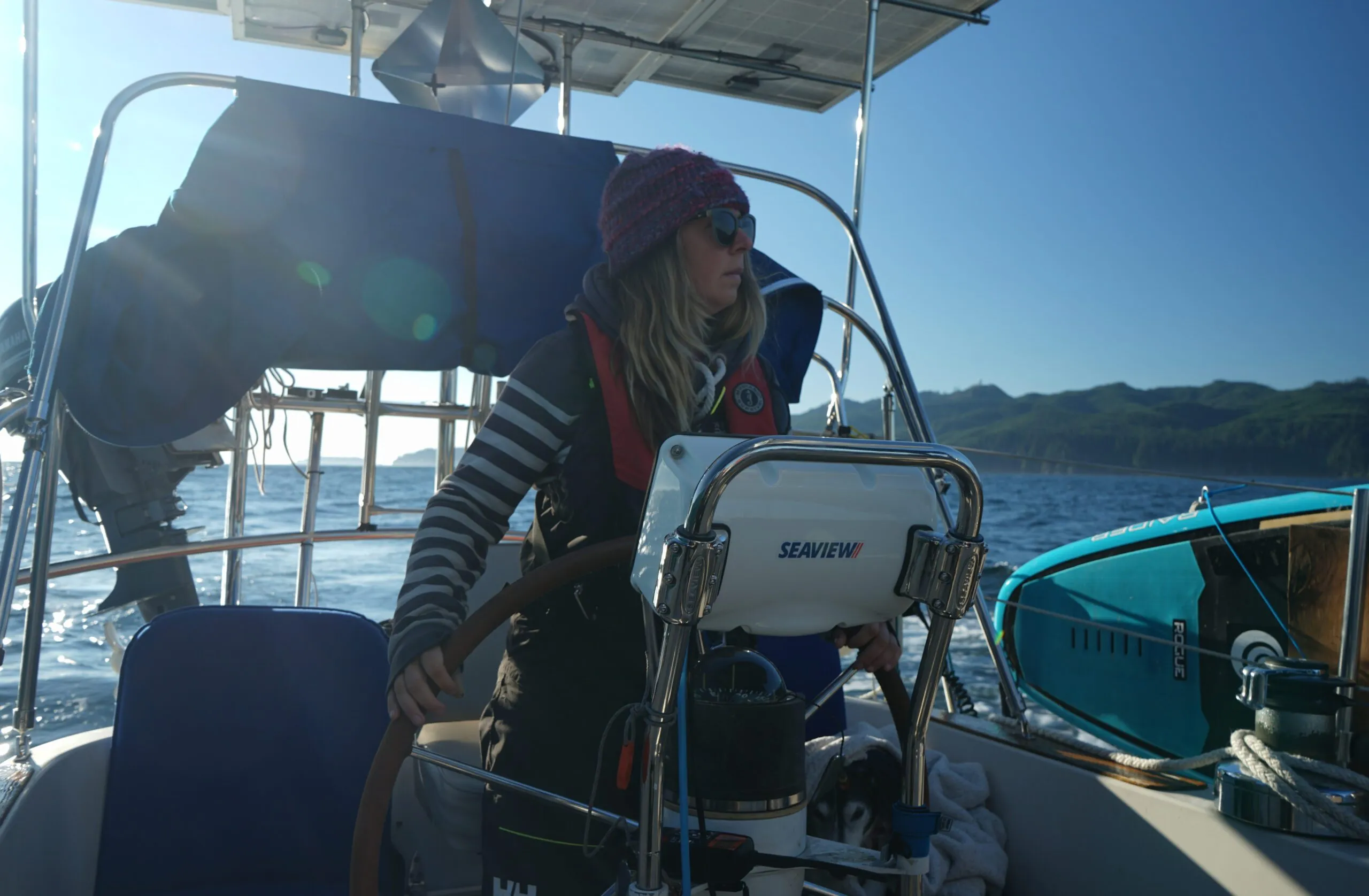
The West Coast of the United States is a long stretch of rugged shoreline. Before leaving, I assumed it was only dotted with only a handful of safe anchorages. Many of those come with challenging bar crossings and unpredictable conditions. Sailors often debate the best way south: long offshore legs hundreds of miles from land, or harbor hopping from port to port.
When we began planning our passages down to Mexico, we asked seasoned sailors for advice. The responses weren’t exactly comforting. We were warned about dense fog, fishing boats and dangerous bar crossings if we chose to harbor hop. One circumnavigator even told me: “The ocean between Vancouver and San Diego was the worst passage in our entire circumnavigation.” Not exactly reassuring news for two new sailors about to leave the safety of British Columbia’s protected Salish Sea.
What we discovered, however, was very different from what we expected. Harbor hopping not only made the passage manageable—it gave us confidence, experience and memorable stops along the way.
Why Harbor Hop the West Coast?
Harbor hopping offers some clear advantages for cruisers making their run down the West Coast.
For sailors, or crew members, new to offshore passages, shorter hops build confidence. With safe harbors spaced a day or two apart, you can choose passage lengths that match your comfort level. Weather windows become easier to manage when you know there’s an option to duck in and wait. Thanks to today’s forecasting tools, it’s possible to time bar crossings and coastal passages safely. Although some patience and flexibility are required if the windows aren’t close together.
Logistically, hopping south is less stressful. There’s no need to provision for weeks at sea, ration water, or carry excessive fuel. With regular access to towns, you can top up supplies, fix gear, and rest. And should something break, there are many opportunities and areas to make repairs along the way.
Of course, harbor hopping isn’t all smooth sailing. Fog is common, bar crossings can be intimidating or dangerous, and hopping in and out of harbors does add time. While friends of ours sailed straight from British Columbia to San Francisco in ten days, our trip from Neah Bay to San Francisco stretched to three and a half weeks.
We chose to harbor hop because we were new to offshore sailing. In fact, we had never left the protected waters of British Columbia. I was unsure if I’d even like sailing offshore. There was comfort in knowing we were never more than a day or two from a place to stop and rest. We also had our dog onboard, and we weren’t sure how he would fare at sea. But ultimately, we looked forward to breaking up the passage and exploring the towns along the way.
The Northern Coast: Oregon to Northern California
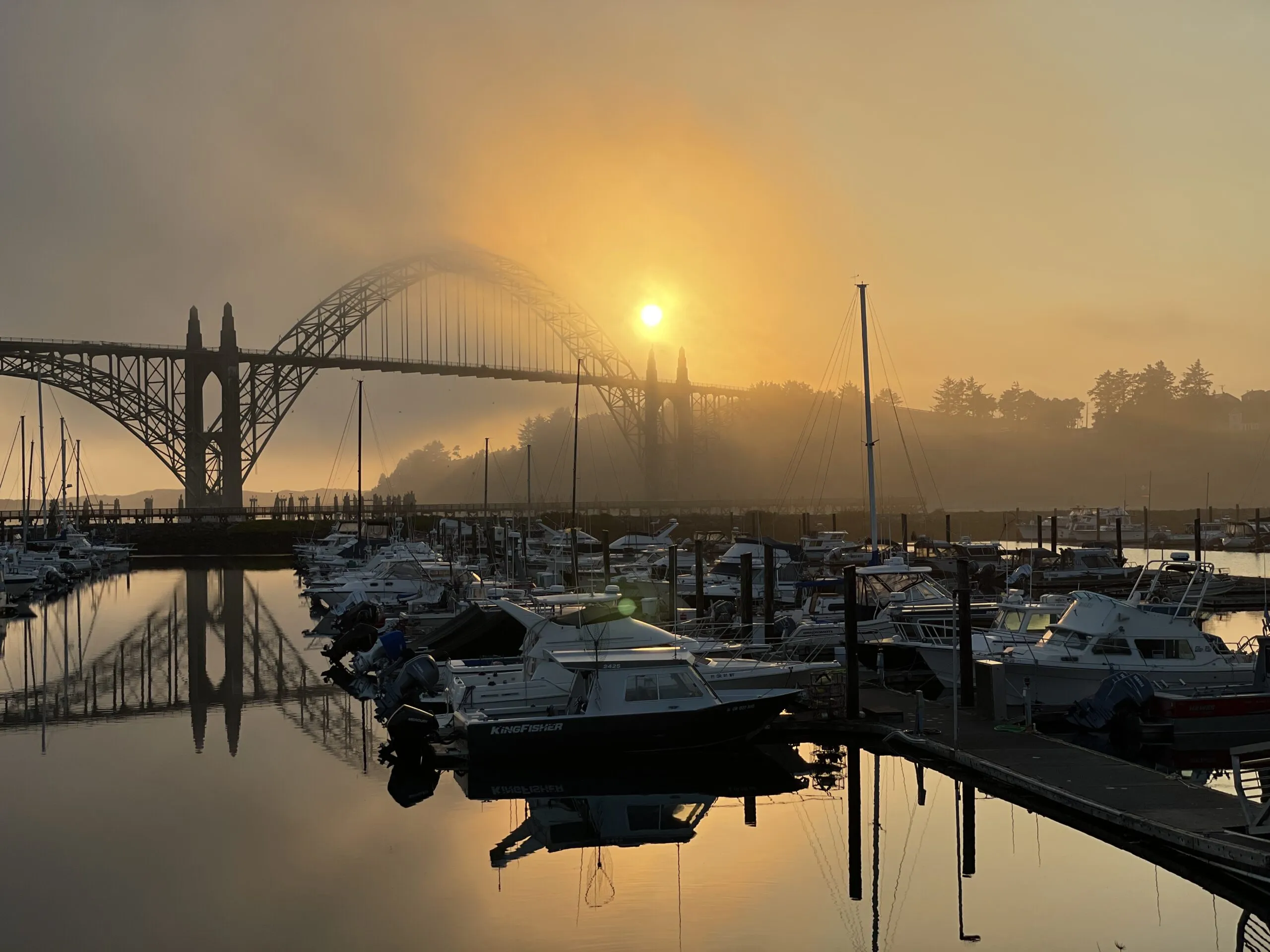
We left Neah Bay under a fog-filled sky with Newport, Oregon, some 275 miles away as our first stop. We stayed 20 to 30 miles offshore to avoid fishing boats, which worked well. What we hadn’t anticipated was the sea state. With good wind but short-period swell, we were tossed around and grateful we’d only be out for two days.
Newport, Oregon
We bypassed the Columbia River bar, famous for its dangers, and chose Newport instead. Guides like “Charlie’s Charts” described Newport’s bar as manageable in good conditions, and we timed our arrival just before slack tide. The Coast Guard confirmed conditions, and although we were nervous, the crossing was straightforward although nail-biting at the time.
As budget-minded cruisers, we anchored in the river instead of paying for a marina berth. The anchorage was comfortable, though weekend crabbers swarmed the area with pots and small boats. Finding a place to land the dinghy was a challenge, but with help from friends at the marina and the local yacht club, we managed.
Newport proved an excellent first port: a lively fishing town with restaurants, shops, a chandlery, and good provisioning. A stop at Rogue Brewery, conveniently near the marina, was a must.
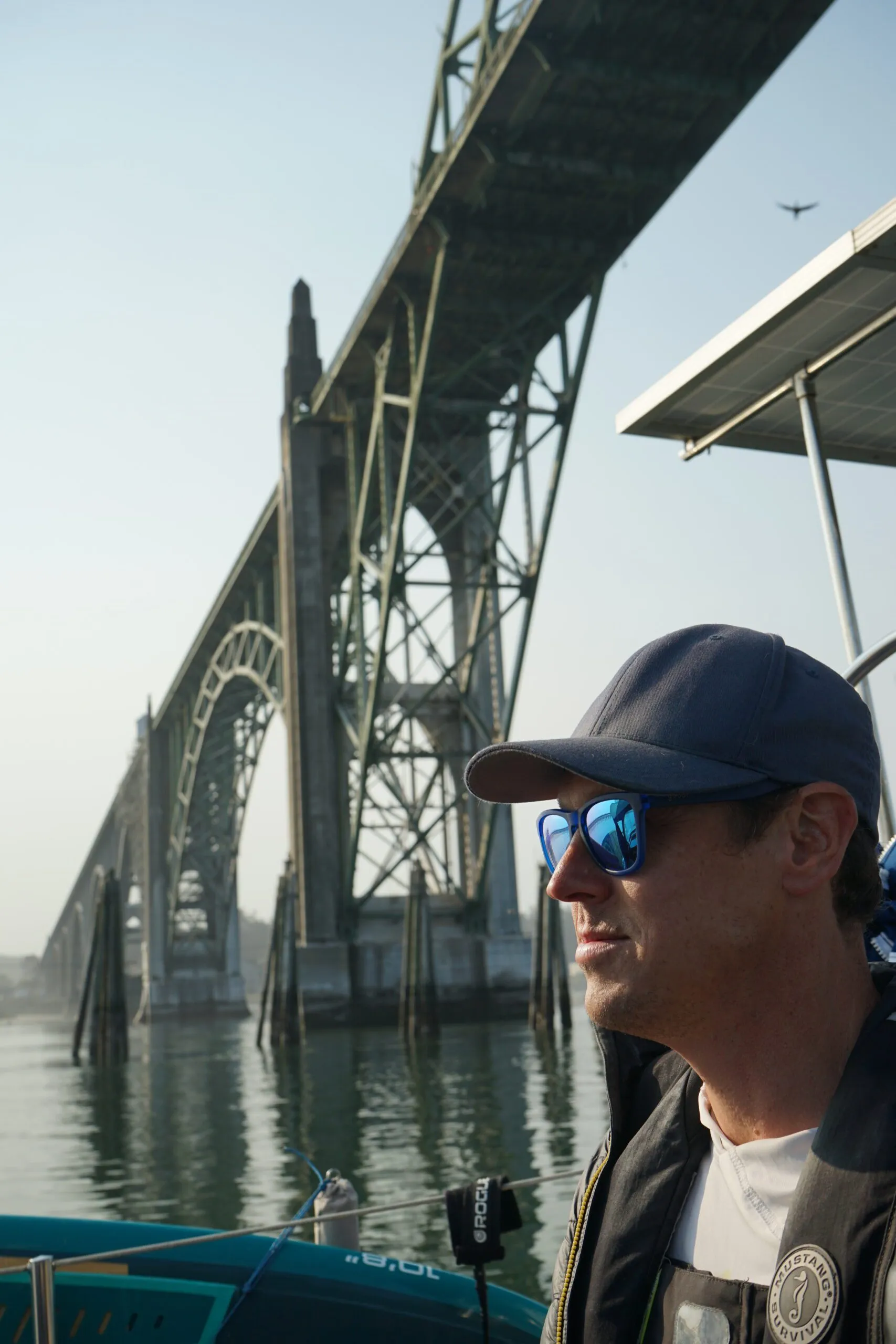
Crescent City
After a week recovering in Newport, we left with calmer swell conditions. The wind filled in and pushed us into Crescent City with 30 knots on the stern, still more wind and swell than we really wanted but less trauma inducing than the first leg. We anchored outside the harbor, where holding was excellent, though a southerly swell during a storm gave us a bouncy few hours.
Crescent City was mainly a pit stop for fuel and provisions. We enjoyed the farmers’ market and a hearty breakfast spot by the marina, but we didn’t linger.
Eureka
Cape Mendocino’s reputation for brutal seas had us looking for a staging point. Eureka, a bar crossing and river harbor, offered just that. We timed the crossing at slack tide with no wind, and the entry was calm.
Eureka quickly became one of our favorite stops. Multiple farmers’ markets kept us stocked on fresh local produce, the harbor master personally drove us to buy diesel, and the locals welcomed us with advice and even invited us to crew in their beer can races. We also sampled our first In-N-Out Burger—which lived up to the hype.
We would have stayed longer if the infamous cape hadn’t been waiting.
Central California: Challenging but Rewarding
Rounding Mendocino
Many sailors dread Cape Mendocino, and with good reason. We chose the conservative strategy: round it in as little wind as possible, hugging the coast. This meant motoring, but as a nervous sailor, it was worth it. The notorious cape was calm, and wind filled in later to carry us to Drakes Bay, 170 miles south.
Drakes Bay
Drakes Bay was a convenient staging stop before entering San Francisco. We anchored for the night, listening to sea lions and spotting our first elephant seal. It was a beautiful, quiet anchorage, though we didn’t go ashore.
San Francisco
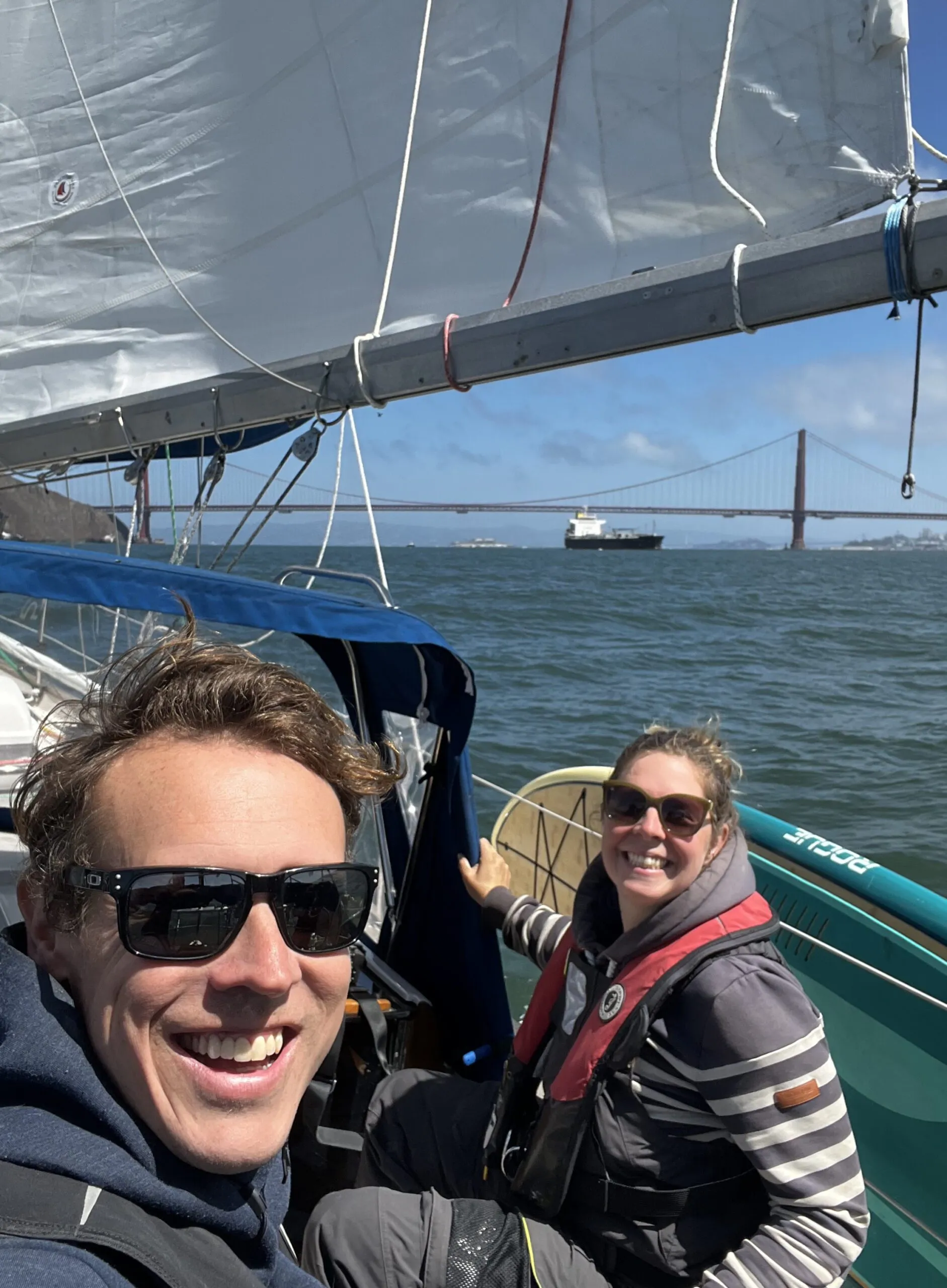
For southbound cruisers, San Francisco is a milestone. We timed our arrival for slack tide, hoping for clear skies, and lucked out. With 15 knots on the beam and little traffic, we sailed proudly under the Golden Gate Bridge, tired but elated.
We dropped anchor in Aquatic Park, across from Ghirardelli Square. It remains one of the most memorable city anchorages we’ve ever had. Over several weeks, we used San Francisco as a base: provisioning, repairing a dead depth sounder, and playing tourist. For us, a trip to the infamous Alcatraz Island prison was worth the price of admission.
Port San Luis
From San Francisco, we made a quick stop at Port San Luis while waiting to round Point Conception. The anchorage was functional but unremarkable, and the town offered little in the way of supplies. Restaurants were plentiful, but finding fresh vegetables proved impossible. Thankfully a fellow cruiser gifted us some soup and cookies. For us, this place was simply a staging point, not a destination.
Southern California: Easy Cruising and the Gateway to Mexico
Rounding Point Conception
Point Conception, often compared to a mini Cape Horn, has a fearsome reputation. Like Mendocino, we chose calm conditions, though this time we were braver and allowed a bit more wind and the gentle Pacific swell we’d heard about. We motored and sailed around with no drama, oil platforms off our starboard side.
Santa Barbara
Santa Barbara greeted us with our first rolling anchorage. Without a stern anchor, we suffered through the constant motion and spent more time ashore than aboard. Dinghy access was awkward, but provisioning was excellent, with a West Marine right at the dock. Despite the roll-y anchorage, we enjoyed the town’s dining and amenities.
Newport Beach
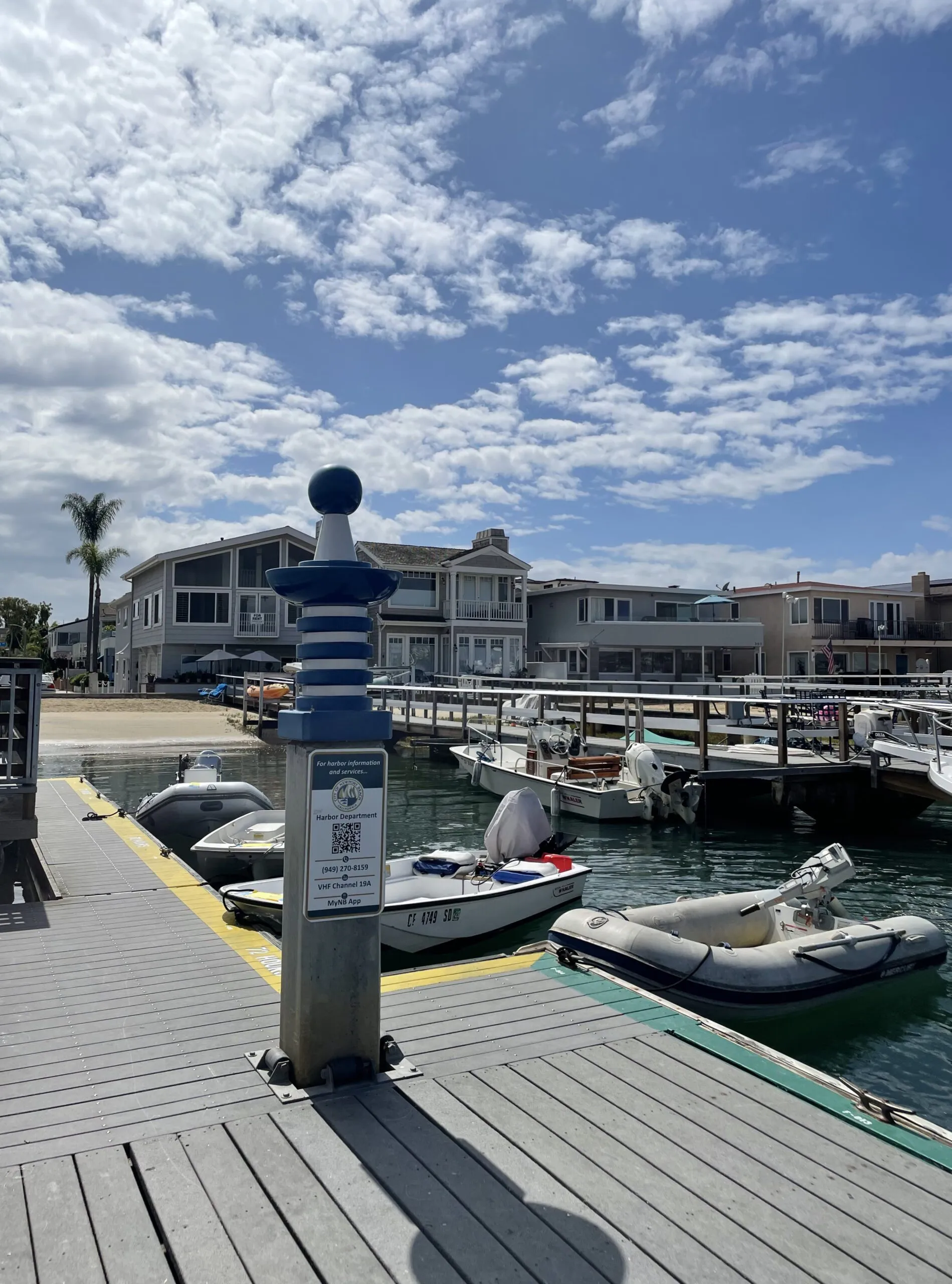
Fed up with rolling, we headed 24 hours south to Newport Beach, where we finally found calm waters. The anchorage was small and strictly regulated, but mooring balls were also available. The harbor bustled with electric boats and mega-yachts, yet it remained comfortable and cruiser-friendly.
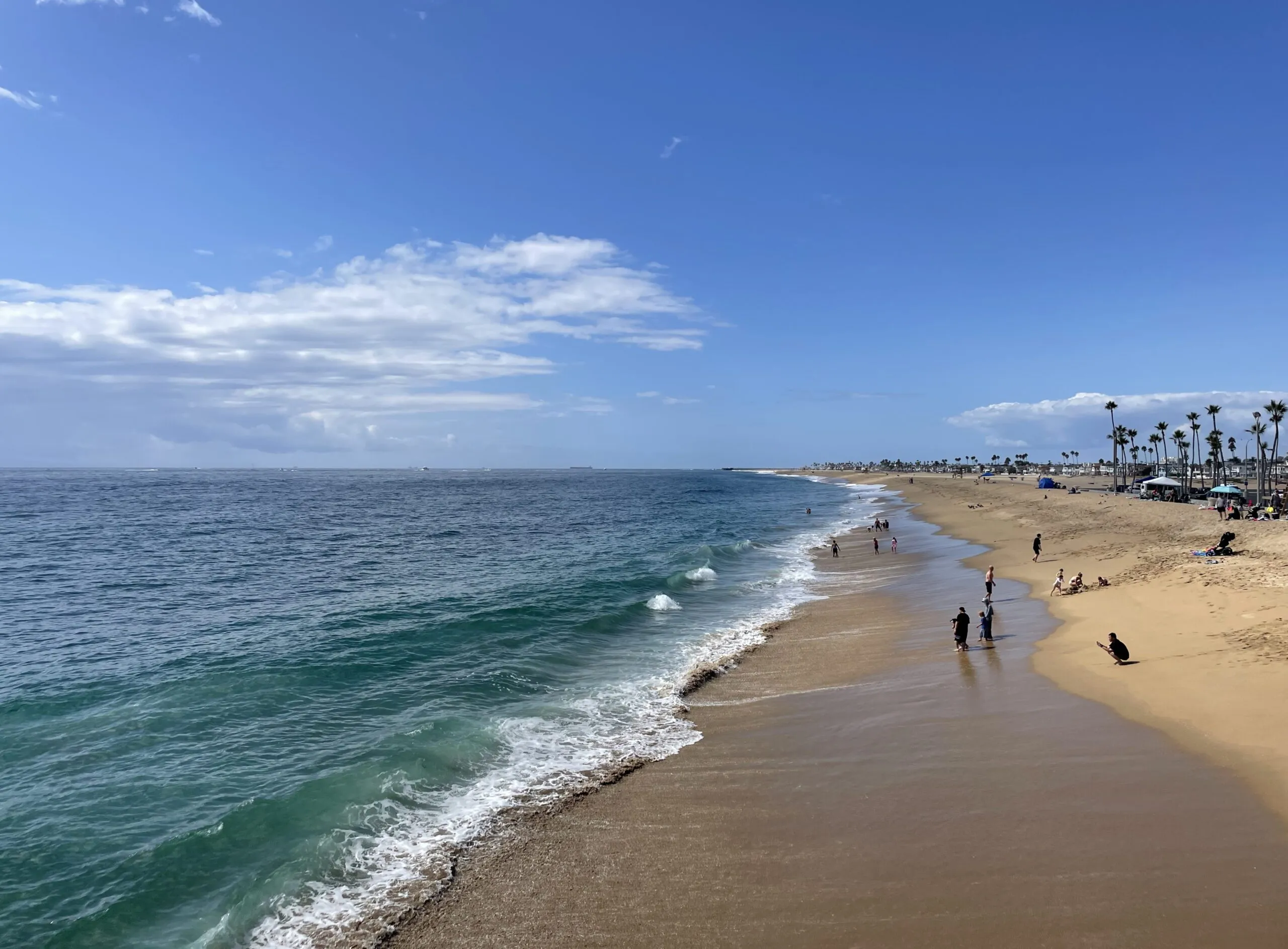
Dinghy docks were scattered throughout the harbor, each clearly marked with time limits, and we never had trouble finding space. This made provisioning, sightseeing, and dog walks easy. We strolled Balboa Island, enjoyed the boardwalks, and soaked up the easy living of Newport.
Avalon, Catalina Island
Leaving Newport, we sailed across to Avalon on Catalina Island. Most Channel Islands were off-limits with our dog, but Catalina welcomed us. Arriving in the shoulder season, we scored a discounted mooring and were escorted to our spot by the harbor patrol. The system, requiring both bow and stern moorings, was well organized and cruiser-friendly.
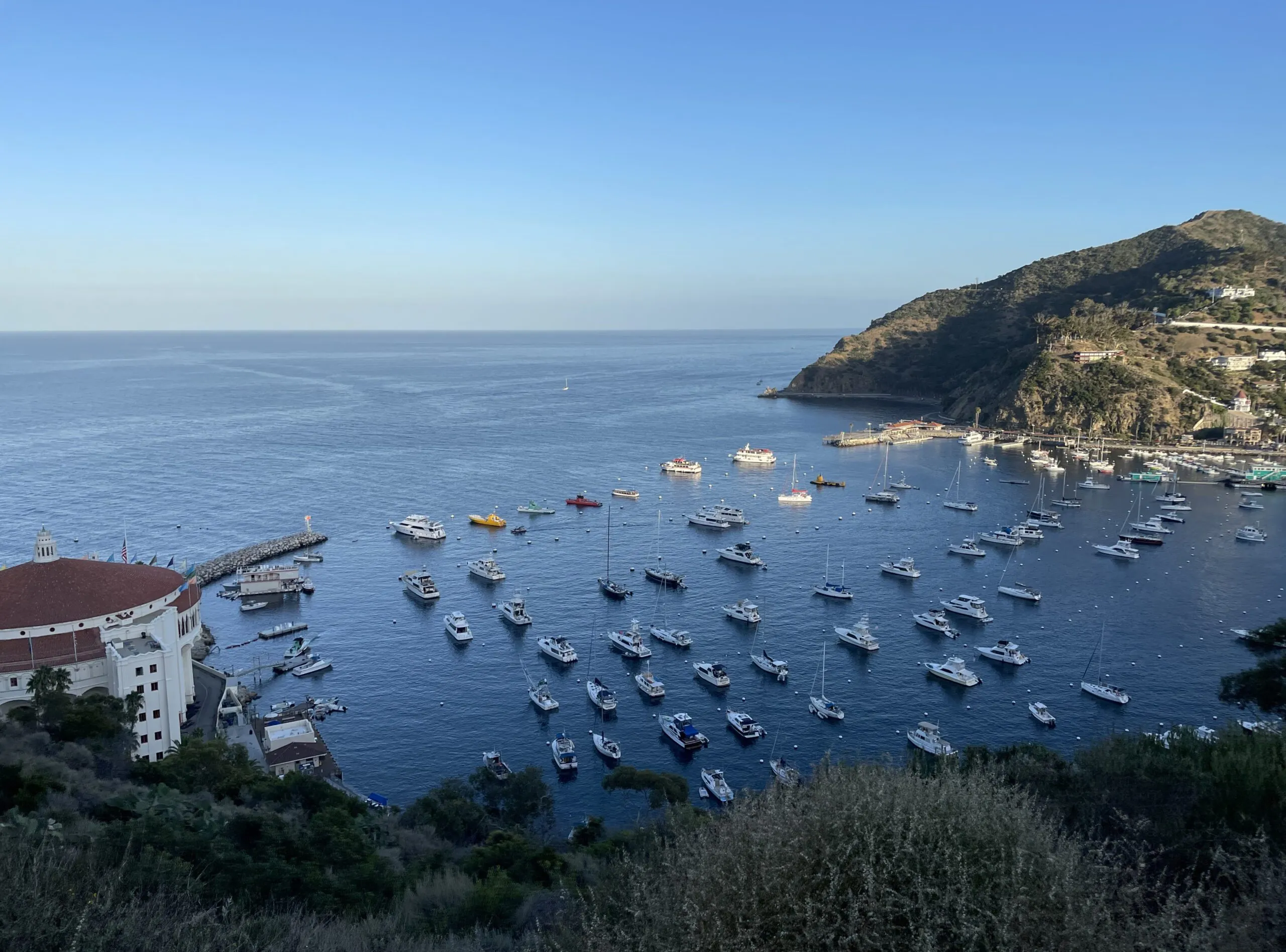
Avalon offered multiple dinghy docks, though provisioning and fuel were pricier than on the mainland. We didn’t need much, and instead splurged on a bison tour, learning the island’s history and spotting its unique wildlife.
Skipping San Diego
Unlike many cruisers, we bypassed San Diego. As Canadians, we didn’t need to clear out of the U.S., so we sailed directly from Avalon to Ensenada, Mexico.
Lessons Learned: What’s Easy, What’s Hard
Looking back, we don’t regret harbor hopping. Some of our most memorable cruising moments, good and bad, came from this coast.
Check the Forecast
We quickly learned that reading forecasts is more than just checking wind speed. Six-foot waves at six seconds apart are far from comfortable. Having places to duck into gave us the flexibility to wait for better conditions. Modern forecasting tools like PredictWind and NOAA were invaluable.
Bar Crossing
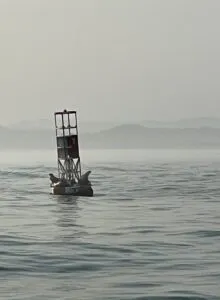
Bar crossings were intimidating, but manageable with preparation. We always checked multiple sources, forecasts, guides, and Coast Guard reports, and crossed at slack whenever possible.
Major Capes
The major capes and points of the West Coast deserve respect. Motoring around in calm conditions may not feel romantic, but it beats battling gales and stacked seas. We were glad to put safety over bravado.
To Skip or To Linger
If we were to do it again, we’d skip Port San Luis and spend more time in San Francisco and Newport Beach, our favorite stops along that coast.
Bottom Line
For us, the run down the U.S. West Coast wasn’t just about reaching Mexico. It was the start of our cruising voyage. Harbor hopping gave us the chance to explore vibrant towns, gain experience in real ocean conditions, and learn patience with weather windows.
It taught us how to manage bar crossings—skills that came in handy later in El Salvador—and how to relax into the rhythm of coastal cruising.
There’s no single right way south. Offshore routes work for some; harbor hopping works for others. For us, the harbors made the difference between an intimidating coast and an unforgettable journey.
Cruising Resources PNW
Name Address Contacts Website
Newport RV Park and Marina 2120 SE Marine Science Dr
Newport, OR 97365
Reservations : 541-867-3321 Email: [email protected] https://www.portofnewport.com/recreational-marina Marina
Rogue Brewery Located at the marina, Newport OR https://www.rogue.com/rogue-brewers-on-the-bay Restaurant
Englund Marine and Industrial Supply 880 SE Bay Blvd., Newport, OR 97365, United States +1 541-265-9275 englundmarine.com Chandlery
Mckay’s Market 107 N Coast Hwy, Newport, OR 97365, United States +1 541-265-6641 mckaysmarket.com Provisions
Crescent City Marina 101 CITIZENS DOCK ROAD, CRESCENT CITY CA 95531 707-954-8341 https://www.ccharbor.com Marina
Englund Marine and Industrial Supply 191 Citizens Dock Rd, Crescent City, CA 95531, United States +1 707-464-3230 englundmarine.com Chandlery
Safeway 475 M St, Crescent City, CA 95531, United States +1 707-465-3353 local.safeway.com Provisions
Grocery Outlet 1124 3rd St, Crescent City, CA 95531, United States +1 707-464-3131 groceryoutlet.com Less expensive provisions
Good Harvest Cafe 575 US-101, Crescent City, CA 95531, United States +1 707-465-6028 Restaurant with good breakfasts
Eureka Public Marina 1 Marina Way, Eureka, CA 95501, United States 707-441-4230 +1 707-268-1973 [email protected] Marina
Englund Marine and Industrial Supply 590 Waterfront Dr, Eureka, CA 95501, United States +1 707-444-9266 englundmarine.com Chandlery
Farmers Markerts Various around Eureka https://www.northcoastgrowersassociation.org Farmer Markets
North Coast Co-op 25 4th St, Eureka, CA 95501, United States +1 707-443-6027 northcoast.coop Provisions
Aquatic Park Anchorage Aquatic Park Pier, San Francisco, CA 94109, United States https://www.recreation.gov/camping/campgrounds/273757 Anchorage (requires permit)
South Beach Harbour Marina Pier 40 and Oracle Park, San Fransisco CA +1-415-495-4911 https://sfport.com/maritime/harbors-berthings/south-beach-harbor Marina
Svendsen's Marine & Industrial Supply 2900 Main St #1900, Alameda, CA 94501, United States +1 510-522-2886 svendsens.com Chandlery
Trader Joe’s 401 Bay St, San Francisco, CA 94133, United States +1 415-351-1013 locations.traderjoes.com Provisions
Alcatraz Island nps.gov Tourist Attraction
Santa Barbara Harbour Marina 132-A Harbor Way, Santa Barbara, CA 93109, United States 805-564-5531 https://santabarbaraca.gov/things-do/waterfront/waterfront-services Marina
West Marine 132 Harbor Way, Santa Barbara, CA 93109, United States +1 805-564-1334 westmarine.com Chandlery
Trader Joe’s 222 N Milpas St, Santa Barbara, CA 93103, United States +1 805-560-1182 locations.traderjoes.com Provisions
Third Window Brewing Santa Barbara 406 E Haley St #3, Santa Barbara, CA 93101, United States +1 805-979-5090 thirdwindowbrewing.com Brewery with good burgers
Newport Beach Harbour Master 1600 W. Balboa Boulevard
Newport Beach, CA 9266349-270-8159 | VHF Channel 17 [email protected] https://www.newportbeachca.gov/government/departments/harbor/visiting-vessels Marina and Moorings
West Marine 3433 Via Lido, Newport Beach, CA 92663, United States westmarine.com Chandlery
Pavilions 3100 W Balboa Blvd, Newport Beach, CA 92663, United States +1 949-675-2395 local.pavilions.com Chandlery
Mini’s Yacht Services 1500 Newport Blvd, Costa Mesa, CA 92627, United States +1 949-548-4192 minneysyachtsurplus.com Chandlery
Avalon Bay Moorings 22 Pleasure Pier
Avalon, CA 90704310-510-0535 https://www.cityofavalon.gov/178/Mooring-Availability-Reservations Mooring field
Vons 240 Sumner Ave, Avalon, CA 90704, United States +1 424-334-3221 local.vons.com Provisions
Sailor’s Delight Ice Cream Shop 220 Crescent Ave, Avalon, CA 90704, United States +1 310-984-4101 sailorsdelightcatalina.com Ice cream
Catalina Island Bison Expedition [email protected] https://www.visitcatalinaisland.com/things-to-do/bison-expedition Bison tour

Even the dreaded Columbia bar is manageable with proper planning. Our main concern has always been large fishing boats heading out as you come in not caring that you’re on a less maneuverable sailboat, that you may not know the area and that the morning sun may be straight in your eyes. But once you get in, Astoria West Basin is a pleasant place to explore the town from.
In Newport, while the Rogue Brewery is a nice place, next time you stop in Newport try Local Ocean – seafood so fresh they can tell you which fishing boat it came from!
And you can also harbor hop on the way up, although it requires even more planning as the winds are usually favorable only in the winter/early spring.
That’s good to know about the Columbia bar, I love Astoria and was a bit sad we didn’t get to stop. Rogue was good, but we also went to a roadside fish place and it was amazing! But that’s a good tip about Local Ocean. If we ever go back, I’ll go.
I think if we came back up, we’d harbour hop because of all the fun we had on the way down.
Great article. I have sailed the US west coast from Canada to Mexico several times, as well as the reverse direction. I have also sailed the Hawaii route. My overwhelming preference is to harbor hop along the US coast. There are so many beautiful places to visit and explore. The bars are manageable. San Diego is also pretty special. Just saying.
This article will be a terrific reference for boaters heading south from the PNW next season.
Fun article, always like hearing about PNW sailing!
Thanks Travis!
Thanks Pam!
The harbour hop vs offshore is a pretty hot debate among cruisers. But with the dog, we preferred the hops. And we got to visit so many places.
See you soon (if you come back to El Salvador before we leave!)