

“But you’re going to re-home the dog before you set sail, right?” “Dogs don’t belong on boats. Period.” Those were just a few of the unsolicited gems we heard when we told people we were taking our dog cruising. And honestly, we didn’t blame them—we were worried too. What if he fell overboard? Would he ever go to the bathroom on a multi-day passage? Would our elderly terrier feel at home aboard?
Turns out, aside from actively trying to sink the boat by clogging every drain and bilge pump imaginable with hair and beach sand, sailing with a dog is completely doable. With a few smart modifications and some trial and error, having furry crew can actually enhance your cruising life.
Know Your Dog, Know Your Boat
Not every dog is cut out for boat life.
Sprocket, our 15-year-old terrier mix, wasn’t chosen for his seaworthiness. In his younger years, he had too much energy and would’ve been miserable stuck on a boat. But at 15, his needs are simple: a shady cockpit and a short sunset walk wherever we drop anchor.
The key is to understand your dog’s temperament, energy level and physical needs. Can they navigate steep companionway stairs? Handle the heat? Relax in tight quarters without losing their mind? If not now, maybe in a few years. But most dogs are surprisingly adaptable, especially when their humans are close.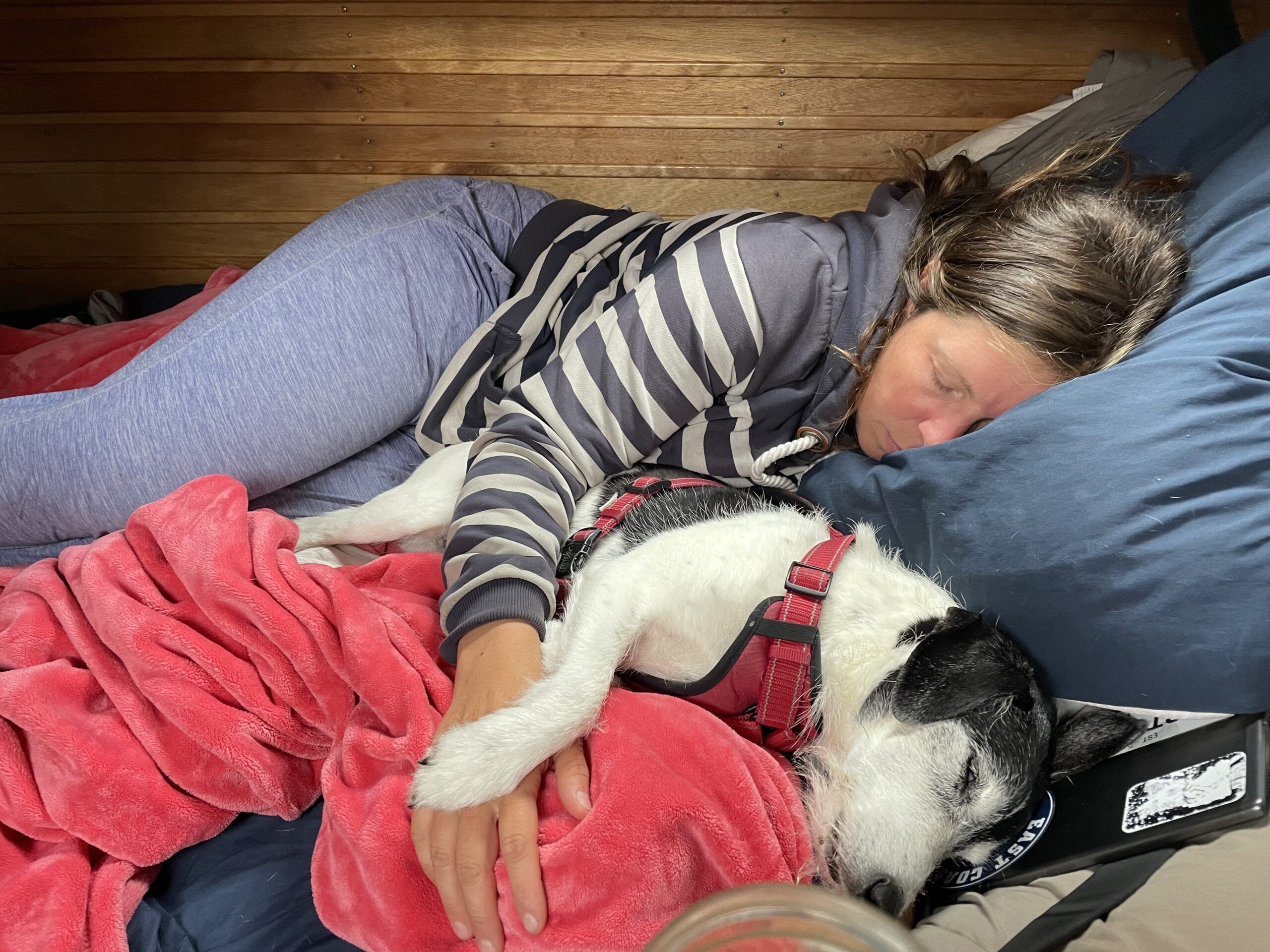
Boat Modifications People Actually Make
We got lucky. The only modification we made was putting Treadmaster non-skid pads ($30.99 for a set of two) over the cockpit combing so the dog could scramble over without slipping—or scratching the gel coat.
Other cruisers, however, went further—and smarter.
Lifeline Netting
Many dog-owning sailors install lifeline netting, especially for smaller dogs or jumpers. It’s easy to install, relatively affordable and adds peace of mind. Sailrite even has a great tutorial how to easily do the install.
Carpets or Mats
Inside the cabin, carpets do double duty—they protect your sole and give your dog a grippy surface to move around. Without the investment of carpeting, simply laying down yoga mats, which can easily be rolled up a stored, provides a grippy surface when underway.
Ramps, Stair Tape
The companionway is another high-traffic zone that often gets a pet-friendly upgrade. Custom or store-bought ramps, grippy stair tape or even modifying the stairs to be wider, were all common upgrades people swore by.
Dog-Friendly Boat Design
Many sailors opt to choose a dog-friendly boat from the start. Cruisers who prioritized low freeboard, wide side decks, and gentle companionways reported fewer issues from the get-go.
Onboard Bathroom
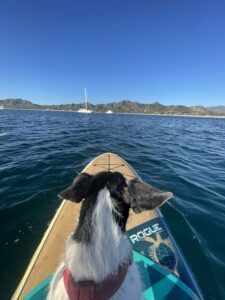
Some dogs take to peeing on board right away. Others—like ours—require a standoff and an incredible amount of patience.
Turf mats are the most recommended solution. They mimic grass, hose off easily, and can be secured in a corner of the deck. Others prefer pee pads for rougher conditions or interior use during bad weather.
Some dogs won’t go until they absolutely have to, and unfortunately, that might mean holding it for an uncomfortable amount of time. But once it happens—praise and treats are all warranted.
If you can train your dog to use a designated spot on the boat, it’ll make long passages or bad-weather anchorages a whole lot less stressful for everyone.
Pets Underway
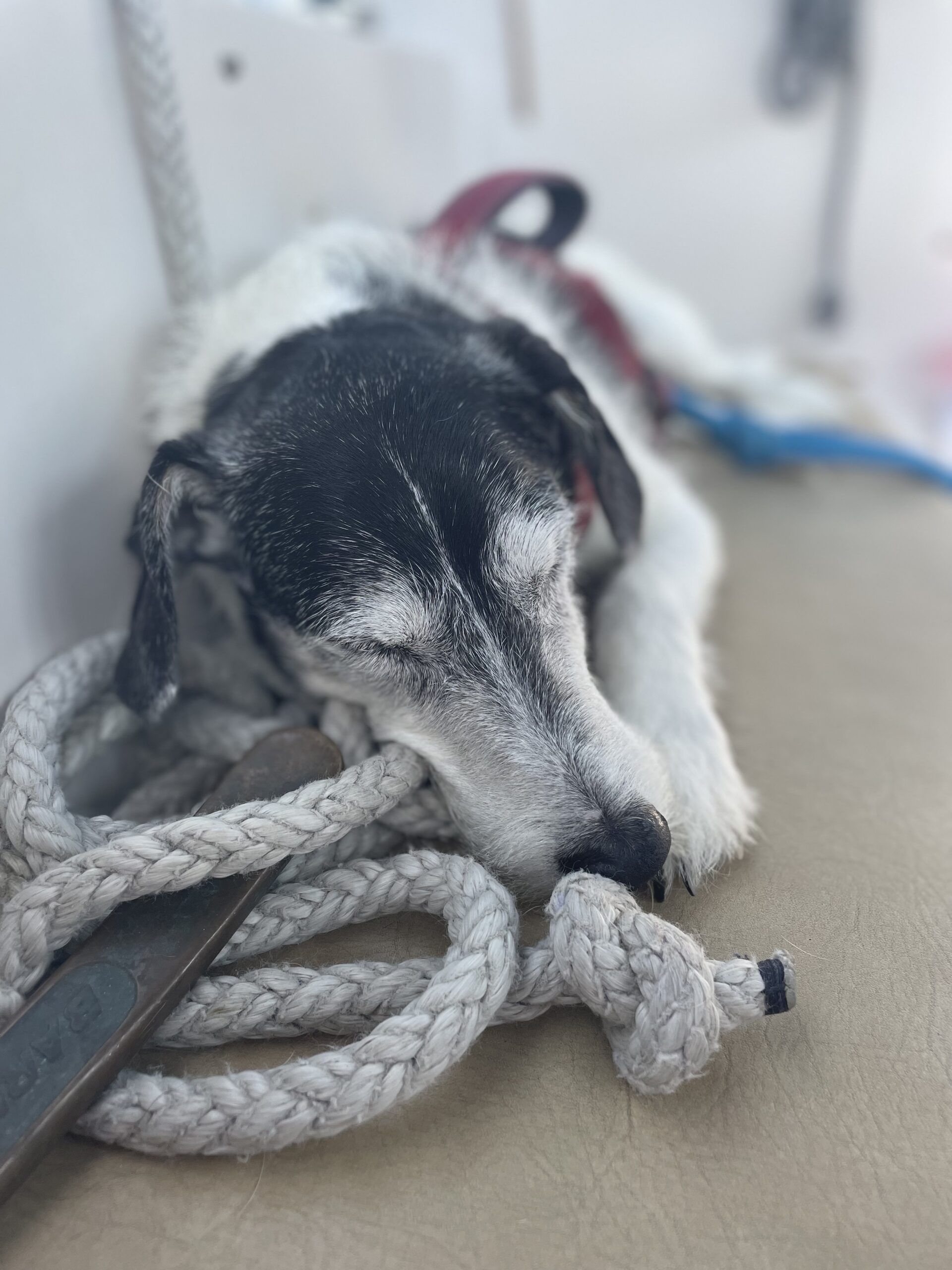
When underway, boredom, heat and seasickness can become real issues.
Dog PFD Options
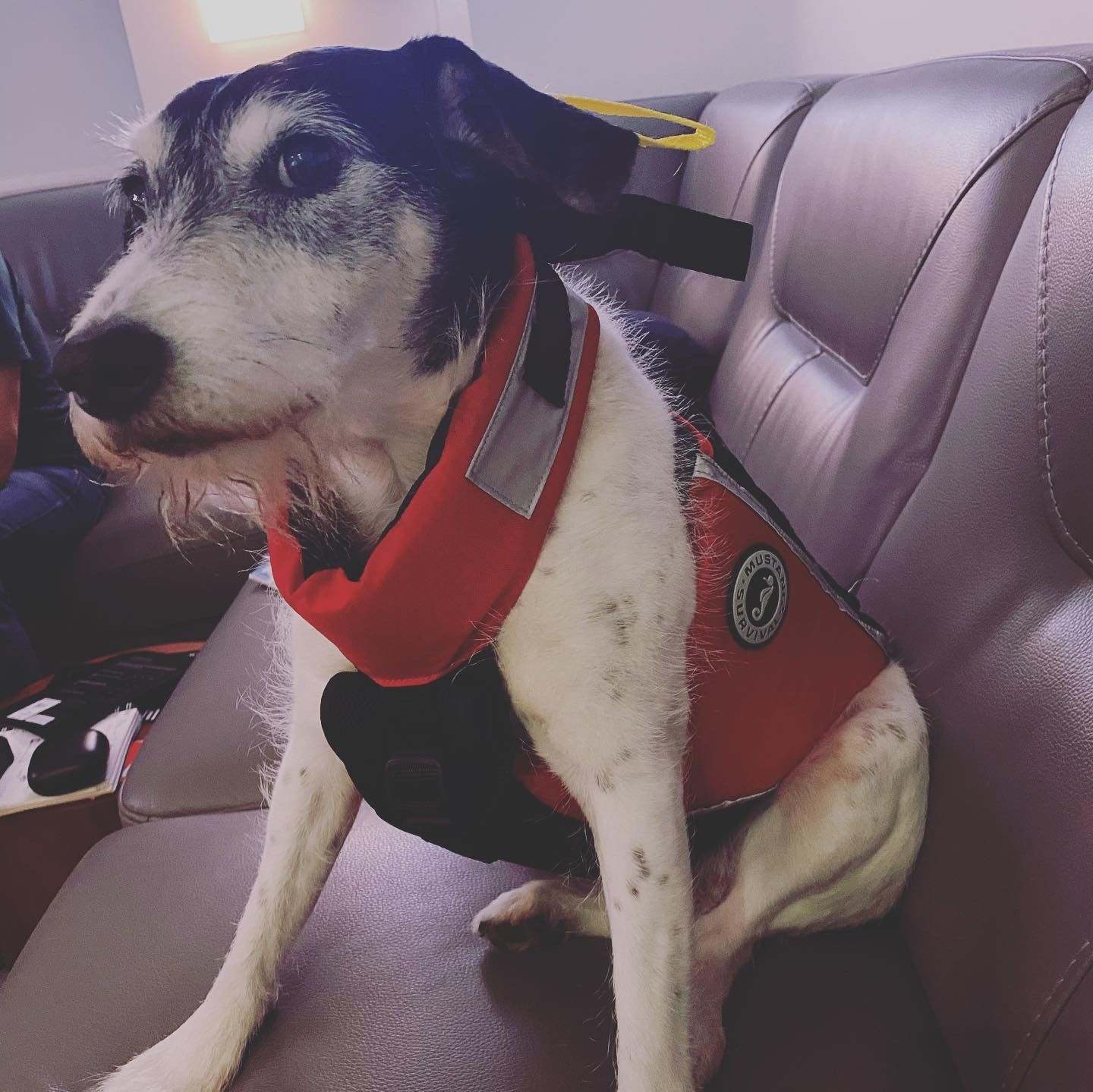
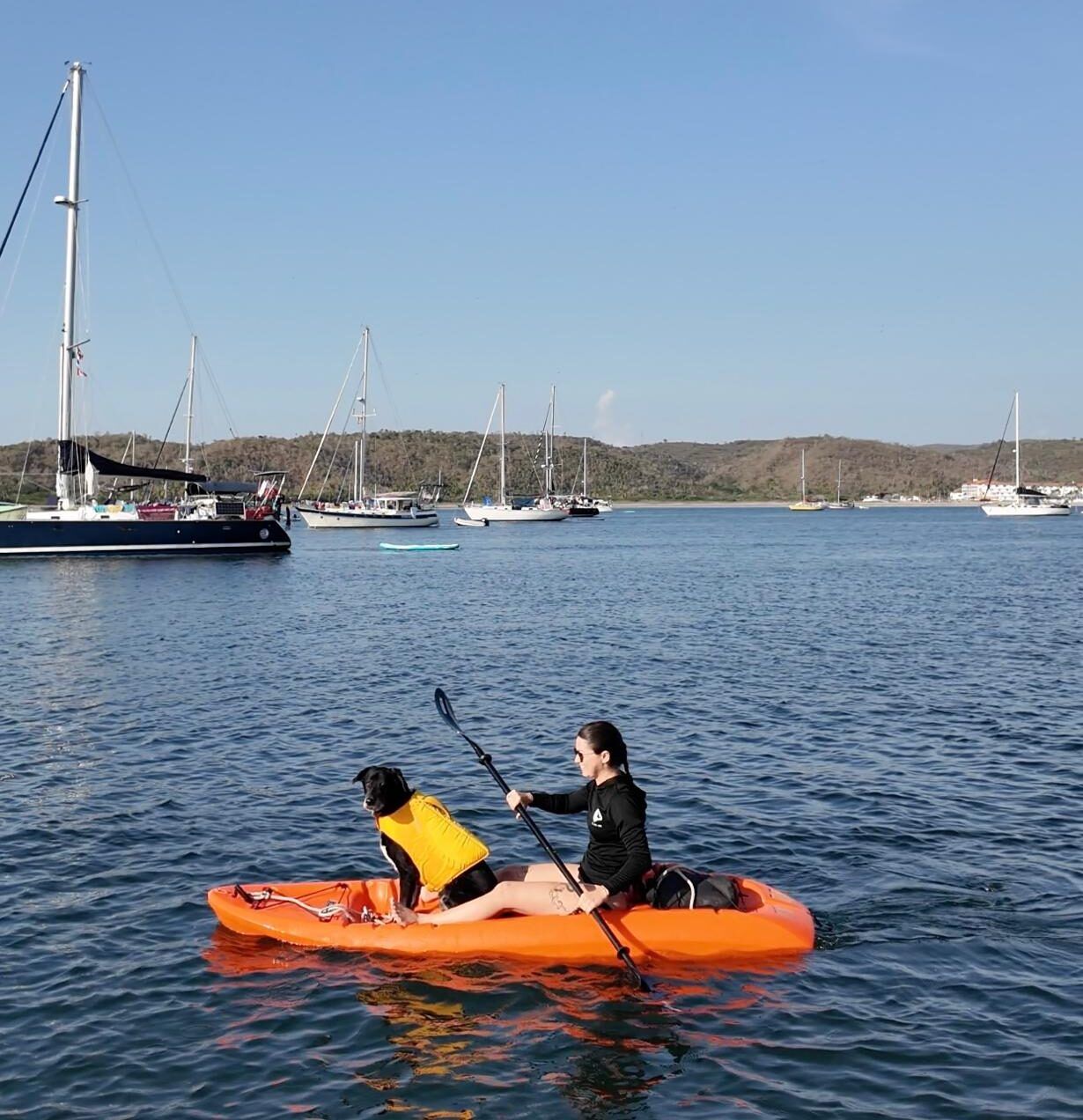
First and foremost, a proper-fitting dog life jacket is a must. We use the Mustang underdog foam PFD ($69.99) because it fits Sprocket’s odd proportions and has a strong grab handle. Our friends use a Ruffwear float coat in high visibility orange ($169.00). Whatever brand you choose, prioritize fit, comfort and durability.
Tethering or Crating
Tethering your dog while underway can help prevent accidental overboard scenarios. But many cruisers, us included, opt to keep the dog safely below deck during docking or rough conditions, especially when all hands are needed on deck. A soft-sided crate, bed in the aft cabin, or even a favorite blanket in a quiet nook can create a calming space.
Sun Protection and Motion Sickness
Don’t overlook sun protection or motion sickness. Provide shaded spots in the cockpit and talk to your vet about meds if your pup shows signs of seasickness. A toy or chew for long passages can also help ease boredom.
Shore Leave: Dinghies and Docks
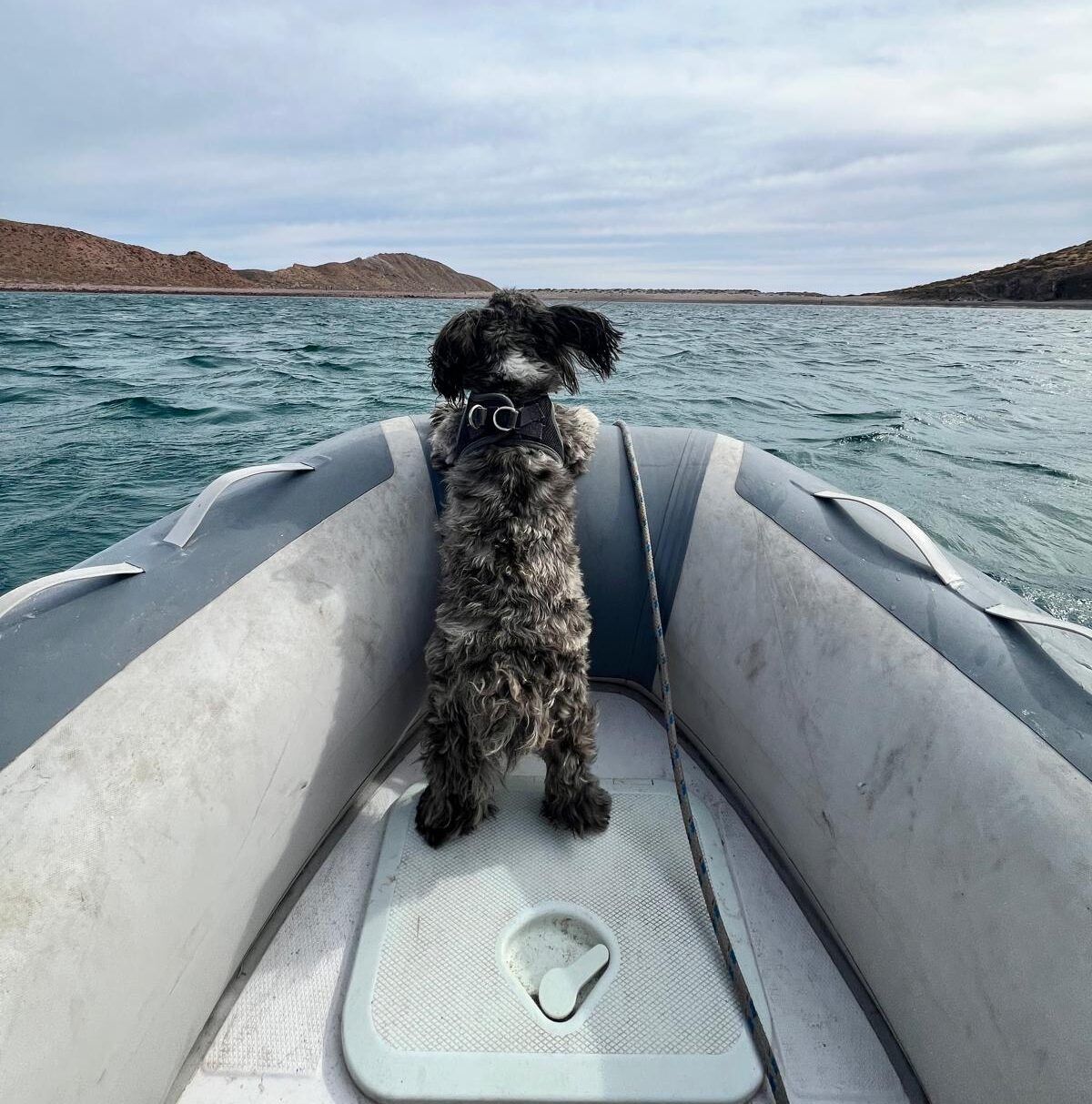
Getting your dog on and off the boat safely is key. We use a harness (with a sturdy handle) so we can lift Sprocket in and out of the dinghy without pulling on his neck. It also makes it easier to rescue him when he inevitably jumps the gun at the dock and lands in the water.
Keeping baby wipes, a towel and extra water in the dinghy for cleanup after muddy beach landings is handy. A floating toy or ball can burn off energy at anchorages where there’s room to play. Be aware of local rules—some towns require leashes or restrict dogs on beaches.
Food and Vet Care Afloat
Pet food and vet care might not be top of mind when you’re dreaming of peaceful anchorages—but they should be.
Food
In some countries, sourcing decent dog food is easy. In others, the options are limited, expensive, or wildly unfamiliar. We’ve learned to stock up on what works for Sprocket when we find it, especially in bigger cities. Cruising friends keep a backup up of freeze-dried dog food and canned chicken for remote places where food might be in short supply.
Vet Care
Vet care has been one of the biggest surprises—many places offer excellent service at a fraction of what we’d pay in Canada. We’ve handled checkups, vaccines, and even a dog bite with the help of local vets and cruiser recommendations. Facebook groups and WhatsApp chats are goldmines for up-to-date info. Local cruising WhatsApp groups, such as No Foreign Land’s Pets On Board, and Facebook’s Dogs Who Sail groups are our go to for cruising pet information.
First-aid Kit
Before we left Canada, we asked our vet to help us build a small onboard kit: motion sickness and pain meds, flea prevention, extra bandages and syringes as well as a digital copy of Sprocket’s records.
Don’t Overthink It

At the end of the day, sailing with a dog is like sailing with any other crew—one who sheds constantly, naps in your seat, and always wants to know what’s for dinner.
Cruising with a dog isn’t perfect—but then again, neither is cruising without one.











We sailed with our dog for five years. He had an absolute blast and loved being the center of attention on board and on shore. Potty training took a bit of time and patience, but he got it, and once he did had no trouble letting us know it was time to heave-to for a break. If you sail the Caribbean bringing a dog into each country can be costly and time consuming, so plan accordingly. If you’re in the French islands a local vet can issue a doggy passport valid in the EU. Very helpful for cutting through red tape.
Thanks for the info about the Caribbean Mike. We might be heading that way and really don’t know too much about which ones to go to or avoid. That info on the French Islands is handy!
I miss my dogs Snooki and The Duke. They both passed away this past February but not before giving me over 10,000 nm of enjoyment and a reason to get up every morning. A mud tray with fake grass sufficed for a pee zone. They would not do #2 on the tray, some sort of canine code I guess but if we didn’t get to shore in a timely manner they would go up on the foredeck to take care of that business. No big deal unless they found too many stray french fries under the tables at restaurants that allow dogs. Which brings up the restrictions question, some marinas some restaurants won’t allow dogs but we found those to be the exceptions, not the rule.