DC-to-DC Converters and Solar Controllers: Are They Smart Enough for LFP?

    Not all charging devices deliver the same CC/CV profile as a shore-based smart charger, and knowing the difference could save your LFP battery's long-term health.

    0
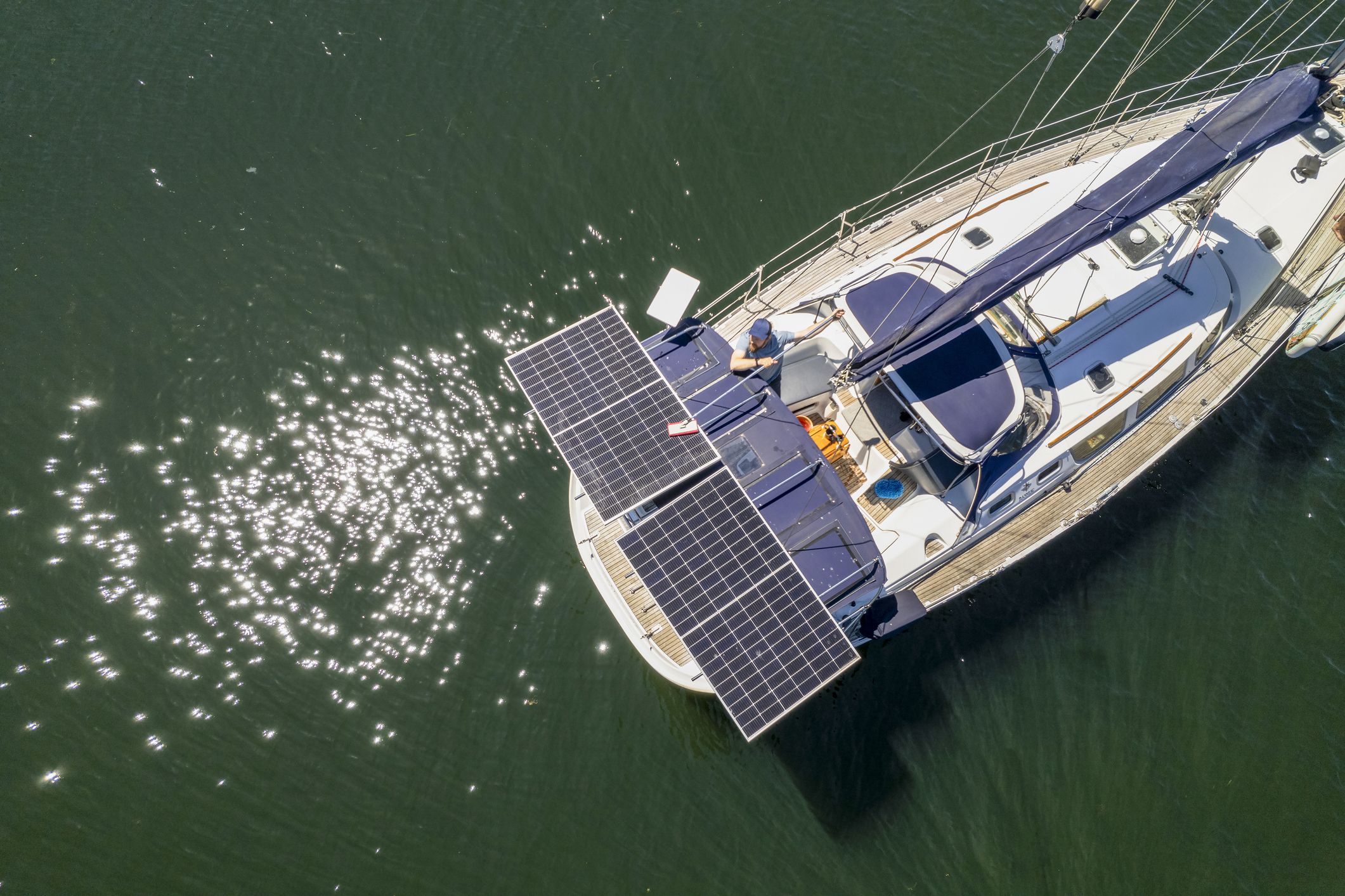
    If a small boat never has access to shore power, their primary means of charging is the DC-to-DC converter and/or solar controller.(Photo/ AscentXmedia)

    In “How to Charge Your LFP Battery the Right Way” we explored the charging needs of LFPs and how smart chargers, fed from shore power, deliver that charge profile.

    The reality, however, is that you may be charging your LFP with a different device, such as a DC-to-DC converter or solar controller. Are these devices “smart” and do they deliver the same charge profile? The simple answer is that it depends on technology, cost and quality. It may also depend on when you purchased the device, as specifications change rapidly.

    The first issue to understand is that the DC-to-DC converter market (in this size and voltage range), is primarily focused on vehicles that have significant secondary load, such as an ambulance or ice cream van. Such vehicles have regular access to mains power, with alternator charging through the DC-to-DC converter, and likely a secondary means of charging.

    Conversely, a small boat may never have access to shore power, in which case their primary means of charging is the DC-to-DC converter and/or solar controller. The functionality and quality of these secondary devices may therefore be more critical in a small boat application compared to the market for which these products are primarily focused.

    DC-to-DC Converters

    The Victron Orion-Tr Smart is designed to replicate a shore-based smart charger’s CC/CV profile when charging from an engine alternator.

    DC-to-DC converters are a solid-state device that converts a source of direct current (DC) from one voltage level to another and are, in effect, the modern DC equivalent of a classic AC transformer. As we discussed in “Lithium Batteries for Small Boats: Install Guide,” these devices are the preferred way to charge an LFP from an engine alternator (and its lead acid start battery).

    In theory, a quality DC-to-DC converter designed specifically for LFP charging has the same initialization process, and the same CC/CV charging profile, as the smart charger functionality that we discussed in “How to Charge Your LFP Battery the Right Way.” However, that is not guaranteed to be true, as many are simple voltage droppers that deliver a constant voltage. This depends very much on the manufacturer, the model, and the era that they were produced.

    Solar Controllers

    There are two types of solar controller: PWM (Pulse Width Modulation) and Maximum Power Point Tracking (MPPT). A PWM is a relatively unsophisticated device that simply pulls the solar panel’s voltage down to match the LFP voltage. It cannot therefore achieve a fixed constant current rate, as this is determined by the level of solar irradiance.

    PWM (Pulse Width Modulation)

    PWM controllers like this Renogy Voyager are simpler and less expensive but generally not recommended for precise LFP charging.

    PWM controllers are therefore generally not recommended for LFP charging, although some models are better than others. Some models seek to achieve a form of constant (or target) voltage by regulating the pulsing, although this is still less precise than other devices.

    MPPT (Maximum Power Point Tracking)

    MPPT controllers such as the Victron SmartSolar continuously optimize solar input, but their downstream charging profile still depends on the manufacturer.

    An MPPT is the more sophisticated device. On the input (e.g., solar array) side, it uses algorithms to monitor the solar panel’s output, determining the voltage and current combination that yields the highest wattage (the “maximum power point”), which is then continually adjusting the input for changes in light intensity. This input is then delivered to a DC-to-DC converter, the output of which charges the LFP.

    Their clever technology is however, primarily focused on the input (solar array) side, so the question remains, does that DC-to-DC converter deliver a CC/CV charge profile and does it have the same functionality and algorithms that we discussed for smart chargers? The answer depends, once again, very much on the manufacturer and particular model.

    Does It Matter if DC-to-DC Converters and Solar Controllers Are Not Smart?

    What is a small boat owner to conclude, about the possibility that these secondary devices are not as smart as a shore-based smart charger?

    If we start with an assumption that any such device never delivers more than 14.6V, as manufacturers know that exceeding that voltage is a red line for all users, a more likely weakness is that they deliver less than that voltage. That is not a potential safety or LFP reliability issue, (it might even increase LFP life), but may result in under-charging.

    Another limitation might be that the device does not switch from CC mode to CV mode (e.g., it continues to deliver a constant current). That may or may not be an issue, depending upon relative size.

    For example, if your MPPT controller and/or DC-to-DC converter are relatively small, like a 20-amp device, feeding a large 300-ah LFP, the impact is modest. Conversely, if you were feeding 120 amps into that same battery, the need to switch to CV mode matters a great deal as that could potentially lead to overheating and can accelerate aging of the LFP.

    A further potential limitation is that the converter or controller may not be programmed to de-energize itself at full charge. If your LFP is constantly serving a parasitic load, that may not matter too much (e.g., that charge is diverted to serve load) but, say, during the off-season, with no or negligible parasitic loads, that would be detrimental to long term LFP health.

    Is Your Charging Device Also a Power Supply?

    As we discussed in “How to Charge Your LFP Battery the Right Way,” LFP manufacturers specify their maximum continuous charge current, but what if you need to serve a house load at the same time as you are charging the LFP (such as a watermaker or refrigeration system)? As an example, maybe you have a 60-amp charging device, but you have a continuous load of 20 amps. Do you select a device that is capable of delivering 60 amps or 80 amps?

    Most manufacturers will take the more cautious approach and recommend that you select a charging device sized to deliver the maximum charge current and no more (e.g. 60 amps in that example), as they cannot really know what your other loads and operating routines are, and exceeding that maximum charge current to the LFP is an issue. They would likely argue that if you are considering this, what you really need is a bigger system.

    Balancing House Loads and LFP Charging Without Overloading the System

    However, everything depends on your unique needs and operational discipline. If you were running a watermaker for hours at a time while underway, and that was demanding 20 amps, you might reasonably conclude that it is better to serve that from the engine alternator (through the DC-to-DC converter) rather than slowing down the LFP charge rate.

    That means, however, that you would need to de-rate the DC-to-DC converter output (assuming that it allows such reprogramming), once water making is over, because, if not, the DC-to-DC converter would deliver excess charging current to the LFP. Of course, in practice, if you failed to re-program the charging device, that over-current should be detected by the BMS, which would then disconnect the LFP. That would leave you with no lights nor navigation, until such time as you clear the fault. Consequently, it is not surprising that manufacturers discourage use of a charging device as a power supply.

    Charging During the Off-Season

    Many cruisers only sail for six months a year, due either to the summers being too hot or the winters being too harsh. What are we to do with our LFPs in the off season?

    The usual advice is to place an LFP into storage, not connected to a charger, with an SOC of 50–80% (some suggest 40–70%) and to check the voltage periodically, to see if it drops outside this range. That presumes that the LFP is routinely accessible.

    How Would We Know What the LFP’s SOC Is?

    The only way to do this is to read the open circuit voltage of the LFP. These are not precise estimates of the SOC, but it can be useful in the absence of any other information. A reading of 3.35V per cell (13.4V) suggests that it is at (or close to) a full charge; 3.25V per cell (13.0V) lingering in the region of 60% SOC and; at 3V per cell (12V), the LFP is significantly discharged.

    A key issue to recognize is that LFPs are subject to self-discharge at a rate generally assumed to be 0.5% to 3% per month. The BMS, of course, can do nothing to protect the LFP from self–discharge and consequently, if left unattended for an extended period, an LFP can eventually discharge down to 0% SOC. Minor parasitic loads, such as a bilge pump (essential if the boat is left in the water), will, of course, accelerate the discharge.

    Extended Storage Issues

    Boat Owner’s Mechanical & Electrical Manual book from Practical Sailor
    Boats laid up for winter, like these at Thornbury Yacht Club, leave LFP batteries unattended for months, making off-season SOC management critical.

    Storing a deeply discharged LFP (or allowing cells to drop below 2.5V to 2.8V per cell), for extended periods can cause irreversible capacity loss. That might encourage you to conclude that it is better to leave a charging device connected but, counterintuitively, the advice is also not to store long term at 100% SOC, as this can also accelerate aging.

    If you are away from the boat for a long time, you may therefore be faced with a choice between risking a 0% or a 100% SOC, both detrimental to the long-term health of the LFP. If faced with such a dilemma, you might want to consult your LFP supplier as to the best approach, but a rule of thumb is that a 0% SOC is far more detrimental to the LFP than a 100% SOC.

    A smarter option may be, however, to re-program your smart charger to a lower voltage (if such a facility exists), so that it does not charge all the way to 100% SOC. You will also want to check that your charging device does in fact de-energize when it reaches full charge.

    Selecting a Manufacturer

    This and “How to Charge Your LFP Battery the Right Way” provide a general description of what charging devices and their algorithms should be capable of but there is no guarantee that the device or the algorithms will act this way. Generally, therefore, you will want to investigate these issues with potential equipment suppliers, especially as it relates to your own installation.

    Somewhat counter-intuitively, some suggest that it is more important to invest in quality in the charging device(s) rather than in the LFP itself. Personally, I would go one step further and suggest that appropriately sized charging cables are by far the single best investment.

    When it comes to equipment, however, the reality is that it is sometimes hard to know what you are buying, as the marketing literature mostly quotes a few highlights without exploring the real details. Even a detailed reading of technical specifications will not necessarily reveal the sort of details discussed in these articles, and specifications change every year.

    Finding an Accessible Technical Team

    My personal test, therefore, is to only buy equipment from a company that I can have a meaningful technical dialog with. While I have no issue with Chinese manufacturing and technology, the priority for me is an accessible technical team that can answer any and all technical questions I throw at them. The point being that you are not buying a standalone device (like a smart phone) but a device that you will integrate into a much larger system.

    Such a dialog might not seem much to ask for, but it is surprising how the supposed experts of some market leaders are only able to repeat a few phrases from their marketing literature and unable to answer basic technical questions about their product. Therefore, the prudent approach is to select equipment only from a reputable manufacturer with a solid technical team that is willing to talk you through such issues. Personally, I have found that Victron and Sterling Power meet that threshold, although there are undoubtedly others.

    Let us know in the comments if you have other manufacturer recommendations with accessible, knowledgeable technical teams.

    Further Reading:

    Stephen Burnage
    Stephen Burnage is a full-time cruiser, having retired in 2017. He left Vancouver, Canada and headed south for warmer climates, on his 1975 Cal 34 sailboat “Moonrise”, in 2018. Since then, Stephen, Moonrise and occasionally his wife Anita, have cruised the West Coast of North and Central America. They are presently in Boca Chica, Panama. Stephen originally trained in the UK as an Electrical Technician Engineer and then proceeded to have a forty-year career, managing high voltage electrical systems around the world. Career highlights include building new power infrastructure on six continents; writing a comprehensive paper on how the North American Power Grid operates (and needs to be rebuilt) and; later, owning and operating his own renewable energy business. Stephen is a joint Canadian and British national and a resident of Chile, with an extended family across the world.