

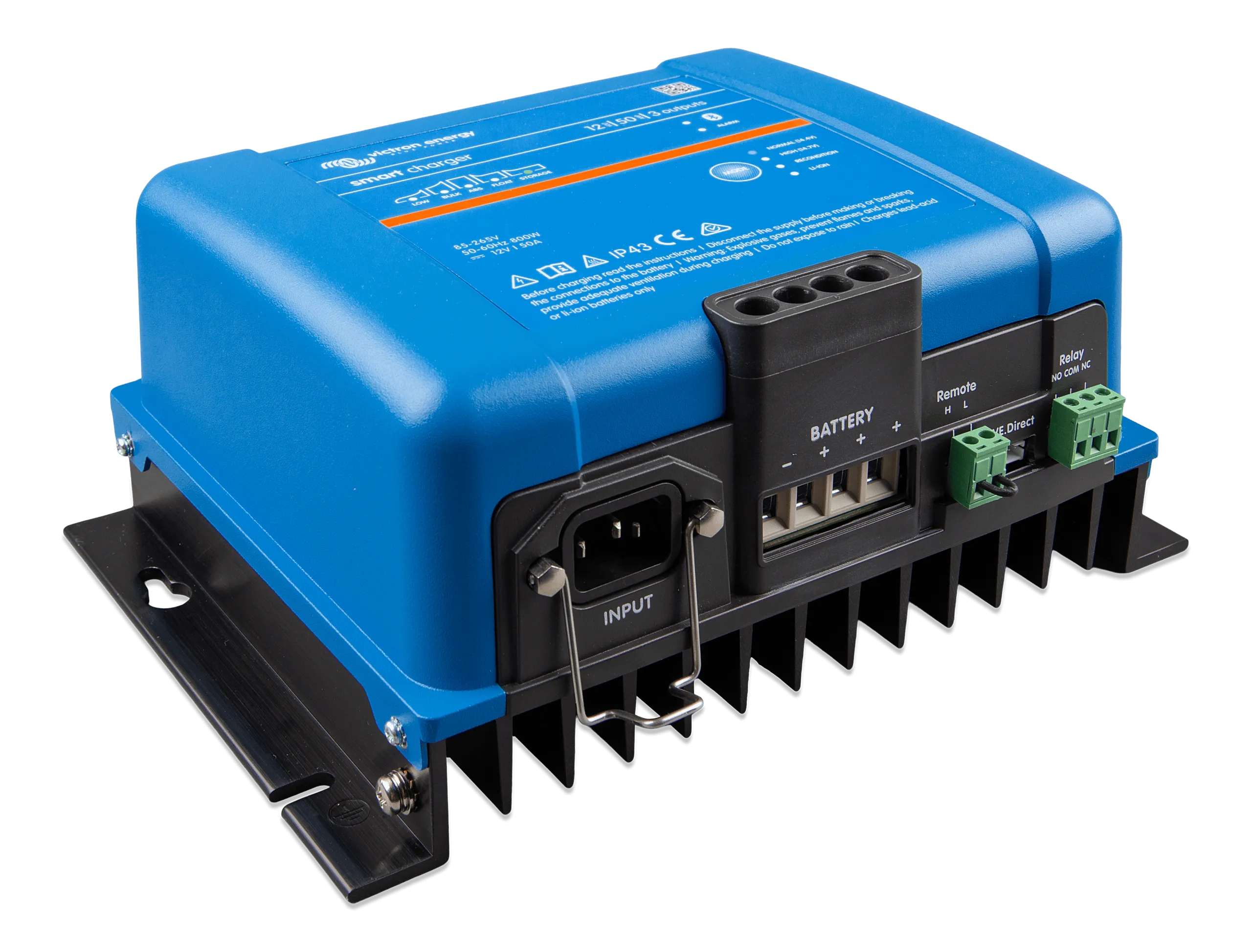
If you are thinking of managing a conversion of your own existing, all lead acid system over to one with a Lithium iron phosphate (LFP or LiFePO4), house bank, there are a few things that you need to understand about the charging of LFPs. As we have discussed in previous articles, LFP’s have their own unique characteristics, distinct from both lead acid and other forms of lithium-ion battery. One of the principal distinctions is its charging characteristics.
To continue reading this article or issue you must be a paid member. Sign in

Join Practical Sailor
Get full access to Practical-Sailor.com – more than 4,000 articles – for just $34.
Join today and save 42% off our full price.











Great article. At 81 I’m not A “sailor” anymore but run around in a Triton Bass Boat. Way back when I became a Marine Engineer there was no such wizardry. I’m changing over to LFPs for the trolling motor as one goes south. So, I’m now running two lead acid batteries and one LFP in series for a Lowrance 36 volt trolling motor using a NOCO charger. This seems to be woking very well, the charger seems to be the key. I now understand some of the differences significantly better than before.
Thanks
Joe
It is not recommended to charge different battery chemistries in series as they have different open circuit voltages, different charge & discharge profiles and different internal impedence. Even charging three LFP’s in series can be challenging (unless you have an external BMS), as imbalances open up over time – better to buy a 36V single pack (managed by a single BMS) if you can. You didn’t say whether your charger is on a lead acid or a LFP setting but you definitely don’t want an LFP on a float or desulfation setting.