To provide the best experiences, we use technologies like cookies to store and/or access device information. Consenting to these technologies will allow us to process data such as browsing behavior or unique IDs on this site. Not consenting or withdrawing consent, may adversely affect certain features and functions.
The technical storage or access is strictly necessary for the legitimate purpose of enabling the use of a specific service explicitly requested by the subscriber or user, or for the sole purpose of carrying out the transmission of a communication over an electronic communications network.
The technical storage or access is necessary for the legitimate purpose of storing preferences that are not requested by the subscriber or user.
The technical storage or access that is used exclusively for statistical purposes.
The technical storage or access that is used exclusively for anonymous statistical purposes. Without a subpoena, voluntary compliance on the part of your Internet Service Provider, or additional records from a third party, information stored or retrieved for this purpose alone cannot usually be used to identify you.
The technical storage or access is required to create user profiles to send advertising, or to track the user on a website or across several websites for similar marketing purposes.









Important story Angie. Nice work. Is disused GRP a raw material that can be repurposed?
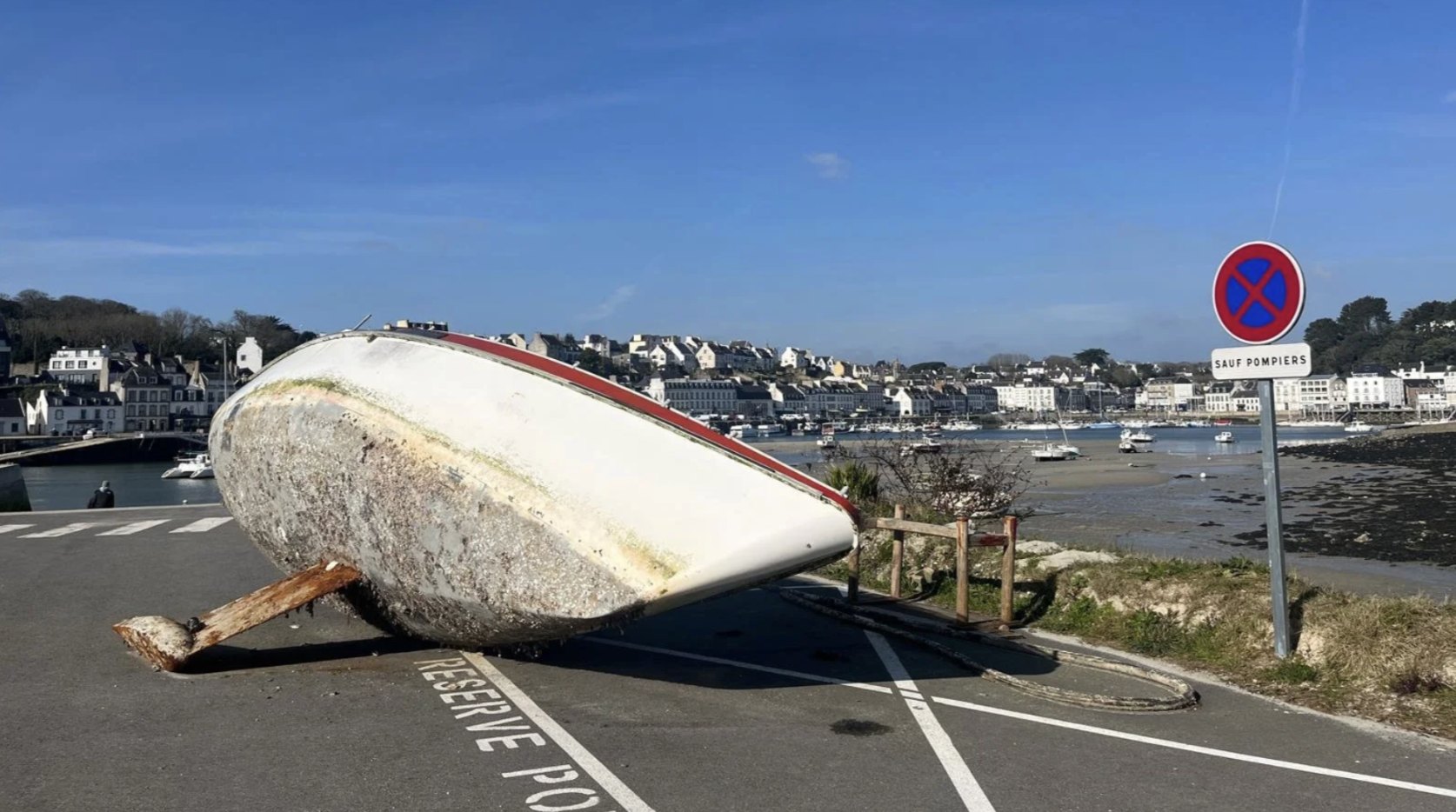
this is a very worthwhile effort… every time I see an abandoned boat (often a hurricane victim), I remember that essentially every GRP boat ever produced still exists in some manner… some dead boats have been repurposed somehow and some exist buried in landfills, or on the bottom or just rottng up some creek… but they generally don’t go away, at least, not very far…
unfortunately, these boats tend to be pretty widely distributed so having enough in one place to do something with their materials, commercially, is an issue even assuming we knew how to use the materials.
fortunately, classic fiberglass boats are still highly desired by some… and with sailboat manufacturers struggling to survive, maybe more old boats will continue to be refit…
so, how might we see dead GRP, carbon fiber, etc as underutilized resources more than a waste problem? IN ALL NEW PRODUCTS, designing for lifecycle is the key, but we barely do that now and only in a few situations… for example, seeing this as a product/process design problem, and making car manufacturers responsible for their product lifecycle, has helped some… not yet the case with our incredible high tech Wind Turbine blades.
The battery people are starting to creatively repurpose these incredibly valuable resources… why not GRP, carbon Fiber, etc… engineers THRIVE on good meaty problems like these… they can be solved, the question is will and it’s cousin, money.
No one seems to be at all concerned about those huge Wind Turbine blades.
Thanks for this. It is a good reminder that, as sailors, we also carry some ecological responsibility. It is becoming more of a problem in all areas as so much stuff we have is not designed to be repairable but disposable. Everything from mobile phones to clothes. As someone who writes about repairing and renovating sailboats, I see this as not just an ecological problem but also a way to make sailing more accessible. The production boat industry seems to be heading down a path towards accepting that boats costing hundreds of thousands of dollars may be at the end of their lives in 15-20 years.
My view is that this is not a scientific, engineering or ecological issue but a cultural one for the industrialized countries. We need a change in attitude towards the value of the care and maintenance of the things we own and away from social status being linked to having ‘new stuff.’ We used to repair and reuse stuff because we had to, now we need to do it because it is the right thing to do.
Same problem as windmill blade end-of-working-life disposal. Is there a better solution than building another Mount Trashmore?
There are some definite advantages to GRP, but this is a downside. Most people are probably aware of the upsides of GRP vs. wood. What are the downside comparisons? Have these been established from the environmental perspective?