To provide the best experiences, we use technologies like cookies to store and/or access device information. Consenting to these technologies will allow us to process data such as browsing behavior or unique IDs on this site. Not consenting or withdrawing consent, may adversely affect certain features and functions.
The technical storage or access is strictly necessary for the legitimate purpose of enabling the use of a specific service explicitly requested by the subscriber or user, or for the sole purpose of carrying out the transmission of a communication over an electronic communications network.
The technical storage or access is necessary for the legitimate purpose of storing preferences that are not requested by the subscriber or user.
The technical storage or access that is used exclusively for statistical purposes.
The technical storage or access that is used exclusively for anonymous statistical purposes. Without a subpoena, voluntary compliance on the part of your Internet Service Provider, or additional records from a third party, information stored or retrieved for this purpose alone cannot usually be used to identify you.
The technical storage or access is required to create user profiles to send advertising, or to track the user on a website or across several websites for similar marketing purposes.













Very cool and nicely done.
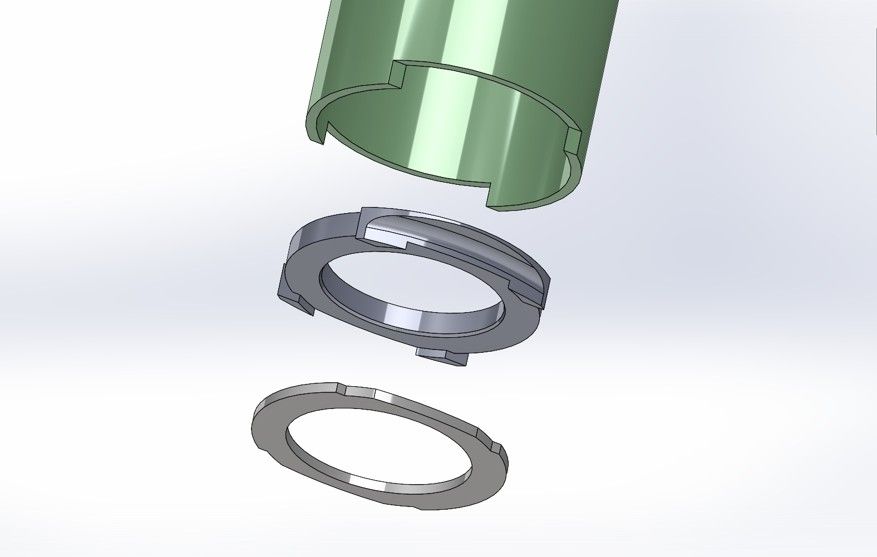
In contrast, I made new rudder bushings for my F-24 from trimmed PVC pipe bushings ~ 7 years ago. Still very tight and smooth. It turned out the original bushings were very, very close to a 1 1/2- x 2-inch pipe bushing, including the flange dimensions, and just a little fine-tuning with a drum and disk sander created a perfect fit. I can steer with my pinky, and there is zero play. I could have turned something on the lathe, but it would not have been any better, in this specific case.
PVC is not a perfect bearing material, but it is used for this, they were oversize (2-inch rudder stock on a well-balanced 1500-pound boat), it is slippery and wear-resistant enough, and resists sunlight better than some alternatives. (They are exposed when the rudder is tipped up–the cause of failure was UV damage to the flanges, not wear. The rudder stock was not worn.) PVC does not swell in water (nylon, for example, can be a problem in that way).
Food for thought, for smaller boats. I would have done something more like the article for my cruising cat. Very nice.
Great resourcefulness using PVC for the bearing swap! PVC isn’t known for great wear resistance (see https://www.azom.com/article.aspx?ArticleID=4101) but should offer many years of service. You are absolutely correct about nylon swelling as it absorbs water. I had nylon bearings because that is what was supplied with the rudder group-buy. Every season, just after launch, the rudder would bind-up from surface swelling of the bearings. A week later, when the full volume of the bearing was hydrated, the steering would free up again. Jefa uses PET-P for their wear surfaces.
Excellent project and well written article.
Tip for using peel-ply on odd shapes: Cut and laminate many small overlapping pieces, as if bird feathers or fish scales, instead of larger sheets. Tall-ish trapezoid shapes work well in the transitions from flats to tubes or conical shapes. Be sure to leave dry edges on the peel ply for a grip to peel.
Good advice!