
Gel vs. AGM Batteries for Boats
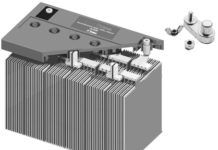
As spring fast approaches (it's coming, I promise), a few of our less fortunate sailing brethren discover their house bank batteries can no longer hold a charge. One of the most common questions we get regarding deep-discharge batteries-those batteries designed to power our lights and electronics-is whether to go with a gel-cell, AGM, or flooded lead-acid wet-cell battery.
Impossible Dream Finds a New Home
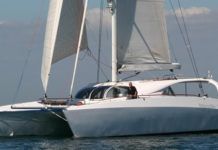
At about 9 p.m., the wind picked up and the temperature dropped to 56 degrees, Miamis version of the polar vortex. Sailing conservatively under staysail and main, the 60-foot catamaran ripped southward toward the city lights. Tucked behind the 18-inch wheel on the leeward hull, helmsman Harry Horgan, a wheelchair-bound sailor who founded one of the nations finest community sailing programs, squinted into the wind. To the west, the nearly full moon rose above Cape Florida Lighthouse.

LPG Explosion Kills Sailor in Guatemala
Three days after I blogged about the risks of having liquid petroleum gas (LPG) onboard boats, and shared frequent PS contributor and surveyor Capt. Frank Laniers tips on checking for leaks, an LPG explosion killed a Swedish sailor who was docked in Livingston, Guatemala. In the upcoming March 2013 issue of Practical Sailor, Lanier goes over LPG safety from top to bottom, and I hope everyone will read the article carefully. The article is an introduction to a series of tests comparing products found in the LPG system-ranging from tanks to valves, from aftermarket lockers to solenoid valves.
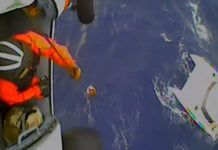
The Short, Brutish Life of a Luxury Cat
Last week, Charlie Doane, executive editor of Sail magazine, and Hank Schmitt, a delivery skipper and founder of the North American Rally for Cruisers, got caught in a very bad situation on a new-boat delivery in the Atlantic. The boat's new owners, a couple from Germany, were also on board. The boat was a brand-new Aeroyacht Alpha 42 catamaran with wave-piercing hulls. It was abandoned; the captain and crew were rescued by U.S. Coast Guard helicopter. The boat was left to drift. Even those of us who are not in the market for a luxury catamaran can draw something from the incident.
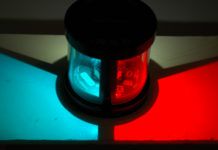
Making the Switch to an LED Mastlight
If you have your mast down this season or are contemplating an annual inspection aloft, it is a good time to consider a switch to an LED tri-color mastlight, which can cut the light's energy consumption by 90 percent. Back in 2010, we looked at six bulbs and lanterns and compared light output and energy consumption. We also checked for interference with VHF radio reception-a common complaint among early versions of several LED lights.
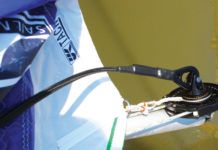
The DIY Spinnaker Sprit
Our recent test of the latest generation of top-down furlers for cruising spinnakers brought up some questions from readers about the type of add-on sprit used for our test boat, an Ericson 41. For some insight into the selection and installation of an add-on sprit for a cruising sailboat, I pulled up excerpts and links from several related Practical Sailor reports for this weeks blog. …
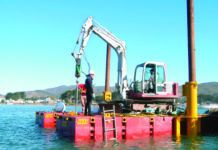
Boat Mooring Upgrade Primer
Now is the time of year that many mooring owners start investing in new tackle. As we prepare for our final report on mooring chains, I dove into some of our archival material on moorings to help guide people through the upgrade process. There are plenty of variations in the details of permanent ground tackle, and PS has covered most, including mooring systems designed for sensitive seabeds. The standard rig is as follows: a mushroom anchor set well in the bottom (or a concrete block, but it had better be huge, or a screw-type anchor, which works well in hard bottoms), to which a length of heavy chain is shackled, then a swivel, then a length of somewhat lighter chain, a shackle, and a rope pendant that goes to the bow cleat.
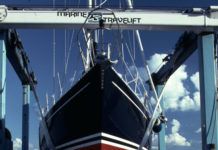
The Captain’s Responsibility During a Haulout
My previous blog posts on cruising rallies and how they affect decision-making raised a number of excellent comments from readers. I think every skipper realizes that, ultimately, he or she is the one responsible for the safety of the ship and crew. Their fate depends on his decisions. But how frequently do we examine how we come to those decisions?
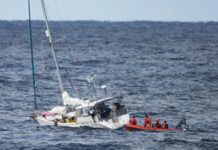
Storm Rakes Sailboat Rally . . . Again
Every November, I hold my breath as cruising sailors gird for the push southward from New England or mid-Atlantic to the Caribbean in one of the annual rallies organized for cruising sailors. Many of the people who participate in these rallies are new sailors, with limited offshore experience under their belt. The rally concept appeals to cruisers for many reasons, but underlying all of these is the belief that there is safety in numbers.
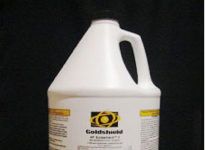
Confounding Mildew Wars Part II
Given the growing concerns about mold allergies, super-bacteria, and public health, the anti-microbe business is a lucrative one. In recent years, a number of companies have been tweaking Dow Corning's 30-plus-year-old miracle antimicrobial, Aegis, to develop their own patents. We learned just how competitive and confusing this new landscape is as we began testing the mildew-fighting effectiveness of Goldshield, a powerful antimicrobial aimed at public facilities like hospitals and airports.
Latest Logbook

Practical Sailor Logbook – September 2026
In September we tour the Hans Christian 48T — the offshore cruiser many sailors call the holy grail — walk the custom Antigua 60...

Video: The BEST Sailboat You Can Buy for $35,000 – Catalina...
If you’re searching for a mid-30-foot sailboat, affordable cruising sailboat, liveaboard sailboat, first sailboat, or a capable used sailboat for coastal cruising, the Catalina...



Latest Sailboat Reviews
Learning by Doing on a $5,000 Catalina 30 Mk II
When Davis’s mother started talking about wanting to do something “big” for retirement, Davis and Gloria half-jokingly threw out an idea that seemed suitably...