
Affordable Marine Antifouling Paint
Practical Sailor tested bottom paints from seven major makers of boat maintenance products. In this report, we compare the 12-month performance of 39 ablative paints and 31 hard paints. We also offer the test results of 18 antifoulings after 24 months in the water, and rate the top specialty antifoulings in specific niches, such as eco-friendly bottom paints, aluminum-safe paints, race-ready antifoulings, fast-drying bottom paints, and budget bottom paints. The bottom paints were tested in both Florida and Connecticut waters. The manufacturers include Alwgrip, Blue Water, Epaint, Flexdel, Interlux, Pettit, and Sea Hawk. Some of the best bottom paints included Epaint EP-21, Pettit Hydrocoat, Epaint ZO, Blue Water Kolor, Interlux Fiberglass Bottomkote, and Sea Hawk Sharkskin.
How Do Acrylic Finishes Hold Up Compared to Boat Waxes?
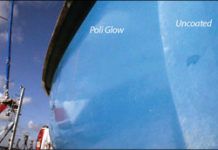
Our July 2009 issue compared 26 bottled waxes and gave an update on our test of 10 traditional paste waxes. This month, we offer a one-year checkup on acrylic coatings. Acrylic coatings differ from paste waxes in their chemistry and how they are applied. Acrylic finishes penetrate pores and chemically bond to the boats surface. We tracked down seven products, applied them to our blue-hulled test boat, and rated them at the one-year mark. Products tested were Vertglas from Lovett Marine, Poli Glow, NewGlass2, Star brite Glass Cote, Klasse High Gloss Sealant Glaze, Higley FiberGloss Restorer, and Presto Gelcoat Rejuvenator.
Practical Sailor Launches Long-term Liquid Boat Wax Test
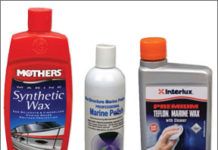
With an ever-growing number of boat wax products on the market, Practical Sailor settles on 25 liquid wax products to test for application, initial gloss, and water beading. Marine wax manufacturers included Star brite, Cajun, Collinite, 3M, Mothers, Interlux, Rejex, Imar, Yacht Brite, West Marine, Turtle Wax, and Island Girl. In many ways the waxes all look, feel and smell the same and their differences may be in what the market application the manufacturers are seeking. Most of the two dozen waxes did a good job in the initial testing, and Practical Sailor will watch these for long-term protection. Waxes with a slightly oily wax finish formula showed better results at water beading in our initial tests, including two products by Star brite, and liquid waxes Island Girl, Zaino Brothers Z-3, Collinite Nos. 845/925, two carnauba wax products by Meguiars and Turtle Wax F-21.
Paste Waxes Test Six-month Checkup
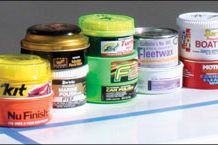
In February 2009, Practical Sailor tested a sampling of 10 paste waxes.After six months, two of these waxes clearly stood out for their continued ability to bead water and repel dirt. Collinite No. 885 Fleetwax and 3M Marine Ultra Performance Paste Wax retained the best gloss and water beading abilities. Mothers Cleaner and the Nu-Finish Paste performed well. Among the automative products that we included in the test, Turtle Wax F21, and Kit waxes stood out.

Eco-friendly Boat Maintenance
Practical Sailors May 2008 issue looked at green practices in marine maintenance outside the hull. This spring, we look at eco-friendly products and techniques for the boat interior. We focus on areas belowdecks where we can reduce our impact on the environment. Proper disposal of petrol fluids used in most inboard engines-fuel, lubricant oil, and transmission fluid-is paramount. Preventing engine fluid spills by using careful filling techniques is key, as are careful preparation for a possible spill and proper cleanup should a spill occur. The best products we found for preventing oil spills and cleaning up oil spills include 3M Sorbent Pads and MDR Oilzorb Engine Pads; Jabsco Oil-Changing System; and the Vetus Bilge Water/Oil Separator. We recommend RydLyme Marine and Barnacle Buster for a green descaling of a boats heat exchanger.Eco-friendly bilge cleaners that we recommend include CRC Industries Big Bully Natural Orange Bilge Cleaner, Clean Water Solutions Microbial Powder, Star brites Sea Safe Biodegradable Bilge Cleaner, and Star brites Super Orange Bilge Cleaner. Eco-friendly soaps and detergents recommended for green cleaning include Dr. Bronners Sal Suds and some cleaners in the Simple Green, Spray Nine, and Thetford Marine lines. And, don't forget plain old blue Windex.
The Great Metal Polish Showdown
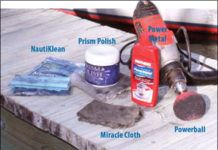
Practical Sailor last tested metal polishes in March 2007, and the best choice for most jobs was the Miracle Cloth. The treated cloths best feature is its ease of use. Since that test, Practical Sailor has come across a couple other products: another impregnated cloth product called the NautiKlean, two cloths that are meant to be used together; and Mothers Power Metal, a polish that can be used with the drill-mounted Powerball, a foam ball that allows power polishing around curves and in tight spaces. Theres also a smaller mini-Powerball. Testers pitted the NautiKlean cloths and the Mothers mini-Powerball and Power Metal Polish against the Miracle Cloth on a variety of metals, including anodized aluminum, stainless steel, and bronze. Testers also included a one-year-old tub of Prism Polish, a conventional polish that did well in the last test.
Practical Sailor Resumes its Search for the Best Boat Wax
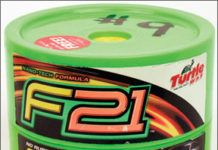
Practical Sailor tested a field of 10 tubs of paste waxes for ease of application, gloss, texture, finish, and price. Most of the products did a fairly good job of producing initial shine. The two waxes with the most glossy fiberglass test patch were not the easiest to apply nor were they the least expensive. The boat wax test included marine paste waxes and car waxes-some with carnauba-from Meguiars, Turtle Wax, 3M, Collinite, Kit, Mothers, Nu-Finish, and Star brite. You need only dip a toe into this topic to realize that there are almost as many recipes for a glossy hull as there are sailors whod rather do anything than wax their hull. As long as marketeers keep alive our hopes for a glossy finish that will last forever, there will be people who will plunk down hard-earned money for the latest and greatest gelcoat elixir. We generally define gloss as being the surface ability to reflect light. Gloss, along with ease of application and the ability to repel dirt and water, are the features that Practical Sailor focused on for this report (see "How We Tested," page 32).
Getting Rid of Mold and Mildew Onboard
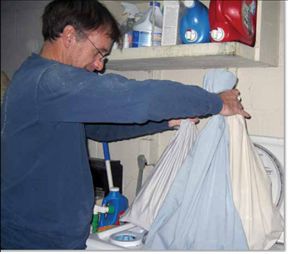
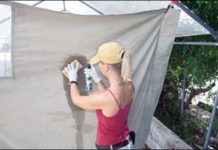
Among the marine maintenance products Practical Sailor evaluated recently were 14 pump-spray mildew cleaners to find out which one was the most effective at removing severe mildew stains. We tested chlorine bleach cleaners, chlorine-free cleaners, hydrogen peroxide cleaners, and ammonium chloride cleaners on a variety of materials, ranging from mildewed shower curtains to moldy vinyl seat cushions and moldy life jackets. We also used them to clean a mildewed sail and mildewed Sunbrella. All products were effective at removing the mold mildew from the shower curtain, but the cushions, life jacket, Dacron sail, and Sunbrella were more of a challenge. One product stood out as a more effective mildew cleaner: Klean-Strip Mildew Stain Remover. Klean-Strip is a highly concentrated product with 19 times more sodium hypochlorite than common bleach, and we do not recommend it for cleaning sails or fabrics. Other products tested include 3M mildew stain remover, Boat Armor mildew stain remover, Boatlife mildew remover, MaryKate mildew stain remover, MDR Amazons Amazing Mildew Stain Away, MDR Moldaway, Naturally Clean Mildew, Nautical Ease Mildew Stain Remover, household Spray Nine, Star brite Mildew Stain Remover, Sudbury Mildew Cleaner and Stain Remover, Thetford Mildew Stain Remover, and West Marine Mold and Mildew Cleaner.
Plastic Razor Blades
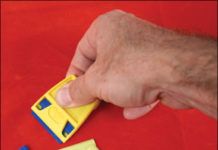
Plastic scrapers have been around for a while. They are popular among painters, woodworkers, and auto detailers. For boaters, they make sense for jobs that need to be done quickly without scratching a delicate surface. However, for a fine cut and a lasting edge, metal blades remain the best choice. We tested the new ScrapeRite plastic razor blades on a variety of surfaces and found them handy for removing vinyl, cleaning dried paint on varnished wood, and trimming sealant. The blades come in three levels of hardness: red, general purpose blades for delicate surfaces like paint or varnish; blue, a polycarbonate blade for use on fiberglass and gelcoat; and yellow, acrylic blades for use on hard flat surfaces.
Latest Logbook

Practical Sailor Logbook – September 2026
In September we tour the Hans Christian 48T — the offshore cruiser many sailors call the holy grail — walk the custom Antigua 60...

Video: The BEST Sailboat You Can Buy for $35,000 – Catalina...
If you’re searching for a mid-30-foot sailboat, affordable cruising sailboat, liveaboard sailboat, first sailboat, or a capable used sailboat for coastal cruising, the Catalina...



Latest Sailboat Reviews
Learning by Doing on a $5,000 Catalina 30 Mk II
When Davis’s mother started talking about wanting to do something “big” for retirement, Davis and Gloria half-jokingly threw out an idea that seemed suitably...