

Measuring Anode and Cathode Degradation
The anodes were cleaned, weighed, and installed on 2-foot lengths of 3/4-inch, copper pipe (type M), which were also weighed. We hung the samples between slips in the mid-Chesapeake Bay near Rockhold Creek for one year, cleaning quarterly to mimic light use. At the end of the test period, the samples were cleaned with a plastic scraper and scrub brush, and their interiors were scrubbed with a snugly fitted multi-knotted rope. Testers gave them a light acid cleaning to loosen barnacle residue and scrubbed them again before weighing them. We also measured potential driving force and current for each anode before and after exposure. Salinity at the test site varied from brackish to seawater salty. We will be testing in full-strength salt water for a followup article.
A New Spin on Dependable Crimps and Splices
Our test focused primarily on the small-wire connections tensile strength, with and without solder, but we also looked at their durability under tough environmental conditions. We tested the pull-out strength without solder and the pull-out strength of soldered connections at 400 degrees by heating the connections in an oven to simulate overheating conditions. We tested fatigue by spinning a 6-inch length of splice wire at 650 RPM in a simple device that we called the wire-fatigue whirligig. Finally, testers soaked all samples for four months in salt water to accelerate corrosion, and then, we repeated the fatigue test.
Testing Winches with Dale
Part 2 of our winch test this month brought back fond memories of the man who helped steer me into my position as PSs skipper, the late Dale Nouse, our former executive editor who died of cancer less than a year after I took over as editor in 2005. Dale was in charge of a winch test that year. He passed away a few months later, at the age of 82-working nearly to his last day after 13 years with Practical Sailor.

Making a Do-it-Yourself Jerry Can Drip Catcher
The previous owner of our test boat swore by using a funnel. Of course, the funnel was too small to catch nozzle leaks, reduced the flow, required holding a heavy can on a rocking deck for three minutes while the CARB can dribbled along, hoping the wind or rocking didnt move the funnel. (Sure, the flow is faster with non-CARB cans, but you had to reduce the flow for the funnel anyway.)
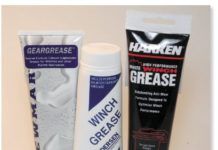
Winch Grease Corrosion Tests
When it comes to most mechanical things-like wheel bearings on a car-its miles that wears em out, as my grandfather used to say. And while there are many reasons why 200,000 miles on a modern car is less remarkable than 75,000 miles was in his day, improvements in lubrication rank high on the list. Lubes of old would oxidize to sludge, stop circulating, wash out, fail to suspend dirt, and drop in pH from acid buildup-or all of these.

Winch Servicing Basics
While using the right winch grease is important, servicing the winch before the grease turns to gum, washes out, or the pawls start to hang up is more important. Makers recommend annual servicing, but racers and full-time cruisers may go one to three years, and weekend sailors might stretch it a bit further. Three years really would be the max, unless you can live with increased wear. If you go any longer, you risk increased wear and even damage. If the pawls hang up and the drum releases, parts can break, and people can get hurt as the handle whips around.
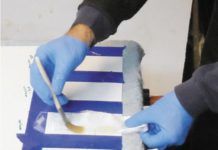
Unsticking Molds
Our boats are molded, heart and soul, from fiberglass resin. And while sailors will argue for hours over the best splice, multi-function display, or anchor, repairs or modification to the actual fiberglass structure are considered a black art. However, working with composite structures is not much more complicated than woodworking; it just requires a new skillset and a different bag of tricks.
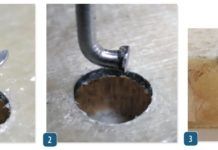
How big does a backing plate need to be?
Practical Sailor recently tested the strength of solid laminate with relation to the bolt passing through it (see PS, June 2016 online). We also tested several materials used to make backing plates when attaching fittings, hardware, and structural components to the boat.

Loading Up Backing Plates
Our deck core samples for testing duplicated the deck core of our test boat, a 32-foot PDQ catamaran. Some other boat cores will be more strongly constructed; some will be lighter.

Pot Skirt: DIY Cooking in the Wind
The writers and editors at Practical Sailor are perpetual tinkerers-always looking for creative, do-it-yourself solutions to even the smallest onboard problems. We figure our readers likely suffer the same challenges on their boats, so were obliged to share such projects.

Morgan 382 – The $30K Boat Nobody Talks About
The Morgan 382 might be one of the most overlooked cruising sailboats ever built. Designed by legendary naval architect Ted Brewer and produced between...



Latest Sailboat Review
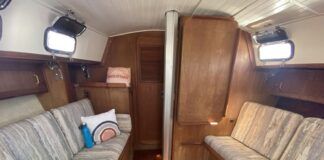
Caliber 33 Used Boat Review
The Caliber is a peculiar blend of tradition and innovation, of security and performance, of practicality and pizzazz. All of the owners we heard from were "satisfied." One called the 33 his favorite boat over six decades of sailing.