



Paste Waxes Test Six-month Checkup
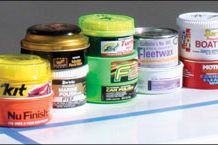
In February 2009, Practical Sailor tested a sampling of 10 paste waxes.After six months, two of these waxes clearly stood out for their continued ability to bead water and repel dirt. Collinite No. 885 Fleetwax and 3M Marine Ultra Performance Paste Wax retained the best gloss and water beading abilities. Mothers Cleaner and the Nu-Finish Paste performed well. Among the automative products that we included in the test, Turtle Wax F21, and Kit waxes stood out.
Practical Sailor Launches Long-term Liquid Boat Wax Test
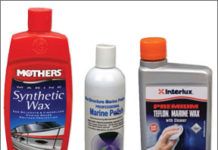
With an ever-growing number of boat wax products on the market, Practical Sailor settles on 25 liquid wax products to test for application, initial gloss, and water beading. Marine wax manufacturers included Star brite, Cajun, Collinite, 3M, Mothers, Interlux, Rejex, Imar, Yacht Brite, West Marine, Turtle Wax, and Island Girl. In many ways the waxes all look, feel and smell the same and their differences may be in what the market application the manufacturers are seeking. Most of the two dozen waxes did a good job in the initial testing, and Practical Sailor will watch these for long-term protection. Waxes with a slightly oily wax finish formula showed better results at water beading in our initial tests, including two products by Star brite, and liquid waxes Island Girl, Zaino Brothers Z-3, Collinite Nos. 845/925, two carnauba wax products by Meguiars and Turtle Wax F-21.

Diesel Biocides Take On Contaminated Boat Fuel
Biological contamination of a fuel tank is a true challenge to any boater. Once the tank is infected with bacteria, an absolute cleansing of all contaminating organisms is necessary, or else the surviving organisms will repopulate the tank. Practical Sailor took a look at how fuel contamination occurs and tested six biocide fuel additives to combat a tank infected with microbial bacteria. Biobor JF, Racor, Stanadyne, Star brite, and ValvTect biocides were tested against diesel cultures shown to have a variety of bacterial and fungal species present. Similar to the effectiveness of antibiotics, the effectiveness of the biocides can varying depending on the type of infection they are fighting, testers found.
Boat Holding Tank Sensor Long-term Test Update
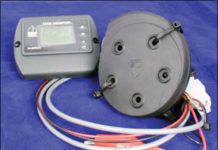
Last year, Practical Sailor installed and tested seven internally mounted liquid-level monitoring kits, including the sensors and their mated remote display panels, in a polyethylene holding tank; the results were reported in the May 2008 issue. The sensors spent the following nine months marinating in the tank, with the occasional sloshing by a tester, before being re-tested to see how well they continued to perform. The test field comprised float sensors, neumatic sensors, and an ultrasonic sender. Float sensors included Sealand TankWatch1, Dometic DTM4, Groco TLM Series, and Wema SHS-8. Air-pressure-fueled sensors included Fireboy-Xintex PTS and Hart Systems Tank Tender. BEP Marines (Marinco) TSI sender uses ultrasonic pulses to measure liquid levels.
Conversion Kits that Turn Your Boat’s Ice Box Into a Galley Refrigerator
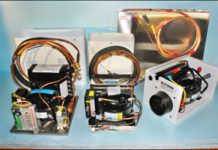
Practical Sailor tested three kits that convert onboard ice boxes into full-fledged refrigeration systems. The three reefer conversion kits in the review-the Waeco-Adler Barbour Cold Machine (CU 100) from Dometic Corp., the Frigoboat Capri 35F by Veco SPA, and the Sea Frost BD-represent a cross-section of whats available on todays refrigeration conversion kit market. Testers looked closely at energy efficiency and the 12-volt units abilities to cool a small ice box with the least amount of amp hours possible. Testers looked at quality, details, reliability, and cooling capacity.

Do-It-Yourself Boatyards
The cost of buying and maintaining a sailboat has spiraled to an all-time high. There are a few steps sailors can take to help keep boating cost effective, including buying a sound older boat and finding a boatyard that is friendly to do-it-yourselfers. In an effort to support affordable boating, Practical Sailor has launched a reader survey on DIY yards, where boaters can rate their favorite boatyard on criteria such as protection from foul weather, boat hauling equipment, service quality and availability, Travelift operator skill, and yard ambiance. These are among the criteria PS Technical Editor Ralph Naranjo used to rate our sample DIY yard, Galesville Harbor Yacht Yard on Marylands western shore of the Chesapeake Bay. Our look at Galesville and some tips on choosing the best do-it-yourself yard offer valuable insight for the DIY boat owner looking for a place to haul out.
Shore-Power Boat Fire Protection
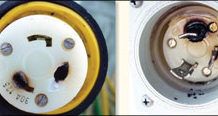
With the increased demand to have all the electrically powered comforts of home onboard, it should come as no surprise to boaters that the majority of AC-related electrical fires involve overheated shore-power plugs and receptacles. Prime Technology, aims to change all that with the introduction of its Shore Power Inlet Protector (ShIP for short), a monitoring and alarm device that automatically disconnects AC shore power when excessive heat is detected at the power inlet connector. We reviewed the ShIP 110 designed for use with a 110-volt, 30-amp system. The company also offers a similar unit (the ShIP 220) for use with 220-volt, 50-amp service. Charred plugs and receptacles are the result of resistance build-up (due to loose or corroded connections), which generates heat and the potential for fire, a problem especially prevalent among vessels that continually run high energy loads such as water heaters and air-conditioning units. In addition to monitoring the temperature of your vessels shore-power inlet plug and its wiring, the ShIP system automatically disconnects AC shore power when an unsafe temperature is detected, providing visual and audible alarms. (The audible alarm shuts down after five minutes to avoid prolonged disturbance to surrounding boats.)
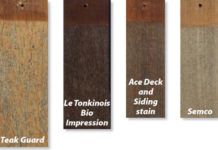
Six-Month Checkup: Long-Term Boat Wood Finish Exposure Test
Practical Sailor closes in on its search for the best teak oil, best marine varnish, and best synthetic wood finish this month. Testers check in on the 53 coated wood panels on our test rack, which have been enduring the elements for six months. Testers rated the panels for single-season gloss and color retention and coating integrity. The test products included dozens of one-part varnishes, two-part varnishes, synthetic wood finishes and stains, spar varnishes, wood sealants and teak oils from makers like Interlux, Pettit, Epifanes, Le Tonkinois, Minwax, Ace Hardware, Star brite, and West Marine. The long-term evaluation aims to find the best exterior wood finish based on overall ratings for ease of application, gloss integrity and appearance, and how the coating fares over time under real-world conditions. At the six-month mark, this report offers our single-season recommendations for finishing teak decks, cockpit trim, toerails, and other exterior wood surfaces.

Eco-friendly Boat Maintenance
Practical Sailors May 2008 issue looked at green practices in marine maintenance outside the hull. This spring, we look at eco-friendly products and techniques for the boat interior. We focus on areas belowdecks where we can reduce our impact on the environment. Proper disposal of petrol fluids used in most inboard engines-fuel, lubricant oil, and transmission fluid-is paramount. Preventing engine fluid spills by using careful filling techniques is key, as are careful preparation for a possible spill and proper cleanup should a spill occur. The best products we found for preventing oil spills and cleaning up oil spills include 3M Sorbent Pads and MDR Oilzorb Engine Pads; Jabsco Oil-Changing System; and the Vetus Bilge Water/Oil Separator. We recommend RydLyme Marine and Barnacle Buster for a green descaling of a boats heat exchanger.Eco-friendly bilge cleaners that we recommend include CRC Industries Big Bully Natural Orange Bilge Cleaner, Clean Water Solutions Microbial Powder, Star brites Sea Safe Biodegradable Bilge Cleaner, and Star brites Super Orange Bilge Cleaner. Eco-friendly soaps and detergents recommended for green cleaning include Dr. Bronners Sal Suds and some cleaners in the Simple Green, Spray Nine, and Thetford Marine lines. And, don't forget plain old blue Windex.
Rust Busters: Spray Solutions for Seized Fasteners and Other Metal Hardware
For those of us living, working, and playing on the water, rust can show up all too often, as the trailer for one of Practical Sailors test boats recently reminded us. Testers tried four aerosol products marketed as penetrating oils-WD-40, Liquid Wrench, PB Blaster, and CRC Freeze-Off-on the rusted U-bolts, and seized nuts and bolts of the neglected trailer to determine which is the best rust buster.
Latest Logbook

Practical Sailor Logbook – September 2026
In September we tour the Hans Christian 48T — the offshore cruiser many sailors call the holy grail — walk the custom Antigua 60...

Video: The 11.5 Knot Cruiser – Bavaria Match 42 Yacht Tour
Could this be the fastest family cruiser you’ve never heard of? The Bavaria Match 42 is a genuine performance sailboat hiding beneath the interior...



Latest Sailboat Reviews
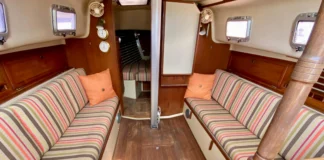
Bayfield 32 Used Boat Review
At first glance, the Bayfield 32 looks less like a fiberglass production boat from the 1980s and more like somebody shrank a traditional sailing...