


Esoteric Fibers Call for Epoxy
Theres little debate over the adhesive quality and toughness of epoxy resin-just look at where its being used. We hear about its presence in crucial structures such as aircraft wings, race car bodies and high-end custom racing yachts. But it takes a little familiarity with engineering lingo to help us understand why epoxy trumps its ester relatives.
Glue-on Fasteners
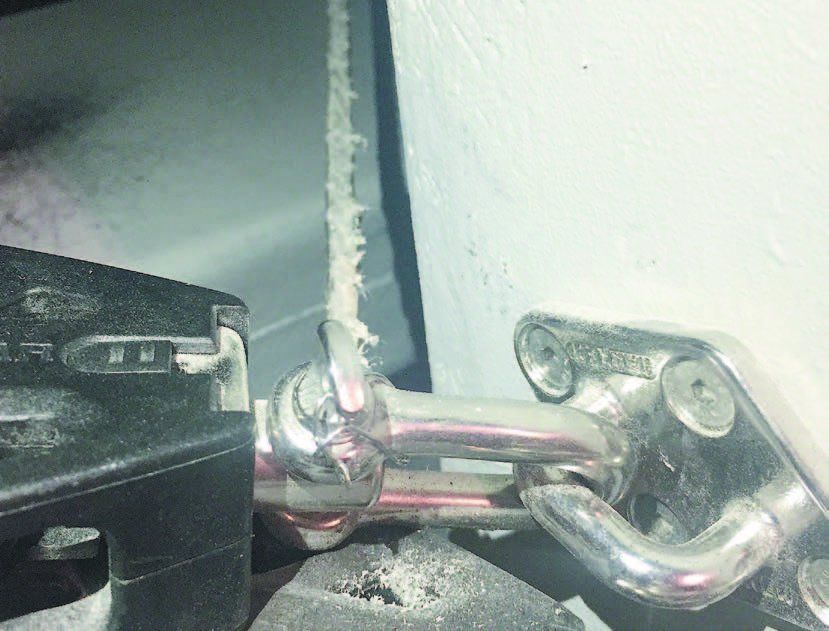
Although through-bolts may be the gold standard for strength and security, sometimes drilling a hole isn't practical, or exposes foam or balsa core to water intrusion. Mounting a sump-pump to the side of the hull, attaching electrical components when the other side is either inaccessible or exposed, mounting an air conditioner on the bridge deck of a catamaran, or adding solar panels to a hard top are just a few examples of situations where a surface mounting is needed.
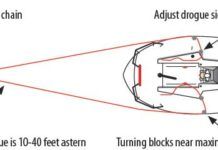
Ideal Drogue setup will require experiments
For maximum maneuverability, the control lines-one port, one starboard-should attach at the widest part of the boat. This maximizes leverage and places the effort close to the center pivot point. On a catamaran, closer to the transom works because of the wide beam, but for monohulls, attaching near the pivot point at the keel will be more responsive. For maximum responsiveness, the drogue should be as close to the transom as practical-this results in more responsive steering and minimal drag. We found the best compromise to be around 65-80 percent of the way aft, where there is still enough beam, but less risk of the control lines fouling.
What’s the Best Anode Material?
Every fall, as the hauled-out boats are sardined into boatyards, a walking tour reveals the casualties from the underwater war. Saildrives are deeply pitted and shedding paint. Bottom paint is burned near seacocks. Folding props no longer fold. Most often, these losses are blamed on the zinc anodes-or lack of them.
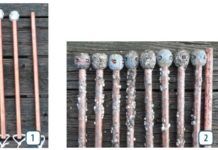
Measuring Anode and Cathode Degradation
The anodes were cleaned, weighed, and installed on 2-foot lengths of 3/4-inch, copper pipe (type M), which were also weighed. We hung the samples between slips in the mid-Chesapeake Bay near Rockhold Creek for one year, cleaning quarterly to mimic light use. At the end of the test period, the samples were cleaned with a plastic scraper and scrub brush, and their interiors were scrubbed with a snugly fitted multi-knotted rope. Testers gave them a light acid cleaning to loosen barnacle residue and scrubbed them again before weighing them. We also measured potential driving force and current for each anode before and after exposure. Salinity at the test site varied from brackish to seawater salty. We will be testing in full-strength salt water for a followup article.
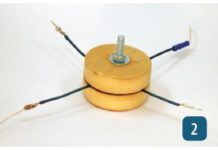
A New Spin on Dependable Crimps and Splices
Our test focused primarily on the small-wire connections tensile strength, with and without solder, but we also looked at their durability under tough environmental conditions. We tested the pull-out strength without solder and the pull-out strength of soldered connections at 400 degrees by heating the connections in an oven to simulate overheating conditions. We tested fatigue by spinning a 6-inch length of splice wire at 650 RPM in a simple device that we called the wire-fatigue whirligig. Finally, testers soaked all samples for four months in salt water to accelerate corrosion, and then, we repeated the fatigue test.
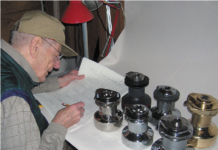
Testing Winches with Dale
Part 2 of our winch test this month brought back fond memories of the man who helped steer me into my position as PSs skipper, the late Dale Nouse, our former executive editor who died of cancer less than a year after I took over as editor in 2005. Dale was in charge of a winch test that year. He passed away a few months later, at the age of 82-working nearly to his last day after 13 years with Practical Sailor.
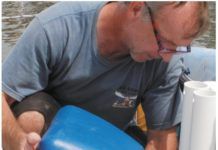
Making a Do-it-Yourself Jerry Can Drip Catcher
The previous owner of our test boat swore by using a funnel. Of course, the funnel was too small to catch nozzle leaks, reduced the flow, required holding a heavy can on a rocking deck for three minutes while the CARB can dribbled along, hoping the wind or rocking didnt move the funnel. (Sure, the flow is faster with non-CARB cans, but you had to reduce the flow for the funnel anyway.)
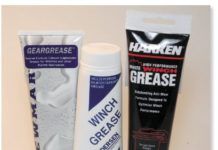
Winch Grease Corrosion Tests
When it comes to most mechanical things-like wheel bearings on a car-its miles that wears em out, as my grandfather used to say. And while there are many reasons why 200,000 miles on a modern car is less remarkable than 75,000 miles was in his day, improvements in lubrication rank high on the list. Lubes of old would oxidize to sludge, stop circulating, wash out, fail to suspend dirt, and drop in pH from acid buildup-or all of these.
Winch Servicing Basics
While using the right winch grease is important, servicing the winch before the grease turns to gum, washes out, or the pawls start to hang up is more important. Makers recommend annual servicing, but racers and full-time cruisers may go one to three years, and weekend sailors might stretch it a bit further. Three years really would be the max, unless you can live with increased wear. If you go any longer, you risk increased wear and even damage. If the pawls hang up and the drum releases, parts can break, and people can get hurt as the handle whips around.
Latest Logbook

Practical Sailor Logbook – September 2026
In September we tour the Hans Christian 48T — the offshore cruiser many sailors call the holy grail — walk the custom Antigua 60...

Video: If You See This on a Used Sailboat, Walk Away
If you’re searching the used sailboat market, comparing sailboats for sale, or learning how to inspect a sailboat before buying, these are the red...



Latest Sailboat Reviews
Cal 2-27 Used Boat Review
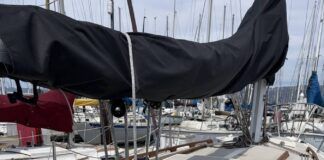
Our story begins in 1970, with the introduction of the Cal 29. Looking for something similar but a bit smaller, the company asked designer Bill Lapworth for a 27-footer, which at first was the Cal 27, a fin keel, spade rudder design with a convertible pop top; another incarnation of this basic hull was the T/2. But the concept of the 29 found its full expression in the Cal 2-27, which began production in 1975 and continued to 1977, after which it was again modified and called simply the Cal 27...again. Production of it ceased in 1986.