
A Copper Alternative?
Prompted by several reader queries and our own curiosity, Practical Sailor recently launched a test of an electronic alternative to metal-based bottom paints: the M20, an ultrasonic antifouling device from the Canada-based SmartAntifouling. Electronic antifouling uses ultrasound waves to prevent algae and other organisms from attaching to a boat’s hull. A transducer, which is mounted on the hull skin inside the boat, emits a high-frequency vibration that creates a micro-thin layer of rapidly moving water blanketing the hull and making it difficult for barnacles and algae to take up residence there. PS installed an M20 on a Florida-based test boat and will be monitoring its performance this season.

Liggett’s Shampoo Soap
After reading PS’s November 2011 report on eco-friendly liquid soaps for onboard bathing, personal-care product maker J.R. Liggett sent us one of his Old-Fashioned Bar Shampoos to try out. Liggett has been making the 3.5-ounce shampoo bar from New Hampshire springwater for 30-plus years. (We reported on his Natural Traveler Kit in the December 2008 issue.)
Liggetts Shampoo Soap
After reading PS’s November 2011 report on eco-friendly liquid soaps for onboard bathing, personal-care product maker J.R. Liggett sent us one of his Old-Fashioned Bar Shampoos to try out. Liggett has been making the 3.5-ounce shampoo bar from New Hampshire springwater for 30-plus years. (We reported on his Natural Traveler Kit in the December 2008 issue.)
Mailport: June 2012
Letters to Practical Sailor, June 2012. This month's letters cover subjects such as: Safety Lessons, USCG Registration Fees, Waterproofing Fabric, and more!
US Sailing Investigating California Sailing Deaths
Nine deaths in two separate offshore sailing races originating in California have prompted investigations by US Sailing. The race tragedies follow last summer’s fatal accident in the 2011 Chicago-Mackinac Race, in which two sailors died, and the near-fatal accident in the 2011 Rolex Fastnet race, which Practical Sailor reported on in the May 2012 issue.
Product Updates
Practical Sailor June 2012 Product Updates
Where Credit is Due: June 2012
Letters to Practical Sailor, June 2012. This month's letters cover topics such as: Accurate Metalworks Marine and Seldèn
Bilge Oil and Keel Worries
I have been looking at purchasing a Catalina 36 that had an engine oil leak, but first I wanted your opinion. The leaked oil accumulated in the bilge, and, in time, appears to have percolated through the base of the hull on either side of the keel, through the holes in which were mounted the sum/log impeller and the depth transducer. On the underside of the hull, there is a 4-inch dark halo that has impregnated the antifouling around each of these two fittings. I am concerned that the oil will damage the components and bedding seals. Also, the percolating oil has seeped down the keel bolts and darkened the joint where the ballast-keel meets the keel stub.
The Man Who Glued Too Much
When PS Technical Editor Ralph Naranjo told me he was interested in doing a report on epoxy, I was thrilled. Ralph ran a boatyard for 10 years on Long Island Sound and is mad about glues and fibers and anything that has to do with building boats. I had one small concern: The project could spiral.
Antifouling for Aluminum Boats
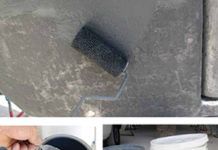
When Achim and Erica Ginsberg-Klemmt upgraded to an aluminum sloop, they had to confront one of aluminum’s major pitfalls: copper-based bottom paints don’t like aluminum. After years of good performance from a foreign-made, expensive-to-import inorganic zinc-silicate coating called Inversalu, the couple sought an affordable option distributed in the U.S. Their research led them to a PPG Amercoat product, a hard two-part zinc-silicate paint called Dimetcote 21-5. Practical Sailor’s report covers their prep and painting experience, a look at how zonc-silicate paints works, and Dimetcote’s performance after eight months in Florida waters.

Performance Sailing – Beneteau First 44 Review
The Beneteau First 44 Performance is not just another modern cruiser. In this Practical Sailor boat tour, we take a close look at the...



Latest Sailboat Reviews

Tartan 395 Boat Review
Co-founded by Charlie Britton in the early 1960s, Tartan Yachts was established on the shores of Lake Erie in Grand River, Ohio. The original...